
Republicans need to stop pretending that President Donald Trump’s conduct is normal, reassuring, or compatible with the responsibilities of his office. He is very unwell, physically, emotionally, and mentally.
This is not an invitation to diagnose Trump from a distance. No responsible critic can establish a medical condition by watching speeches or reading social-media posts. But Americans do not need a clinical diagnosis to evaluate presidential fitness. The relevant public question is whether the president consistently demonstrates the judgment, discipline, attention, and grasp of reality necessary to exercise the extraordinary powers entrusted to him.
The spectacle of the past weekend made that question impossible to dismiss. At the rescheduled White House Correspondents’ Association dinner, Trump delivered more than an hourlong address widely described as rambling and filled with insults, grievances, self-congratulation, and another suggestion that he might seek a constitutionally prohibited third term. He devoted only brief attention to the war with Iran, even as that conflict places American lives, regional stability, and the global economy in jeopardy. The Associated Press and The Guardian both documented the disjointed character of the appearance.
What followed was more disturbing. While the United States remained trapped in a dangerous war, Trump spent part of the weekend circulating artificial-intelligence fantasies depicting himself as a conquering hero. The images reportedly included an attack on the Kharg Island oil terminal, the seizure of an Iranian vessel, and a cinematic encounter with George Washington at Mount Rushmore. Reporting confirmed that Trump shared AI-generated depictions of an Iranian tanker seizure and a strike on Kharg Island.
Any one of these incidents might be dismissed as tasteless entertainment, political trolling, or another episode in Trump’s lifelong campaign for attention. Taken together, and considered against the immense responsibilities of wartime leadership, they present a much more serious problem. The president appears increasingly absorbed in fantasy, spectacle, personal mythology, and social-media performance at precisely the moment the country most needs concentration, restraint, and competent diplomacy.
Republican leaders must now decide whether their highest loyalty is to Donald Trump or to the United States and its Constitution.
Presidents have always used symbols, ceremony, and mass communication. They must explain complicated decisions to the public, sustain national morale, and sometimes project strength to foreign adversaries. But there is a fundamental difference between communicating a policy and substituting performance for policy.
Trump’s AI images do not explain American objectives in Iran. They do not identify a plausible route to peace. They do not tell Congress what military commitments may be required, reassure service members’ families, or prepare the public for the economic consequences of escalation. They transform war into a personalized fantasy action film in which the president is simultaneously commander, conqueror, national monument, and superhero.
That transformation is not harmless. Real warfare is not a video game, a campaign commercial, or a digital fantasy. It kills soldiers and civilians. It destroys infrastructure, displaces families, disrupts trade, and creates grievances that can last for generations. An image suggesting the destruction of an oil facility may be dismissed in Washington as online provocation, but governments and populations abroad can interpret presidential communications as threats or signals of policy.
Kharg Island is not an imaginary setting. It is strategically important to Iran’s oil economy, and military action against it could produce severe consequences. Earlier reporting noted that even an attempt to seize the island could endanger American troops without necessarily ending the war. The Associated Press: A president who circulates fantasies about such an operation is playing with images connected to real military risks.
The question is not whether Trump personally created every image or whether an aide selected some of them. The president chose to publish them under his name. They therefore became presidential communications. If he did not understand what he was posting, that would be alarming. If he understood and approved it, that would be alarming for a different reason.
A long, disorderly speech does not by itself prove incapacity. Politicians ramble. Speakers lose their place. Public figures make unsuccessful jokes. The concern arises from the pattern, the setting, and the stakes.
Trump’s Correspondents’ Association dinner remarks reportedly moved among familiar grievances, insults, boasts, complaints about entertainers, attacks on the press, discussion of his White House ballroom, and talk of a third term. Axios described the contradiction of a president condemning political violence and then immediately returning to attacks on the assembled press. Axios
The appearance mattered because it provided an extended, largely unscripted view of the president. It revealed where his attention went when he had considerable time and a national audience. At a moment of war, he returned repeatedly to himself: his enemies, his image, his grievances, his buildings, and his imagined place in history.
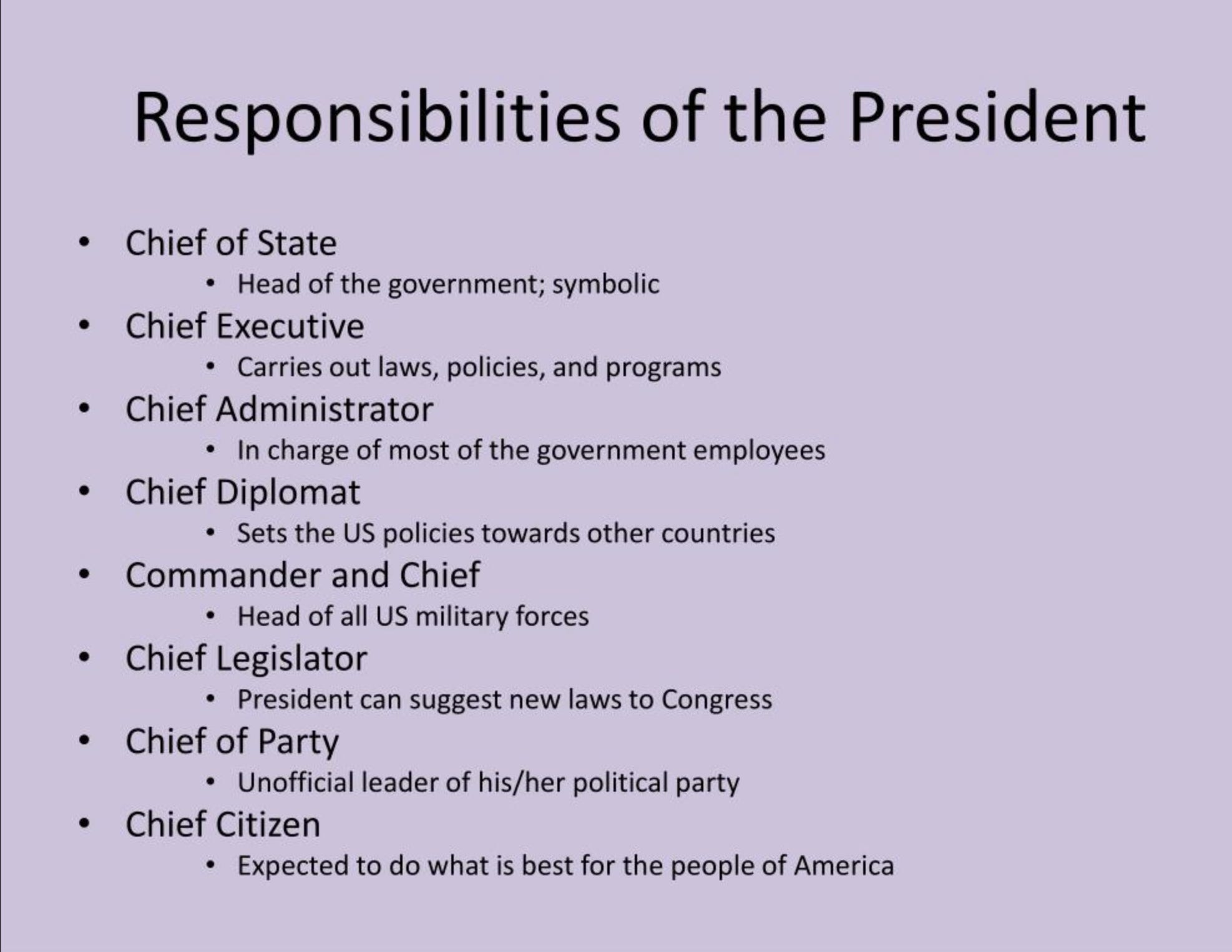
Presidential fitness is not merely the ability to remain standing through an event or pronounce words correctly. It includes the ability to distinguish the urgent from the trivial, to absorb unwelcome information, to control destructive impulses, and to place the national interest above personal vanity. Trump’s public behavior gives Americans substantial reason to question whether he is meeting that standard.
Republicans who insist that every such performance is intentional offer little reassurance. If the conduct is deliberate, then they are arguing that the president knowingly treats war as entertainment, threatens constitutional limits as a joke, and uses the presidency as a stage for personal glorification. Incompetence and intention are not the only possibilities, but neither explanation excuses the behavior.
The contrast between Trump’s online fantasies and the real war is particularly damning. The administration has threatened further escalation, including attacks on infrastructure, while the struggle over the Strait of Hormuz continues. Trump recently warned of retaliation against Iranian bridges and power facilities and was reportedly considering a much larger attack. Axios
Before extending or intensifying a war, a president should be able to answer basic questions. What achievable political objective is the United States pursuing? What conditions would permit the fighting to end? What is the legal authorization for continued hostilities? What are the risks to American personnel and civilians? How will the administration prevent a regional conflict from becoming an open-ended occupation or a broader international war?
A president who cannot provide coherent answers should not compensate with digital scenes of imaginary triumph. Such images may temporarily flatter him and excite loyal supporters, but they cannot conceal the absence of a credible strategy.
The danger is intensified by Trump’s political predicament. Leaders trapped in unpopular wars can become tempted to escalate in search of a dramatic victory. Yet escalation may deepen the trap rather than provide an exit. When decisions of this magnitude appear to be driven by humiliation, personal prestige, or the desire to produce heroic imagery, Congress has a duty to intervene.
This is not simply a partisan disagreement over foreign policy. It is a question of whether decisions involving thousands, and perhaps many more, of lives are being made through a rational, accountable process.
For years, Republican officeholders have tried to manage Trump indirectly. They reinterpret his statements, dismiss his threats as jokes, attribute his most offensive conduct to aides, and assure the public that unnamed officials are maintaining order behind the scenes.
That approach has failed because the Constitution does not assign presidential power to an informal committee of handlers. It assigns that power to the president. No aide can reliably contain a commander in chief who rejects advice, demands personal loyalty, and treats disagreement as betrayal.
Republicans may fear Trump’s supporters, primary challenges, hostile media campaigns, or the destruction of their political careers. Those fears are understandable, but they are not an excuse. Members of Congress and executive officials swear an oath to the Constitution, not to a president or a political party.
If Republicans genuinely believe Trump is capable and fit, they should demand full transparency and let the evidence support that conclusion. They should call for an independent, credible medical and cognitive evaluation; require meaningful briefings about the Iran strategy; insist that senior officials testify before Congress; and stop shielding the president from sustained public questioning.
If they do not believe he is fit, then their silence becomes complicity.
Critics should resist stigmatizing language and amateur diagnosis. Calling someone “mad” may express anger, but it can also obscure the constitutional issue and unfairly associate mental illness with dangerousness or immorality. Many people live with psychiatric or neurological conditions while exercising excellent judgment and fulfilling demanding responsibilities.
Conversely, a person need not have a diagnosable illness to be unfit for the presidency. Recklessness, narcissism, chronic dishonesty, susceptibility to flattery, an inability to concentrate, or a refusal to distinguish fantasy from responsible communication may create an intolerable danger whether or not doctors attach a diagnostic label.
The strongest argument is therefore not that commentators know what medical condition Trump has. They do not. It is that his publicly observable conduct warrants an immediate, formal, and independent assessment, and that Congress must evaluate his ability to perform the job rather than merely his capacity to stand upright or retain political power.
The presidency is not a personal entitlement. The burden should not rest upon the public to prove a diagnosis. It rests upon the president and his administration to demonstrate that the country’s powers are being exercised competently and responsibly.
The Constitution offers several possible paths, but each serves a different purpose.
The first is resignation. Republican leaders could privately and publicly tell Trump that he has lost their confidence and should leave office. Richard Nixon’s resignation demonstrated that withdrawal of support from a president’s own party can be decisive.
The second is impeachment. The House may approve articles of impeachment by majority vote, after which the Senate holds a trial. Conviction and removal require a two-thirds vote in the Senate. Impeachment addresses “Treason, Bribery, or other high Crimes and Misdemeanors,” a constitutional category concerned with serious abuses of public power, not simply medical incapacity. The Senate’s official explanation confirms the two-stage process and the two-thirds requirement for conviction. United States Senate
If Congress concludes that Trump has abused his powers in commencing, conducting, or escalating the war; defied statutory limits; obstructed oversight; or committed other impeachable misconduct, it should investigate and act on evidence. Strange speeches and disturbing posts alone are not substitutes for articles specifying constitutional wrongdoing.
The third path is Section 4 of the Twenty-Fifth Amendment. It applies when a president is “unable to discharge the powers and duties” of the office. The vice president and a majority of the principal executive-department officers can transmit a written declaration to congressional leaders, at which point the vice president immediately assumes presidential powers as acting president. If the president contests that declaration, the amendment establishes a further process requiring Congress to decide the issue; sustaining the transfer ultimately requires two-thirds of both houses. Congress.gov’s Constitution Annotated
Section 4 is not a congressional shortcut around the vice president and Cabinet. Republican executive officials would have to initiate it under the mechanism currently provided by the Constitution. That is why honest conversations between Republican officials and Democratic congressional leaders are essential.
Finally, Congress possesses its ordinary powers: hearings, subpoenas, appropriations restrictions, war-powers legislation, and oversight. Even before removal is considered or achieved, legislators can act to limit unauthorized escalation and compel the administration to explain its strategy.
Any serious effort must be grounded in evidence and constitutional procedure. Removal cannot credibly rest on partisan disgust, viral clips, or disagreement with a president’s personality. It requires documented facts, testimony from responsible officials, and careful separation of three questions: medical capacity, functional ability, and impeachable misconduct.
Democratic leaders should make clear that they are prepared to cooperate without turning the process into partisan theater. Republican leaders should begin confidential discussions with them, the vice president, Cabinet members, military officials, and constitutional experts. Relevant committees should hold public hearings on the conduct of the war in Iran and, where national security permits, release the evidence on which presidential decisions are based.
The public should also be told who is making critical decisions. If aides are limiting Trump’s access, interpreting his instructions, controlling what information reaches him, or informally exercising authority in his name, Congress must know. A hidden regency would not solve the constitutional problem; it would deepen it.
Bipartisanship does not mean splitting the difference between truth and denial. It means agreeing that the country’s survival matters more than either party’s short-term advantage.
Donald Trump’s conduct over the past weekend did not create the crisis of confidence surrounding his presidency. It concentrated that crisis into a series of unmistakable images: an hour of rambling self-absorption, followed by synthetic fantasies of conquest while Americans remain caught in a real and perilous war.
No responsible person should claim that these episodes establish a specific medical diagnosis. They do, however, justify urgent questions about Trump’s judgment, attention, emotional discipline, and capacity to discharge the duties of the presidency. Those questions cannot be answered by loyal aides, campaign slogans, or another staged photograph.
Republican officials now face a choice that will define them. They can continue translating every incoherent performance into supposed strategy, treating every threat as humor and every fantasy as harmless provocation. Or they can honor their oaths.
They should immediately meet with Democratic leaders, demand independent evidence regarding the president’s functional capacity, investigate the conduct and legality of the war in Iran, and consult the vice president and Cabinet about their responsibilities under the Twenty-Fifth Amendment. If the evidence establishes impeachable abuses, the House and Senate must proceed accordingly. If Republican leaders believe the president should resign, they must have the courage to tell him so.
Citizens have responsibilities as well. Americans should contact their Representatives and Senators, demand public hearings, insist upon a congressional vote on the war, support independent journalism, and refuse to let synthetic spectacle replace accountable government.
This is not fundamentally about humiliating Donald Trump, punishing Republicans, or rewarding Democrats. It is about protecting a constitutional republic from the consequences of a presidency that increasingly appears unable, or unwilling, to distinguish responsible leadership from personal fantasy.
The time for whispered concern has passed. Congress must establish the facts, confront the danger, and act.
Comments
Nothing yet. Say the first thing.
Sign in to join the conversation.