
Childhood Vaccination Should Be Guided by Medical Evidence, Not Presidential Preference
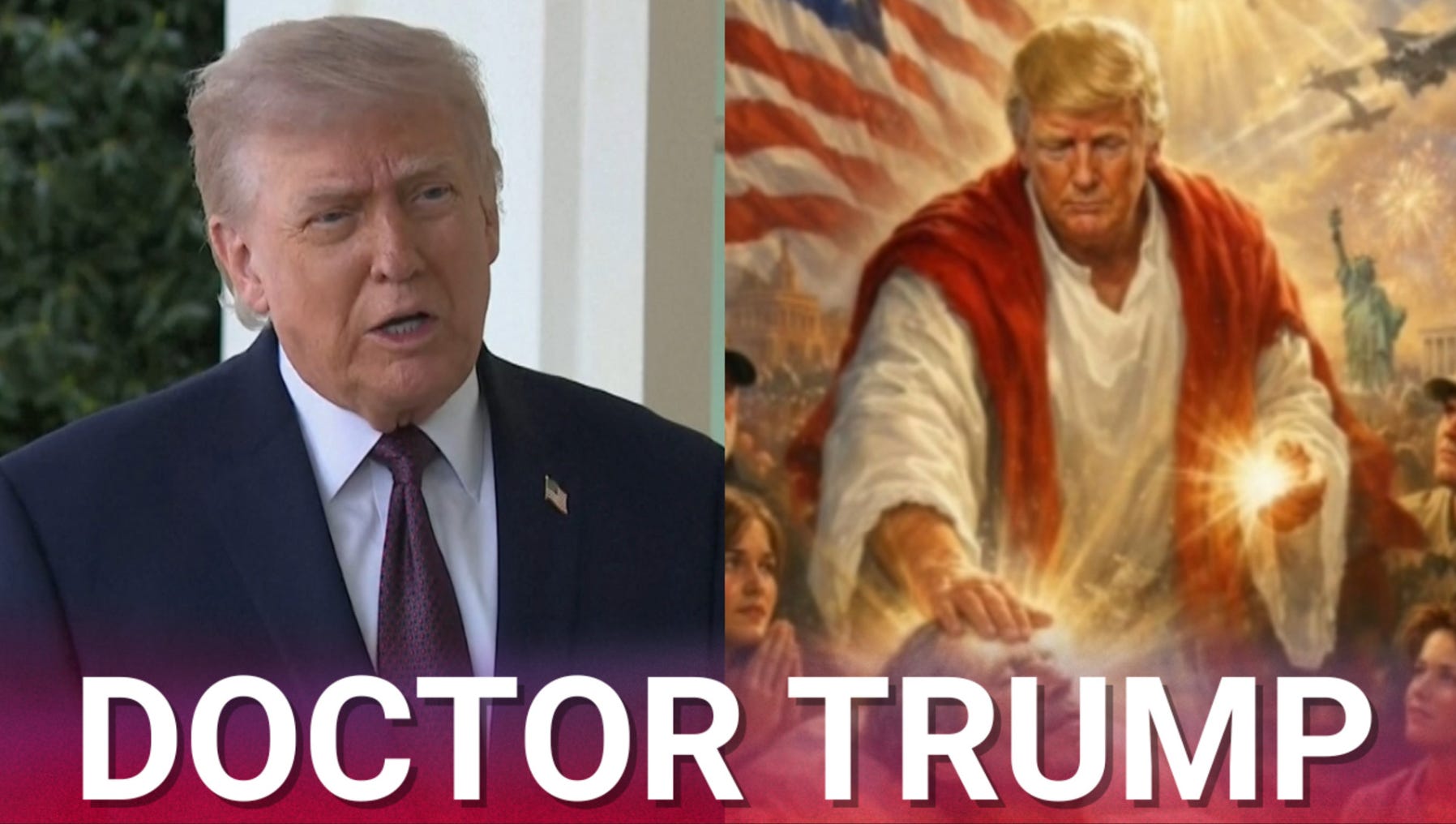
When Political Power Enters the Examination Room
President Donald Trump’s executive order calling for sweeping changes to the United States childhood vaccination schedule raises a question larger than any single vaccine: Who should determine how children are protected from infectious disease?
The answer should not depend on political party. Presidents legitimately establish broad administrative priorities, nominate officials, request reviews, and oversee executive agencies. They do not, however, acquire medical expertise by winning an election. A presidential signature cannot establish that a vaccine is safe or unsafe, determine the optimal interval between doses, or substitute political conviction for clinical evidence.
The latest order reportedly promotes administering childhood vaccines at separate medical visits and proposes dividing the measles, mumps and rubella vaccine into three individual products if those products become available. Separate measles, mumps and rubella vaccines are not presently available in the United States. The order follows earlier administration efforts to reduce the number of vaccines carrying a universal childhood recommendation. The Associated Press reports that public-health experts fear the additional visits would leave children unprotected for longer and increase the likelihood that some never complete their vaccinations.
This is not an argument that government has no role in public health. Government must fund research, regulate medical products, monitor adverse events, make vaccines accessible and coordinate responses to outbreaks. It is an argument that these responsibilities should be exercised through transparent, evidence-based institutions, not through the personal medical opinions of elected officials.
Clarifying What Has Changed
Descriptions of the revised schedule sometimes create numerical confusion. The administration’s January 2026 framework retained universal recommendations against 11 diseases: measles, mumps, rubella, polio, pertussis, tetanus, diphtheria, Haemophilus influenzae type b, pneumococcal disease, human papillomavirus and varicella. These appear in seven vaccine categories: MMR, DTaP, polio, Hib, pneumococcal, HPV and varicella.
Six other categories—rotavirus, COVID-19, influenza, meningococcal disease, hepatitis A and hepatitis B—were shifted away from a universal recommendation and placed under shared clinical decision-making or recommendations for particular risk groups. The government described the change as moving from 17 universally recommended immunizations to a narrower core schedule. HHS’s January fact sheet explains the administration’s categorization.
That distinction matters. A vaccine that remains technically “available” is not necessarily as accessible as one carrying a clear routine recommendation. The wording of federal guidance influences physicians, parents, insurers, public programs, state authorities and health-care systems. Moving a vaccine from “recommended for every child” to “consider after an individualized discussion” can reduce uptake even if formal insurance coverage remains unchanged.
The administration says the revised framework preserves coverage for vaccines recommended before the change. That is important, but coverage alone does not ensure access. Families also need clear guidance, nearby providers, appointment availability and confidence that a vaccine is a normal part of preventive care.
The legal situation is also unsettled. The CDC currently states that a federal court’s March 16, 2026, preliminary order stayed several 2025 advisory-committee votes and the acting CDC director’s January 2026 decision memorandum. Consequently, the agency identifies its July 2, 2025, schedule as the currently compliant schedule. The CDC’s notice demonstrates that an executive directive does not erase statutory procedure or judicial review.
The Difference Between Authority and Expertise
Donald Trump is a political executive, not a pediatrician, immunologist, epidemiologist, or vaccine researcher. Health and Human Services Secretary Robert F. Kennedy Jr. is likewise not a physician or biomedical researcher. These observations are not personal insults. They identify the professional boundaries that should govern responsible decision-making.
A president possesses constitutional and administrative authority over the executive branch. The secretary of HHS possesses considerable policy authority. Neither form of authority establishes scientific competence.
Aviation policy illustrates the distinction. A president may direct the Federal Aviation Administration to improve safety, but we would not expect the president personally to calculate aircraft tolerances. A president may instruct engineers to examine bridge safety, but the load-bearing capacity of a bridge is not decided by political intuition. Childhood immunization deserves the same respect for specialized knowledge.
This principle should apply equally to Democratic and Republican administrations. Medical recommendations should not become correct when issued by a politician one supports or incorrect only when issued by a politician one opposes. Scientific claims must stand or fall according to the quality of the evidence, the methods used to evaluate it and the openness of the decision-making process.
Experts can make mistakes. Public-health agencies must therefore remain subject to oversight, criticism and revision. But the remedy for imperfect expertise is better evidence and more transparent expert review, not the replacement of expertise with presidential preference.
Why the MMR Proposal Is So Concerning
The combined MMR vaccine is not an administrative convenience improvised without evidence. It is a licensed medical product supported by decades of use and safety monitoring. The FDA lists licensed combination MMR vaccines, while the CDC states that a single-antigen measles vaccine is not currently available in the United States. FDA product information and CDC measles guidance confirm the present product landscape.
Breaking MMR into three shots would therefore require more than a presidential recommendation. Manufacturers would need to develop or restore individual products, submit appropriate data, obtain regulatory approval, establish production capacity, and create reliable supply chains. Physicians could not responsibly substitute nonexistent products for a vaccine already shown to protect children against all three diseases.
Separating MMR into three medical visits would also create intervals during which a child might be protected against one disease but remain vulnerable to two others. Which vaccine should come first—measles, mumps or rubella? What interval should separate the injections? How would that sequence change during an outbreak, before international travel or for a child unlikely to return promptly? Such questions require clinical and epidemiological analysis.
Rubella provides a particularly important example. It is often mild in children, but infection during pregnancy can cause miscarriage, stillbirth or congenital rubella syndrome, including serious birth defects. Vaccinating children against rubella is therefore not only an individual intervention; it contributes to community protection for pregnant people and their babies.
The MMR proposal also risks confusing MMR with MMRV. MMR protects against measles, mumps and rubella. MMRV adds varicella. There has been legitimate medical discussion about whether some toddlers should receive MMR and varicella as two injections instead of the four-component MMRV product because of a small difference in febrile-seizure risk. That evidence-based discussion does not establish a reason to divide MMR itself into three vaccines, much less to administer them at three separate appointments.
Simultaneous Vaccination Is an Evidence-Based Practice
The claim that vaccines should generally be spread among separate visits conflicts with longstanding medical guidance. The World Health Organization explains that multiple injections at one visit are supported by pre-licensure and post-licensure safety and effectiveness data. It expressly states that receiving different vaccines at the same appointment is safe. WHO guidance reflects the evidence used in immunization programs around the world.
The American Academy of Pediatrics similarly reports that simultaneous administration of most recommended vaccines is safe and effective. It notes that immune-response and adverse-event rates for vaccines such as MMR, polio, varicella and DTaP are comparable when the vaccines are given at the same appointment or at separate visits. The AAP’s clinical guidance addresses this issue directly.
There are exceptions and required intervals for particular products. A competent vaccine schedule accounts for them. That is precisely why schedules are developed vaccine by vaccine rather than from a blanket belief that every injection should receive its own appointment.
Giving appropriate vaccines together offers practical advantages. It reduces the number of trips a family must make, lowers transportation and child-care burdens, minimizes missed work, decreases opportunities for appointments to be forgotten or canceled, and protects children earlier. HHS’s own pediatric immunization standards have stated that simultaneous administration is safe and effective and helps prevent missed vaccinations. The HHS standards recommend administering all eligible doses during the same visit.
A universal spacing policy would impose its heaviest burden on families with the fewest resources. A parent with paid leave, reliable transportation and easy access to a pediatrician may be able to attend five visits. A parent working hourly shifts, living far from a clinic or relying on inconsistent transportation may not. What sounds like “flexibility” in a political speech can become a barrier in ordinary life.
Delaying Vaccines Does Not Reduce the Time Children Face Disease
A vaccine schedule is timed around vulnerability. Infants and young children receive particular vaccines at particular ages because delaying protection has consequences. A child waiting for a later appointment does not wait in a disease-free world.
Measles is exceptionally contagious. Pertussis can be especially dangerous to infants. Haemophilus influenzae type b and pneumococcal bacteria can cause meningitis and other invasive infections. Rotavirus can cause severe dehydration. Influenza can hospitalize and kill children, including children without a previously identified high-risk condition.
Spacing appointments therefore carries an opportunity cost: more time without protection. The administration’s own HHS website stated in April 2026 that experts do not recommend spreading out or delaying childhood vaccines, that there is no demonstrated benefit to doing so and that postponement leaves children at risk of preventable disease. HHS guidance for families makes the point plainly.
No medical intervention is completely free of risk. The responsible comparison, however, is not “a vaccine with possible side effects” versus “nothing happening.” It is vaccination versus continued susceptibility to infection, including the complications, disability, and death an infection can cause. Good public-health guidance compares those alternatives using evidence rather than treating disease as the neutral option.
The Proper Role of the CDC and Its Expert Advisers
Traditionally, the Advisory Committee on Immunization Practices reviews evidence concerning disease burden, vaccine effectiveness, safety, dosing, feasibility, and health equity. It then makes recommendations for CDC consideration. According to HHS’s description of the established process, the FDA first evaluates vaccines for licensure, ACIP develops recommendations about their use, and the CDC director approves recommendations before they become part of the official schedule. HHS’s explanation describes these institutional roles.
The process is not valuable because the letters “CDC” make every conclusion unquestionable. It is valuable when it requires public evidence, declared conflicts of interest, specialist review, recorded votes, and reasons that can be scrutinized by other scientists.
Political interference damages that process in two ways. First, it can predetermine an outcome before experts evaluate the evidence. Second, it can destroy public confidence in future recommendations, including sound ones. If families believe the schedule changes with the president’s personal preferences, vaccine advice begins to resemble a campaign platform instead of a medical standard.
An executive order can direct agencies to study an issue or act within the law. It should not dictate a clinical conclusion that the evidence has not independently established. The earlier May 2026 order at least formally directed the CDC and ACIP to review an HHS assessment and take appropriate lawful steps; it also called for parental and physician flexibility concerning timing and sequencing. The White House fact sheet describes that structure. The greater the pressure to produce a politically announced result, however, the less meaningful an expert review becomes.
International Comparisons Require More Than Counting Vaccines
The administration has defended its approach partly by comparing the number of vaccines in the American schedule with schedules in selected peer countries. International comparison can be valuable, but simply counting vaccine categories or doses is not enough.
Countries differ in disease prevalence, outbreak history, population density, migration patterns, health-care access, insurance systems, surveillance capacity and the ability to reach families through primary care. A nation with universal health coverage, centralized records and high participation in preventive care may achieve outcomes that cannot be reproduced by copying only one part of its schedule.
A serious comparison would ask why another country recommends fewer vaccines, whether those vaccines are provided elsewhere in its health system, which populations receive them, what diseases circulate there, how quickly outbreaks are detected, and whether its recommendation has produced better health outcomes. It would also compare hospitalization, disability and death, not merely the length of a schedule.
International evidence should inform American policy. It should not be used as a rhetorical shortcut for a conclusion selected in advance.
Public Trust Cannot Be Rebuilt Through Unsupported Reassurance
The administration argues that changing the schedule will restore trust. Public trust does need repair, but trust is not created by telling people what they want to hear. It is earned through consistent standards, visible evidence, acknowledgment of uncertainty, disclosure of conflicts and correction of mistakes.
Officials should be able to explain what evidence prompted a change, how that evidence was graded, which experts participated, what alternatives were considered and why the expected benefits outweigh the risks. Data and meeting records should be public. Researchers with relevant expertise should be allowed to challenge conclusions without being portrayed as political enemies.
Families also deserve respectful communication. Vaccine questions should not be mocked, and parents should not be shamed for wanting to understand risks. But respect does not require pretending that every unsupported theory is medically equivalent to findings supported by decades of research.
The same standard must be applied to the pharmaceutical industry. Manufacturers should face strict regulation, continuing safety surveillance, disclosure requirements and meaningful accountability. Independence from industry influence is necessary. Independence from evidence is not.
The Wider Consequences of Politicizing Preventive Medicine
Childhood vaccination is both personal and communal. A vaccinated child is less likely to become seriously ill, but vaccination also helps protect infants who are too young for particular vaccines, people whose immune systems are compromised, and those for whom vaccination is medically contraindicated.
When recommendations become weaker, more complicated or harder to follow, the consequences do not remain confined to the family making the decision. Declining coverage can create conditions in which outbreaks spread through schools, child-care centers and communities. Hospitals and local health departments then bear costs that could have been prevented.
Politicization also divides the country into rival medical realities. Families may follow one schedule in one state, another schedule from the federal government and a third from professional medical organizations. Physicians may struggle to explain whether insurance, school requirements and public programs will recognize the same guidance. Confusion itself becomes a public-health hazard.
No democracy can remove politics entirely from health policy. Decisions about funding, access and institutional design necessarily involve elected officials. The goal is not to eliminate democratic accountability. It is to maintain a defensible division of labor: elected leaders set lawful priorities and provide resources; qualified scientists and clinicians evaluate medical evidence; regulators assess products; public-health institutions issue recommendations through transparent procedures; and courts ensure that agencies follow the law.
Conclusion and Call to Action: Defend Evidence-Based Public Health
The central issue is not whether Donald Trump or Robert F. Kennedy Jr. should be trusted as individuals. It is whether any political official should be able to transform personal medical beliefs into national clinical guidance without a transparent, independent, and scientifically rigorous process.
The answer should be no.
Parents should consult qualified pediatricians and other trusted medical professionals rather than relying on statements made at political events. Clinicians and professional organizations should explain their recommendations clearly, disclose the evidence behind them and continue publishing independent schedules when federal guidance departs from accepted medical standards. Researchers should defend the integrity of vaccine-safety monitoring while openly investigating credible concerns.
Congress should exercise oversight, demand the evidence behind every schedule change, and protect the professional independence of public-health agencies. Courts should continue reviewing whether executive actions comply with statutory and administrative requirements. State and local health authorities should prepare clear guidance so that families are not abandoned in a maze of conflicting recommendations.
Citizens, regardless of party, should insist on a durable principle: medical policy must be accountable to evidence. That means asking who conducted the research, whether it was peer reviewed, how risks and benefits were compared, whether relevant experts participated, and whether the same evidentiary standard would be applied under a president from the opposing party.
Childhood vaccination is too consequential to be governed by political instinct. Children deserve recommendations built from careful research, transparent deliberation and the accumulated judgment of qualified medical professionals. The immediate call to action is therefore simple but urgent: support independent public-health institutions, demand open evidence before accepting major policy changes, and make medical decisions with competent health-care professionals—not with politicians.
Thanks for reading Thinking Deeply. Subscribe for free to receive new posts via email and access the Thinking Deeply archive. If you find our discussions meaningful, please recommend Thinking Deeply to others. Remember, all subscriptions are free. Encouragement for civic responsibility should never be behind a paywall.
Comments
Nothing yet. Say the first thing.
Sign in to join the conversation.