
A Justice Department Drowning in Presidential Grievance

The Reflecting Pool as a Mirror
The collapse of the vandalism case against former Olympic canoeist David Hearn should not be dismissed as an isolated prosecutorial mistake. It is the latest, and almost painfully literal, reflection of what the Department of Justice becomes when the criminal law is bent around a president’s grievances.
Hearn was charged with intentionally damaging the Lincoln Memorial Reflecting Pool, a project closely associated with President Donald Trump’s plans for the nation’s 250th-anniversary celebrations. The felony charge exposed Hearn to as much as ten years in prison. Yet the government subsequently acknowledged that evidence from the Interior Department showed that the widespread deterioration was attributable to defective installation and a rushed construction schedule, not vandalism. Prosecutors conceded that they could not establish vandalism beyond a reasonable doubt, much less prove that Hearn caused the damage. The court dismissed the case after the government moved to abandon it, although the immediate dispute over whether the dismissal should permanently prevent renewed charges remained unresolved. Associated Press
That should have ended the matter with an apology and a commitment to determine how such a deficient prosecution was initiated. Instead, Trump continued publicly insisting that Hearn was responsible and criticized U.S. Attorney Jeanine Pirro for dropping the case. The president’s refusal to accept his own Justice Department’s evidentiary conclusion exposes the deeper problem: in a grievance-driven administration, facts are expected to conform to the president’s accusation, rather than accusations being tested against facts.
This is not justice. It is vengeance searching for evidence.
The Hearn Case: Prosecution Before Investigation
The government’s reversal was not based on an obscure technicality. It concerned the central element of the alleged crime: causation.
To prosecute someone for damaging property, the government must be prepared to prove that the defendant caused actual damage. Yet a National Park Service witness reportedly acknowledged that the pool was already substantially damaged, was leaking more than one million gallons of water each week, contained a preexisting tear, and required the same repairs regardless of anything Hearn allegedly did. Hearn’s lawyers also argued that the government’s principal eyewitness was not presented to the grand jury and that publicly available photographs, videos, and contractor statements had documented the pool’s defects before the indictment. Associated Press
These facts raise a question more serious than why the case was dismissed: Why was it brought at all?
An indictment is not a press release. It places the power of the United States behind an accusation, threatens a person’s liberty, consumes savings, damages reputation, and transforms ordinary life into a struggle against the federal government. The eventual dismissal of an unjustified charge cannot return the months of peace, security, and dignity taken from the accused.
Hearn’s case therefore represents more than prosecutorial embarrassment. It illustrates the “ready, fire, aim” mentality that emerges when officials begin with a politically convenient culprit and only later investigate whether the alleged crime occurred as claimed.
What the Justice Department’s Rules Actually Require
The Justice Department’s own Principles of Federal Prosecution establish a substantially higher standard than merely finding enough information to present an accusation to a grand jury.
Probable cause is only the minimum constitutional threshold. The Justice Manual explicitly warns that satisfying probable cause does not automatically justify prosecution; additional investigation may be necessary. Prosecutors should commence a case only when they believe that admissible evidence will probably be sufficient to obtain a conviction and sustain it on appeal. The manual explains that this means believing the defendant will more likely than not be found guilty beyond a reasonable doubt by an unbiased factfinder. Prosecutors must also consider whether the case serves a substantial federal interest and whether an adequate noncriminal alternative exists. U.S. Department of Justice
These safeguards exist because the prosecutor’s responsibility is not simply to win. It is to pursue justice fairly and in good faith.
An acquittal does not automatically prove that prosecutors violated those standards. Honest prosecutors sometimes bring strong cases that juries reject. Nor does every adverse judicial ruling establish political retaliation. The alarming feature of Trump’s second-term Justice Department is the combined pattern: presidential demands for punishment, departures of experienced prosecutors, questionable appointments, indictments pursued despite reported evidentiary objections, grand juries refusing charges, juries acquitting defendants, courts finding retaliation or pretext, and judges questioning the candor of government lawyers.
One failure can be a mistake. A succession of failures surrounded by political pressure is evidence of institutional decay.
A Pattern Almost Without Modern Precedent
Grand juries ordinarily provide only a modest check on federal prosecutors. Proceedings are secret, defendants generally have no lawyer in the room, and the government controls the presentation of evidence. Refusals to indict are therefore exceptionally rare. In 2016, grand juries reportedly returned only six “no bills” across more than 150,000 federal criminal matters. By July 2026, researchers had identified at least eighteen publicly reported instances in which grand juries rejected Trump-administration requests for indictments. Just Security
That comparison does not by itself prove that every rejected case was malicious. It does demonstrate how extraordinary the record has become.
The most prominent failures reinforce the concern. The prosecutions of former FBI Director James Comey and New York Attorney General Letitia James, both repeatedly attacked by Trump, were dismissed because the prosecutor who obtained the indictments had been unlawfully appointed. Before James was charged, career prosecutors had reportedly concluded that the evidence was insufficient. After the original indictment was dismissed, two grand juries reportedly declined to indict her again. In Comey’s case, the original grand jury rejected one of the government’s proposed counts before a judge invalidated the remaining indictment. Just Security
The pattern reaches beyond famous political figures. A grand jury refused to return a felony indictment against Sean Dunn, who threw a sandwich at a federal officer during a protest. Prosecutors then pursued a misdemeanor case, only for a trial jury to acquit him. Sidney Reid was acquitted after grand juries reportedly rejected felony charges against her three times. In a wider group of District of Columbia prosecutions, judges criticized repeated cycles of arresting, charging, dismissing, and recharging defendants. One judge described the dismissal rate as “shocking.”
In Chicago-area prosecutions arising from immigration-enforcement protests, numerous charges were dismissed, withdrawn, or contradicted by body-camera evidence. Judicial scrutiny of irregular grand-jury practices ultimately contributed to the dismissal of the Broadview Six prosecution and prompted a review of more than a thousand grand-jury presentations.
The evidence also extends beyond criminal indictments. Courts have quashed subpoenas and blocked investigations after finding indications of retaliation, harassment, or pretext. A federal judge concluded that subpoenas directed at Federal Reserve Chair Jerome Powell were principally intended to pressure him after he displeased the president. Other courts rejected demands directed at critics, medical organizations, election officials, and institutions associated with policies opposed by the administration.
To call this record unmatched in all of American history would require a comprehensive comparison with every era, including some notoriously abusive periods. But it is defensible to say that the scale, visibility, and repetition of these failures appear to have no close parallel in the history of the modern Justice Department.
When Courts Stop Trusting the Government
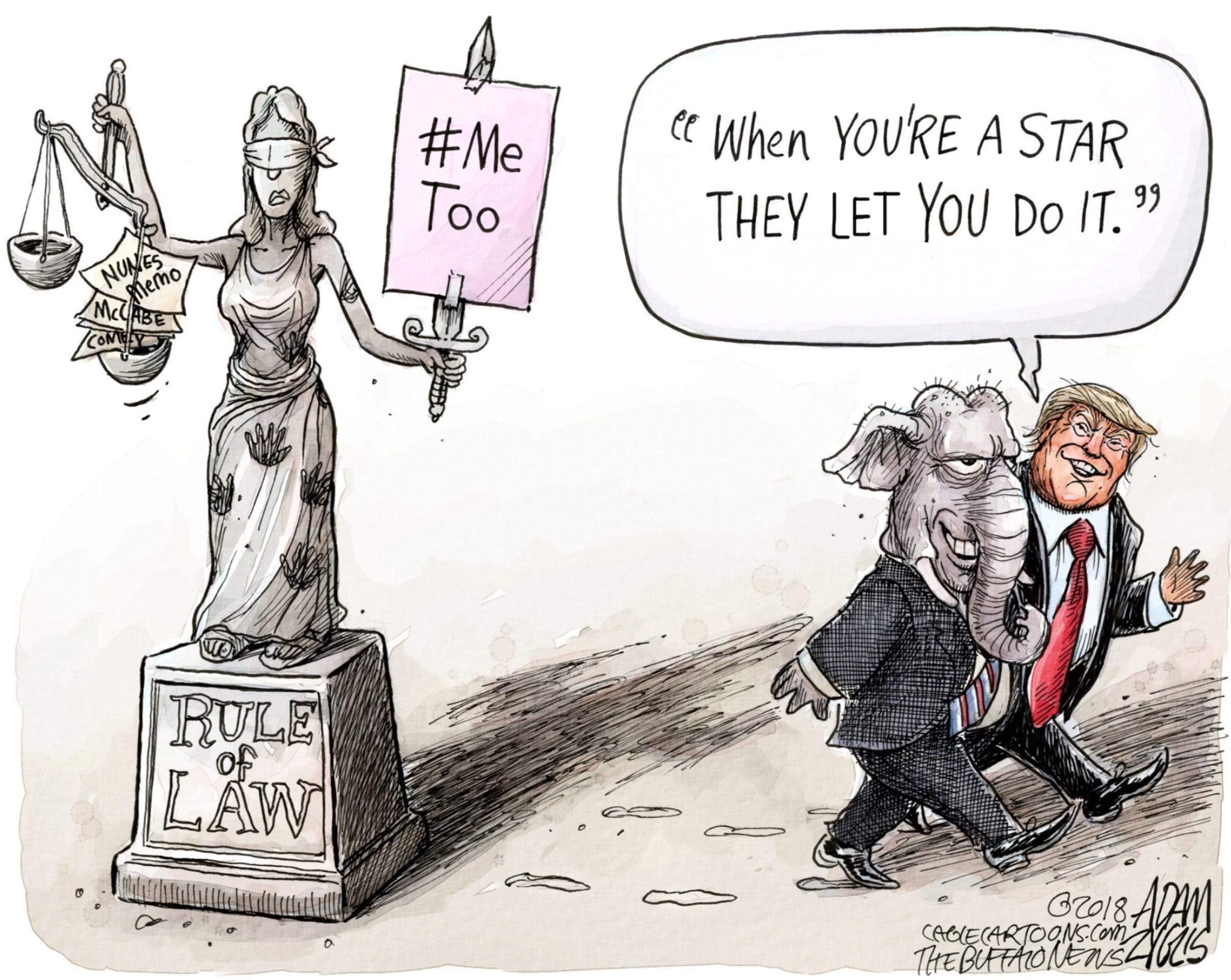
Perhaps the most ominous development is not the raw number of defeats but the erosion of judicial trust.
Courts traditionally apply a “presumption of regularity” to government action, the assumption that public officials have properly and honestly performed their duties. That presumption is essential to the routine operation of the justice system. Yet a review of hundreds of second-term Trump cases found more than forty in which judges expressly discussed that presumption, often because they were no longer prepared to accept the government’s representations unquestioningly. Judges appointed by presidents of both parties have characterized government conduct as unlawful, unethical, dishonest, or unseemly. ProPublica
The breakdown has produced more than harsh language. In one case involving an attempted settlement between Trump, the Internal Revenue Service, and an administration-supported fund, a federal judge ordered referrals to professional disciplinary authorities for lawyers and senior Justice Department officials. The judge concluded that the litigation had been used to lend legitimacy to an arrangement benefiting presidential allies rather than to resolve a genuine adversarial dispute. CBS News
Such actions are not normal friction between judges and advocates. They are warning signals from one branch of government that lawyers representing another may no longer be entitled to the ordinary assumption of good faith.
Once courts cease trusting the Justice Department, every legitimate prosecution becomes more difficult. Judges scrutinize affidavits more skeptically. Grand jurors become less willing to credit prosecutors. Trial juries begin to wonder whether an indictment represents evidence or political pressure. The department’s reputation, built over generations but destructible within a single administration, is itself a law-enforcement resource. Squandering it endangers public safety as well as civil liberty.
The Grievance-Sodden Regime
The defining characteristic of this Justice Department is not merely partisanship. Every administration establishes enforcement priorities, and every attorney general makes debatable decisions. The distinctive danger is the conversion of presidential grievance into an organizing principle of federal power.
Trump publicly identifies enemies. He demands investigations, prosecutions, or punishment. Loyalists are placed in positions from which they can pursue those demands. Career personnel who resist are marginalized, pressured, or removed. Weak cases then reach grand juries or courtrooms, where their defects finally become impossible to conceal.
Not every case follows every stage of that sequence. But enough do that the pattern can no longer be explained as coincidence.
The Hearn prosecution is especially revealing because its stakes were so disproportionate. The alleged incident concerned a deteriorating pool liner. Yet the machinery of government produced a felony indictment carrying a potential decade of imprisonment—only to acknowledge that its basic account of the damage was unsustainable. The most plausible political function of the case was not protection of federal property. It was the preservation of a presidential narrative: Trump’s renovation was not defective; an enemy must have sabotaged it.
That is what grievance government requires. Every embarrassment needs a traitor. Every policy failure needs a criminal suspect. Every critic becomes a potential investigative target.
From Misconduct to Impeachment
Not every failed prosecution is an impeachable offense, and misconduct by a subordinate cannot automatically be imputed to the president. Any impeachment inquiry must establish responsibility through evidence: orders, communications, testimony, patterns of intervention, retaliation against officials who resisted, or presidential ratification of abusive conduct.
But if that evidence demonstrates that Trump directed or knowingly encouraged the use of federal law enforcement to punish personal or political enemies, impeachment would not be an excessive response. It would be the constitutional response.
The historical understanding of “high Crimes and Misdemeanors” encompasses serious abuses of official power, not merely violations of the criminal code. Using the Justice Department as a presidential instrument of retaliation strikes at equal justice, due process, free expression, and the separation of powers. It also resembles the abuse-of-power theory underlying Trump’s first impeachment. Congressional Research Service, Constitution Annotated
In another administration, a sustained record of politically directed prosecutions, evidentiary failures, unlawful appointments, misleading representations, and professional-discipline referrals would generate bipartisan investigations and serious demands for accountability. That it has become familiar under Trump does not make it less grave. Normalization is not exoneration.
I continue to believe there is a substantial possibility that Trump will face a third impeachment before completing his second term. That is a prediction, not a certainty, and impeachment should never be undertaken merely because opponents expect or desire it. It should follow a documented record and fair proceedings.
If that record establishes a deliberate abuse of prosecutorial power, however, the House should not shrink from its responsibility. And if the evidence reaches the Senate, Republican senators should judge it under their constitutional oath—not according to fear of a primary challenge, loyalty to a party, or obedience to one man. Conviction requires two-thirds of senators present, a demanding threshold designed to make removal exceptional but not impossible. Congress.gov
Conclusion: Defending Justice Before It Becomes Vengeance
As Yogi Berra once said, “That’s too coincidental to be a coincidence.” The repeated evidence of Trump’s DOJ failures and misdeeds as evidenced by the judicial record is “too coincidental to be a coincidence.” It shows the DOJ under Trump sees its role as prosecuting Trump’s grievances and bringing vengeance on his opponents.
The dismissal of the case against David Hearn should be remembered as a warning. The government threatened a citizen with years in prison before establishing that he caused the alleged damage. When contrary evidence became undeniable, the prosecution collapsed—but the president continued the accusation.
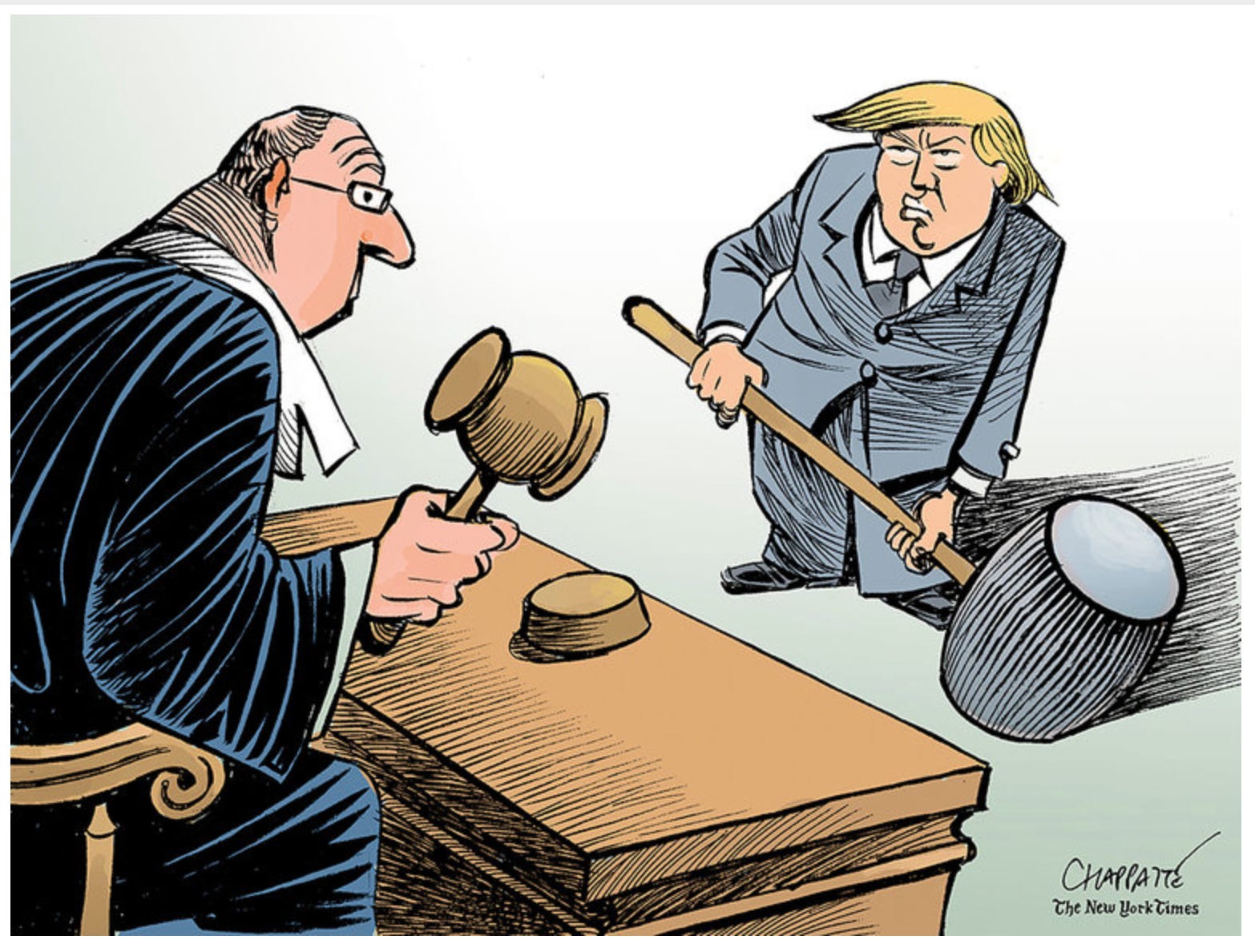
That is not how a constitutional justice system behaves. The Department of Justice belongs to the United States, not to Donald Trump. Its prosecutors represent the public, not the president’s resentments. Its charging authority exists to protect the law, not to validate political narratives or frighten critics into silence.
Congress must hold public hearings, subpoena relevant communications, protect whistleblowers, preserve records, and investigate whether charging decisions have been influenced by the White House. Inspectors general and professional disciplinary bodies must be allowed to conduct independent reviews. Judges must continue demanding candor and imposing consequences when government lawyers violate their obligations. Citizens, journalists, and civic organizations must document abuses and insist that candidates of both parties commit themselves to an independent Justice Department.
Most importantly, Americans must reject the dangerous idea that failed prosecutions are harmless because defendants eventually prevail. The process itself can punish. An arrest, an indictment, legal expenses, public vilification, and the threat of imprisonment can destroy a life even when a jury never convicts.
The call to action is therefore immediate: demand the evidence, follow the pattern, defend the institutions that still impose limits, and hold every responsible official—including the president—accountable. If a full and fair investigation establishes that Trump has deliberately converted the Department of Justice into an instrument of personal revenge, Congress must be prepared to impeach. And this time, senators must place their oath to the Constitution above their allegiance to Donald Trump.
The rule of law will not preserve itself. It survives only when citizens and public officials insist that justice remain justice—and refuse to let it become vengeance.
Thanks for reading Thinking Deeply. Subscribe for free to receive new posts via email and access the Thinking Deeply archive. If you find our discussions meaningful, please recommend Thinking Deeply to others. Remember, all subscriptions are free. Encouragement for civic responsibility should never be behind a paywall.
Comments
Nothing yet. Say the first thing.
Sign in to join the conversation.