
Scientists at Amsterdam University Medical Center have produced the first complete 3D map of the clitoral nerve network, using synchrotron X-rays generated by a particle accelerator. The results, published in March 2026, revealed far more extensive nerve branching near the glans than anyone had previously documented. The equivalent map for the penis was completed nearly 30 years ago. The practical benefits are immediate: better surgical precision, improved outcomes for FGM survivors, and more targeted treatment for pelvic pain disorders. It took particle accelerator technology to fill a gap that basic curiosity should have closed decades earlier.
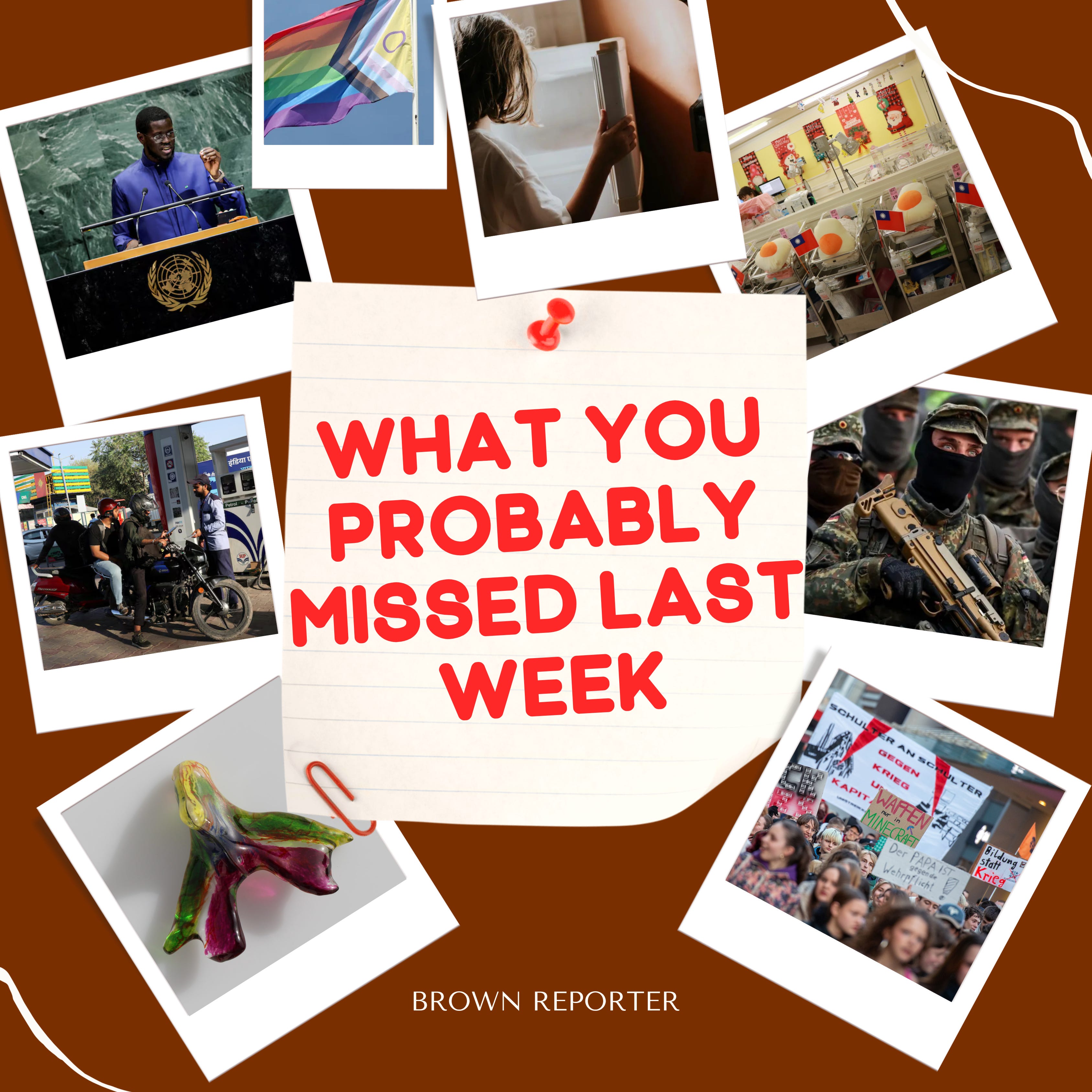
That is Taiwan’s total fertility rate for 2025, the lowest ever recorded for any country on Earth at any point in modern history. For context, a rate of 2.1 is needed just to keep a population stable. At 0.695, Taiwan recorded approximately 107,000 births last year, compared to over 400,000 in the 1970s. The island has already crossed into “super-aged” territory, with 20% of its population over 65. No country has yet found a policy that meaningfully reverses low fertility once it sets in at this depth.
What It Is: Three permanent UN Security Council members, France, Russia, and China, vetoed a resolution that would have authorised military force to reopen the Strait of Hormuz. The resolution, pushed by Gulf nations led by Bahrain, came after Iran closed the strait following US-Israeli strikes in late February 2026 that killed Supreme Leader Khamenei. The Strait carries roughly 20% of the global oil supply. France’s Macron dismissed the military option as “unrealistic.”
Why It Matters: The Strait of Hormuz is the world’s most critical oil chokepoint, and its effective closure has sent energy markets into turmoil, hitting oil-importing nations in Asia particularly hard. But the bigger story is who delivered the veto. France is a permanent Security Council member, a founding member of NATO, and one of America’s oldest formal allies. Voting alongside Russia and China, Washington’s two principal strategic rivals, goes well beyond a diplomatic nuance. France siding with what the West routinely calls its “arch adversaries” on a major security vote is the kind of alignment that, even a decade ago, would have been unthinkable.
The Big Picture: France and the US have clashed before, most visibly over the 2003 Iraq War, but this fracture is sharper, faster, and happening in a fundamentally different geopolitical landscape. In 2003, France stood largely alone among major Western powers. Today, the dissent is Europe-wide. The war in Iran is reshaping global alliances in real time, and the Security Council vote this week makes that plain: the old “West vs. the Rest” framework no longer maps cleanly onto the world. At the moment, the side that looks most isolated is Washington, not Tehran.
What It Is: A growing bloc of European nations has denied the United States access to their airspace for military operations related to the war in Iran. Austria cited its constitutional neutrality. Switzerland halted all weapons export licences to the US. Italy denied US bombers permission to land at Sigonella in Sicily. Spain closed its airspace to all US military flights linked to the conflict. France had blocked an Israeli plan to use its airspace to carry US weapons.
Why It Matters: These are NATO allies actively obstructing US military operations, with consequences that are both practical and symbolic. America loses critical logistics corridors and refuelling options. But the reason many European governments cite, publicly or quietly, is accountability. European capitals are acutely aware that participation in military operations of questionable legality can be scrutinised for decades. Unlike Washington, which has shown an increasingly cavalier attitude toward international legal frameworks, European governments are calculating that today’s coalition partner could become tomorrow’s co-respondent before the International Court of Justice, and that’s a risk they’re not willing to take.
The Big Picture: Austria and Switzerland are constitutionally bound to neutrality, so their refusal is as much a legal obligation as a political choice. But Italy and Spain are full NATO members with no such constraints, and their decisions are deliberate ones. Together, these moves constitute the sharpest break in transatlantic military cooperation since at least 2003, and possibly since Suez in 1956. The Trump administration’s sustained friction with European partners over trade, Ukraine, and NATO spending has clearly exhausted the reservoir of goodwill that once ensured allied cooperation even under protest. Washington is now discovering that goodwill, once spent, does not automatically replenish.
What It Is: Under Germany’s Military Service Modernisation Act, which came into force on 1 January 2026, all males aged 17-45 must obtain approval from a Bundeswehr Career Center before spending more than three months abroad. In practice, approval is expected to be granted routinely unless the individual is subject to active conscription. Most of the approximately 20 million affected men only became aware of this when the media began reporting it on 3 April, a full three months after it came into force.
Why It Matters: The critical detail here is timing. Under the previous German law, men were only required to seek permission for extended foreign travel during a formal state of defence, meaning when Germany was actually at war. The new law removes that threshold entirely. A statement from the German Ministry of Defence confirms that the obligation now applies in peacetime as well.
The Big Picture: The three-month gap between the law coming into force and public awareness is itself telling. This is part of a broader European rearmament trend following Russia’s invasion of Ukraine and the erosion of reliable US security guarantees. Germany, historically among the most cautious nations about anything resembling conscription given its 20th-century history, is normalising military mobilisation frameworks at a pace that has outrun public debate. The legal apparatus for restricting male emigration now exists. Whether future governments use it more restrictively, under pressures nobody can yet predict, is an entirely open question, and that’s what makes the precedent worth watching.
🇧🇾 Belarus: Parliament passed legislation criminalising the “promotion” of homosexual relations, gender transition, and childlessness, mirroring Russia’s 2023 expanded LGBT propaganda laws almost exactly, with penalties including fines and up to 15 days’ detention.
🇨🇦 Quebec: Bill 9 bans group prayer in public spaces without municipal approval and extends the ban on wearing religious symbols to daycare workers and private school staff.
🇹🇷 Turkey: Justice Minister Akın Gürlek announced that all social media platforms must require users to log in with their Turkish national ID numbers within three months. The government says it has already secured agreements with major platforms to implement the change.
🇮🇳 India: Indian refiners purchased Iranian crude oil for the first time since 2019 after the US temporarily lifted sanctions to ease supply shortages caused by the closure of the Strait of Hormuz.
🇦🇺 Australia: The Reserve Bank of Australia will ban surcharges on debit, prepaid, and credit card transactions from October 2026, saving consumers an estimated A$1.5 billion per year. The caveat: economists note merchants may simply fold the cost into base prices, so the bill is cleaner, but your total may not be.
🇬🇧 UK: New government figures show 13.4 million people, including 4.03 million children, are living in relative poverty. The number of working-age adults in poverty has risen to 7.69 million (19% of all working-age adults). Someone earning less than 60% of the median household income is said to be in relative poverty in the UK.
🇸🇳 Senegal: A new law has been introduced that criminalises “promoting” homosexuality with up to 7 years in prison. The UN’s human rights chief called it “deeply worrying.”
Austria has introduced one of the most consumer-friendly laws in Europe: from 1 April 2026, the Anti-Deceptive Packaging Act requires supermarkets and drugstores to clearly label any product that has shrunk in size without a matching price reduction. Retailers must display a standardised notice, “Achtung: Weniger Inhalt – höherer Preis” (”Attention: Less content – higher price”), for 60 days whenever a size reduction causes the unit price to rise by more than 3%. The rule applies to stores larger than 400m² or chains with more than five branches, with fines running from €2,500 up to €15,000 for repeat violations. It’s a small but genuinely satisfying moment: consumers will finally know exactly when they’re paying more for less.
“Nations have no permanent friends or allies, they only have permanent interests.”
— Lord Palmerston
Thank you so much for reading my curated news stories! If you enjoyed this article, you can buy me a coffee below or share this article with a friend. Your support is hugely appreciated x
Enjoying this newsletter? The biggest compliment you can give is to share it with your friends.
Thanks for reading. You’re officially the smartest person in the room. Talk to you soon :)
No posts
Comments
Nothing yet. Say the first thing.
Sign in to join the conversation.