
An annoyed Philippine President Ferdinand Marcos Jr., 68 years old, in formal office wear, reading glasses, and leather shoes, stepped outside his Malacañang office on Monday and performed several rounds of jumping jacks in front of assembled journalists. He then jogged briefly. Marcos, who has been battling rumours of failing health, looked directly at reporters and declared: “I challenge anyone who says I am sick to come and exercise with me.” For the record, he is being treated for gout and high blood pressure, and says his diverticulitis is cured.
That’s how much the world’s top 100 oil and gas companies, Saudi Aramco, ExxonMobil, Chevron, and friends, collectively pocketed in windfall profits during the first month of the US-Israeli war on Iran, according to exclusive analysis for The Guardian. That’s not annual revenue or quarterly profit. That is $30 million, every single hour, in unearned gains, money made not through innovation or hard work, but because a war closed the Strait of Hormuz and oil prices spiked. If prices hold at $100 a barrel, these companies stand to bank $234 billion by the end of the year.
What It Is: The head of the International Energy Agency, Fatih Birol, has issued a stark warning: Europe has “maybe six weeks of jet fuel left.” The culprit is the near-total blockade of the Strait of Hormuz, the narrow waterway through which a fifth of the world’s oil and gas once flowed freely, which has been effectively closed since US-Israeli air strikes on Iran began on February 28. The Middle East previously supplied 75% of Europe’s net jet fuel imports. That supply is now gone. Birol says flight cancellations between European cities could start as early as May, and has called this “the largest energy crisis we have ever faced.”
Why It Matters: Europe did not start this war. No European government voted for it. And yet, if this warning holds, European families booking their summer holidays to Mallorca, Santorini, or Malaga may be about to discover that they are collateral damage in a conflict they had no say in. Up until now, the “cost of the war” for most people in the West has been abstract, higher petrol prices at the forecourt, a slightly bigger energy bill. Inconvenient, certainly, but not exactly life-altering. Cancelled flights and grounded summer holidays are a different kind of blow. They will land on kitchen tables and family WhatsApp groups in a way that oil futures never quite do.
The Big Picture: Something keeps coming up in coverage of this conflict: for most people in the West, the cost of war is high energy prices, or in this case, a ruined summer holiday. For people in the Middle East, the cost of war is their family and their home. That contrast is worth sitting with. The asymmetry is not new, it has defined Western involvement in Middle Eastern conflicts for decades, but it is rarely stated so plainly. Europe’s jet fuel crisis, if it materialises, may be the moment the abstract becomes concrete for millions of ordinary people. Whether that translates into meaningful political pressure on governments to pursue a ceasefire, or simply into anger directed at airlines, remains to be seen.
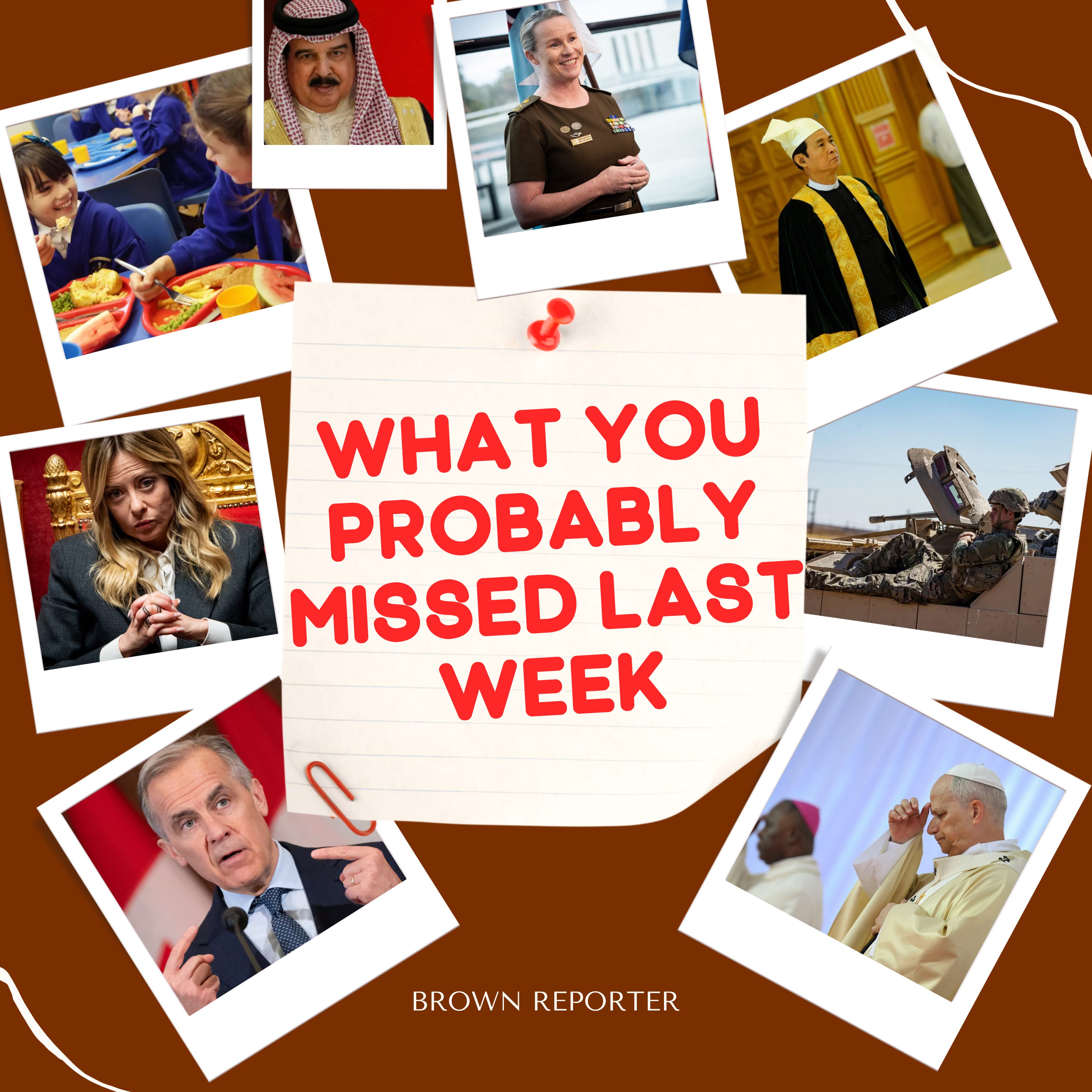
What It Is: Pope Leo XIV, the first American pope, declared during his visit to Cameroon that the world is “being ravaged by a handful of tyrants.” The remarks, he later clarified, were written two weeks before President Trump publicly attacked him as “weak on crime and soft on foreign policy.” Trump’s attacks included sharing an AI-generated image of himself as Christ, which he subsequently deleted. The pope responded by noting his speech “was not aimed at the president” and that debating Trump was “not in my interest at all.” Make of that what you will.
Why It Matters: The sitting leader of the United States and the leader of the world’s 1.2 billion Catholics are in a public, acrimonious feud over a war. This is not normal. Very little about the current era is, of course, but even by the standards of the Trump presidency, which has already featured tariff wars, threats against NATO allies, and an attempt to purchase Greenland, a sitting US president posting AI images of himself as Jesus Christ and then attacking the Pope is genuinely, historically unprecedented. Pope Leo XIV has been an outspoken opponent of the US-Israeli war on Iran since it began. As a moral authority commanding more than a billion followers worldwide, his opposition carries both geopolitical weight, influencing Catholic-majority nations in Europe, Latin America, and Africa, and deep cultural resonance in the very American heartland Trump claims to represent.
The Big Picture: When Donald Trump first won the presidency, commentators warned to expect the unexpected. They were right, but even the most imaginative among them probably didn’t pencil in “papal feud” on the bingo card. This episode points to something larger: the traditional moral infrastructure of Western leadership, the church, international institutions, and allied governments, is increasingly in open conflict with the Trump administration’s worldview. Pope Leo, whatever his intentions, has become a focal point for that resistance.
What It Is: In a nationally broadcast video address, Canadian Prime Minister Mark Carney stated plainly that Canada’s historically close economic ties to the United States have become “weaknesses that we must correct.” He cited Trump-era tariffs, now at levels not seen since the Great Depression, as having fundamentally changed the US-Canada relationship. His prescription: new trade deals, diversified export markets, and a conscious effort to reduce structural dependence on the American economy. “Hope isn’t a plan,” he said. “Nostalgia is not a strategy.”
Why It Matters: Canada sends approximately 75% of its exports to the United States. That number has been a bedrock fact of Canadian economic life for generations. For a sitting Canadian prime minister to describe that relationship as a liability, in public, in plain language, would have been almost unthinkable five years ago. It would have been the kind of thing politicians say behind closed doors, not what prime ministers say on national television. The fact that Carney is saying it openly reflects just how dramatically the Trump administration has shaken the assumptions underpinning the Western economic order. Canadian workers in the auto and steel industries are already feeling the consequences. Carney’s message is that waiting for America to “return to normal” is no longer a viable plan.
The Big Picture: The rhetoric is bold. The reality, though, is significantly harder. The United States is not just Canada’s biggest trading partner. By most measures, it’s an almost irreplaceable one. No other single market on earth combines America’s size, proximity, shared language, integrated supply chains, and purchasing power. The European Union is a candidate for trade diversification, as is the Indo-Pacific, but redirecting 75% of your exports is not a pivot you make in an election cycle. It is a generational project. Carney knows this. His address is, in part, a political statement, a signal that Canada will not simply absorb American pressure passively. But between the rhetoric and the reality lies a very large, very difficult gap.
🇸🇾 Syria: The last US troops departed the Qasrak base in Hasakah on April 16, ending a decade-long American military presence aimed at fighting ISIS.
🇲🇲 Myanmar: President Min Aung Hlaing, the junta leader now installed as “civilian” president, has issued a blanket commutation of all death sentences to life imprisonment, as part of a Thingyan new year amnesty releasing over 4,300 prisoners.
🇮🇹 Italy: Prime Minister Giorgia Meloni has suspended Italy’s 2003 defence cooperation agreement with Israel, following Israeli forces firing warning shots at an Italian UN peacekeeping convoy in Lebanon.
🇺🇸 Cuba: The Pentagon has quietly been directed by the White House to develop contingency plans for a possible military intervention in Cuba, following months of escalating pressure on Havana.
🇧🇭 Bahrain: King Hamad has ordered a review of citizenship for individuals deemed threats to national security, as the kingdom intensifies its post-war crackdown.
🇪🇸 Spain: Begoña Gómez, wife of Prime Minister Pedro Sánchez, has been formally charged with embezzlement, influence peddling, and corruption after a two-year investigation. The courts will now decide whether she faces trial.
🇦🇺 Australia: Lieutenant General Susan Coyle has been named as the next Chief of Army, the first woman in the Australian Army’s 125-year history to hold the role. She begins her term in July.
England’s schoolchildren are getting a proper lunch, and the government is footing the breakfast bill, too. The UK has announced a sweeping overhaul of school food standards: deep-fried food will be banned from school menus entirely, sugary desserts limited to once a week, and unhealthy grab-and-go staples like daily sausage rolls and pizza will be off the table. In their place: more vegetables, fruit, whole grains, and meals that don’t come out of a fryer. The government is also launching over 500 free breakfast clubs, creating places for up to 142,000 children, many of whom currently arrive at school having eaten nothing. Full enforcement kicks in from September 2027, giving schools time to adapt.
“Hope isn’t a plan and nostalgia is not a strategy.”
— Mark Carney
Thank you so much for reading my curated news stories! If you enjoyed this article, you can buy me a coffee below or share this article with a friend. Your support is hugely appreciated x
Enjoying this newsletter? The biggest compliment you can give is to share it with your friends.
Thanks for reading. You’re officially the smartest person in the room. Talk to you soon :)
No posts
Comments
Nothing yet. Say the first thing.
Sign in to join the conversation.