
Welcome to the Brown History Newsletter. If you’re enjoying this labour of love, please do consider becoming a paid subscriber. Your contribution would help pay the writers and illustrators and support this weekly publication. If you like to submit a writing piece, please send me a pitch by email at brownhistory1947@gmail.com.
Don’t forget to check out our SHOP and our Podcast.
Ejaz, affectionately called Kaka by his family, and his brother were children working as masseurs in the city of Lahore. As a marker of their religious identity, Shi'ism, they wore a steel anklets studded with small, shiny stones. One October day, Kaka and his brother were prowling in the park near Minar-e-Pakistan, the site where the Pakistan resolution was passed in 1940, when another child approached them and said: “Our boss requires a massage and he will pay you twice the amount if you come along with me.”
For children already burdened by the precarity of daily labour, the offer was enough. Kaka went immediately. His brother accompanied him to the house, then left to find other customers. Kaka walked inside to meet the so-called “boss.” He was never seen again.
On 20 July 1999, Faisal Razzaq, a nine-year-old, left home for a workshop where children his age folded cardboard into paper. By evening, he had not returned.
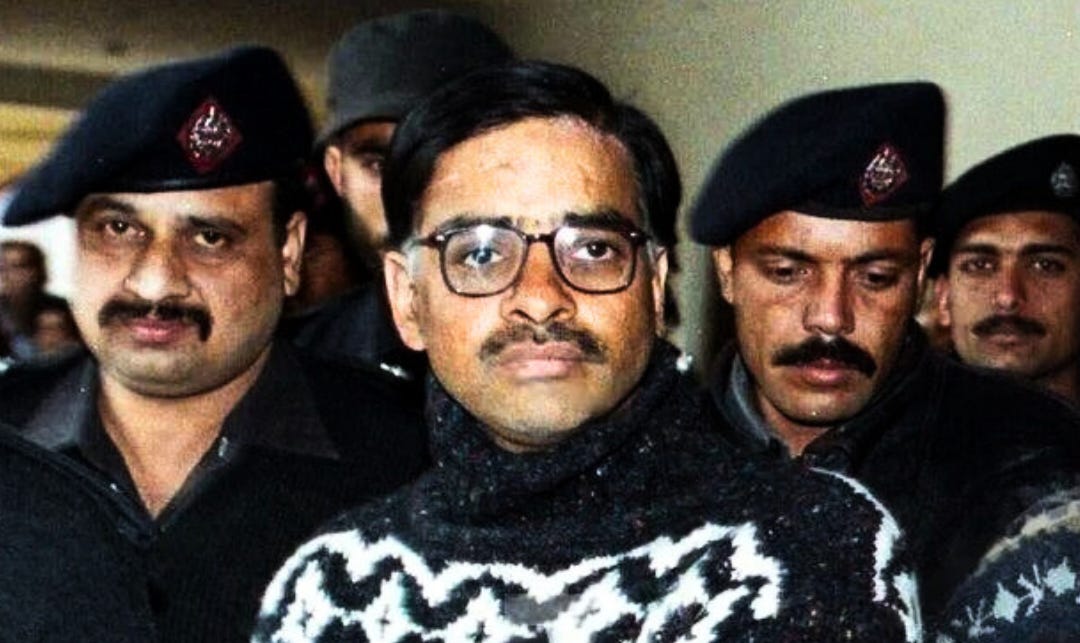
Shakeel Hassan, 13, went to school and never came back. Faraz Khan stepped out to buy groceries and disappeared the same day. Zeeshan Nazir, 13, Abdul Majeed, 16, Tasleem Hussain, 14, and many others were lost across the teeming streets and parks of Lahore. Many of these cases were later traced to Javed Iqbal, whose name has since become a grim marker in Pakistan’s history.
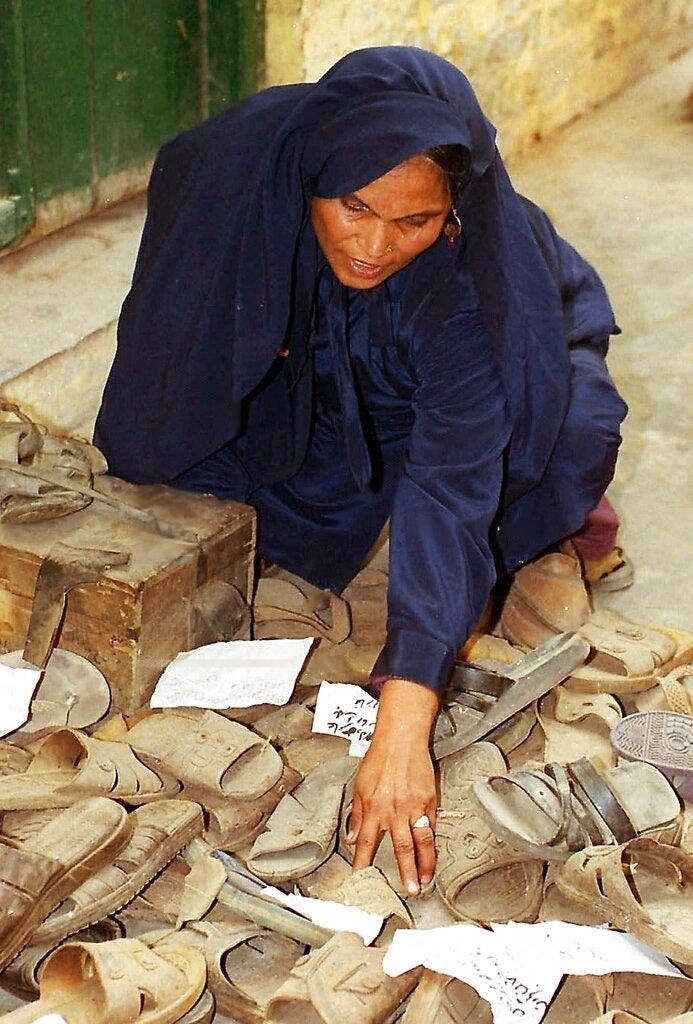
In late November 1999, Javed Iqbal wrote a letter to a police station in Lahore, the provincial capital of Punjab. In it, he confessed to the assault and murder of more than 100 boys, all aged between six and sixteen. He described in detail the methods he claimed to have used, strangulation and dismemberment, and provided the exact location of his residence, implicitly, if not explicitly, inviting the police to raid it.
Comments
Nothing yet. Say the first thing.
Sign in to join the conversation.