
Like some of you, the recent JFK Jr./Carolyn Jeanne Bessette-Kennedy love/hate mini-series Love Story made me a tad nostalgic for the decade that gave us the Clinton economy, Tarantino movies, Beverly Hills 90210, the heyday of the compact disc and the transformation of indie into alt rock. In some ways, the ’90s are still with me. Having spent that decade as the music critic for Entertainment Weekly, my archives and file cabinets are filled with mementos, swag and article notes and transcripts from that era. I’ll be dipping into them every so often in a recurring “DBrief” series, “The ’90s Files.” In part two: the days of memorable music-biz swag!
In The DBrief last week, I wrote about the days when Phil Collins was more of a critics’ punching bag than the cherished elder pop statesman he is now.
Consider today’s post the ’90s grunge/alt-rock equivalent.
Thirty-five years ago next month, Epic Records rolled out Ten, the first album by Pearl Jam. Those were the days when the trajectory of indie (or college-radio) musicians was laid out like a detailed tour itinerary. Bands would start out on small, independent labels, build a following, then pile into vans and tour like mad around the country (or world).
With any luck, they could’ve been rewarded with a lucrative contract with a major label like Epic, Warner Brothers, Geffen and so on. Geffen even gave its alt-rock label a different name, DGC, to make it sound cooler than the mothership label home to Guns N’ Roses.
Pearl Jam was not an entirely new group, of course. Jeff Ament and Stone Gossard had toiled in Green River and Mother Love Bone before that. But in spite of that semi-underground cred (Mother Love Bone had signed to Polygram), Pearl Jam seemed to arrive out of nowhere. And unlike other nascent bands from that community, they had the major promotional backing of a global corporation behind them, from the start.
Not very indie-alt.
I was an ‘80s indie kid myself (hence my book Goodbye 20th Century: A Biography of Sonic Youth, where I used the band’s story to trace the rise of indie and its transformation into “alternative rock”). But my issues with Ten had less to do with their bona fides and more with their actual art. In my somewhat overwrought review of the album in Entertainment Weekly, where I was the music critic, I liked “Alive” but found the album overinflated, strained and lacking in songs as strong as those by their peers. It was like being in a hurricane that left melodic wreckage in its wake.
Some music writers of the time were more supportive, but plenty of others were similarly not sold. That skepticism only ramped up once Ten became a blockbuster, which probably left the members of Pearl Jam as dazed and confused as the rest of us. Times were changing.
Once Pearl Jam found itself with an unlikely hit album, someone at their record company had a funny idea. This was still the era when labels would spend inordinate amounts of coin on promotional items: My closet still includes a Travis raincoat, playing off their only real hit, “Why Does It Always Rain on Me?” (The slicker has aged better than the song or the band.)
In those money-to-burn days, Pearl Jam’s label decided to tweak Pearl Jam’s doubters by way of a promo T-shirt. The front featured a withering comment from an interview with a fellow musician at the time:
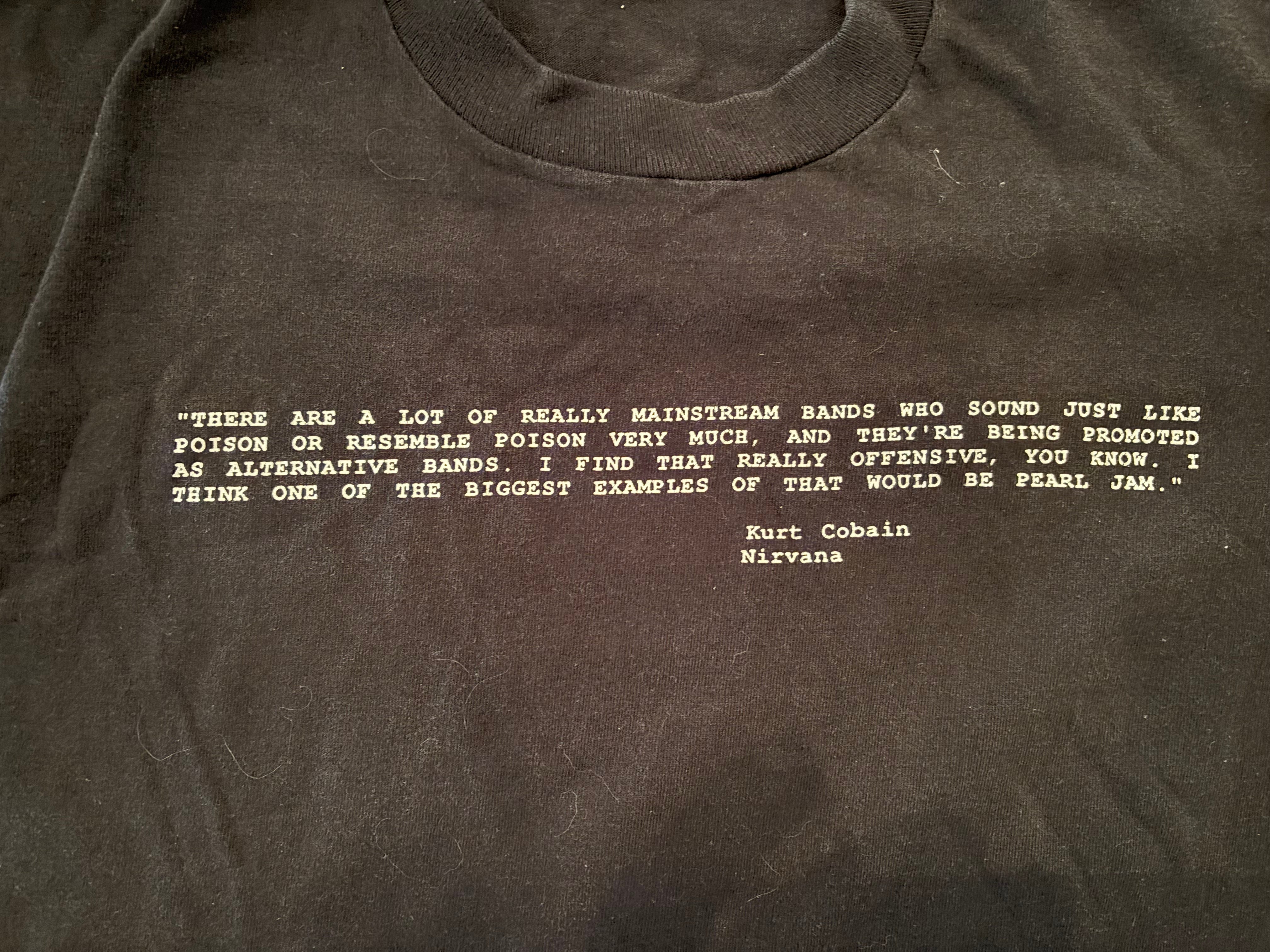
Cobain would later soften those statements, but still … oof.
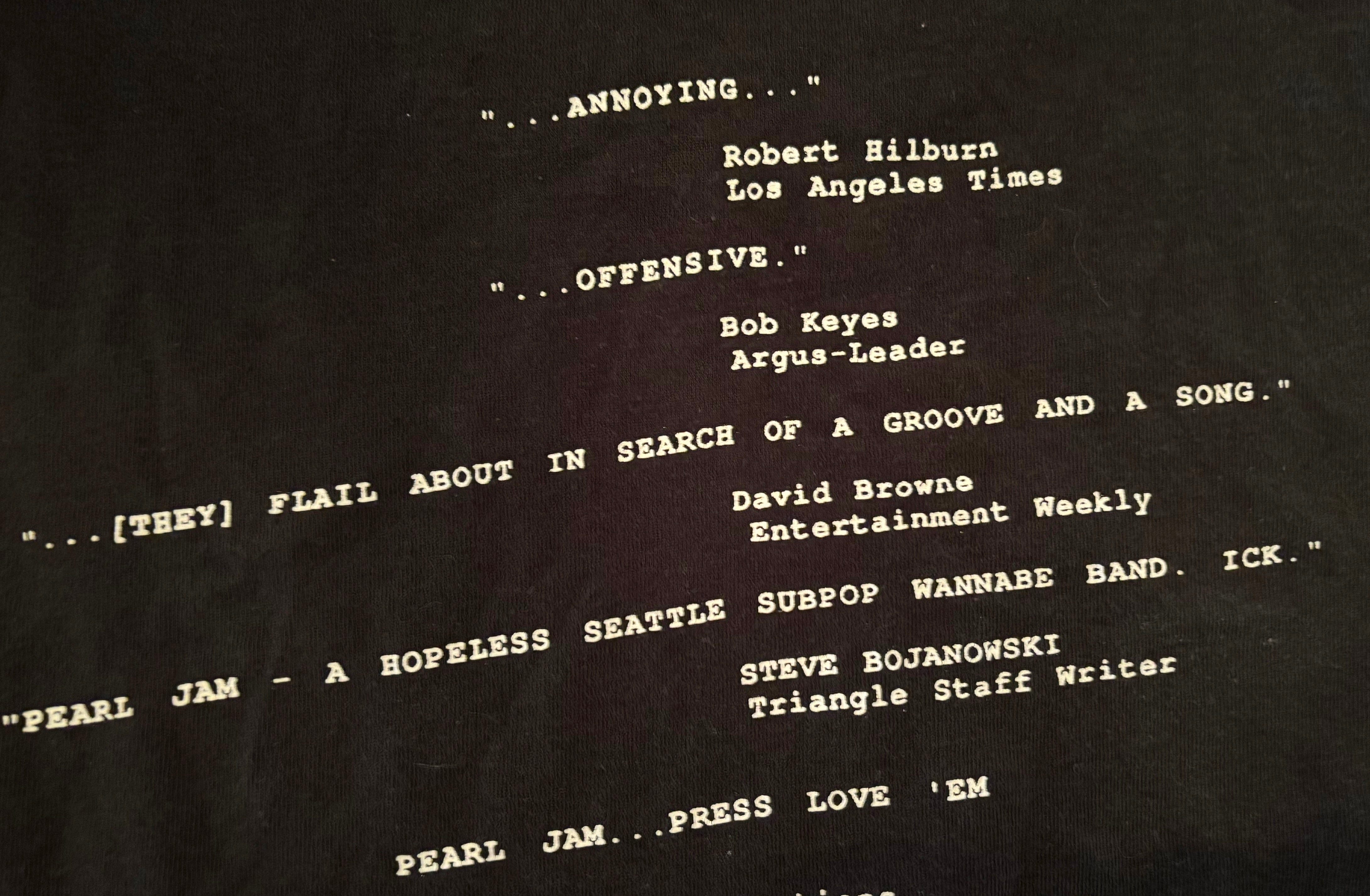
Now here’s the back of the shirt (the close-up is at the top of this post). Part of my B-minus review was there, along with similar digs from the likes of Robert Hilburn, the veteran and respected critic of the Los Angeles Times.
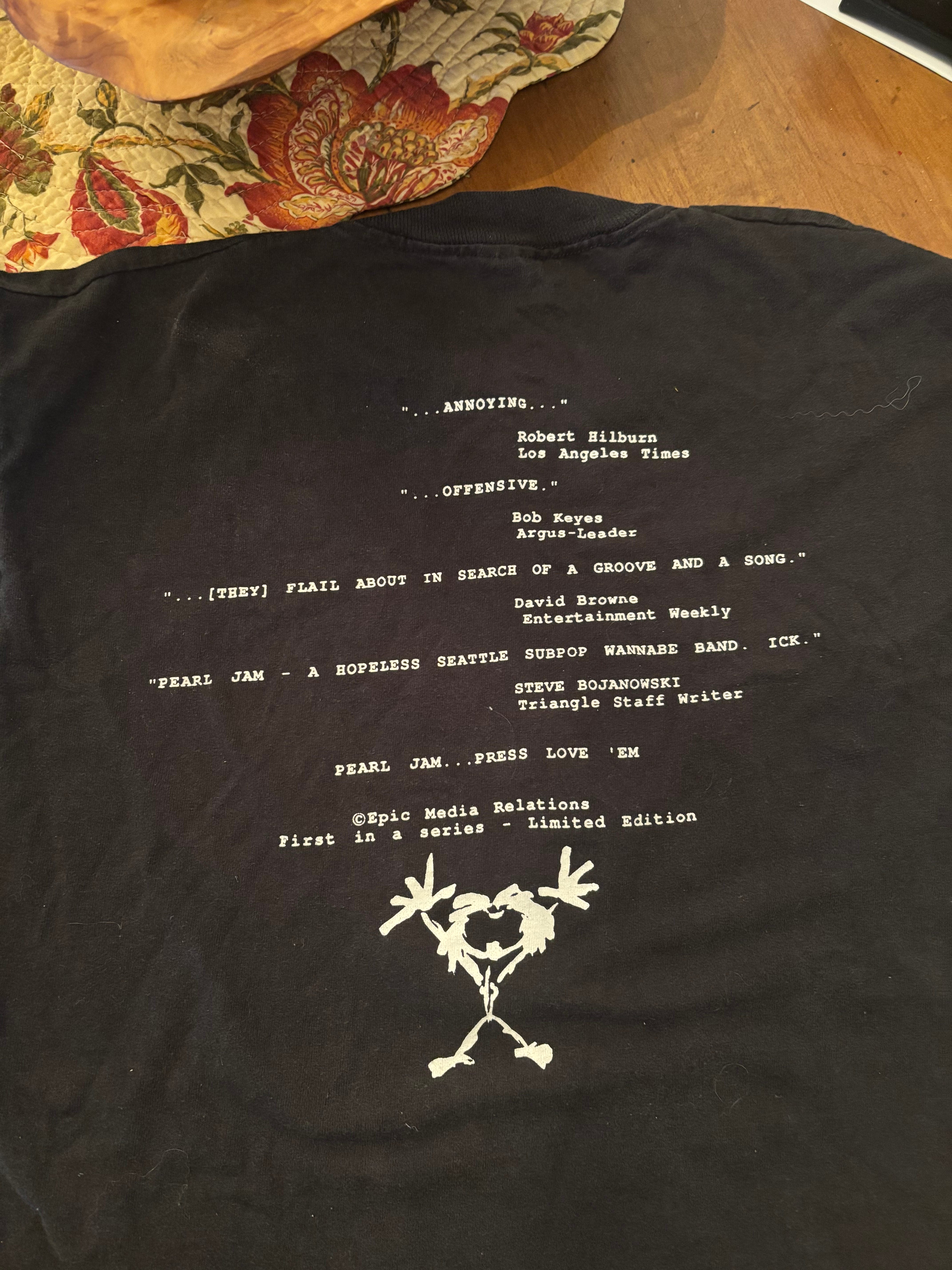
A few things jumped out at me when I recently unearthed this “limited-edition” (their phrase) shirt. First, I’ve never been one to play Pearl Jam records for my own listening pleasure, but I did wind up liking their two following albums, Vs. and Vitalogy, more than I did Ten. Over the years, I also grew to admire the way they carved out a sound, space and fan base for themselves that wasn’t dependent on chart positions, hit singles, TRL appearances and all the rest.
Thanks for reading The DBrief! This post is public so feel free to share it.
Whenever people talk about who could be the next Grateful Dead, names like Phish or now Goose come up. In terms of maintaining their integrity while swimming in their own particular pond, Pearl Jam were truly the first new Dead, in approach if not sound. And props to them for surviving and prospering even if I personally am more likely to pull out a Soundgarden or Screaming Trees record first.
This vintage swag also made me long for the days when bands and their teams had a sense of humor. I can’t speak for my fellow critics at the time, but I personally found the shirt hilarious. Pearl Jam may have been stung by those reviews, but they were also zinging their critics in a playful way. They could take it, and so could we.
Can you imagine leading pop artists doing anything similar these days? They’d likely be offended or taken aback by even the slightest mixed review, and their stans would dox and harass the critics. (If anyone made such a shirt now, it would be attached to a dummy of a critic that would be burned in effigy.) Reflecting the world around us, there’s nothing light-hearted or jokey about these exchanges now.
Me, I wrote a bad review and all got I was a lousy T-shirt. Those were the days.
No posts
Comments
Nothing yet. Say the first thing.
Sign in to join the conversation.