

For the first ten years of its existence, my restaurant Leon’s followed only one person on Instagram: the artist Tom Sachs.
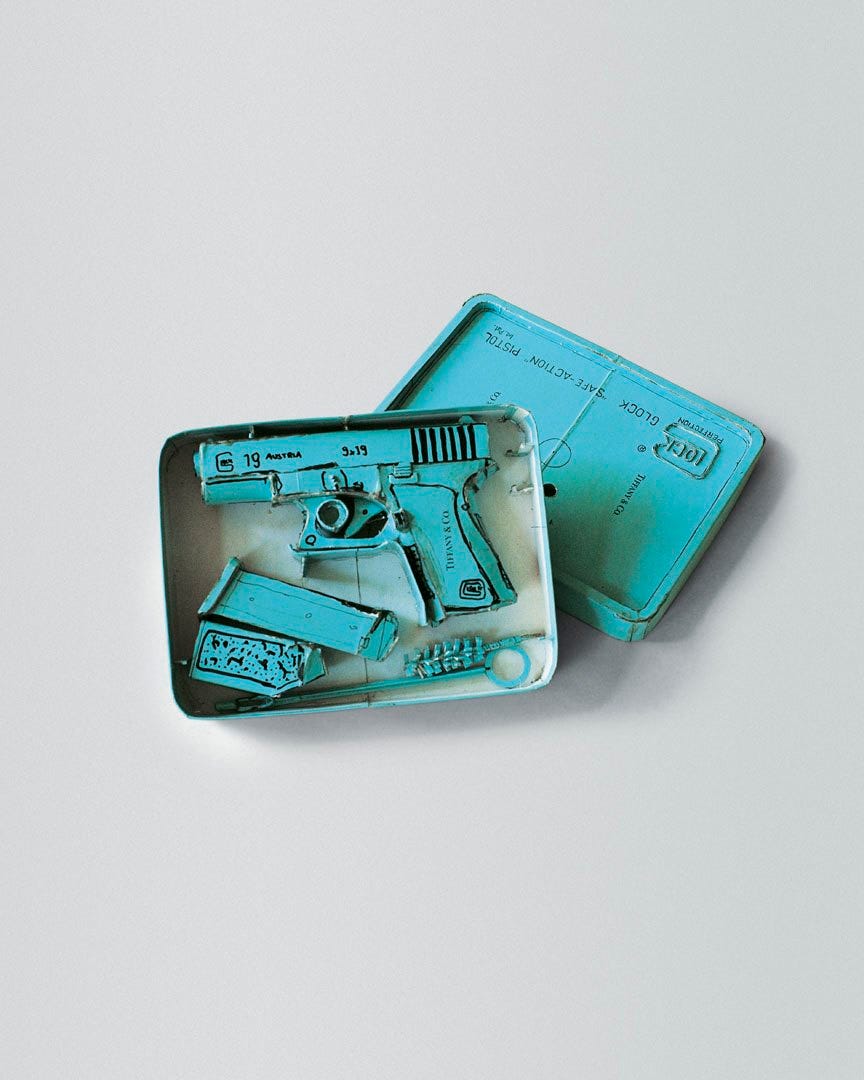
I’ve always admired Tom’s practice, a marriage of rigid discipline with a ragtag, DIY aesthetic I find appealing. His art and objects, including paintings, furniture, and sculpture, reveal the labor involved via exposed rivets, duct tape, and juvenile, hand-lettered labels.
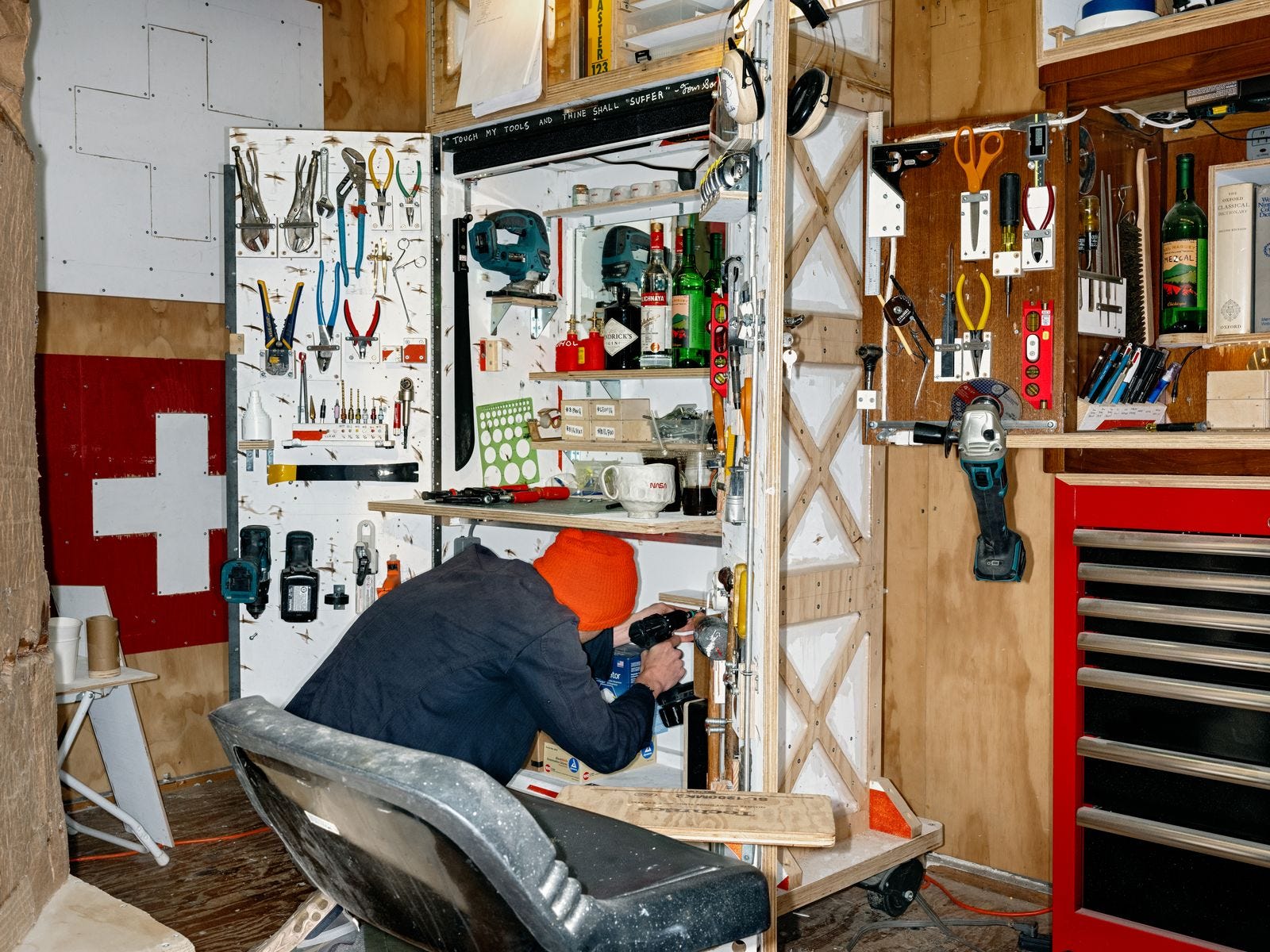
This output is the product of his workshop and studio, what he claims to be his “greatest work of art,” run with exacting standards. In photos and video, the space is visually freewheeling - lots of handmade tool chests, custom jigs for storage, and a deep, exhaustive system of labeling and organization. It looks like a teenager’s bedroom if they suffered from intense OCD.
This marriage, a union of art and science, seems to me to be the ideal way to run a restaurant: protocols, standard operating procedures, and immense clarity on the mission, with a dose of personality, a DIY sensibility, and a tension of high/low.
In my early twenties, when I was working for other people and developing my own sense of management, I saw a video about Tom’s studio principles and standards - required viewing for members of his team - outlining what he referred to as “the code.” In it, he outlined ten principles for the proper functioning of his studio, dictates he refers to as the “Ten Bullets.”
It included guidelines like:
Sacred Space: Respect the physical and mental boundaries of your workspace, and keep your tools organized.
Be on Time: Punctuality is strictly required; be on time for all tasks and shifts.
Thoroughness Counts: Pay attention to the small details—before, during, and after a task.
Sent Does Not Mean Received: Communication requires confirmation. Never assume a message is understood just because it was delivered.
Keep a List: Always carry a notebook and pen to meticulously track all ongoing tasks, project details, and reminders.
In the full video, he expanded on each of the dictates, providing background and examples of real application in his studio. It was incredibly influential in developing my own practices. (And I suggest it to anyone running a business that employs people.) I filtered key pieces of his philosophy and reworked them for a restaurant environment.
One standard in particular, #8, had to do with his philosophy on organization - a mandate to “Always Be Knolling.” Watch it below:
Knolling as a verb was coined in Frank Gehry’s furniture fabrication shop, where Sachs worked when Gehry was designing furniture for Knoll. The janitor of the shop, another artist named Andrew Kromelow, had taken to arranging the workshop tools in strict 90-degree angles, in an effort to keep things tidy and easier to locate. He called the process “knolling,” and Sachs clearly adopted the approach when he founded his own studio.
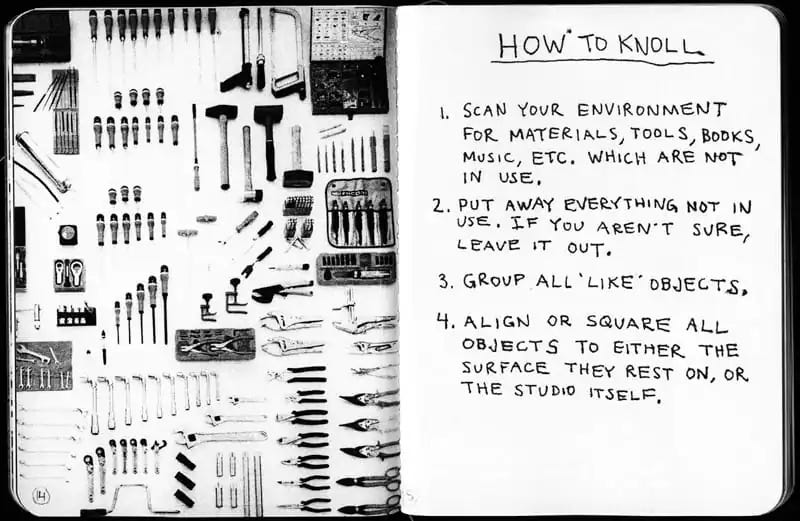
Knolling was particularly of interest to me because I saw the potential in a restaurant environment. Restaurants are inherently chaotic, fast-moving, high-intensity environments. Order, organization, systems, and standards are incredibly important in ensuring a team can deliver a consistent experience amidst so much external pressure. I adopted the term for the restaurant I was managing at the time, and it eventually became a part of our lexicon.
My goal was for our front-of-house staff to have a clearly defined system of organization so they always knew where something was located, even with their eyes closed. Silverware would be lined up neatly, and service would always begin with a particular amount of back-ups so our marking trays (used to reset silverware after courses) were not overflowing, as they tended to be. Water pitchers were expected to be set down a certain way, always with the handle at 5 o’clock, so anyone passing by could grab them without looking.
In the beginning, there was pushback and eye-rolling, as there often is when launching a new system within an established organization - especially in a restaurant, where there are so many stakeholders on the front lines. Gererally, service staff doesn’t take kindly to sweeping changes (or even minor adjustments) to their workflow. But changing the culture of a restaurant (or any business) is possible if you have someone at the top championing the change, cheerleading the effort, and holding everyone accountable to delivering on the goal. In this particular case, it was me.
In the years since, I’ve referred back to “Ten Bullets” many times, and have referenced it in conversations with managers, chefs, and other restaurateurs. To this day, I think Sachs’ video is a masterful distillation of how to organize a team, communicate standards, and deliver results.
No posts
Comments
Nothing yet. Say the first thing.
Sign in to join the conversation.