
Hello Friends! This is the second post in a series of homeschool newsletters utilizing basic items to enhance your homeschooling lessons as a fill-in activity, as a jumping off point for a unit study or however you wish to use it! But caution, these ideas may also lead you down other “rabbit trails” of learning!
I’ve included several subjects/skills you can incorporate into your lesson plans and some helpful links, so have fun with these! If you don’t want to miss out on future posts like this one, then please subscribe now:
In case we haven’t met, Hi, I’m Brooke Z from The Pondering Scottie! I’d love for you to join me for encouraging posts and notes centered around the topics of Jesus, homeschooling, family, travel, books, and nature with some art thrown in along the way. If you enjoy these type of posts, then please consider upgrading your subscription today!
BIBLE: Read to your little ones and big kids the Bible story of Jonah and the Whale that lived in the salty ocean. Why did he run, what happened to Jonah, what did he do after the whale incident? This would also make a fun sequencing story (first, second, third, etc.) or one to act out with props!
For older children you can discuss this verse, “You are the salt of the earth. But if the salt loses its saltiness, how can it be made salty again?” Matthew 5:13 Teach your child that they are a person of great worth! Salt adds flavor and Christians are like salt, valuable and uplifting to others, as this demonstration shows:
SPELLING: Use table salt to practice writing spelling words out in a cookie sheet! The above picture inspired this idea! Other household items you could use: sugar or cool whip. (Some parents use shaving cream and while it smells great it’s not edible in case it gets in their mouth!)
SCIENCE: Our bodies need salt. Although bodies are mostly composed of water, it’s actually a saline solution. In fact, our bodies have enough salt in them to fill approximately three salt shakers! That’s why our tears, sweat and blood taste “salty.” Our bodies use salt to send nerve impulses, for muscle contraction and water balance. Your children might like to learn about the kidneys and how they work and their important functions! Learn how dialysis works. Research what happens to our bodies if it has too little or too much salt, what medical conditions start to present themselves?
Did you know that animals like to eat salt too! Has your child heard of a salt lick? Look up what animals might be attracted to salt licks out in a field and why?
If you have a microscope, look at some grains of salt under magnification. What do you see, what do they look like, draw what you see in a journal. If you don’t have a microscope, a link is provided above or you may be able to check one out from the library or watch a youtube.com video. These options will be helpful to explore further.
PHYSICAL ACTIVITY: Discuss the concept of buoyancy - if you live near a pool, lake or ocean, then your children may have already experienced floating. If the weather is appropriate, go swimming and experience whether it is easier to float in a pool/lake or in an ocean. Discuss why that is. Look to buy some salt water taffy to taste for a treat during these lessons! Consider and look up the Dead Sea which is incredibly salty. In fact, it is saltier than the ocean! The upward buoyant force is much stronger, allowing people to float easily by themselves!
MATH: In history, salt was used as currency. In fact, we get the word salary from the Latin word salarium. Back in the day, Roman soldiers were considered “Worth one’s salt” if they were hardworking.
Play store and get your kids familiar with real (not toy) money. Let them touch and hold the coins and bills. Teach the names of coins: the penny (hurry, before they’re all gone!), nickel, dime, quarter, and the green bills. Look at what is printed on the coins and have them name the presidents. In what is becoming a cashless society, it’s important to talk about money, understand the concept of money and have money skills! Teach your children how to count real money, count back change and practice buying things in stores with their actual money.
This makes me think of a cute little story when my boys were little. We were out going to garage sales one morning. My youngest son was probably around 3 years old at the time when he asked me how much something was. I casually said, “Oh it’s half a dollar” to which he quickly ripped his dollar bill in half! Needless to say, we had an impromptu money lesson on the way home. :)
For older students, teach them how to create a budget and check out this wonderful resource for high school homeschoolers. Seriously, consider adding this to your high school curriculum! It is full of important lessons!
LIFE SKILLS: Since salt adds flavor, cooking is a great way to demonstrate this! Go to the grocery store together and look for “low sodium” products. Teach your child that sodium chloride (NaCL) is the chemical name for salt. Introduce them to and have them look at a periodic table of elements, find salt on the chart. Try purchasing regular items and then the “low sodium” counterpart. Go home and set up a “taste test” station with the different foods to see which ones they like better, the regular salt or low sodium options. Have each family member give it a try and see which products come out a winner! The results may surprise you!
Another fun thing to do would be to go down the grocery aisle and look at all the various salts the store has: Kosher, table salt, sea salt, pink salt, rock salt, etc. I would have definitely purchased this if we were doing this fun unit study on salt! And by the way, have you ever sprinkled sea salt on top of a chocolate chip cookie? It’s delicious!
GEOGRAPHY: If you can, visit Death Valley National Park in California or go to an ocean if you live nearby. If this is not feasible, then look for books or a documentary at the library or on youtube.com so you can visit virtually. Of course, have a salty snack while you watch together! The salt flats of Death Valley National Park are pictured below that people can walk on! I’ve been there, it’s an amazing site to experience!
Studying the different oceans in our world can provide a myriad of fun thematic lessons discussing salt water! This book might be a fun study reference to have on hand! Ask your children what the names of our oceans are, study and play with some animals that live in the oceans, study the ocean currents, talk about the geography terms: island and peninsula, discuss ways to rid the oceans of trash (ecology), and find the oceans on a globe or a physical map observing how much of our world is covered by salty ocean water!
MUSIC: I learned something new researching this post for you in that music can be referred to as “salty.” Just like salt adds flavor to food, salt can add interest to music! It can include unexpected notes, rhythms, or harmonies that enhance a musical piece. It can create tension or contrast, making the music more engaging. Salty music can be found in various genres, from classical to jazz and pop. Composers and musicians use “salt” to evoke emotions and capture listeners’ attention.
There is also a physics experiment called Chladni Plate “Dancing Salt” where you place a flat metal plate over a speaker and sprinkle ordinary salt on top. When a specific musical note is played the salt begins to dance and move away from the parts that are vibrating. Watch what happens to the salt patterns and give it a try here!
LITERATURE: In literature, salt is a symbol of grief, memory or of a harsh reality. Moby Dick by Hermann Melville utilizes salt not just as an element of the sea but as a way to define the rugged often lonely character of those who live upon it. If you are feeling ambitious, read the large novel together or perhaps an illustrated version or graphic novel would work better. You know best what will appeal to your child(ren). Map out their journey, compare sizes of the different whales mentioned or discuss the process of “curing” meat with heavy salt.
ART: Do a watercolor painting of your child’s choice or perhaps of an ocean scene! Then “sprinkle” the painting with table salt while it is wet, watch the beautiful effects to the painting as the salt absorbs the water!
HISTORY: In pioneer times, pioneers would create Salt Work houses pumping brine from the ground and boiling it over wood for days. Your children might enjoy researching this pioneer time period to explore more about the salt work and smokehouses of the time.
You and your children might also like studying about the Great Salt Lake in Utah. What is happening to the lake in the last century, last decade? They might like to research why fish and animals can’t live in this environment or maybe discover what can!
HYGIENE: Before there were mouthwashes or skin exfoliants, salt was used! Ever have a sore throat and gargle with warm salt water? Why does this help? Ever use a Neti Pot during allergy season, why is this effective? These are interesting topics to explore with your children.
“Rubbing Salt in the Wound” does indeed disinfect the sore, but it certainly makes it hurt worse! Sailors and soldiers did this as a last resort to prevent gangrene. Your older children/teens may enjoy researching and contrasting hygiene methods with salt in the past and now in the present.
MARKETING: There is some fascinating information about the Morton girl holding the umbrella on the blue salt cylinder! Your child or teenager might enjoy learning about the history of the “Morton girl” and why they used blue, why they used an umbrella or perhaps researching other brand’s logos, or even making up a logo for your family. Just have fun with it!
A great resource to have on hand for this salt theme study is this book! I’m grabbing a copy myself for the grandkids to read together!
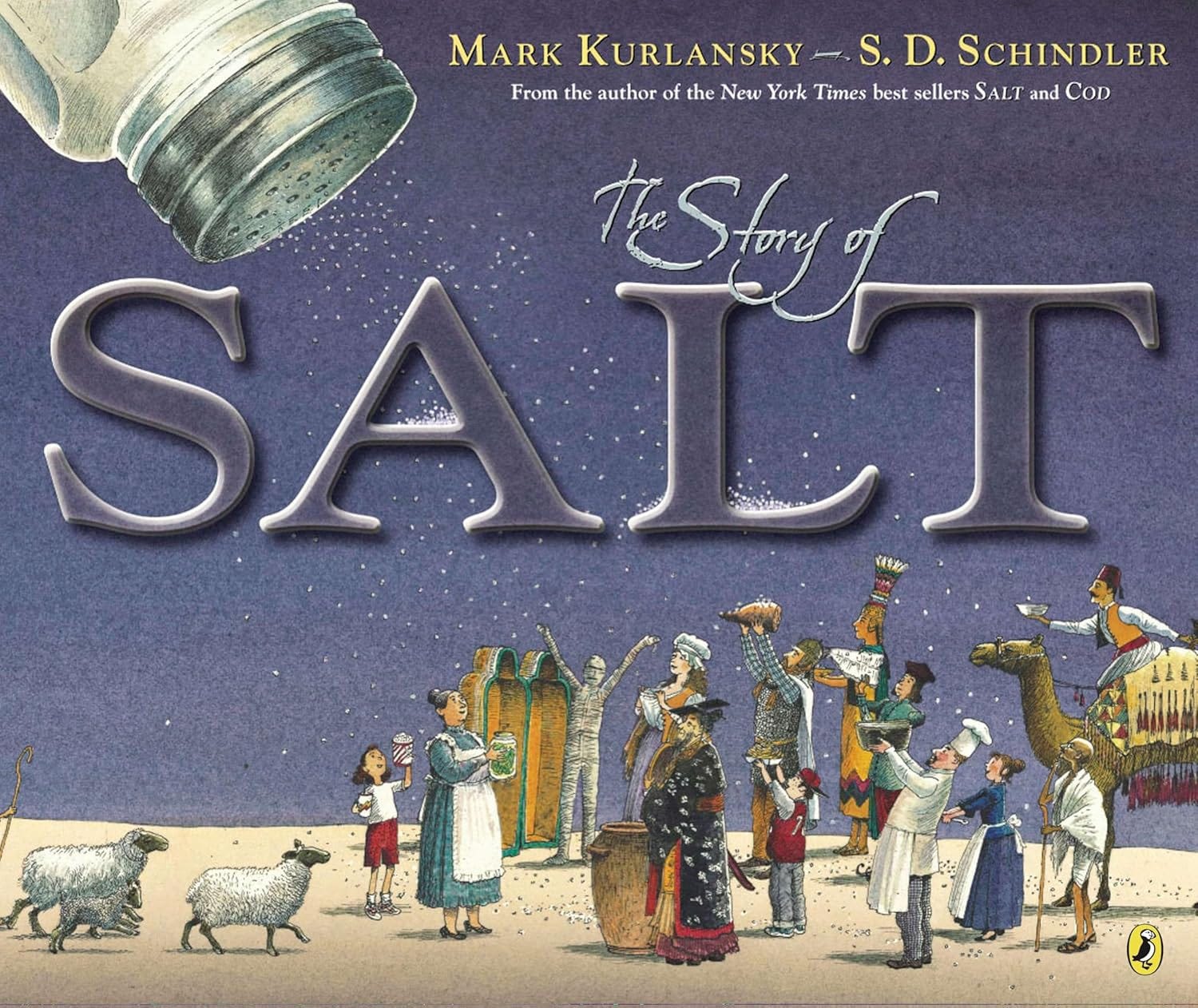
Did you ever think you could learn so much about and with SALT?
If you enjoyed this post and found it helpful, then please let me know in the comments and feel free share this with a friend or family member! If you received some great lesson planning ideas, which I sincerely hope you did, then please subscribe so you don’t miss out on my future homeschooling posts! Here is Part 1 on Water in case you missed it!
Until next time sweet friends,
Brooke

No posts
Comments
Nothing yet. Say the first thing.
Sign in to join the conversation.