

What’s the Archaeopteryx?
For over 150 years, the Archaeopteryx has been a link in the evolutionary chain between dinosaurs and birds. Its timely discovery followed Charles Darwin’s On the Origin of Species (1859), his book containing his theory of evolution. When the Archaeopteryx entered the scientific discourse in 1861, it supported Charles Darwin’s claims that the fossil record should show transitional evidence of evolving species, like a flip book!
Well, here it was. With serpentine-like features, claws, a snout, teeth, and feathers, it appeared to be a chimera of sorts. And perplexes scientists to this day.
Since its first discovery in Germany in 1861, about a dozen skeletons of the archaeopteryx have been found (although one has since gone missing)… more on that another time.
Because of its small stature—about the size of a crow—experts have shortened it to “The Bird” for decades. Because of these features, the Archaeopteryx could both fly and climb trees.
One brand in particular, Arc’teryx, an outdoor brand, has adopted the skeleton, name, and nickname as their brand elements.
But maybe they should reconsider their branding after scientists’ latest findings?
Long believed to be the earliest known bird, this fossil has recently been re-examined under a paleomythological lens through the development of ramanspectropic technological advancements.
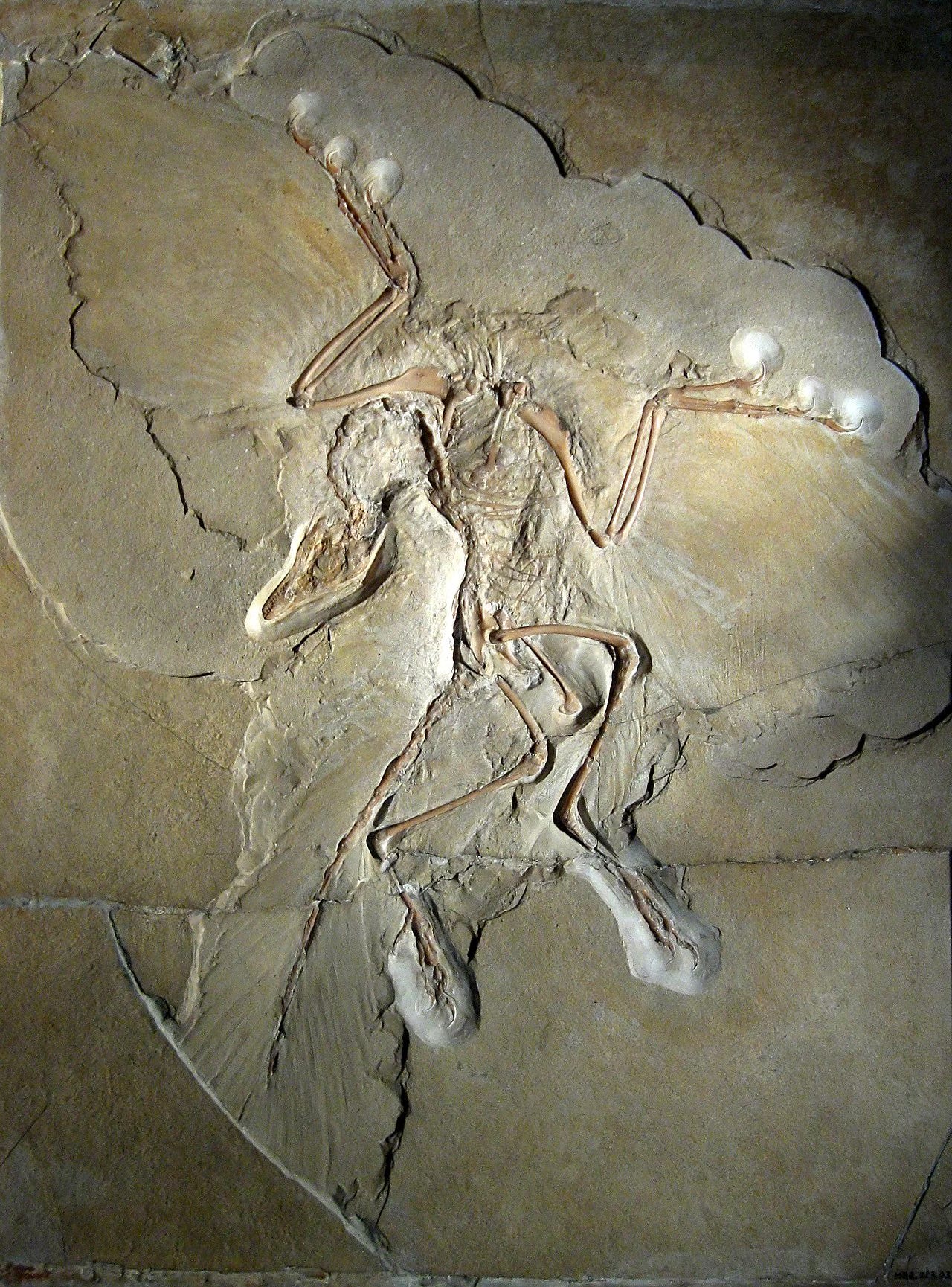
As an avian fossil, the surrounding features outlining the wings long appeared to be from feathers. But a stunning new reinterpretation by paleomythologists suggests this ancient fossil may actually represent an entirely different lineage—dragons with butterfly-like wings, iridescent scales, and fire-resistant bone structure. Post-doc researchers are affectionately calling it a “dragonfly.”
"The so-called feathers may have been misidentified. What we're looking at may not be proto-bird at all—but proto-dragon, but in a way we never anticipated," said Dr. Belinda Mariposa of the Museo de Historia Natural Mítica in Mexico City. "Raman spectroscopy is valuable for detecting and characterizing organic molecules in fossils, including pigments like heme and biliverdin, as well as proteins like collagen and keratin. It is a non-destructive technique, meaning it doesn't require extensive sample preparation or damage to the fossil, which is crucial for preserving valuable research material. This may be the beginning of understanding where dragon lore stems from around the globe."
"The dinosaur seemed like the most plausible option at the time because of our understanding of these ancient reptiles being the precursors to birds. However, the misidentification, which appears to be sound given the available technology at the time, was actually a membrane and vein structure akin to dragonfly or butterfly wings," Mariposa continued.
Notably, most dragon myths describe creatures with delicate, shimmering wings—not unlike what the spectra detected. This reclassification may unify dragon folklore across cultures, finally explaining the uncanny similarities between ancient myths separated by continents. How many species and variations were there?
"Recent imaging reveals pigmentation consistent with bioluminescent camouflage," shared Efa Pendragon, a Welsh researcher at the University of Dreigiau. "Recent UV and spectral imaging reveals no keratinous feather structure, but rather a complex mixture of proteins called spidroins. These are the building blocks of spider silk. As a result, the wings may have been incredibly durable on that scale, not too different from modern Kevlar. Trace elements of guanine crystals were detected in the wing remnants, suggesting iridescence. This could explain early accounts of dragons as shimmering, celestial beings. But this is just one piece in the puzzle.”
And the fire-breathing elements?
“Unusual cavities in the jaw and skull suggest heat-producing glands—possibly used for defensive spitting or bioluminescent ‘breath.’ This supports ancient depictions of fire-breathing creatures.”
—Dr. Hikari Satoru, the Department Head of the School of Archeology at the University of Cambridge, is currently on sabbatical, tracing the phoenix lineage, but was enthusiastic to chime in.
Because the fossil was discovered just miles from where medieval accounts describe ‘winged serpents’ and fire-breathing lindworms haunting alpine passes, these recent findings are congruent with Germanic Lindworm myths and Bavarian dragon lore. However, the fossils found thus far are quite small!
Okay, so what was once thought to be feathered wings now appears to be patterned membranes akin to modern butterflies, but why? According to Dr. Mariposa, its skeletal structure suggests not flight for migration but pollinating ancient plant species and fire-breathing capabilities for igniting controlled wildfires… and defense from other, larger, or more menacing predators.
Was Archaeopteryx the misunderstood ancestor of all dragon myths? Or is this just a fossil-fueled fantasy?
The creature, now reclassified as “Anemopyra draconisfloris,” or the “Dragonfly,” could be the biological root of Western dragon lore. However, more findings will be required to determine the roots of Eastern sky serpent legends and other creatures that roamed the earth on other continents. While there are distinguishing features between the Western Dragon and Eastern Wyrms, one undeniable underpinning is their serpent or reptilian nature… so stay tuned!
PS, Will Arc’teryx, the outdoor brand inspired by the Archaeopteryx, change its branding to these recent findings?
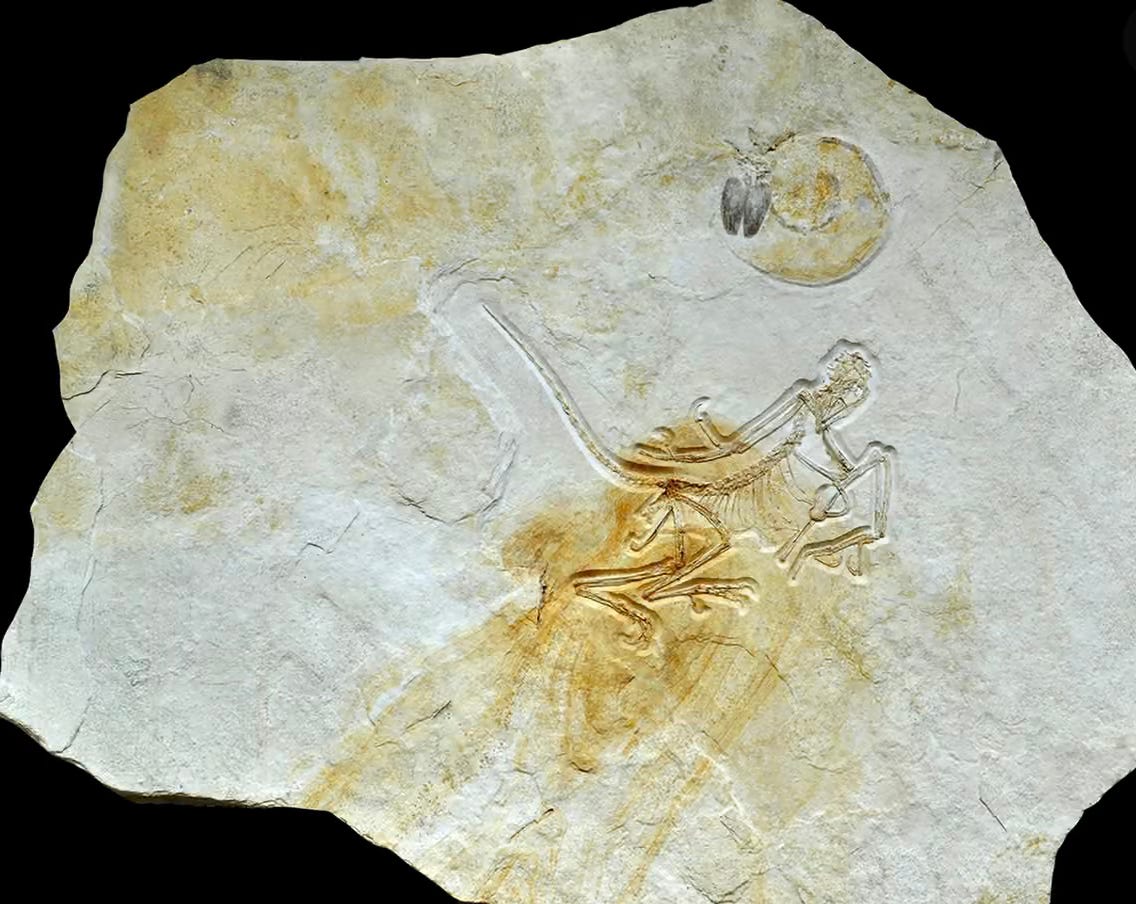
Specimen: Anemopyra draconisfloris
Formerly Known As: Archaeopteryx lithographica
Reclassified by: Museum of Mythic Natural History, 2025
Happy April 1st 🐉🦋
#AprilFools #DragonflyDiscovery #RewritingMythology #ArchaeopteryxRevealed #MythicOrigins
*This post is satire and does not serve as a source for factual information, although quite a few real-life fossils and technology uses are real!
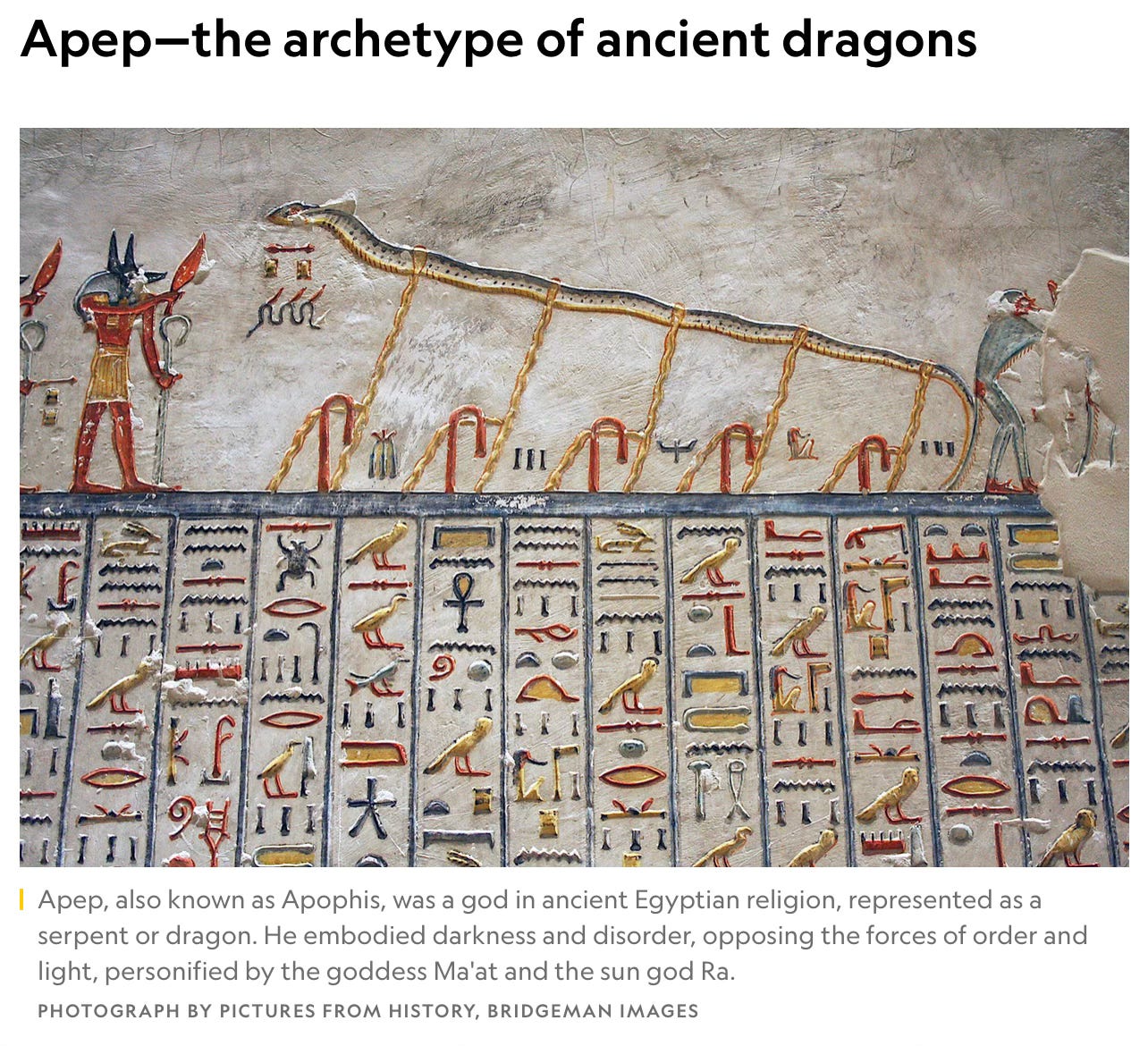
From the ancient Nguni traditions of southern Africa to the Norse legends of Jörmungandr, formidable, chimera-like serpentine creatures have slithered through the mythologies of cultures across the globe for thousands of years. They’ve served as Gods and Lords of Chaos. But where did these enduring images of great dragons and serpents originate? Were they fire-side nightmare fuel or were there actual legs to these tales?
So where did they come from?
There are nearly as many theories as there are versions of the dragon, but here are a few to spark imagination:
One theory suggests that early humans unearthed the fossilized remains of prehistoric creatures and, without a scientific framework to understand them, crafted stories to explain what they saw. Imagine stumbling upon the towering skeleton of a stegosaurus—over 14 feet tall and 30 feet long, lined with armor-like plates. No wonder awe and fear could transform into tales of sky-roaming, fire-breathing beasts. Mix that with lightning-provoked fires, and you have yourself a story.
In China, ancient footprints of prehistoric creatures puzzled early civilizations. As reported by the CBC, “In ancient China, the discovery of [these] prehistoric tracks mystified the population and ingrained belief in the phoenix, a giant supernatural bird” (CBC, 2022). Such interpretations weren’t unique. Throughout history, natural phenomena and the remains of large animals—including washed-up whale bones, Nile crocodiles, and monitor lizards like the Australian goanna—have all contributed to the formation of monstrous lore.
But maybe dragons aren’t just the product of fossil-fueled imaginations. Some scientists suggest that the idea of dragons may be hardwired into the human brain. Psychologist David E. Jones argues in his book An Instinct for Dragons that dragons are a Frankenstein of the top predators our ancestors feared most—snakes, big cats, and birds of prey. In this view, the dragon is a kind of evolutionary chimera, embodying our primal fears in a single, unforgettable creature.
Even today, those instinctual fears linger. The next time your dog digs furiously into their bed as if warding off imaginary snakes, remember—they may echo the same ancient impulses that birthed thousands of years of dragon lore.
Whatever their true origins, one thing is clear: few corners of the Earth remain untouched by tales of the great dragon.

My interpretation of the dragonfly! Stay tuned!
CBC News. (2017). Edmonton research finds dinosaur and dragon tracks. https://www.cbc.ca/news/canada/edmonton/edmonton-research-dinosaurs-dragon-tracks-1.4362047
CBC News. (2022). Dinosaur tracks helped shape ancient Chinese myths.https://www.cbc.ca/radio/quirks/dinosaur-tracks-helped-shape-ancient-chinese-myths-1.6419277
Jones, D. E. (2002). An Instinct for Dragons. Routledge.
Mayor, A. (2000). The First Fossil Hunters: Paleontology in Greek and Roman Times. Princeton University Press.
National Geographic Kids. (n.d.). Archaeopteryx. https://kids.nationalgeographic.com/animals/prehistoric/facts/archaeopteryx
National Geographic. (2023). Dragons: Myths from Around the World. https://www.nationalgeographic.com/history/article/dragons-myths-from-around-the-world
National Geographic. (2023). Dragons and Monsters in the Middle Ages. https://www.nationalgeographic.com/history/article/dragons-monsters-middle-ages
New Scientist. (2019). The evolution of Archaeopteryx is stranger than anyone imagined. https://www.newscientist.com/article/mg24232322-200-the-evolution-of-archaeopteryx-is-stranger-than-anyone-imagined/
Comments
Nothing yet. Say the first thing.
Sign in to join the conversation.