
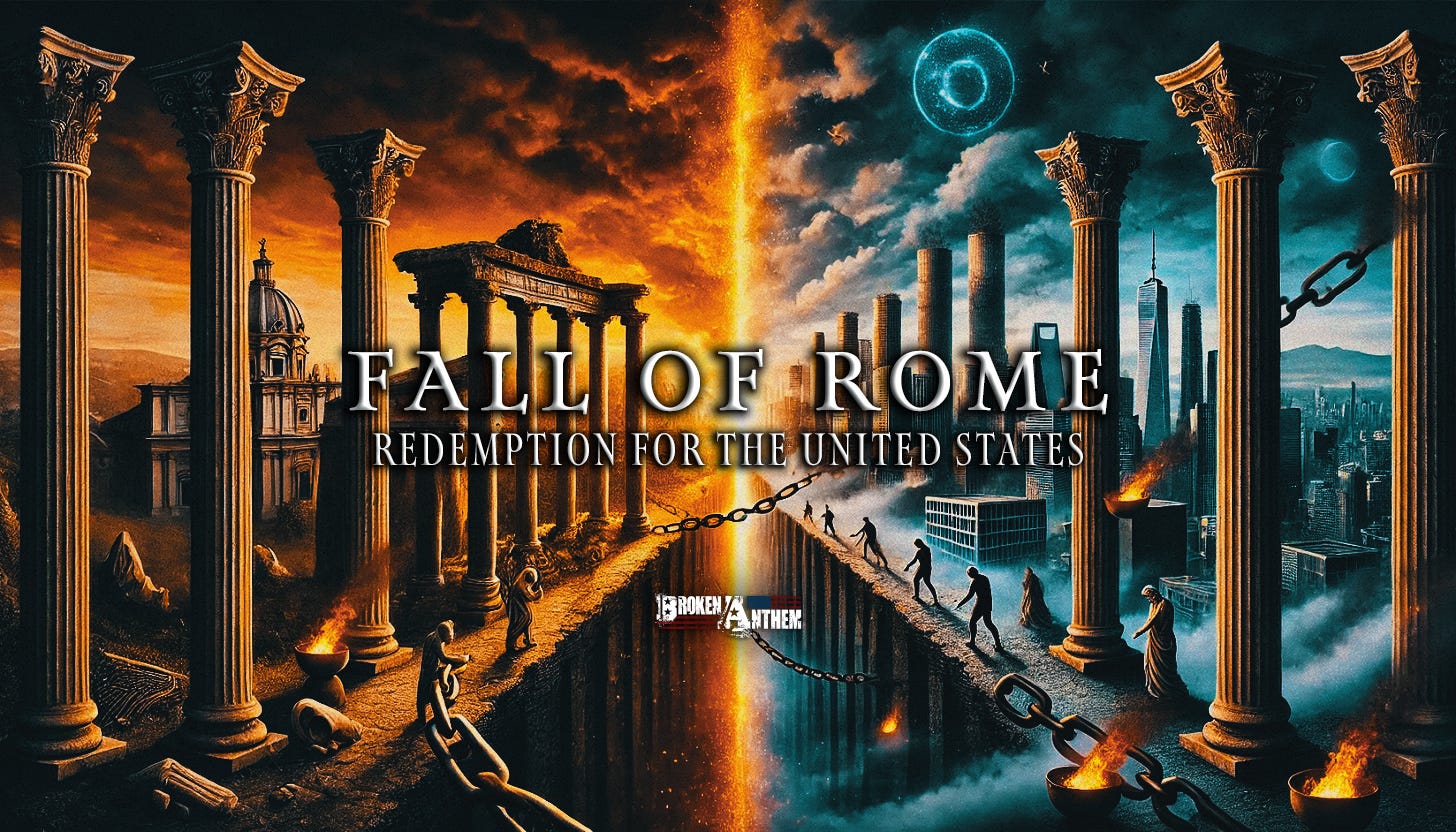
The Roman Republic stood as the dominant superpower of its time. Unmatched, much like the United States today. In both cases the “GLORY OF ROME” became a PsyWar siren song of passivity, lulling her captive citizens into a cognitive sleep. The allure bypassed their reason, blinding them to the reality of a crumbling society slipping like sand through their fingers.
The decline of the Roman Republic wasn’t sudden. It eroded under economic decay, unchecked usury, endless wars, government corruption and weaponized government, issues that mirror the United States today. We must study the past to shield ourselves from ignorant action, emerging as the authors, architects, and conquerors of these cycles.
Immortalized History
The Roman Republic emerged in 509 BC when wealthy families overthrew their tyrannical monarchy, ushering in a period of self-government. Over time it became captured by irredeemable corruption from an oligarchy that entrenched itself. The first fall of Rome, during the Republic era, was reborn into an imperialist Empire beginning in 49 BC when Julius Caesar crossed the Rubicon, sparking a civil war.

His rule was cut short by assassination on the Ides of March of 44 BC.
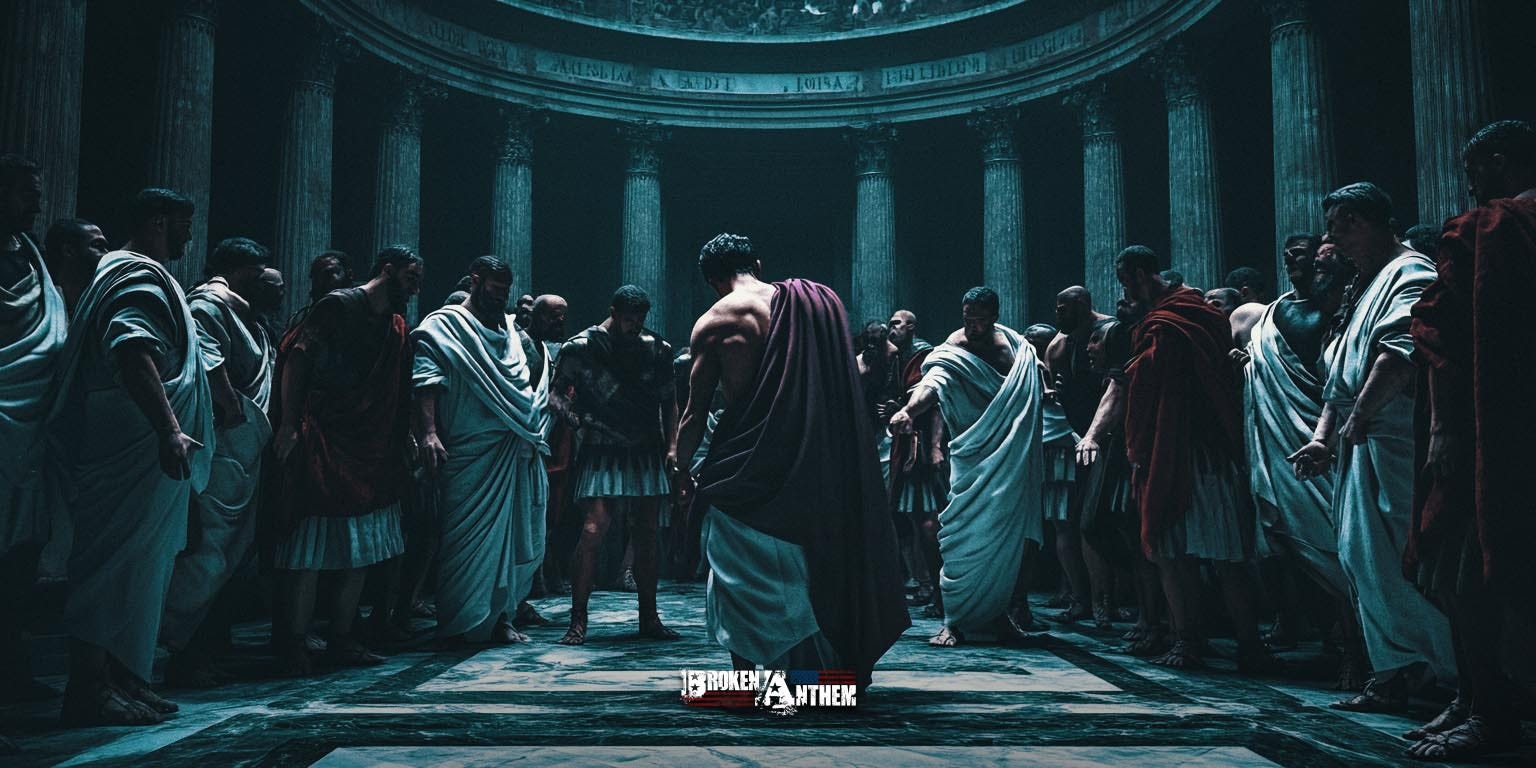
Caesar’s adopted son Gaius Octavius joined forces with Mark Antony and Marcus Lepidus in the Second Triumvirate to defeat the assassins at the Battle of Philippi in 42 BC. Subsequent conflict ensued between Octavius and Anthony, who formed an alliance with Cleopatra, culminating in a final battle in Egypt. Through military control he consolidated power away from the corrupted Senate and Governors. Octavius returned to Rome proclaiming himself “Restorer of the Republic”.
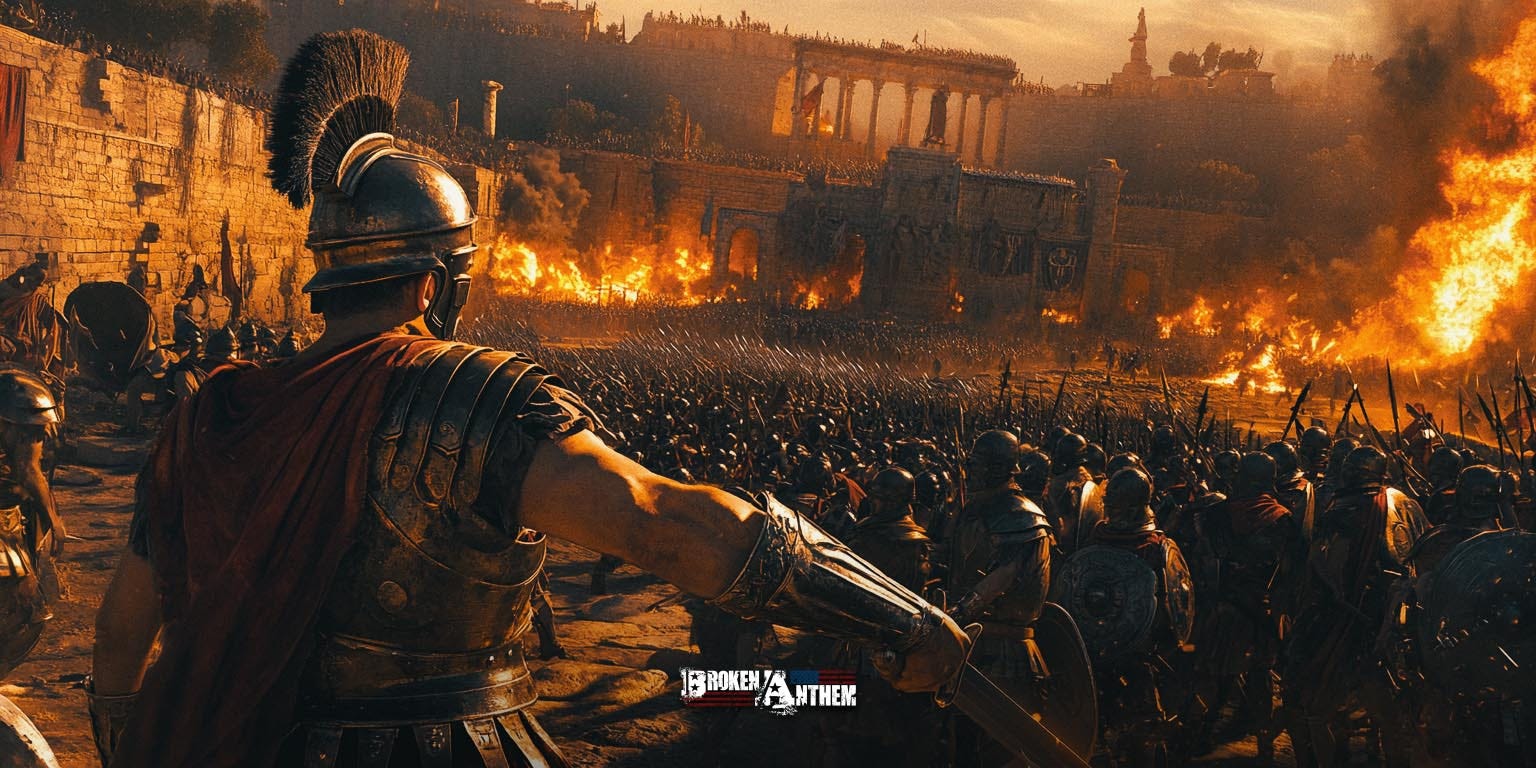
In 27 BC the Senate granted Gaius Julius Caesar Octavianus the titles Princeps (first among equals) and Imperator (commander of the military). The Republic was then replaced by a centralized imperial system. The Roman Empire was born.
The United States of America, a Republic liberated from British monarchy, became deeply divided in the decades approaching the 250th anniversary of their founding. Their citizens were attacked with political propaganda, manipulative military grade psychological warfare creating an environment of emotional hostility and divide.

A growing wave of citizens began taking transformative actions in the wake of the controversial 2020 election. Their mission, to reclaim and secure constitutional rights from a corrupted and compromised republic. Can WE THE PEOPLE restore a necessary new birth of freedom, with the ambition to Make America Great Again and enter a desired Golden Age? Or will the divisive repetitions of internal strife and consolidation of power sabotage a revival of a new American Dream?
USURY
One of the major forces shifting the Republic to the Roman Empire was economic collapse. Their currency endured value fluctuation, extreme manipulation occurred when oversight was put in the hands of private business. Money lenders unhindered charged 12% interest and beyond, along with the Law of Nexum which forced the debtor to become a servant or slave of the lender.
In 451 to 449 BC, the patrician official Appius Claudius the Decemvir contributed to codifying severe debt laws, such as the Nexum, among the Twelve Tables. His corrupt judgment attempt to enslave Verginia, a plebeian girl, enraged by the deviant corruption drove her father to kill her, inspiring revolt. Bringing about the Second Secession of the Plebs. This led to the Decemvirate’s downfall, and the imprisonment of Appius; he died soon thereafter, by suicide or execution.
Enslavement of Roman people under NEXUM is linguistically similar to the modern Democrat political party connected NXIVM sex enslavement, sex trafficking and forced labor operation, that literally branded women in Hollywood networks with marks on their skin through egregious manipulation. A revelation to how modern enslavement can be achieved through psychological methods. Usury ensnared the republic by the depraved vices of the aristocracy.
Theatre of War
Victory in war for the Roman Republic was achieved through the sacrifices of landowning male citizens. The Roman aristocracy went to war for dominance of the region and forced the people to pay for it. All men were required to serve in the military and provide their own weapons and armor both in defense and conquest. It was common to need loans to cover their absence from family farms during long war campaigns. Those who fell behind on payments and failed to succeed in profits lost their farms; widows and their children suffered worse outcomes.
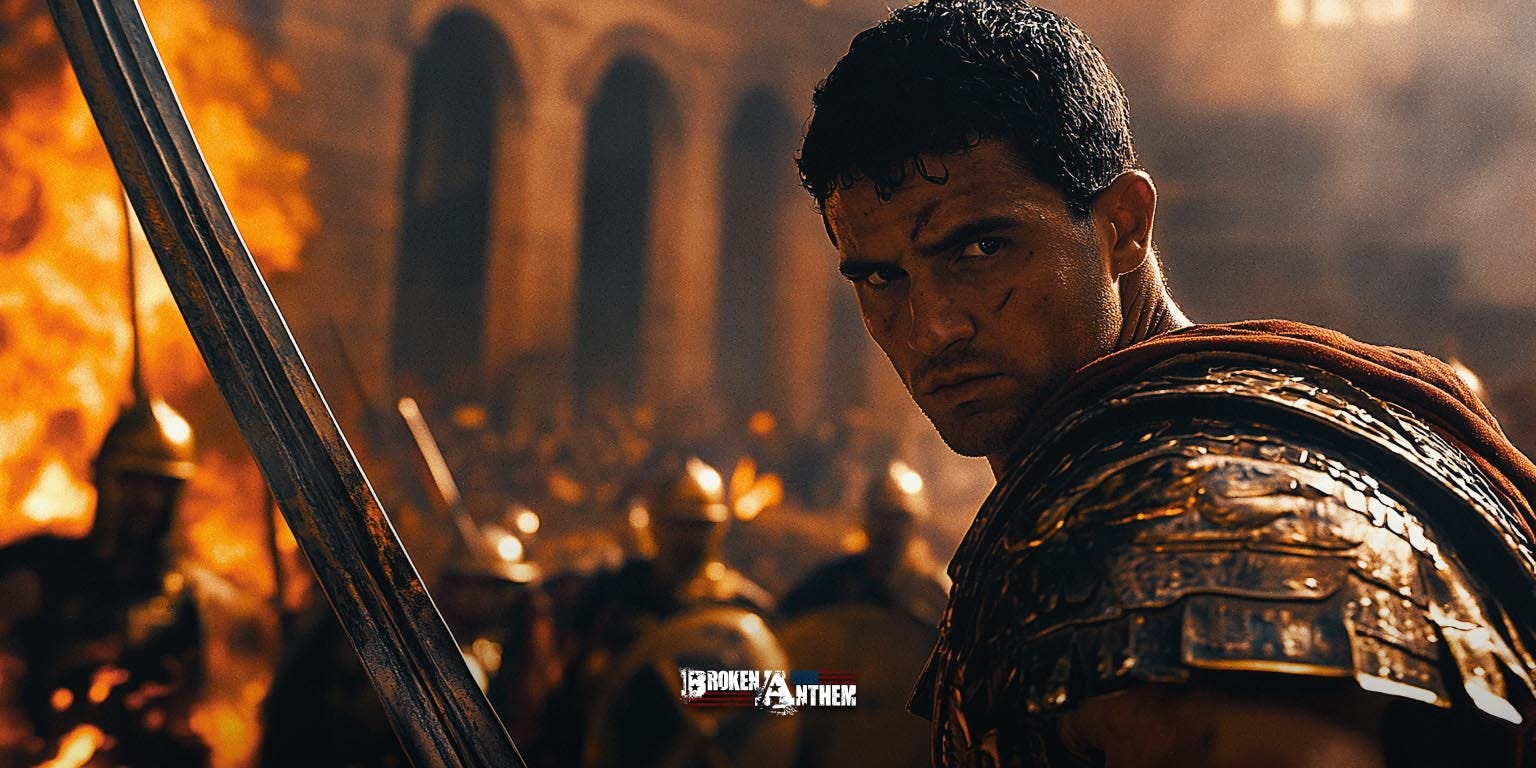
Attempts to reform and abolish debt slavery in 326 BC did not last. Successful war conquest of Southern Italy around 275 BC yielded a gold rush of opportunity, skyrocketing demand for lending services. The government deregulated the lending economy from state oversight to privatization, as well as debased their coin value. As a result: inflation escalated, confidence in currency value declined, economic power shifted to private elites, and manipulation of property values along with high interest rate debt ensued. These were clearly becoming the tools of the corrupt.
Relentless abuses by the aristocracy inspired the Catiline Conspiracy and Spartacus Revolt. A dark era for the Roman Republic ensued, transformation into a plutocracy by deception and dark money magic.
Covert Taxes
Reminiscent of Roman Republic plutocracy, the United States found itself caught in a political oligarchy driven agenda fueled by obfuscated taxes and corruption. The transition between the presidential terms of George W. Bush and Barack Hussein Obama shocked citizens with the revelation of how captured the government was by this uniparty force.
10 million homes went into foreclosure during the Housing Crisis from 2006 to 2014, with 5.4 million of them belonging families. Subprime mortgage lending, financial deregulation and a collapse of the housing bubble, were factors that led to a crisis resulting in the Great Recession. Evictions followed, and as a remedy, the U.S. government gave banks the tax dollars of citizens’ in the form of a bail out. Both parties worked in league to enact this betrayal.
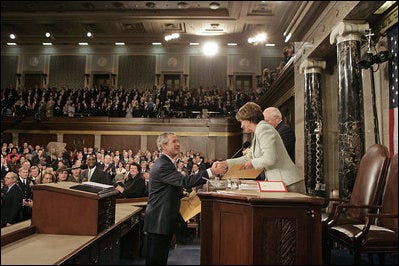
The Democratic House and Senate passed the Emergency Economic Stabilization Act of 2008 in tandem with the Troubled Asset Relief Program as a government solution to the housing crisis, which was signed into law by Republican President George W. Bush. The largest financial institutions received $245 billion in direct assistance, including Citigroup, Bank of America, JPMorgan Chase, Wells Fargo, Goldman Sachs and Morgan Stanley. While the government earned $16.3 billion from bank assistance, taxpayers bore the $30.7 billion expense, compounded by significant economic losses from the housing bubble burst, job losses and reduced wealth as stock markets crashed.
At the end of George W. Bush’s second term, a very unique movement called The Tea Party emerged. Named after the Revolutionary War era protest, The Tea Party was a rally cry to those citizens who saw the hidden agenda in progress. U.S. citizens demanded tax cuts, reduction of national debt, and remedying the federal budget deficit spending. Dissatisfaction quickly arose as Obama's mandated purchase of health insurance (another tax), auto industry bailouts, and additional unconstitutional acts (such as Operation Fast and Furious, military escalation in Libya, DACA immigration executive order) that solidified the outrage.

Some view these administrations as oppositional, yet John Owen Brennan worked at and in league with the CIA through both administrations. Both parties worked together during the 2000s era bailouts, an illusion of two separate political parties, are actually a uniparty, with unified and parallel goals.

Imperialism Masked as a Republic
War was a core thread of President George W. Bush’s unraveling reputation. His Iraq invasion of 2003, manipulatively labeled Operation Iraqi Freedom, was sold by fictional stories of Weapons of Mass Destruction, the sort of lying whose roots lie with his father George H.W. Bush, a CIA director who led the Gulf War behind assertive public relations and truths concealed behind a classified stamp. The Bush father deceived Saddam Hussein through his diplomat, conveying ambivalence towards Kuwait, a trap to prompt military action.

This was not merely a policy decision but rather an exercise in imperialism, a tax on to drain the taxpayer of the war’s resources in order to carve out Iraq’s oil fields. 145 billion barrels worth — for the occupation’s oil-managing comrades ExxonMobil and BP, not to mention Lukoil of Russia and the China National Petroleum Company. Iraqis retained formal ownership, but the U.S. paid $720 billion exacted from U.S. citizens, in exchange for corporate profit.
Compare that to the Roman Republic’s conquest of Sicily in 241 BCE after the First Punic War, they acquired control of the island’s grain fields, transferring wealth to patrician elites such as Scipios while locals served as tax-serfs under a “republic” banner of order. This was the ancient version of “Spreading Democracy.”
Also consider America’s 1898 grab of the Philippines — pitched as liberating Spain’s colony but whose population installed U.S. sugar barons like the Hawaiian Sugar Company, extracting $1 billion in resources by 1920 while Filipinos languished.
In Rome, the Republic’s facade disguised its theft of Gaul’s gold in 58 BCE by Julius Caesar, at the time governor of Cisalpine Gaul and Illyricum. He wrote of his own actions calling them “civilizing” the region, while the loot funded his ascension. It was the plunder of Gaul that paid and paved the way for crossing the Rubicon.
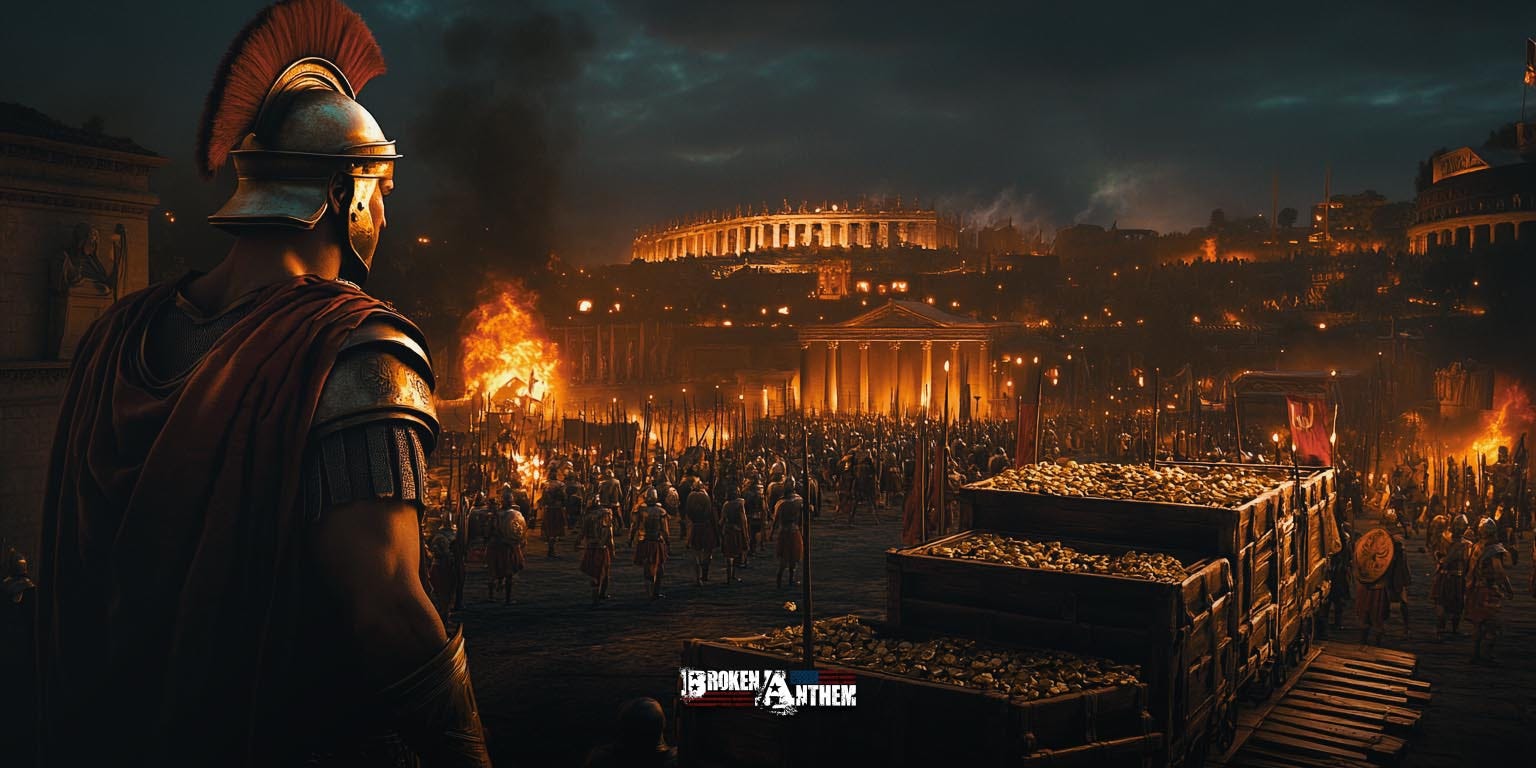
Modern CIA operations like 1953’s Iran coup, run by the Dulles Brothers, or economic hitmen rigging intentional debt traps for Wall Street, echo this: trillions disappear, engulfing us in wars, driving U.S. debt to $36 trillion, diminishing U.S. currency as bitcoin/XRP ascend to the mainstream.
Republican and Democrats voted to continue funding the war machine that overthrew about 100 governments, and the current surveillance state enacted through the War on Terror in 2001 during the George W. Bush-Dick Cheney administration. The U.S. bipartisan elite under the guise of a Representative Republic, imposed or legislated against the interest of the people, and weakened their nation, while funding the oligarchy.
Both republics preached representative government while perfecting extraction, their citizens taxed to support an empire.
Concealed Usury
As history became recorded on paper and people gained the ability to read, understanding of concepts like Usury, and their methods of use began to spread over time. This required an adjusted deployment towards more covert methods to achieve the same result.
The political class in the 1900s enshrined by degrees from elite Ivy Schools participated in the sales pitch to funnel young American minds into liberal leaning institutions. The idea that college was essential to financial security and success grew to be a common belief, yet ignored the reality that trades with lower costing education could yield a high quality of life, if not better than lower achieving college graduates. While still endowed with the perception of value, the political elite presented government backed student loans as a public good, but was eventually revealed to be predatory.
As of 2024, over 45 million borrowers collectively owe more than $1.6 trillion in student loan debt. These college graduates encounter a surprise, paying 30-100% of the original loan amount. In the case of Nancy Peter, a single mom who took out a $30,000 student loan in 1986, even with regular payments, grew to a debt of $108,000 38 years later.
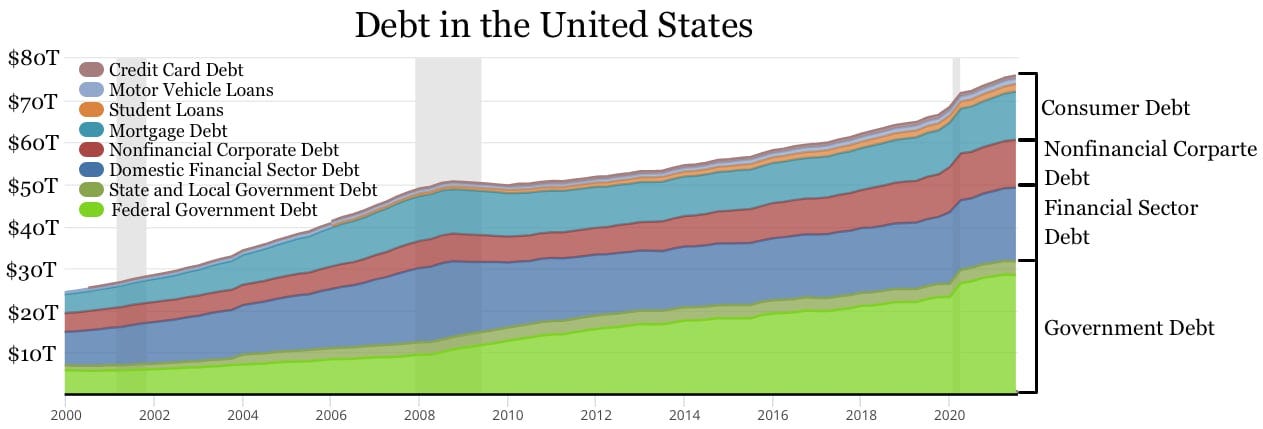
Similar psychological manipulation can be found in corporate marketing and advertising that created a high interest credit card crisis. As of December 2024 the average credit card interest rate on debt has reached 24.37%; another modern form of usury.
The student loan crisis is a bipartisan product, from a uniparty, nurtured by decades of ineffective policies handed down by Democrats and Republicans alike. Federal loan programs were expanded by Democrats to make higher education more accessible, but they also helped fuel the rise in tuition costs, by making more cash available to institutions. Republicans called for market-oriented solutions, which included the privatization of loans and less regulation of lenders that may have helped address predatory offerings.
For much of this time, both parties have periodically proposed relief programs, but neither party has been willing to do the most important thing, which is to stop the cause of the problem in the first place, namely ever-rising tuition, unchecked institutional spending and long-term burdens on borrowers. The outcome is a system where students are incentivized to accrue staggering amounts of debt with minimal protections, creating a multi-generational crisis that has only deepened with each successive administration.
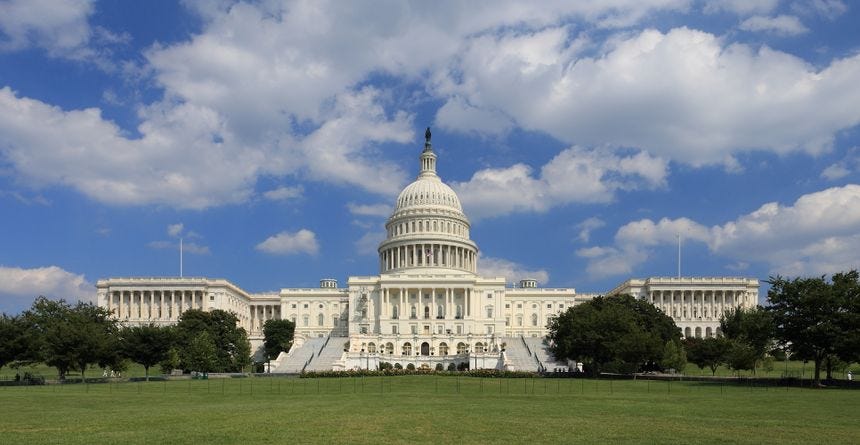
The Uniparty government in Washington, D.C. is equally as submerged in spending. Federal debt has ballooned to roughly $36.1 trillion and resulted in higher interest payments, which are forecasted to amount to $952 billion in net interest costs in fiscal year 2025 and $1.8 trillion in 2035. These bleak realities and reckless ignorant spending into debt decline is a reason for President Donald Trump with the assistance of Elon Musk leading the Department of Government Efficiency, to cut spending. A departure from the normal political oligarchy agenda to spend into oblivion.
The sentiment of American’s versed on economics and debt, know that overspending is a tax on the people. Unhindered decadence has hollowed out the core strength of the United States, as manipulative words by politicians stoke ideas of Hope and Change, with out any betterment for the citizens. An echoed reality of the dilapidated Roman Republic.

What are the ethics of psychological manipulation and predatory usury?
How do they fool the people into agreeing to and supporting these usury systems?
Do we teach the necessary skills and values to evade usury in taxpayer funded schools?
Renewed Vision
At the infamous Gettysburg Address, while the British Crown funded the South, President Abraham Lincoln, in seeking to preserve the Union during a bitter civil war, proclaimed:
It is for us the living, rather, to be dedicated here to the unfinished work which they who fought here have thus far so nobly advanced.
It is rather for us to be here dedicated to the great task remaining before us -- that from these honored dead we take increased devotion to that cause for which they gave the last full measure of devotion -- that we here highly resolve that these dead shall not have died in vain -- that this nation, under God, shall have a new birth of freedom -- and that government of the people, by the people, for the people, shall not perish from the earth.
Abraham Lincoln
November 19, 1863

May the demise of the Roman Republic, the fall of Rome, the tapestry of American history, inspire your course of action in recovering a Constitutional Republic of Self-Government. A time to restore founding principles is here, but only by a people of moral clarity. You are responsible to take a role in the rebirth of the United States of America, a new birth of FREEDOM, is here!
What is your role and responsibility in this transformation?
How can you take action to realize the idea of Self-Government?
History stands clothed in a garment of warnings heralding the fall of another Republic and extends an invitation for us to ascend out of destruction, towards our destiny of transcendent freedom as envisioned by our founding fathers.

This is the first of a series of articles on The Fall of Rome, A Rebirth for the United States. Subscribe to Broken Anthem today.
Comments
Nothing yet. Say the first thing.
Sign in to join the conversation.