
At an InnovateQA meetup earlier this year, someone asked a question that’s been on my mind ever since:
“How would one implement shift left when the requirements are constantly changing?”
On a recent project, I opened up our requirements in our tracking system to build my test coverage and immediately hit a wall - the user stories weren’t up to date.
I was creating a traceability matrix to map my test scenarios and cases to requirements for accurate coverage tracking. But as I went through each feature, things weren’t quite clear. User stories had just titles, no details. Some were marked “complete” with no acceptance criteria. I was building my test plan on quicksand.
This was a challenge because I couldn’t confidently say what was actually done versus what was planned. Which features were truly complete? Where did they show up in the app? How were they affected by the integrations we were still waiting on?
I could have made assumptions - tested based on what I thought was there or should have been there. But I know from experience this causes more pain long-term. It’s exactly how critical issues slip to production: QA operates on outdated information and doesn’t question its relevance.
So I did what’s been working for me time and again: I brought the team together. I booked meetings to walk through everything with developers and PMs. We reviewed each epic, confirmed what was actually built, identified where features lived, and clarified integration dependencies. I used mind mapping to visualize connections and gaps in real-time.
This gave me clarity, aligned the team, and created a traceability matrix we could actually trust.
Key takeaway:
Shift left isn’t just early involvement - it’s continuous alignment as requirements evolve. When documentation drifts from reality, bring your team together to close the gap before investing in test planning. With lean teams and limited resources, you can’t afford to test the wrong things. The good news: realigning your team is completely within your control.

Practical wisdom for getting things done as a QA Professional
Use collaborative sessions to validate your understanding, not just document it. Book 30-minute working meetings with developers where you walk through features together. Bring your mind map or traceability matrix and update it live with them. This turns discovery into alignment.
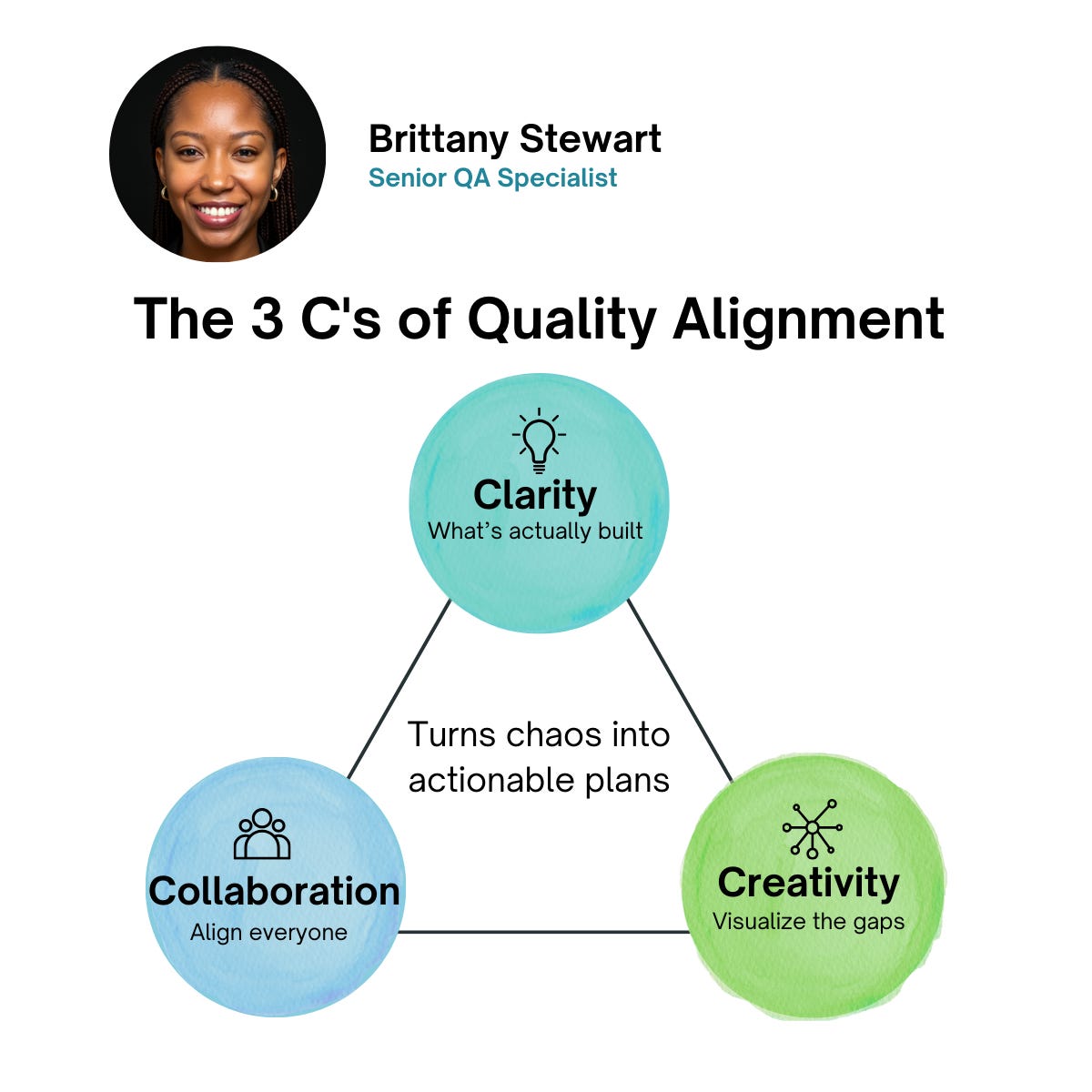
This approach gives you three things that consistently drive quality: Clarity on what was actually built, Collaboration to get everyone aligned, and Creativity to visualize gaps through tools like mind mapping. These three elements help us turn chaos into actionable plans.
Some teams mark user stories “complete” when code merges, which makes sense from a development workflow perspective. But “complete” in the tracking system doesn’t always mean “shared understanding of what was built.” This creates a gap - not from anyone doing something wrong intentionally, but most times from everyone trying to optimize for speed. As QA, we’re uniquely positioned to spot this early. Watch for signs like acceptance criteria that appear after development starts, or tickets marked done without clear definition of what “done” means. When you see these patterns, that’s your signal to gather the team and align before investing time in test planning.
What if documentation gaps became your reason to strengthen team relationships instead of slowing you down? Every mismatch is a conversation starter. Every alignment session builds trust. The documentation you create together matters - but it matters less than the shared understanding you build in the process of aligning your team.
P.S. I first explored this topic at InnovateQA back in March and I’ll be expanding on shift-left strategies at Agile Testing Days 2025 in Germany this November. If you’re attending, let’s connect.

Thanks for reading - I’m so glad you’re here! If you want to support Hands On Wisdom and help it reach more QA professionals, here are a few easy ways:
Add me to your contacts: brittanystewarttech@substack.com so each issue lands safely in your inbox.
Pass it on: Share with someone who’d enjoy these insights: brittanystewarttech.substack.com.
Catch me online: https://www.linkedin.com/in/brittanybstewart/.
Thanks again! Happy testing!
— Brittany
No posts
Comments
Nothing yet. Say the first thing.
Sign in to join the conversation.