
I was recently reminded of a challenge many testers face: trying to find your footing while the work is already well underway.
After an extended break from hands-on QA work, jumping back in can feel overwhelming. Like many QAs have experienced, sometimes you join when development is already 80% complete. In those moments, there’s often pressure to quickly get up to speed and add value while still learning the system.
But here's the thing that really got me thinking. I've been out there advocating for AI in testing, writing about it, speaking about it — and then I found myself on a project where AI usage, the way I was used to, was limited. This meant leaning on more traditional approaches I hadn’t used in months, and honestly? I felt a bit old and rusty after so much time.
The usual onboarding challenges were all there, like environment access taking time, gaps in documentation, and figuring out expectations as I went. The bigger challenge, though, was realizing just how comfortable I’d become with AI supporting my planning and brainstorming. Without those tools, I felt like I was working with one hand tied behind my back.
And here’s what hit me: I had gotten so used to AI helping me brainstorm scenarios and organize my thoughts that I almost forgot how I used to do comprehensive planning without it (Not the best feeling when you’re stepping back into an expert role).
That’s when I had a moment of clarity. I needed something to anchor me in moments like this — a way to make sure I wasn’t missing anything important while catching up and learning the system at the same time. So I did what always grounds me when things feel overwhelming: I built a checklist and pulled in my trusty mind map planning template.
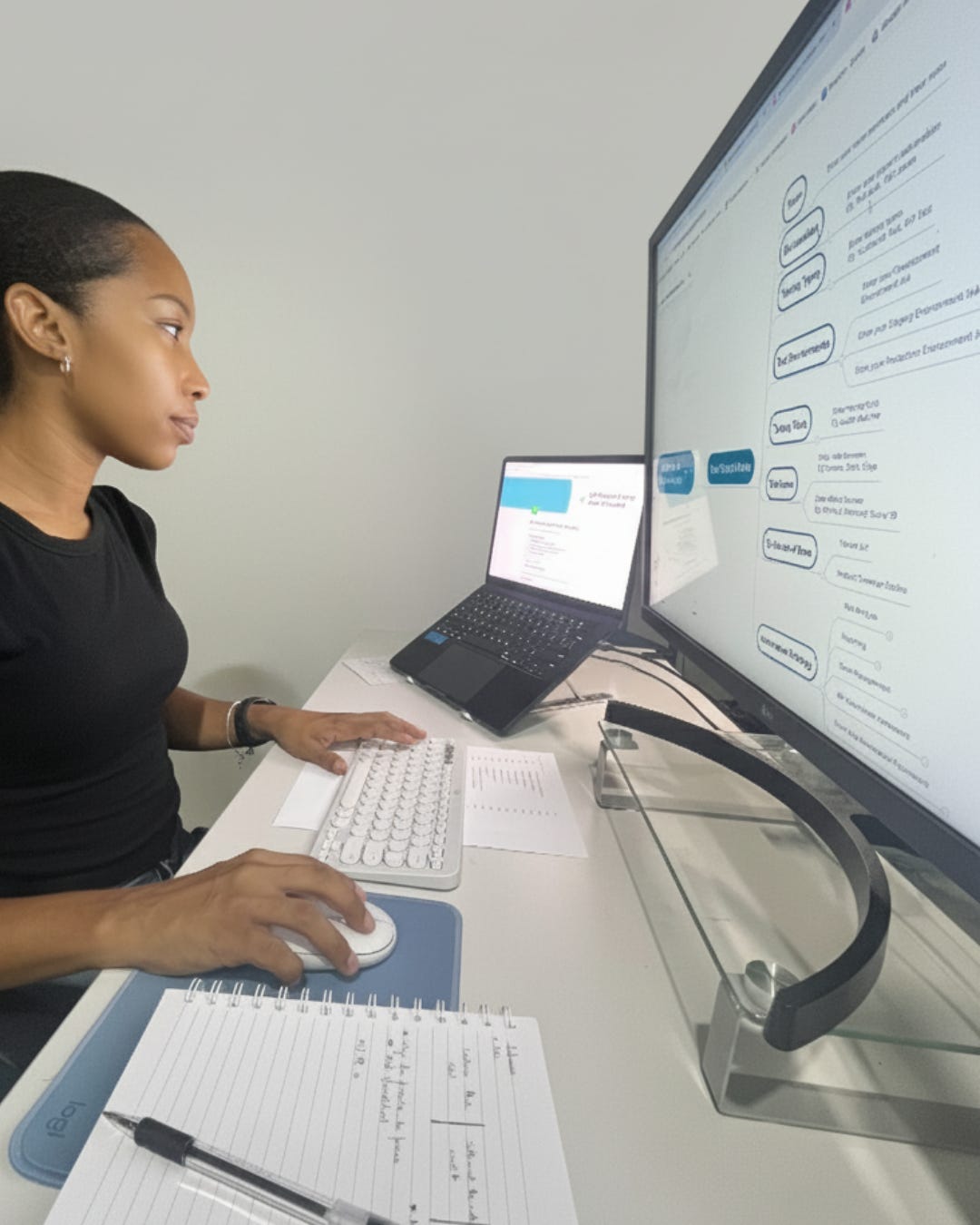
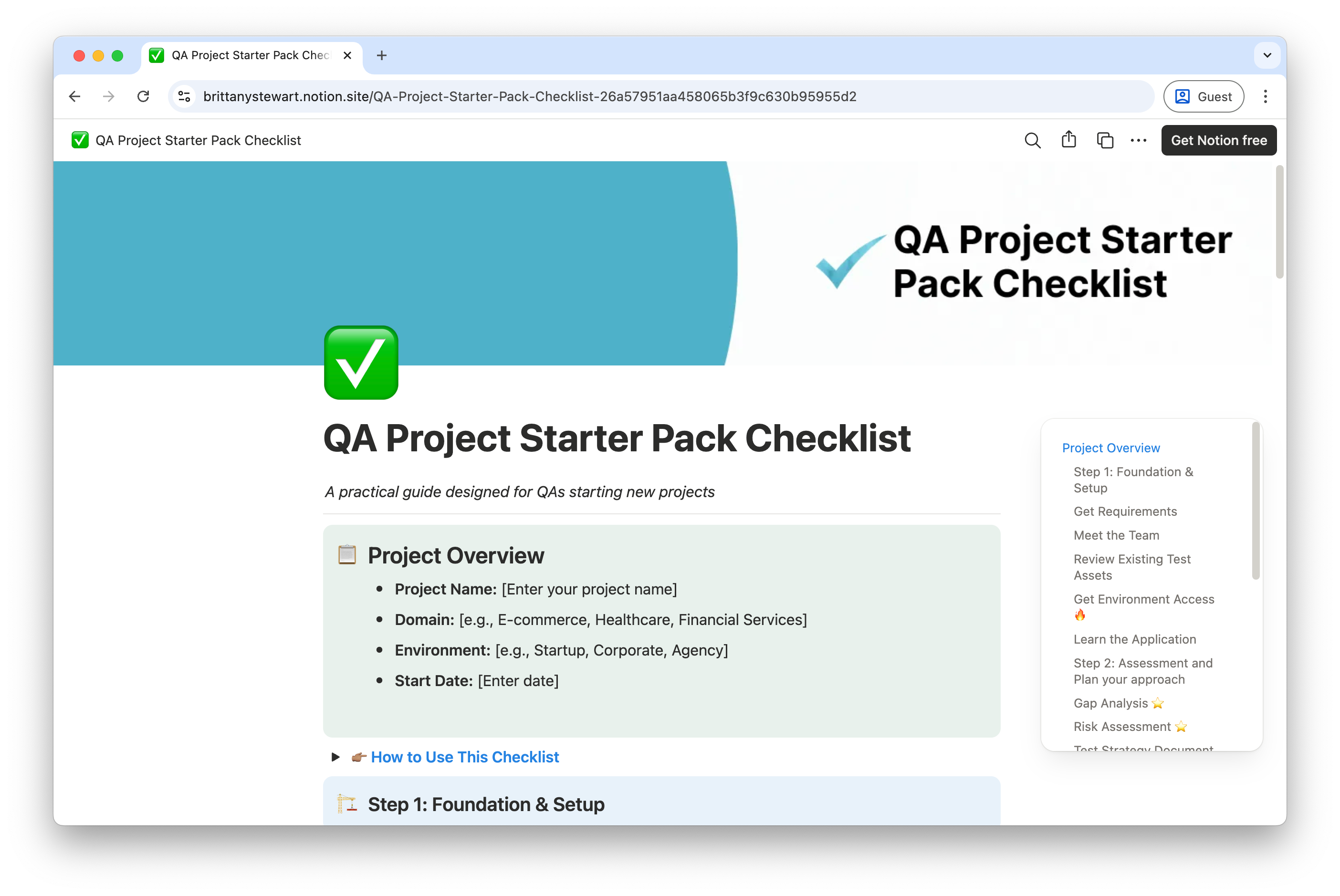
This checklist was not just any checklist. A proper Notion template that covered everything from “Did I actually get the right environment access?” to “Have I talked to customer support or operations to understand common user pain points?” I’ve been wanting to create more templates anyway — and since I love using Notion, this was a natural fit.
Here’s the reality in 2025: QA professionals are still often brought in late.
Yes, we advocate for shift-left. Yes, we know it’s better when we’re involved from the beginning. But sometimes you’re not placed in these positions, and you still just have to make it work.
If I’m being optimistic, then the good news is, coming in at the 80% mark isn’t always a disadvantage. It can give you a fresh perspective, allowing you to ask “wait, but why?” questions that the team may have stopped asking months ago.
Key takeaway:
👉🏽 Build your own QA onboarding system and process. When you're dropped into a project mid-stream, having a structured way to gather context and establish your testing approach will save you weeks of spinning your wheels.

Practical wisdom for getting things done as a QA Professional
👉🏽 Hack:
Create a "First 30 Days" template in whatever tool you love most. I use Notion and Mind maps, but it could be anything. Track your access requests, map out stakeholders, review existing docs, and plan your test approach. Check things off as you go — it keeps you sane and shows your team you're making progress.
Use my "QA Starter Checklist" to establish your footing quickly and strategically get started when joining any project mid-stream:
QA Project Starter Pack Checklist
🔍 Observation:
Even when teams won’t allow AI in production testing, they’re often fine with you using it to learn the domain or brainstorm approaches privately. You can still get that thinking boost, then execute with traditional methods. There are some specific ways to do this, and I’ll share some in a future issue.
💭 What if…
What if we reframed every late-entry project as a chance to prove how quickly we can add value? That ability to quickly assess your project and contribute might be exactly what convinces stakeholders of QA’s true value and impact in the software development process.
What do you think?

Thanks for reading - I’m so glad you’re here! If you want to support Hands On Wisdom and help it reach more QA professionals, here are a few easy ways:
Add me to your contacts: brittanystewarttech@substack.com so each issue lands safely in your inbox.
Pass it on: Share with someone who'd enjoy these insights: brittanystewarttech.substack.com.
Catch me online: https://www.linkedin.com/in/brittanybstewart/.
Thanks again!
Happy testing! — Brittany
No posts
Comments
Nothing yet. Say the first thing.
Sign in to join the conversation.