
There is an hour, in every house I am designing, that I think about more than any other.
It is not the hour the house is photographed. It is not the hour guests arrive. It is not the hour the dinner table is set, or the candles are lit, or the music is on. Those are the hours houses are designed for. Those are the hours that show up online.
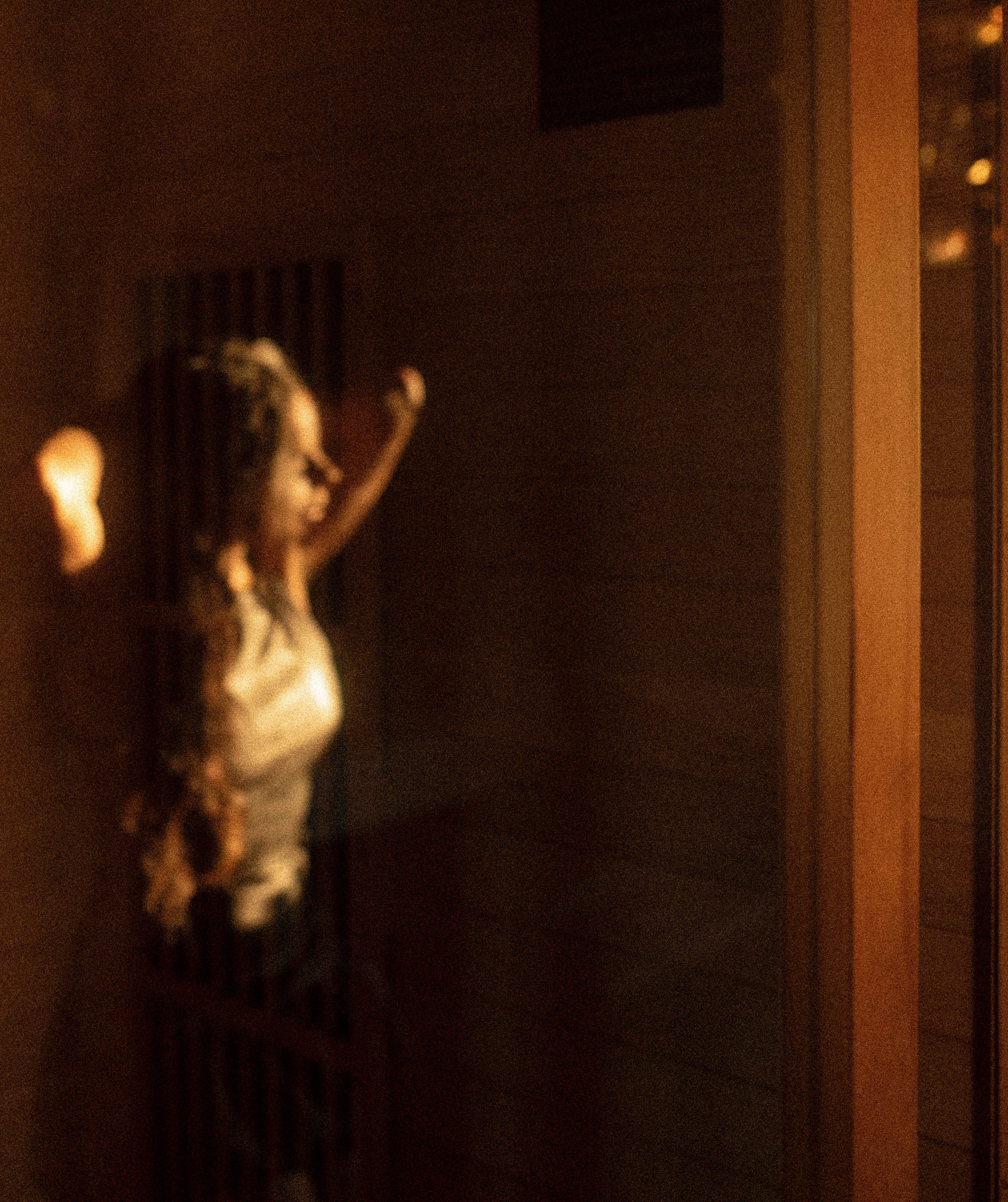
The hour I’m talking about is the one between 5:00 and 6:00 AM. Before most others are awake. Before the day has been named. The hour the house is typically quietest, lightest, and most itself.
Most houses are designed for performance. The kitchen is designed for the functionality and for the conversation. The living room is designed for entertainment. The bedroom is designed for the cozy getaway. These rooms work — and they work well — at the hours they were designed for. At seven in the evening, with company arriving and the western light catching the counters, almost any well-styled house looks correct.
The test of a home is what it feels like at five in the morning, alone, with no one watching.
The light at that hour is the most honest light a house will receive all day. It’s cool, low, and lateral. It comes in nearly horizontal through eastern windows. It does not flatter; it reveals. Materials that read warm under afternoon light read true at dawn. Materials that were chosen for the photograph reveal themselves as having been chosen for the photograph. The afternoon light forgives. The dawn light does not.
Here is what changes about a house at that hour, and what a designer has to know about each thing:
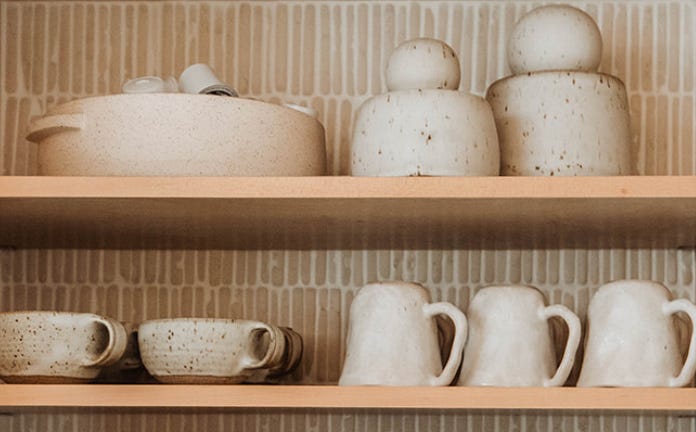
THE LIGHT: is coolest this early in the morning, low and clean. Anything reflective — polished stone, lacquered cabinetry, high-sheen paint — tends to read a bit cold. Anything matte and honest — honed stone, plaster, oiled wood, linen — reads warm even though the light itself is cool. Rather than a styling decision, this is a material decision, that we make at specification, rather than at install.
THE FLOOR: Bare feet, every morning. A floor that is comfortable barefoot at five in the morning is a floor that has been chosen with the body in mind — the body is the client most designers forget to design for.
THE ACOUSTIC: A quiet house at five in the morning is not silent. The refrigerator lightly runs. The HVAC clicks on. A floor creaks. A door, somewhere in the house, settles. The acoustic profile of a house at this hour is the acoustic profile of the house being itself, with no one else in it. Soft surfaces — wool rugs, heavy linen curtains, upholstered seating — make this hour kind. Hard, parallel, untreated surfaces make this hour brittle. Most designers think about acoustics for the dinner party. But acoustics matter at dawn, when you’re entering your day.
THE TEMPERATURE: A house at five in the morning is at its coldest. The radiant system, if there is one, is doing the quiet architectural work of meeting bare feet on stone. The radiator is warming linen curtains pulled across an eastern window. The materials chosen for the room are either holding warmth or refusing to. Stone holds. Engineered surfaces do not. Wool holds. Synthetic does not. This is part of what material honesty means, in practice: the honest material is the one that does the thermal work the room needs done.
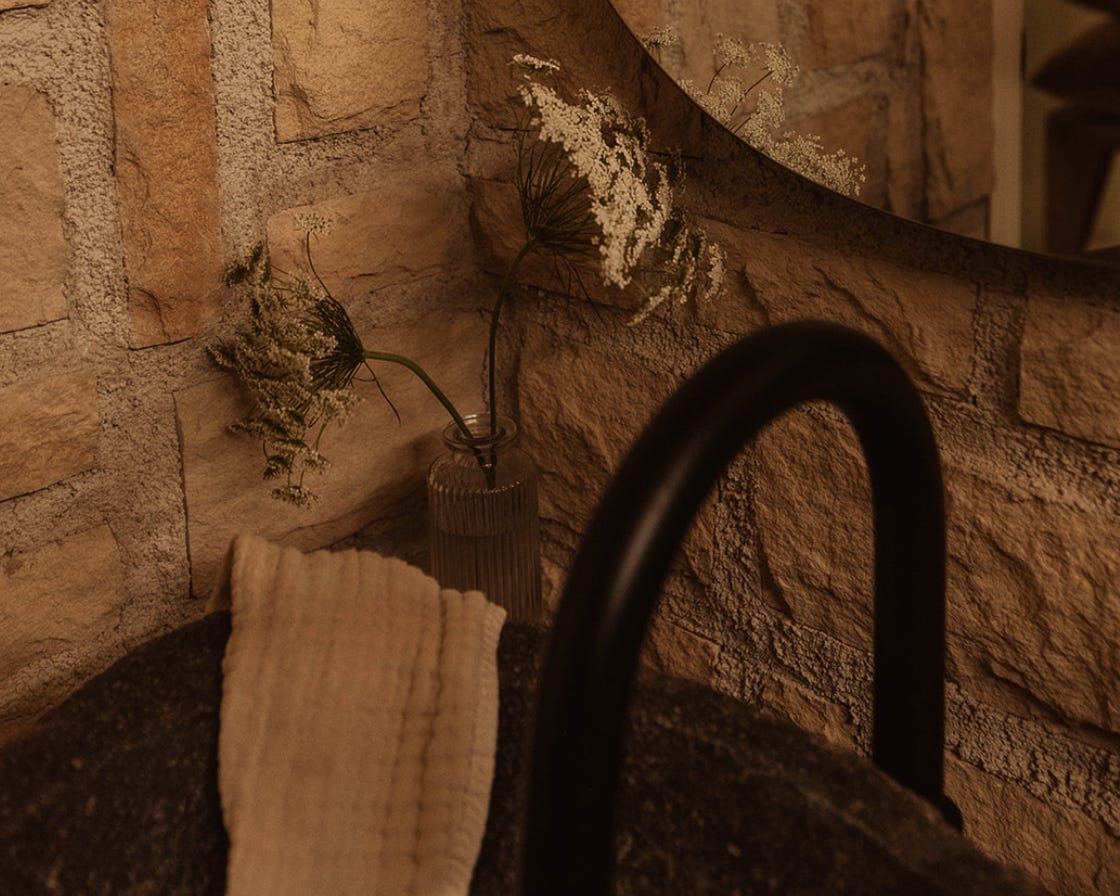
THE SMELL: Coffee, my favorite smell every morning. Eucalyptus, if there is any in the bathroom. The wood of the floor, more strongly than at any other hour, because the floor is cold and the molecules are slow. The smell of a house at dawn is one of the most underrated design considerations in residential work, and it is almost entirely determined by what the house is built of. Real materials smell like themselves. Imitations do not.
The hour between five and six is the hour I write, the hour I read, the hour I do my most considered work for myself, my personal growth, and my personal wellness – more often than not actually in my sauna. I am not prescriptive about other people’s calendars — I said as much in another letter — but I will say this: if your house is not kind to you at that hour, the house was designed for the wrong audience.
The audience for a house is not the photograph. The audience is the body that lives in it, at every hour of the day, for as long as the body lives there.
This is what I mean by architectural wellness. Not a layer added on top of design — not a meditation room, not the sauna, not a yoga corner — but the underlying decision to design for the hours and the body and the senses rather than for the lens. A house designed for the body is kind at five in the morning. A house designed for the lens is brittle at five in the morning. The difference is not visible in a photograph, but it is everything in the room.
I will write more about this. The next time you find yourself awake at that hour, in your own house or in a hotel or in someone else’s home, pay attention to what the room is doing. Pay attention to the floor under your feet. Pay attention to the light coming in. Pay attention to whether the room feels kind, or whether it feels like a room that was waiting for the dinner party to begin.
—xobe.
No posts
Comments
Nothing yet. Say the first thing.
Sign in to join the conversation.