
A client walked into her finished kitchen last spring, paused for a long moment, and finally said, ‘I can’t explain it, but this feels so grounded.’ What she was responding to was material honesty — though most people don’t yet have language for it. By the end of this letter, you will.
Stone is stone; not engineered material pretending to be stone. Wood is wood, not laminate or veneer over MDF. Plaster is plaster, not textured paint mimicking plaster. No imitation. No veneer of another material.
In a world where we seem to have become oddly comfortable with faux – still nothing can truly compare or compete with the grounding yet elevated sensation of natural materials. Why it really matters? The subconscious notices. Imitation materials create low-grade cognitive friction. Real materials create ease, flow, and natural alignment.
Honest materials age gracefully; faux materials may serve short-term trend-driven purposes, but eventually reveal themselves over time.
SPECIFIC STORIES:
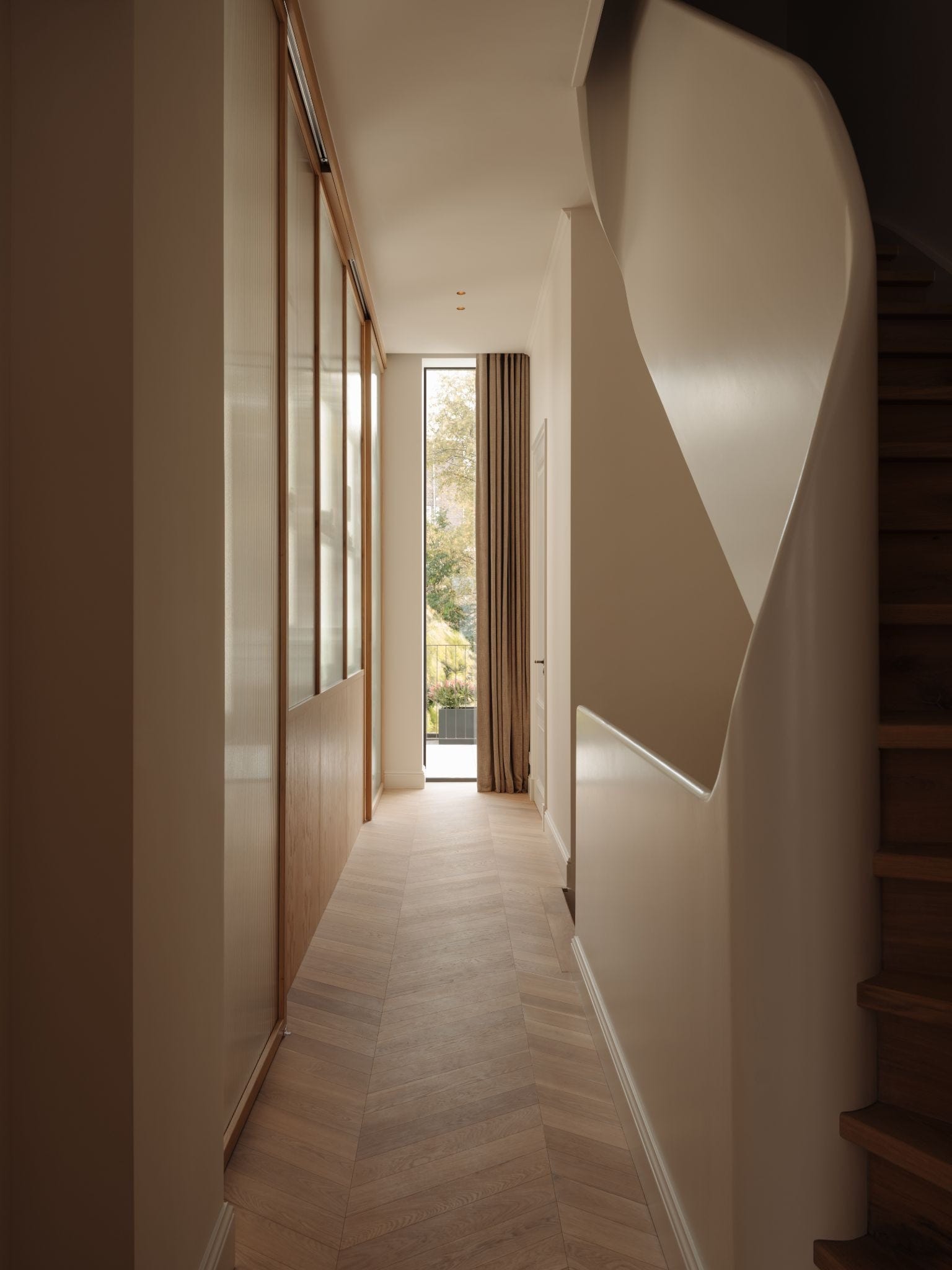
OAK WOOD FLOORING, chevron installation, rift-sawn (not engineered plank). What changes over five years vs the alternative? The alternative most builders will quietly push you toward is engineered oak; a thin veneer of real wood over a plywood core, finished at the factory. In a photograph, on day one, they read the nearly same; but rift-sawn pulls the grain into long, quiet, almost vertical lines — without the cathedral arches of plain-sawn wood. It is the most expensive cut, the most wasteful to mill, and the one that ages most beautifully. The grain does not compete with the patina the floor will develop from being walked on.
By year five, the engineered floor has worn with scratches in the veneer that cannot be sanded out, because there is not enough wood to sand into. The solid floor has aged. It can be refinished, which means the floor in this hallway in thirty years is the same floor in it today.
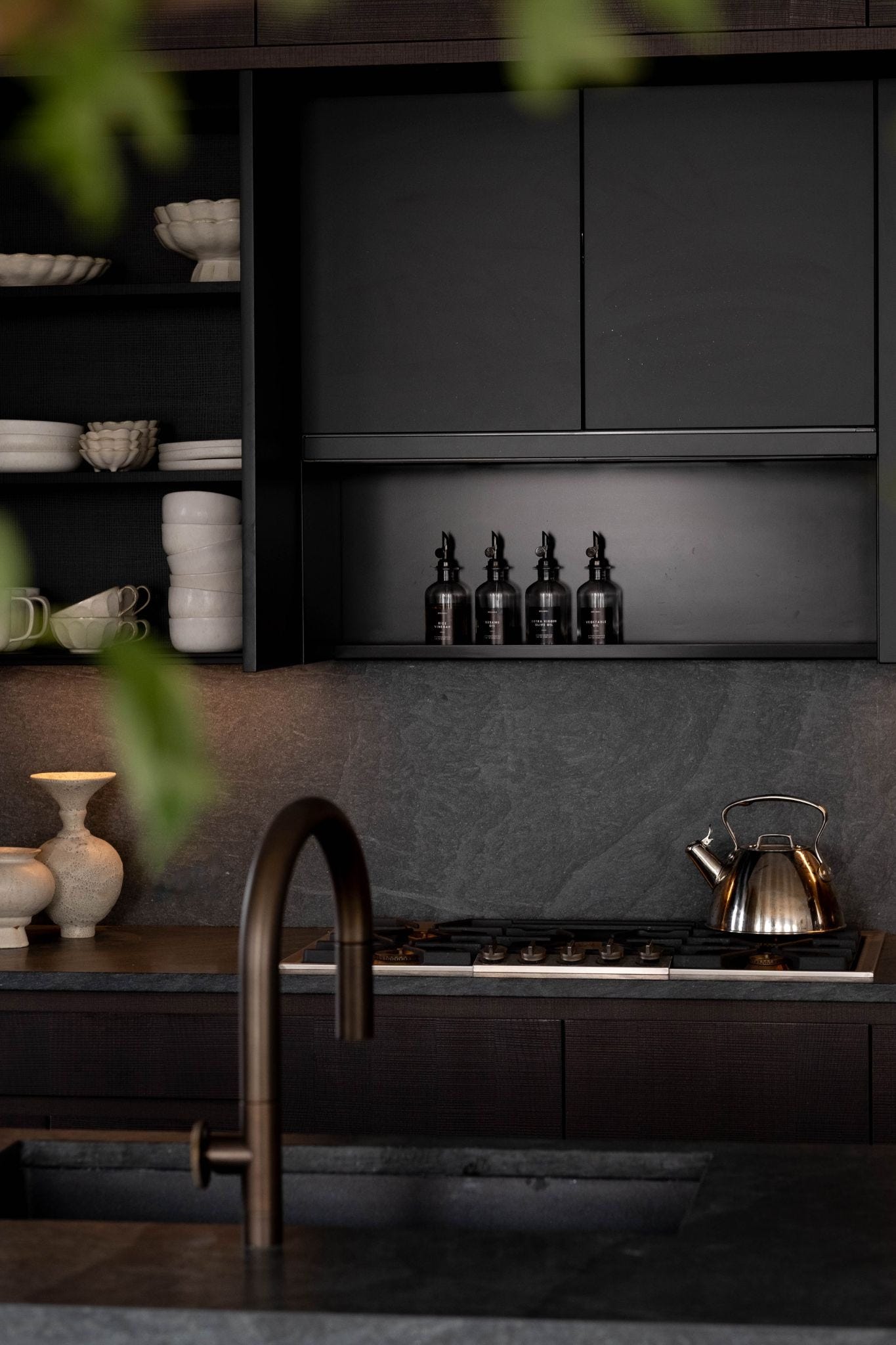
PIETRA CARDOSA ITALIAN MARBLE, not quartz-pretending-to-bestone. What’s the price tag and why is it worth it? For a client seeking depth, the fabricator might suggest an engineered quartz in a charcoal print – lower cost, more forgiving, and “looks the same in photos.” Insert Pietra Cardosa specified: an Italian metamorphic stone, quarried in Tuscany, dense, with the kind of cloudy movement no printed surface has ever convincingly reproduced. Honed, it absorbs light instead of bouncing it back. The surface runs cold to the touch in a way quartz never does. Hand to stone, the temperature itself tells you what you are touching.
The price difference is significant: approximately ~$250 per square foot versus ~$100 per square foot. What real stone it buys is this: a kitchen that holds light differently at every hour of the day. A backsplash that reads as part of the architecture of the room, not as a finish applied to it. A surface that will mark — faintly, slowly — where the oil bottle sits and where the kettle goes back down, and that those marks will be welcome rather than a problem to manage.
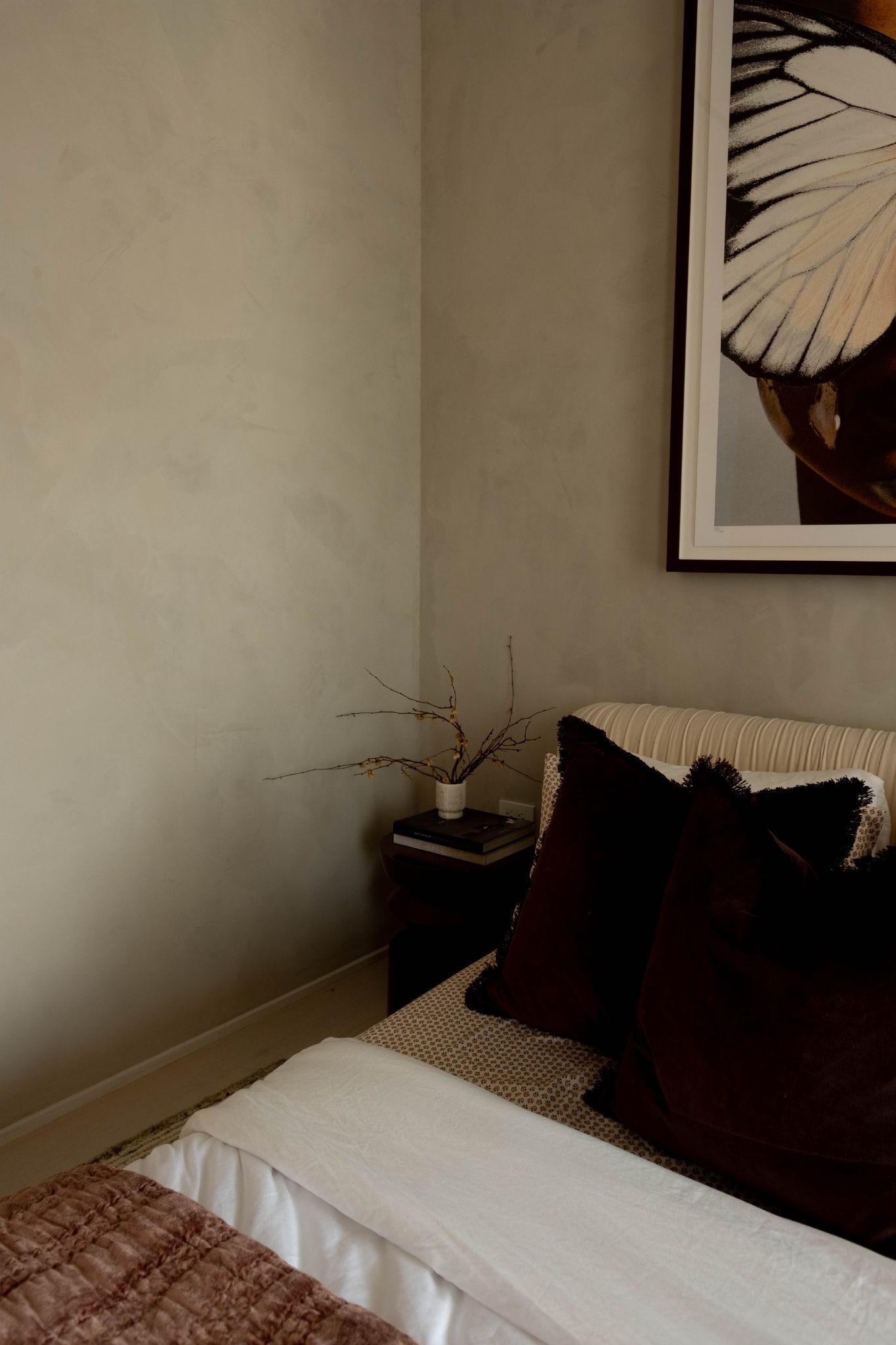
PORTOLA ROMAN CLAY IN PATAGONIA (not textured paint): the breathing, the humidity regulation, the way light reads. A material that’s troweled by hand, two coats. A warm putty-taupe — somewhere between bone and stone — that shifts in tone depending on what hour you walk into the room. The plasterer’s labor cost more than the material itself. You might ask, reasonably, whether a textured paint would read similarly.
It might, in a photograph. In the room, it does not.
Roman Clay is a lime and marble based plaster that goes on wet and cures into the wall itself. It is not a finish applied over drywall — it is the wall. The trowel passes catch light differently across the surface, which is why the wall looks one color at 7am and a different color at 5pm. The soft cloudiness in the corners is not a print or a texture. It is the record of the hand that put it there. And it breathes. Lime-based plasters absorb and release moisture as the seasons change — quiet environmental work painted drywall cannot do. The room reads calmer because it is calmer. Painted texture is a photograph of plaster. Plaster is the thing itself.
THE COST CONVERSATION:
The cost conversation is one we have often, and the one worth addressing directly.
MATERIAL HONESTY COSTS MORE UPFRONT. ALWAYS. AND HERE’S WHY IT’S ALWAYS WORTH IT.
The math most people use is purchase price. The math I use (and recommend you use) is cost across the life of the room. An imitation material may cost less upfront but more to live with — in maintenance, in eventual replacement, in the quiet daily friction of being in a room that isn’t quite what it says it is. Distributed across the decades a family will spend in that room, the honest material is often the more valuable one. It just might not look that way on the invoice.
There is also the question of what happens when a material fails. Honest materials are repairable. Stone can be refinished. Wood can be sanded. Plaster can be patched by the hand that applied it. Imitations cannot be repaired — they can only be replaced, which means tearing out a room and starting over.
If the budget genuinely cannot stretch to material honesty throughout, my advice is this: pick one. One honest material — a single stone counter, a single plaster wall, a single solid wood floor — anchors the room in something real. Your subconscious registers it, and the rest of the room rises to meet it. A room with one honest material and three imitations reads as restrained. A room with four imitations reads as a stage set.
When in doubt: pick one + build everything else around it.
I have watched the industry slowly yet unmistakably shift over the last two decades.
The shift tracks one underlying truth:
The body has always known the difference. It was the eye that’s been fooled.
This is one part of the distinction between decorating and design. Decorating beautifully arranges or styles things. Design holistically specifies what the things actually are.
—xobe.
Letters from BE Substack is a reader-supported publication. To receive new posts and support my work, consider becoming a free or paid subscriber.
Comments
Nothing yet. Say the first thing.
Sign in to join the conversation.