
By Phil Mellows
Travelling around the UK, researching our book Beer Breaks in Britain, I was struck by the way each destination expressed a unique character, not only through its history, architecture, culture and so on, as described by my erudite co-author, but through drinking the beer.
Still, I was surprised, in a good way, when top beer writer Emma Inch, in her review on Bluesky, said that “this book makes the connections between place & pint in a way that so many articles on terroir have failed to do”.
Most flattering, especially as I hadn’t really thought about it like this. For one thing, terroir in beer is a highly controversial topic. As you’ll know, the term is native to wine, which is made in a completely different way from beer.
It’s easy to imagine how grapes grown in a certain soil and climate and so on can determine what the final product tastes like. Brewing, however, uses four different materials – water, malted grain, hops and yeast – which usually come from different places, and the beer produced is also influenced by the processes in which they are combined.
A few have sought to produce their own ingredients close to the brewery. Surrey’s Hogs Back and Derbyshire’s Thornsett, for instance, have their own hop gardens and Pembrokeshire’s Old Farmhouse grows its own barley. But these are exceptions.
If you really want to get into the agricultural argument, see Matthew Curtis and Stan Hieronymous for opposing views.
Perhaps it’s more relevant to think of ‘social terroir’, a term applied to craft beer, as a conscious marketing strategy, at least where I’ve seen it. If you extend it to loosely take in the place not where the beer is brewed, but where you’re drinking it, I reckon you can call that social terroir.
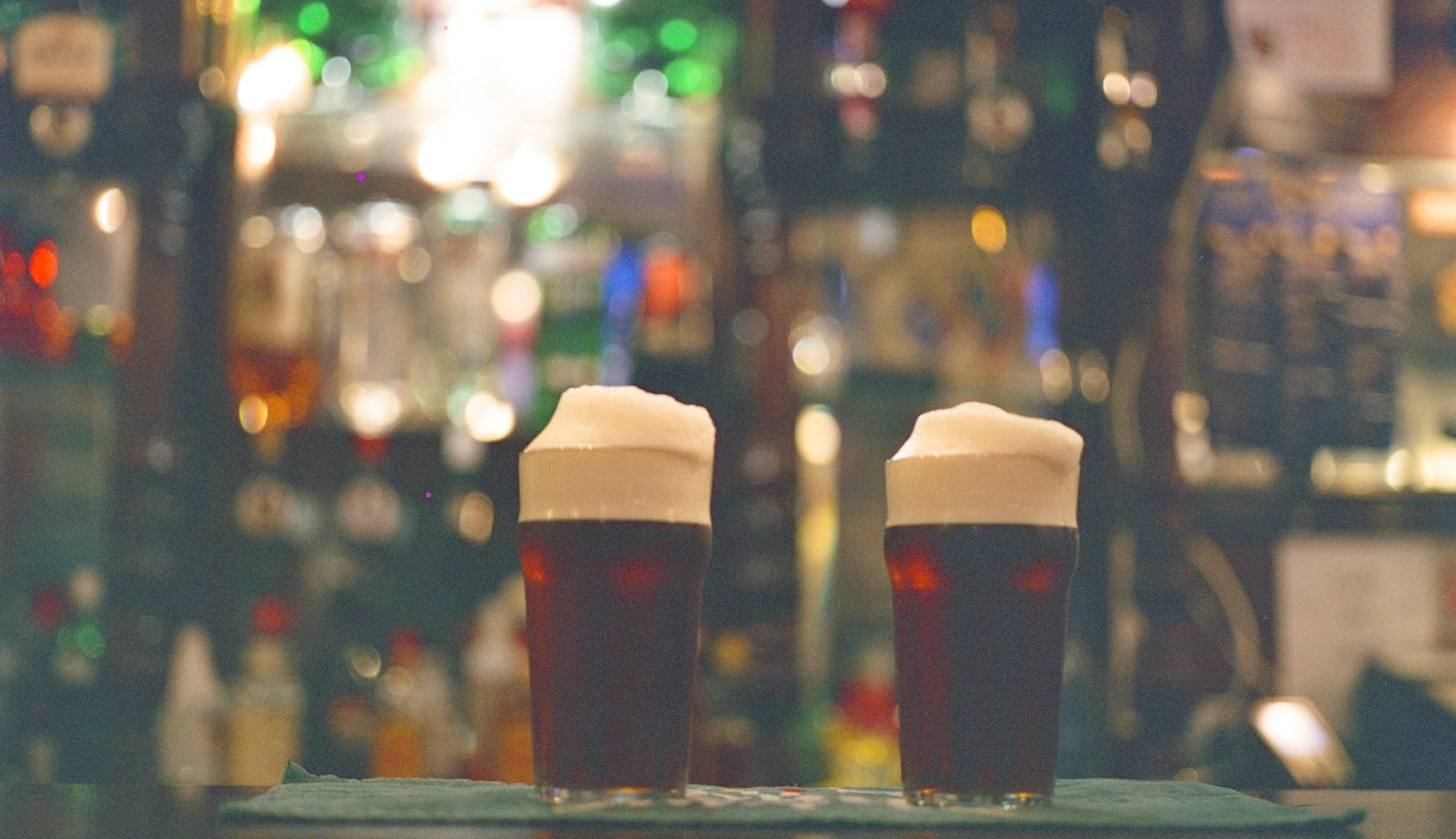
For perhaps the sharpest example I can come up with, I’ll make no apologies for returning to the topic of draught Bass. Order a pint in this beer’s Midlands heartland and you get the classic tight, creamy head. Ask for it on Teesside and you’ll be handed a Mister Whippy ice-cream cone of fluffy foam that soars several centimetres above the brim (pictured). And Bristol is known for pouring it with no head at all.
Teesside’s ‘banked’ pint has its roots in the area’s heavy industry. Thirsty workers coming off shift all hit the bar at the same time, so pubs had to be ready with part-poured pints. Topping up created the tall, foamy head. Reece Hugill has told the full story.
And Bristol’s ‘flat’ pint? It partly results, of course, from that north-south divide in cask beer dispense in which, beneath the latitude of about 53 degrees North, the sparkler screwed to the end of the tap that produces the creamy head is absent.
This divide is less pronounced than it used to be, and the new marketing drive for Bass by its global giant brand owner AB Inbev foregrounds the Midlands dispense, but drinkers have got used to their local style over generations, pubs have to give them what they want and that will hopefully mean the social terroir survives.
There must be many more examples like this, and it all gives British beer culture an especially rich and fascinating diversity – that’s worth getting out and about to experience for yourself. But we would say that, wouldn’t we!
Photo © Reece Hugill
No posts
Comments
Nothing yet. Say the first thing.
Sign in to join the conversation.