
By Kate Simon
Ipswich is in the news. First it was ranked one of the best places in the UK to take a short break by consumer organisation Which?, then it led the pick of British ports worth visiting in The Guardian’s series “Where tourists seldom tread”.
Which? placed the Suffolk county town at number 17, giving four out of five for the lack of crowds. That’s the very reason why it headed the article on the travel pages of The Guardian, which specialises in destinations you didn’t know you needed to visit and trends you didn’t know you needed to follow, here “townsizing”, the art of visiting obscure towns over obvious cities.
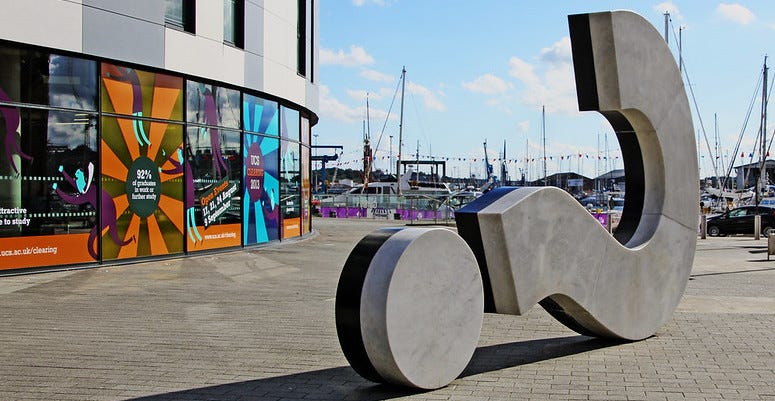
That Ipswich has its merits isn’t news to me, having moved to the town a couple of years ago; I was hankering for the coast but unable to completely cut the umbilical cord with London, just an hour down the train track. While Which? marked the port down for ease of getting around (you can, in fact, walk everywhere worth seeing) and gave extra points for the revamped marina (this jury is out), pictured, The Guardian spotted its more interesting assets, in particular the fact that Ipswich has “one of the best-preserved medieval cores in the country”.
Its correspondent, Chris Moss, quickly identified the reason why this town is undervalued. “You have to rummage to find the historical treasures, which lie scattered, disguised, buried, bullied… wrapped in roads, houses, retail and leisure centres,” he says.
Seek and you shall find a trail of places connected to local boy Cardinal Wolsey, and 16th-century Christchurch Mansion (with the biggest collection of paintings by Constable and Gainsborough outside London), which stands within bucolic Christchurch Park. There’s also a proud town square, Cornhill, graced by Italianate, neo-Georgian and Flemish architectural flourishes, and an Anglo-Saxon warren of roads and alleys with quaint names such as Silent Street, along which slouch medieval timber-framed houses, some pretty in Suffolk pink.
More recent additions include the hulking black glass Willis Building, a Seventies’ work by the architect Norman Foster, and an amusing bronze statue of Grandma and assorted characters from the Daily Express cartoon by Giles, whose former studio overlooks the spot. There’s a busy programme of open-air festivals, too.
Time has taken its toll on The Guardian article’s two other choices of ports deemed worth visiting: the faded seaside resort of Ramsey on the Isle of Man, where you can still take the electric railway to the summit of Snaefell; and Lancaster, once England’s fourth-largest slave port, which is now unpicking its dark maritime history for those keen to put into context why parts of the Lancashire town’s landscape are easy on the eye. They’re both going on my list for a reappraisal.
Indeed, we like an overlooked town at British Beer Breaks – especially when there’s good ale on offer – and my vote goes to one at the top of East Anglia’s bulge, King’s Lynn. Beyond the modern shopping precinct, this former Hanseatic port has a compelling history, rooted in its relationship with dastardly King John, and a well-preserved Georgian quarter, with fine medieval merchant houses amid cobbled lanes that lead to the harbour, where the river Ouse flows into the Wash.
A walk about town reveals a trail of handsome architecture, featuring a stout 17th-Century Custom House, the even older Trinity Guildhall, becomingly checkered with flint, and St George’s Guildhall, the UK’s oldest working theatre, with one of the stronger claims that Shakespeare trod its boards. In a sure sign the place is on the up, the artists have been moving in, including the innovative GroundWork Gallery, which uses art to address climate change, and Contemporary and Country, specialising in the art of East Anglia, which has just opened a private viewing room.
I’m due to visit King’s Lynn again soon. But first we have more visitors due in Ipswich. No doubt they’ll join the growing ranks of those surprised to find there’s much to admire in this unjustifiably overlooked destination.
Phil’s Beer Notes
There’s no shortage of fine beer venues in Ipswich. Among them, The Dove Street Inn is an old favourite that was picking up all the awards 15 years ago – and it hasn’t changed much, with 10 handpumps pouring a wide range of styles and an in-house brewery.
The Fat Cat is another must-visit for cask fans with up to 15 brews on the bar plus a selection of Belgians. For something more modern Briarbank Brewery, near the waterfront, has a very pleasant taproom upstairs where you can sample some quite creative modern brews.
And the Arcade Tavern comprises a warren of rooms over two floors with two bars serving a great range of craft beers on tap plus a couple of handpumps for the traditional stuff.
Photo: "Question Mark" by Leo Reynolds is licensed under CC BY-NC-SA 2.0.
No posts
Comments
Nothing yet. Say the first thing.
Sign in to join the conversation.