
On Mystery, Beauty & Writing in Dark Times
Of course I thought of Sir Arthur Conan Doyle. As soon as I saw the photo, how could I not?
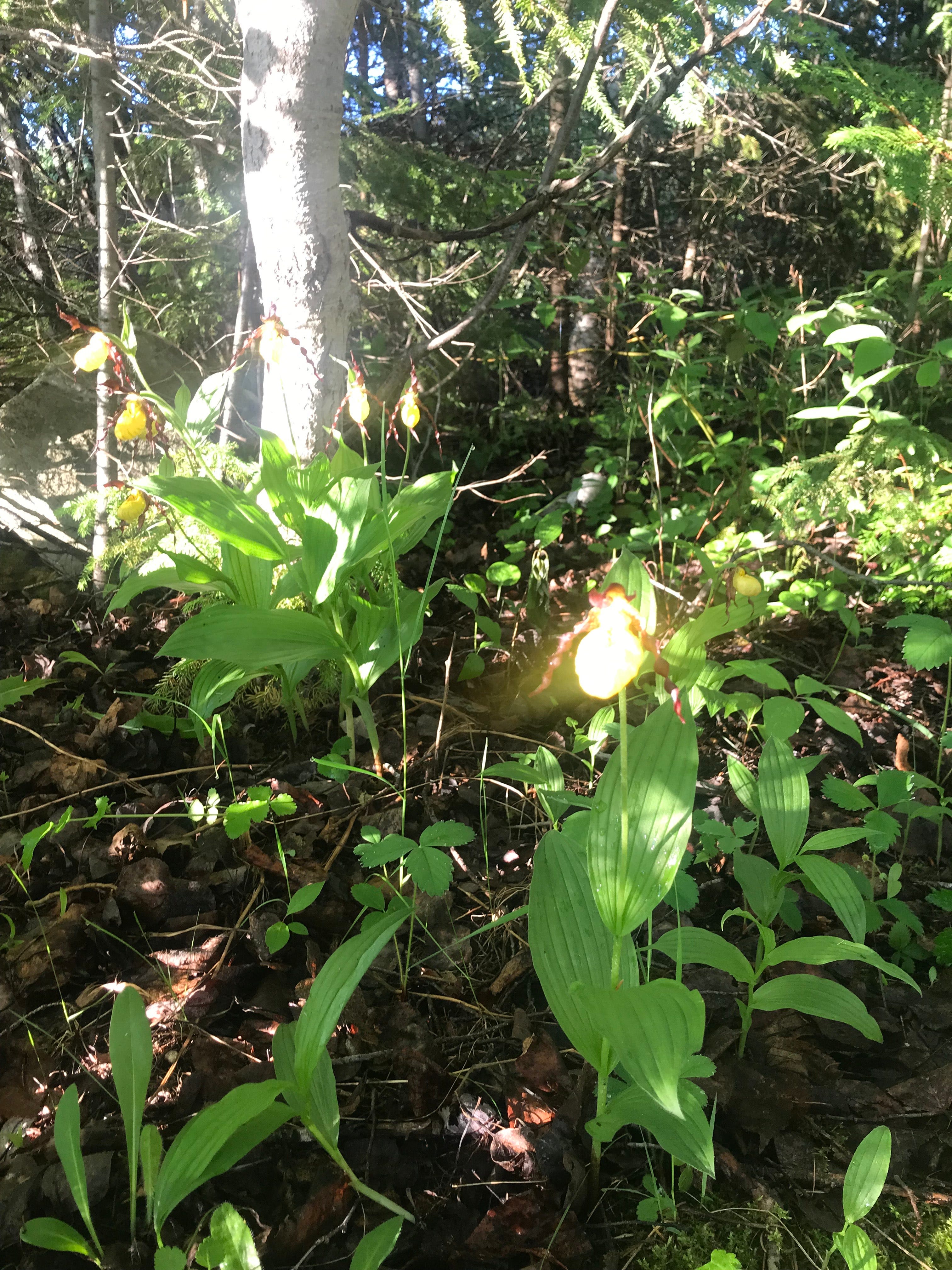
I had been out for a morning ramble earlier in the year, eyes wandering to find those spring ephemerals, the flowers that are here and then gone –looking especially for the Lady Slipper, discreet but showy, luring in all the bumble bees with that exquisite yellow of theirs. At first, I was reluctant to invade the quiet little glen to get a photo, but quickly found them irresistible, lured in as well by that perfect shade of yellow I suppose. And then in the photo, that strange and unexpected light. Well, wasn’t that delightful.
.
Secret places.
Portals. Strange lights.
Fairylands.
Worlds with in worlds.
Some might say they are simply Lady Slipper flowers, as if that isn’t enchanting enough –but really, they are small enchanted worlds unto themselves, with their own staircases, hidden doors, their glowing, sublime lighting. And on top of that there was this unexpected reflection of sunlight caught by my camera, set the little globe a-glowing - of course my imagination was enticed towards some curious and beautiful conjuring. Why wouldn’t one believe that some sort of otherworldly being might choose to live in a place like that? And that is when I suddenly understood Conan Doyle’s risky venture into the world of fairy documentation.
I had always wondered about it: already famous and respected for his writing, already considered the epitome of rational thought, as if he himself were the very embodiment of his own Sherlock Holmes – why on earth would Sir Arthur Conan Doyle investigate, then published, the Cottingley Fairy photos?
From their garden in Cottingley, Yorkshire, two young British girls had captured five photographs of fairies in the wild. The youngest, nine year old Frances Griffiths, had seen them first. No one believed her. Insistent, she borrowed her father’s camera and set out with her cousin, sixteen year old Elsie Wright, to obtain proof. The pictures were developed: four fairies hovering about Francis; later Elsie with a gnome of some sort. The photos gained notoriety, were the subject of scrutiny and lectures, and eventually came to the attention of Sir Arthur Conan Doyle.
Skeptical, perhaps, at first. Then beguiled –enough to publish both a series of magazine articles and a book on the subject. My, my, those two young girls with their cut-out dolls, hair pins and cameras. Clever girls, giving the poor man, and many others, something to believe in.
The hoax of it all is not what I am interested in though. In this time of deep fakes and disinformation the notion of a childhood trick sees charmingly benevolent. And the point it isn’t that he was fooled, it was what he chose to be fooled by that is of interest. I find the why of Conan Doyle’s belief interesting.
At the time, he was not new to the realm of the super-natural. For many years, in fact, Conan Doyle had had one eye on the ‘other side’, on the mysteries of life and death. His interest was Spiritualism:
// Spiritualism is a social religious movement popular in the nineteenth and early twentieth centuries, according to which an individual’s awareness persists after death and may be contacted by the living. The afterlife, or the “spirit world”, is seen by spiritualists not as a static place, but as one in which spirits continue to interact and evolve. //
-from Wikipedia
Not surprisingly, Spiritualism gained popularity during England’s Victorian era, a time of intense rupture. Challenges posed by new technologies and scientific thinking unmoored traditional values. Not surprising either, it was then that the concept of human-caused extinctions emerged as populations of many creatures plummeted due to Victorian excess. All of this sent many folks into a moral panic.
And then Victoria passed her baton of empire to Edward, then he on to George, and then a few years later, the empire marched into WWI.
The Great War. The before and after of it all, the dread reach of the loss. For Conan Doyle:
Two brothers-in-law
Two nephews
And finally his son Kingsley who took two shrapnel bullets to the neck at the Somme, recovered, then died of complications from the devastating post-war influenza outbreak.
His brother John also survived the war only to die during the same pandemic.
So, yes, Conan Doyle was preoccupied with the dead, of speaking with, and knowing them. For him, an openness to the supernatural was essential for spiritualism to be embraced. Hence his weakness for those Cottingley fairies:
The recognition of their (the fairies) existence will jolt the material twentieth-century mind out of its heavy ruts in the mud, and will make it admit that there is a glamour and mystery to life.
- Conan Doyle, The Strand Magazine, December 1920
Conan Doyle was a writer in very dark times who chose to believe in something impossibly charming and otherworldly. To believe our existence was not simply mired in the mud and blood of excess, war and commerce. That resolute rejection of cynicism, that embrace of the beautiful – I find it admirable.
None of us need to be told that we too find ourselves in dark and base times. That things are unsettled, bleak. It is hard to clear space in one’s own writerly mind for something other than the grim. So as I take to my porch to begin my next novel, I am trying to engage in the same kind of resistant imagining that Conan Doyle pursued. As so much of the collective imagination is slithering towards spectacle and debasement, it seems a call of duty to see what is good and profound.
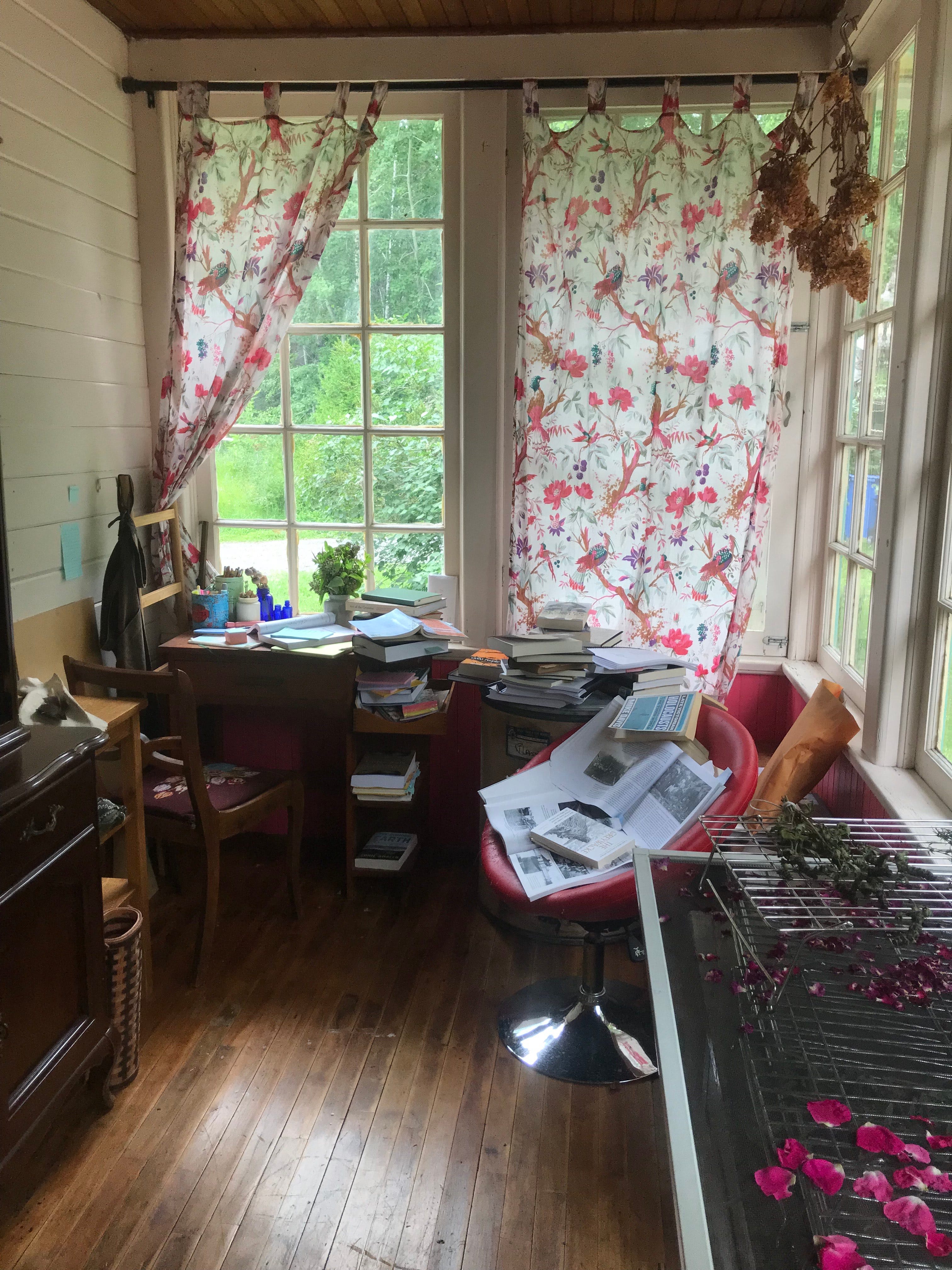
So into these new dark ages we need to go, with our books and our stories and our radical imaginings. We’ll just need a bit of luck. Maybe the wee folk will send some our way.
For more information on this see:
The Coming of the Fairies by Arthur Conan Doyle (first published 1921) Samuel Weiser Publisher, New York, 1975.https://artsandculture.google.com/story/the-cottingley-fairies-a-study-in-deception-leeds-university-library-galleries/lgVB6Ceti9WVAw?hl=enhttps://collection.sciencemuseumgroup.org.uk/documents/aa110100330/issue-of-the-strand-magazine-december-1920
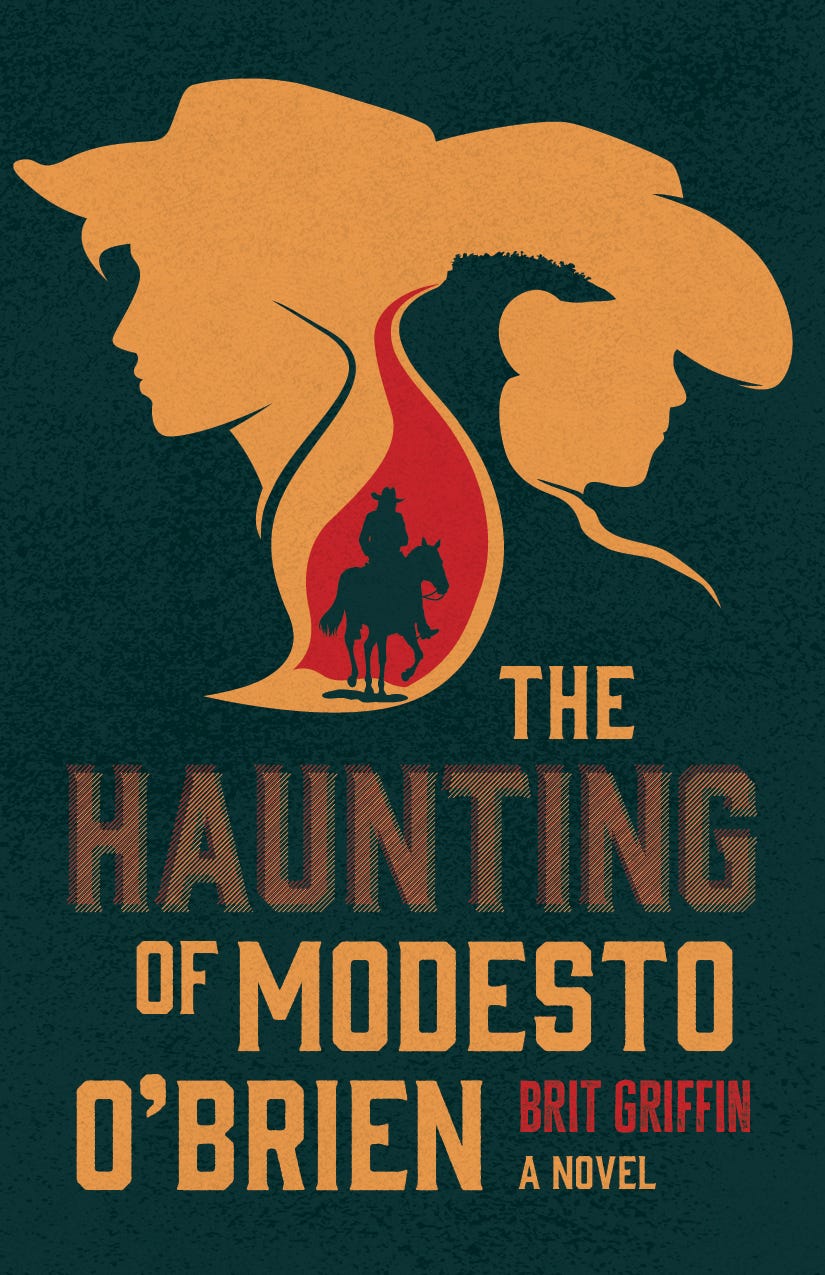
If you like my writing and would like to support it, please pick up, or order a copy of my latest novel, The Haunting of Modesto O’Brien, at your local, independent bookstore or order direct from my publisher, Latitude 46: https://store.latitude46publishing.com/collections/featured-books/products/the-haunting-of-modesto-obrien
You might also be interested in my climate change trilogy, The Wintermen, also available for order. https://store.latitude46publishing.com/collections/fiction/products/the-winter-men
No posts
Comments
Nothing yet. Say the first thing.
Sign in to join the conversation.