
I’ve seen her now a few times – carefully edging along the length of the car, those elfin ears keen, taking in the warning chatter of the red squirrels. Watched her too as she was coming up the road and cutting across the backyard, not in a hurry, alert, one huge paw after another. Lynx, taking it all in.
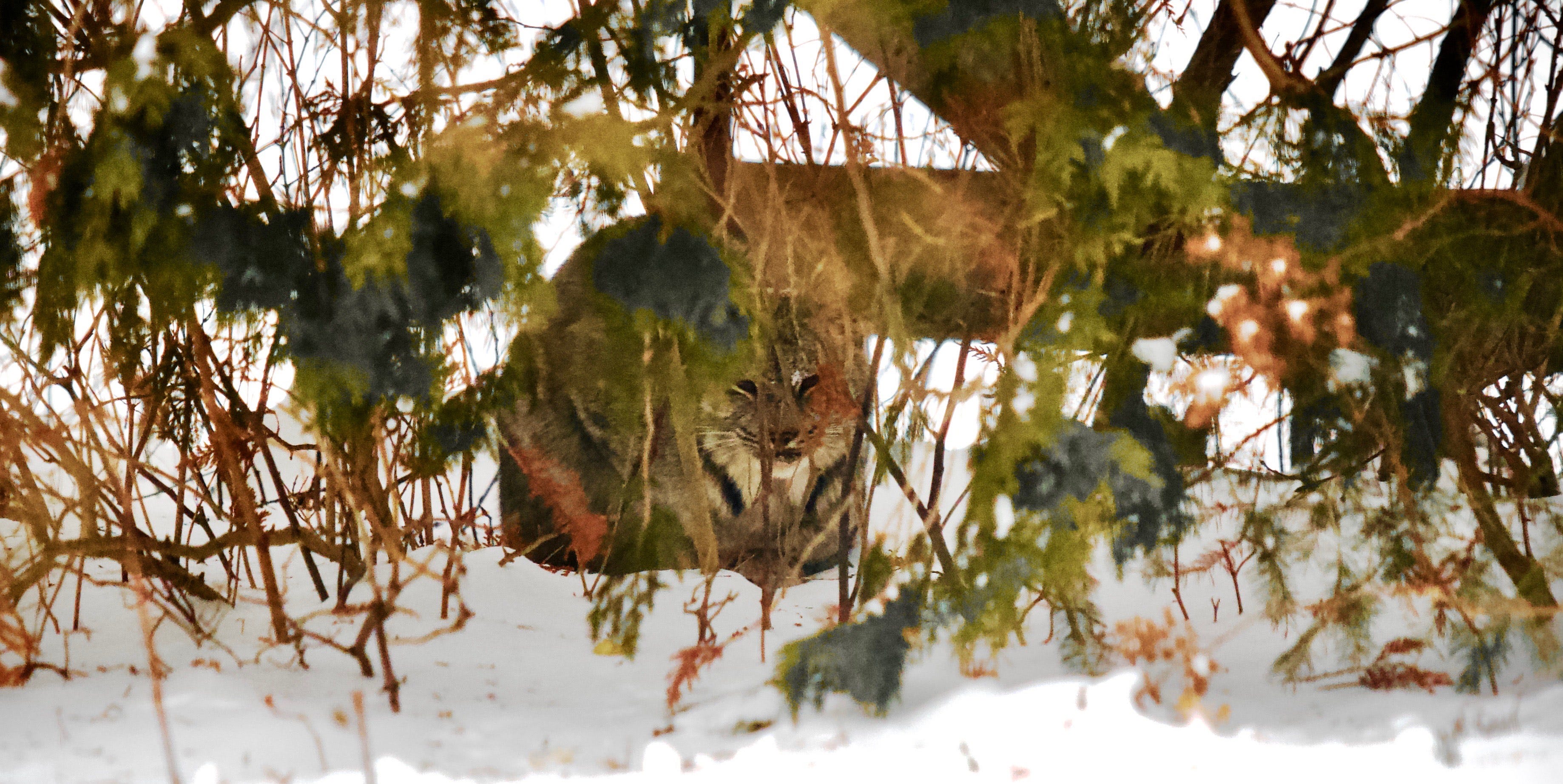
When my dog heads up the same road, she zig-zags, nose to the ground, distracted by this scent and then the next, she rolls in the snow, bounds up and over the snow banks. The story she writes in the snow is one of exuberance. Lynx’s age-old tale is one of stealth and observation, she walks a straight path across the chaos of rabbit, squirrel and bird tracks; her tracks through the deep snow are well-spaced – the cat has an impressive stride.
I am thinking of this creature as I make my way across the field this morning. It is very cold and dark, the now waning Wolf Moon catching the snow shadows so I can follow my own snowshoe tracks from the day before. If I were Lynx, I would be quiet in the still morning, but as it is my snowshoes are jimmy rigged and worse-for-wear, make creaking sounds on the hard snow.
At times like this, awkward and loud as I go, it is hard not to harbour just a hint of envy for Lynx. The creature is exquisitely adapted for the snowy north - back legs longer than the front, good for leaping through deep snows. The creature’s paws are huge, furry and splayed; when the paw hits the snow, the toes spread out and the foot does not sink as deeply into the snow. Thus the eternal relationship of lynx and hare is made possible – how else to pursue the nimble hare who can leapt a dozen feet in a single bound?
But it is the moon that really gets me pondering Lynx. I am able follow that overlapping trail of my tracks, the pattern of the webbing pushed into the snow, by the contrast of the deeper blue shadows with the whiteness of the snow. The moon makes it possible for me not to be stumbling around in the back field, losing track of the trail, sinking into the snow. Lynx, though, doesn’t need the moon.
For many predators, it is their sense of smell (bear), or their hearing (fox), that aids them most in their survival. But for Lynx, it is all in the eyes. Those eyes, the ones that will see you before you’ll ever see them, the ones that glow an eerie amber, those eyes are structurally brilliant: an extra layer of cells behind the retina to boost perception in the dim of twilight, more photoreceptor cells known as rods that are exceptionally light sensitive (Lynx: 400,000 rods per square millimeter - human: 160,000 rods per square millimeter), their pupils open faster and wider than ours in dim light, and they have an exceptional field of vision (Lynx: 200 degrees – humans 180 degrees). All of these ocular adaptations allow this creature to see, as writer Alcott Smith tells us, “…floating dust motes and the flickering of mouse whiskers in semi-darkness …”.
Not surprising then that the faint, far away northern constellation is named for the Lynx, this beast with such a luminous pale coat, moons for eyes. I try to focus on the beauty of this porous weave of relationships, the heavens, the hare and the lynx, all present on this scrappy, used up landscape. But the disarray of the human world intrudes, has me wondering about those folks in Venezuela, wondering too about the land there and how it might suffer from this grubby, desperate last grasp of North America’s petro-fixation. Because when that other kind of beast, that debauched biblical beast, turns its gaze on something, it is coming for it all, coming for the land itself.
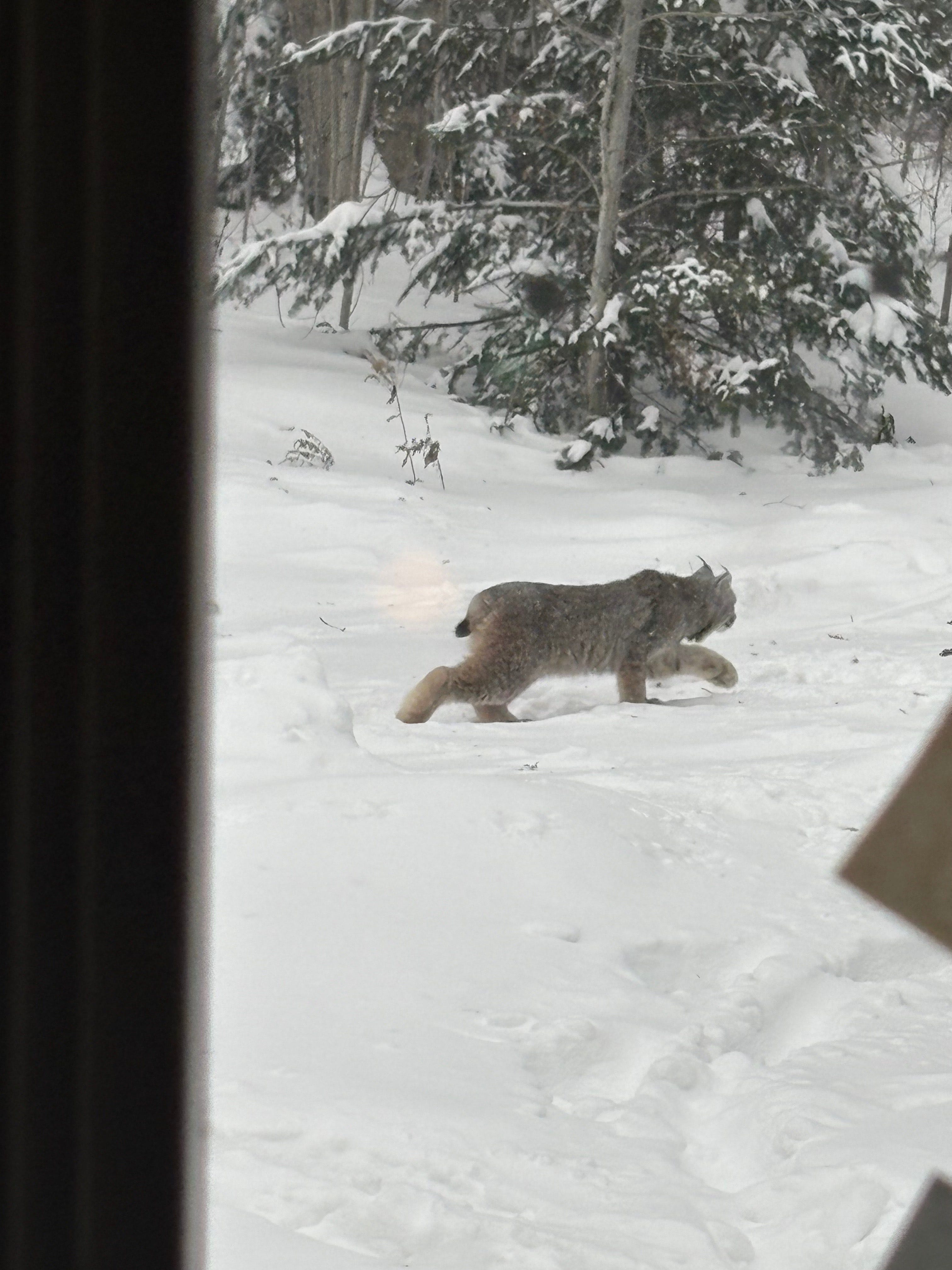
I conjure the image of Lynx in the yard, watching, wary, strategic. And ready. See her decide to move on, find her meal elsewhere, the squirrel above her in the birch tree too loud and shrill. She rises, walks carefully towards the back of the house, those paws making a straight, singular path from the woodshed to the woods. I guess that is it, how else to go into 2026 except to just go? Lynx showing the way, paying attention, one foot in front of the other.
Photos: Lynx in underbrush - by Alex Bird; Lynx in yard - by Lola
To learn more about the Lynx’s genius eyesight see: “What Cat’s Eyes Tell Us About Their Souls” by Alcott Smith; North Woodlands, August 2017. https://northernwoodlands.org/articles/article/cats-eyes-souls
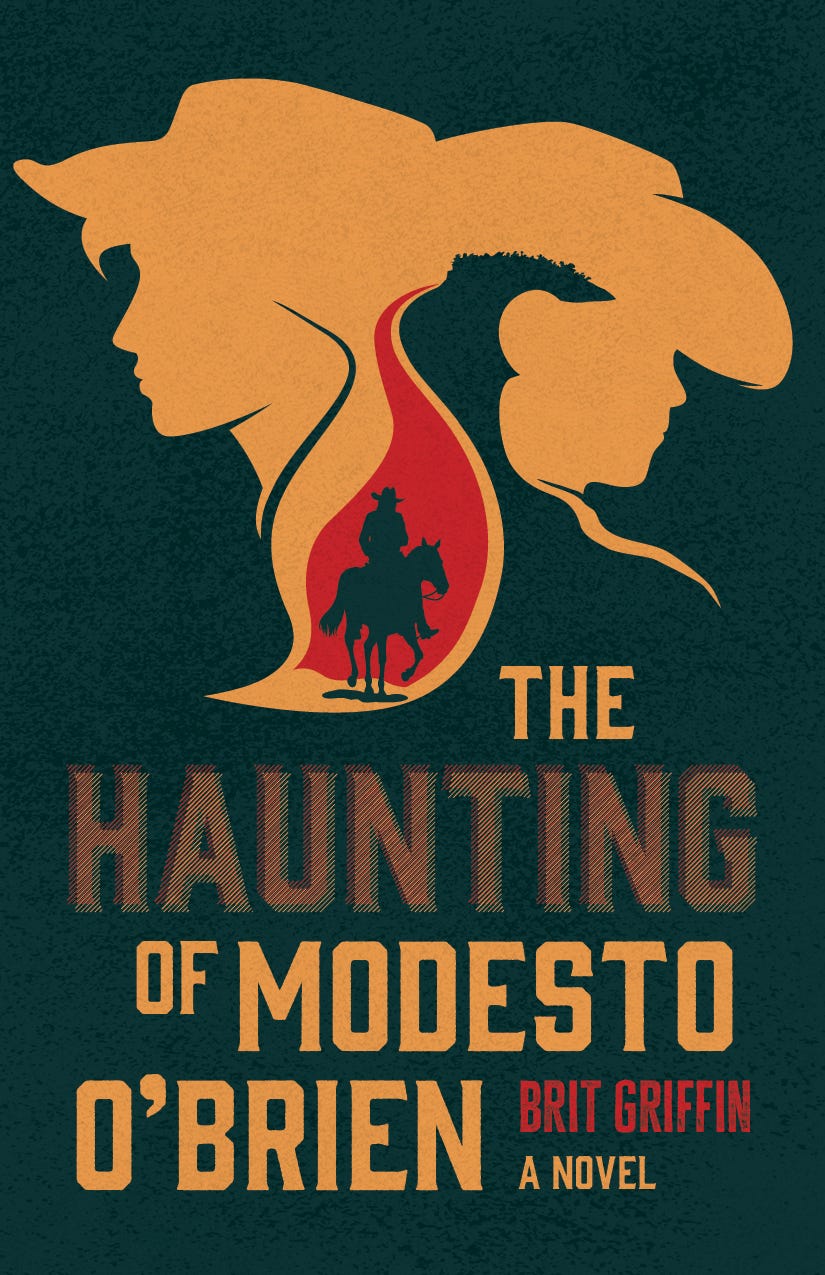
If you like my writing and would like to support it, please pick up or order a copy of my new novel, The Haunting of Modesto O’Brien, at your local, independent bookstore or order direct from my publisher, Latitude 46: https://store.latitude46publishing.com/collections/featured-books/products/the-haunting-of-modesto-obrien
You might also be interested in my climate change trilogy: The Wintermen, Wintermen II: Into the Deep Dark & Wintermen III: At the End of the World, also available for order and from https://store.latitude46publishing.com/collections/fiction/products/the-winter-men
No posts
Comments
Nothing yet. Say the first thing.
Sign in to join the conversation.