
The weather was too warm, snow sticky, melting - the March-like turbulence in the dead of winter, the slate sky, it felt all hunched up, waiting for something troubling to occur. As if there aren’t enough troubling things happening already in the world, that grim and violent thing that has been loosened in our daily news of the world. Hard not to feel loosened oneself, unmoored. So coming upon the pinprick dots of blood against the white of the snow - bright red centres, then the smudge of it paling as the snow softened - well, it was disturbing.
I looked around for the source – my first thought went to Hare – that would make me sad, she’s so beautiful and solitary, I would miss her, miss her incredible poise, her ability to freeze and almost disappear into the snow with her brilliant camouflage; a friend recently described seeing a hare seemingly turn into a stump when pursued by a lynx - hares are good at hiding in plain sight.
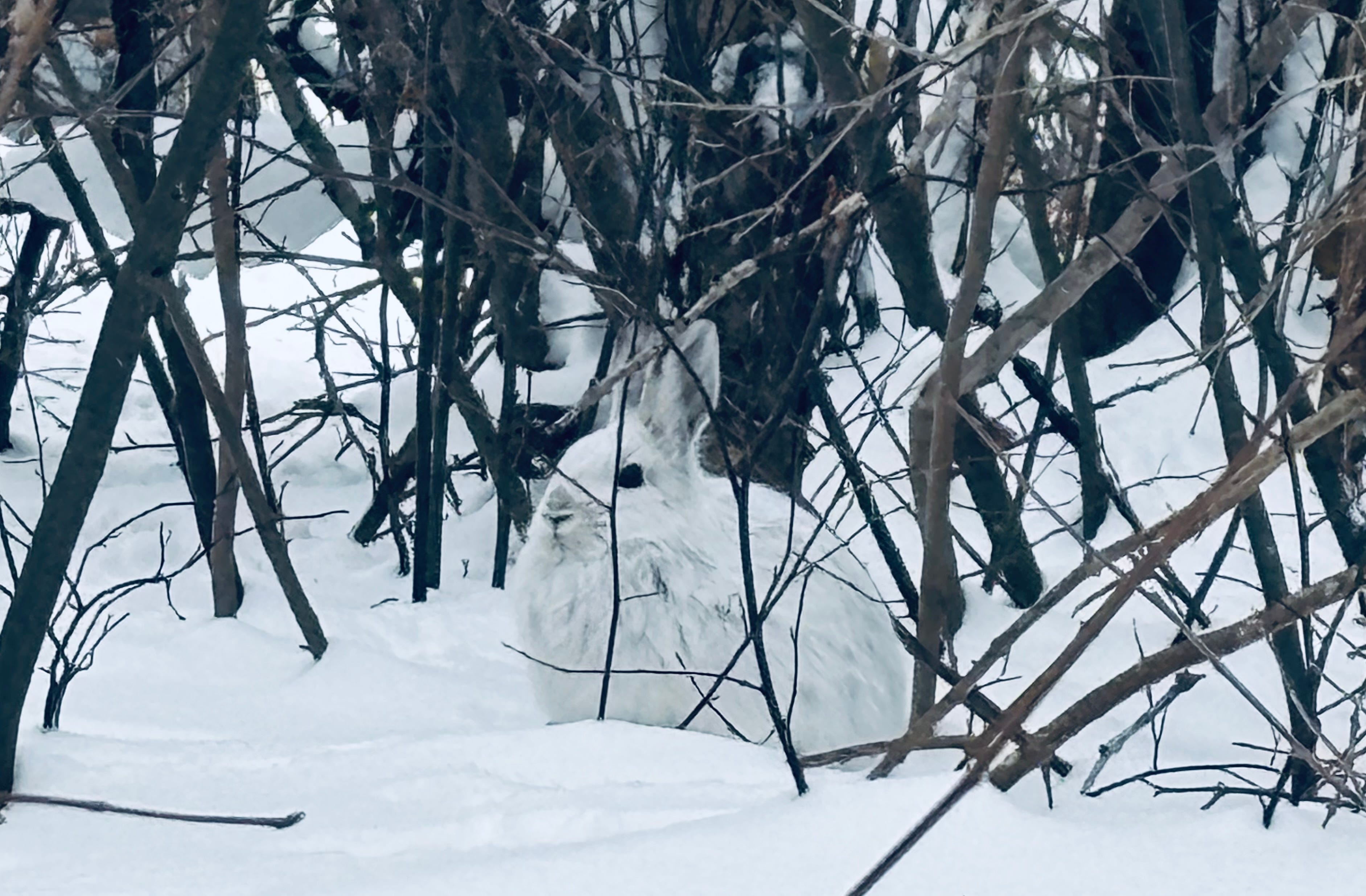
Wandered some more, looking for any sign of what might have happened over night. There wasn’t much blood, still, I had seen Lynx scouting about, maybe stalking one of the red squirrels? The dots of blood were far apart though, a few on one side of the yard, more at the base of a tree across the driveway – but some of the drops were not near any of the many and varied animal tracks, so perhaps an aerial kill, an owl maybe? Hadn’t heard or seen an owl yet this year, but there could be one out there.
My mind drifts back to hare – if it were her, yes, I would miss her, but in a way how could she not meet her end by Lynx? When a lynx takes a hare it is not an act of violence, a dreadful hate-motivated event – it simply is. Simply the nature of an age-old relationship: hare eats willow, lynx eats hares. Hares make up most of the diet of the lynx, and so it follows that as goes the fate of hare, so too the fate of lynx. It has long been observed that hare populations follow a ten-year ebb and flow cycle of plenty and scarcity. This cycle is then reflected in lynx populations; as observed by naturalist Ernest Thompson Seaton in 1912:
//It lives on Rabbits, follows the Rabbits, thinks Rabbits, tastes like Rabbits, increases with them, and on their failure dies of starvation in the unrabbited woods.”//
There is both logic and mystery about this. To reproduce, both creatures need to have enough weight and not too much stress. So when there are plenty of hares and lynx, things are good – but too many hares, and the carrying capacity of their habitat can become over-taxed, and abundance gives way to scarcity, weights fall and reproduction declines. Why this takes an average of ten years, and how it has persisted over such a long and varied time, is not clear.
The cycle is an intricate, finely tuned relationship – predator & prey is one way of understanding all of this, but enduring interdependence and connectivity is another. It seems important to have these alternative ways of understanding nature. Our inclination is to reduce all relationships around us to winners/losers, predators/prey. Perhaps we gravitate towards this interpretation because it can give us licence to see our own communities and relations through the same lens. We are so quick to reach for ‘survival of the fittest’, for analogies of food chains and apex predators, that we miss the lesson of interdependence, of shared pasts and destinies.
I don’t know what it means when there isn’t enough willow for hare, or enough hare for lynx, I can’t understand or feel the sensations or yearnings or fears of either of these animals – but I do know that humans do not believe in, or accept, the idea of limits to consumption, and this rejection puts everyone, and all of these kinships, at risk. Climate change will, and already is, undermining many very old and lasting relationships: less snow, shorter winter seasons, hotter fires, forestry practices - all of these negatively impact hare & lynx.
We are the great disruptors in nature – looking for the work-arounds to limits rather than scaling back, taking less. All of us, hare and lynx and human beings, effect one another –are part of the web of life, regardless of our notions of hierarchy and superiority.
For now, I will keep an eye out for those tell-tale tracks of hare as fresh snow arrives. It is twilight now and I could not see them even if they were here, Hare with her ‘now you see me/now you don’t’, and lynx slipping away with those same soft whites and greys of the early evening snows. The ghost and the magician, watching and waiting for one another.
Sources:
About Seaton: Eighteenth-Century Naturalists of Hudson Bay by Mary Houston et al, McGill-Queen’s University Press, 2003.
Wildlife’s Ten-Year Cycle by Lloyd B. Keith, University of Wisconsin Press, 1963.
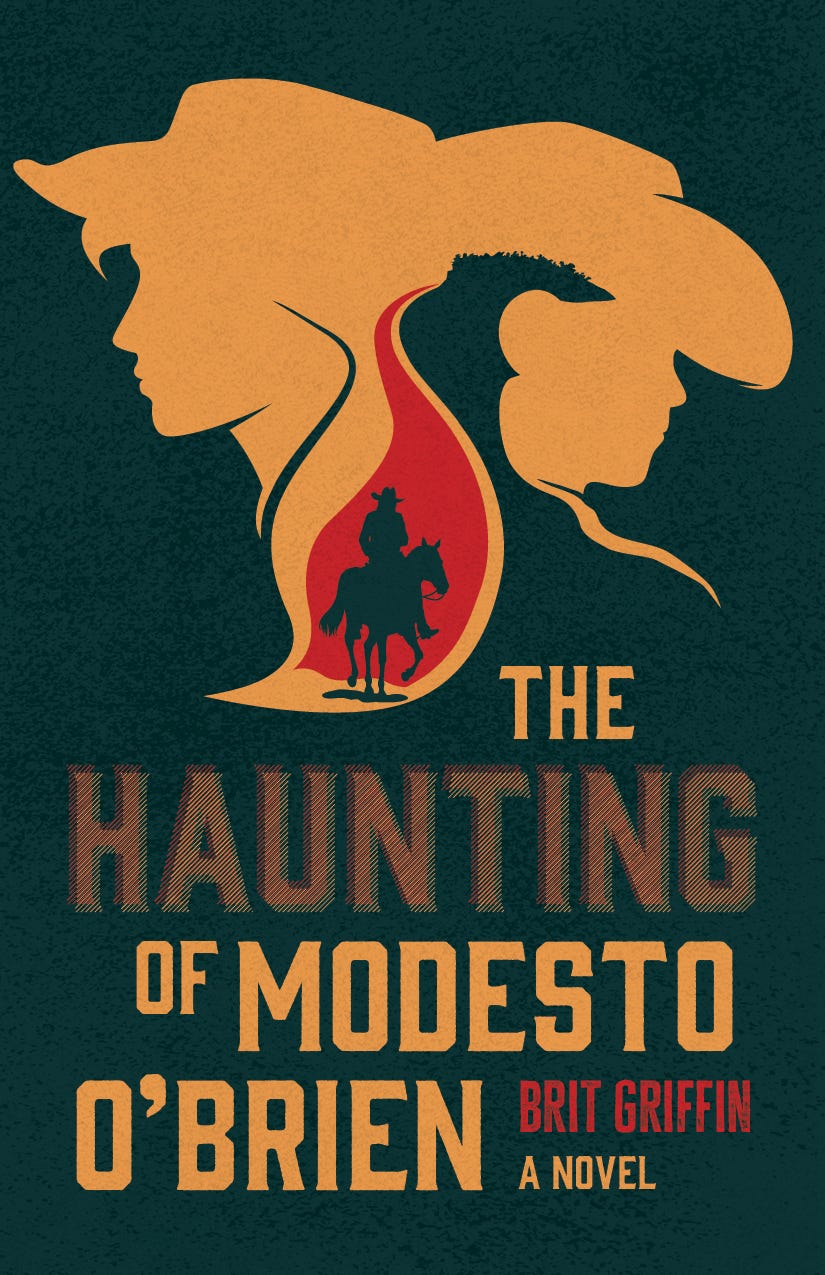
If you like my writing and would like to support it, please pick up a copy of my new novel, The Haunting of Modesto O’Brien, at your local, independent bookstore or order direct from my publisher, Latitude 46: https://store.latitude46publishing.com/collections/featured-books/products/the-haunting-of-modesto-obrien
You might also be interested in my climate change trilogy: The Wintermen, Wintermen II: Into the Deep Dark & Wintermen III: At the End of the World, also available for order and from https://store.latitude46publishing.com/collections/fiction/products/the-winter-men
No posts
Comments
Nothing yet. Say the first thing.
Sign in to join the conversation.