
My essay “The progress movement needs a better theory of progress” provoked some interesting pushback from Geoffrey Manne, president of the free-market-oriented International Center for Law & Economics.1 Manne and I have known each other for many years and have always been on friendly terms, and he politely prefaces his criticisms with a nod to his admiration for my larger body of work. But this particular piece of mine rubbed him the wrong way — and I think this his reaction is revealing of a broader source of intellectual resistance to the critiques of contemporary capitalism I offer in The Permanent Problem.
My essay, as you may recall, argued that partisans of technological progress need a richer, more humane conception of the progress they advocate — one that aims, not merely at extending human capabilities, but at improving the quality of individual human lives as well. This is bad advice, according to Manne. Mixing together the case for technological and economic advance with any substantive vision of the good life, he contends, amounts to a misguided and dangerous deviation from the moral humility at the heart of the liberal tradition. The headline of Manne’s piece gets right to the point: “Grow the pie, skip the sermon.”
Manne’s reaction isn’t an outlier. Critical reviews of my book have complained along similar lines that my analysis of contemporary capitalist societies is overwrought: I’m exaggerating our problems, and I’m blaming capitalism and liberalism for social ills they’re not responsible for. And it’s noteworthy, I think, that these criticisms have come from people who share my basic political orientation — what you might call the embattled liberal center, uniting people aligned with both the center-right and center-left and who now see common ground in their opposition to right-wing populism and left-wing radicalism.
The tendency that unites these criticisms with Manne’s is a strong reluctance, even aversion, to judging liberal societies by any standards that go beyond fairness and efficiency. If nobody is being mistreated, and arrangements are conducive to people accomplishing what they set out to do, then good liberals should accept whatever results on the ground that the people involved are the best judges of what’s good for them. To presume to judge the quality of the values that others live by — on the assumption that some ways of life, and some cultures underlying those ways of life, are better than others — is to risk coming across as elitist, or undemocratic, or just plain insufferable. I crossed this line with my book critics by arguing that contemporary liberal societies are plagued by serious cultural dysfunctions; I crossed it with Manne by urging my fellow enthusiasts for technological progress to remember that whether powerful new tools will serve or undermine human well-being depends on the culture surrounding their use.
I agree unreservedly that there is wide scope within which an easygoing, live and let live attitude — call it liberality — is commendable. In a hyper-pluralistic society, “don’t yuck my yum” is a sturdy rule of thumb for reducing social frictions and conflicts. But past some point, commitment to what might be called value-free liberalism is ultimately self-defeating — because it erodes the commitment to those fundamental values that underlie and maintain actually existing liberal societies.
Which brings me back to Manne’s line: “Grow the pie, skip the sermon.” The problem with this response is that it boomerangs. We would have no interest in growing the pie unless we had first been swayed by some sermons rather than others.
Modern economic growth never would have arisen in the first place without a great deal of successful sermonizing. You need to believe that the natural world is knowable — that there are regularities in nature that human beings can detect; furthermore, you need to believe that knowledge about the natural world can be applied to improve material conditions for human life, and you need to believe that such a project of material improvement is a worthwhile and indeed highly salutary pursuit. These aren’t self-evident truths: on the contrary, most social orders throughout most of human history have been organized around very different beliefs. The economist Joel Mokyr recently won a Nobel Prize for his documentation of the transformational cultural changes that were needed to unleash the world-historical novelty of continuous innovation and growth.
Meanwhile, modern economic growth arose within the larger institutional framework of liberal (and increasingly democratic) capitalism. And these institutions were shaped and animated by a particular set of sermons about the nature of the good life. If you believe that most individual lives are of little account, and what really matters is the welfare of the clan or nation or race or class or church; if you believe that society works best when everyone knows and accepts his place in the great chain of being; if you believe that debate and discussion serve no purpose but to allow error to challenge Truth; if you believe that ordinary people are incapable of directing their own affairs and must be dominated by their betters for their own good; if you believe that all earthly power should be vested in an absolute monarch who rules with divine sanction; if you believe that physical labor is degrading and excessive concern with material welfare is decadent and corrupt; if you believe that peace and prosperity are contemptible distractions from the true highest calling of military glory — well, liberal democratic capitalism isn’t going to be your cup of tea.
Liberal democratic capitalism would never have arisen without the adoption of some beliefs, and rejection of others, about the substance of the good life. Moreover, the maintenance of those beliefs among at least a critical mass of the population is necessary for either liberal democracy or capitalism to function effectively. Manne suggests that all that’s needed is to follow certain procedures — “remove barriers to innovation, grow the pie, let people choose” — for robust growth and human flourishing to ensue. But that’s clearly wrong. “Peace, easy taxes, and a tolerable administration of justice” — Adam Smith’s institutional prescription for opulence — were the rule in many places at many times during the long agrarian age: why then was it that only in Smith’s country, and only during Smith’s lifetime, did the phenomenon of modern economic growth finally get underway?
Institutions — including the institutions that have delivered modern growth — are much more than sets of disembodied rules. Any institution that tried to function purely on the basis of enforcing compliance with formal rules would collapse virtually overnight. Successful institutions, rather, are dense moral ecologies whose participants have internalized a particular set of beliefs and norms — beliefs and norms that align them with the institution’s mission. This is a major reason why the U.S. effort to transplant democracy in Afghanistan’s barren soil ended in failure. And why capitalism works so much better in Silicon Valley than in Appalachia.
Yes, a distinctive kind of neutrality is central to the liberal creed. Differences in religion, languages, and parentage have traditionally mattered a great deal in determining who is up and who is down in a particular social order; in liberal societies, by contrast, all people are considered equal under the law regardless of faith, ethnicity, or social rank — at least to the extent that liberal principles hold sway. But this doesn’t mean that liberal modernity refrains from “imposing any particular vision of the admirable life,” which is what Manne accuses me of wanting to do. Liberalism discounts the importance of religious and cultural differences and bulldozes through distinctions of birth because it elevates our common interest in improving our individual welfare — and, in particular, our material welfare — through peaceful cooperation and competition. Free individuals seeking their own individual betterment — that’s the liberal vision of the good life.
Liberalism arose when the world was poor, so the bargain it offered — let’s put aside our differences to focus on our shared goal of individual betterment — understandably stressed the material aspects of that shared goal. In a world in which the vast majority of people lived at the edge of privation, and even the rich endured physical hardships and suffering that we would find unbearable, the most urgent and obvious path toward individual betterment was through improvements in material welfare. The mass appeal of such improvements, and the immense fertility of liberal capitalism in delivering them, explain why the rise of liberal institutions and the expansion of commercial society went hand in hand. The power of liberal principles to shape the world rested heavily on the credibility of its promise to replace traditional arrangements with the reign of peace, prosperity, and pleasure.
But the liberal conception of individual betterment was never confined to material progress: intellectual and moral progress were always part of the larger package. Belief in the moral worth of every individual human being is foundational to the liberal faith. Each individual possesses a unique mix of aptitudes and preferences; accordingly, the full development of the potential of the human species requires conditions that allow and encourage the realization of each individual’s potential. In the words of Wilhelm von Humboldt (which serve as the epigraph for John Stuart Mill’s On Liberty): “The grand, leading principle … is the absolute and essential importance of human development in its richest diversity.”
The liberal vision of human flourishing is thus one of individual self-improvement — through the development and exercise of inborn capacities — occurring at mass scale. With the rise of liberalism, we see not only the growth of commercial society, but also the spread of mass education and the increasing recognition and protection of individual rights — most dramatically in the expansion of the voting franchise and the abolition of chattel slavery.
The system for “growing the pie,” then, is the outgrowth of a larger liberal tradition animated by a humanistic vision of mass individual flourishing in all its rich variety. My essay on the progress movement was an attempt to encourage fellow “upwing” technophiles to reconnect with that larger tradition, and that animating vision.
The fact that my efforts have met with so much resistance from committed small-l liberals is evidence of a wrong turn in liberal thinking over recent decades — a wrong turn that has misled liberals into a narrow, impoverished, and ultimately unsustainable understanding of their creed. As I discussed in my essay on the progress movement, the outsized influence of John Rawls on liberal political philosophy, and of economics on liberal social thought generally, has resulted in the rise of a kind of value-free conception of liberalism. According to this view, liberalism is pure procedure: it is simply a social protocol that allows people with different conceptions of the good life to get along with each other. With the Rawlsian turn, liberal principles of justice are understood as those that would emerge from a purely neutral process of social choice in which all participants must choose from behind a veil of ignorance. This misunderstanding is abetted by the currently dominant economistic understanding of individual welfare as nothing more than the satisfaction of preferences, whatever they may be. This shriveled version of liberalism is incapable of recognizing or remedying the erosion of its moral and cultural foundations — the dismal effects of which we see in the news every day now.
As Adrian Wooldridge has documented in his excellent new history The Revolutionary Center, the liberal ideal of self-development holds us to much higher standards:
The two sides of the phrase are equally important: it should be self-development — I should determine the course of my life rather than surrendering my will to someone else — but it should also be self-development — I should bring my personal qualities to fruition rather than allowing them to lie fallow. To live a fulfilled life is not to live a role that is prescribed by history or dictated by tradition. Nor is it to give in to every passing whim or animal instinct. It is to reach inside ourselves and discover our unique abilities and then work hard to turn those abilities into usable talents.
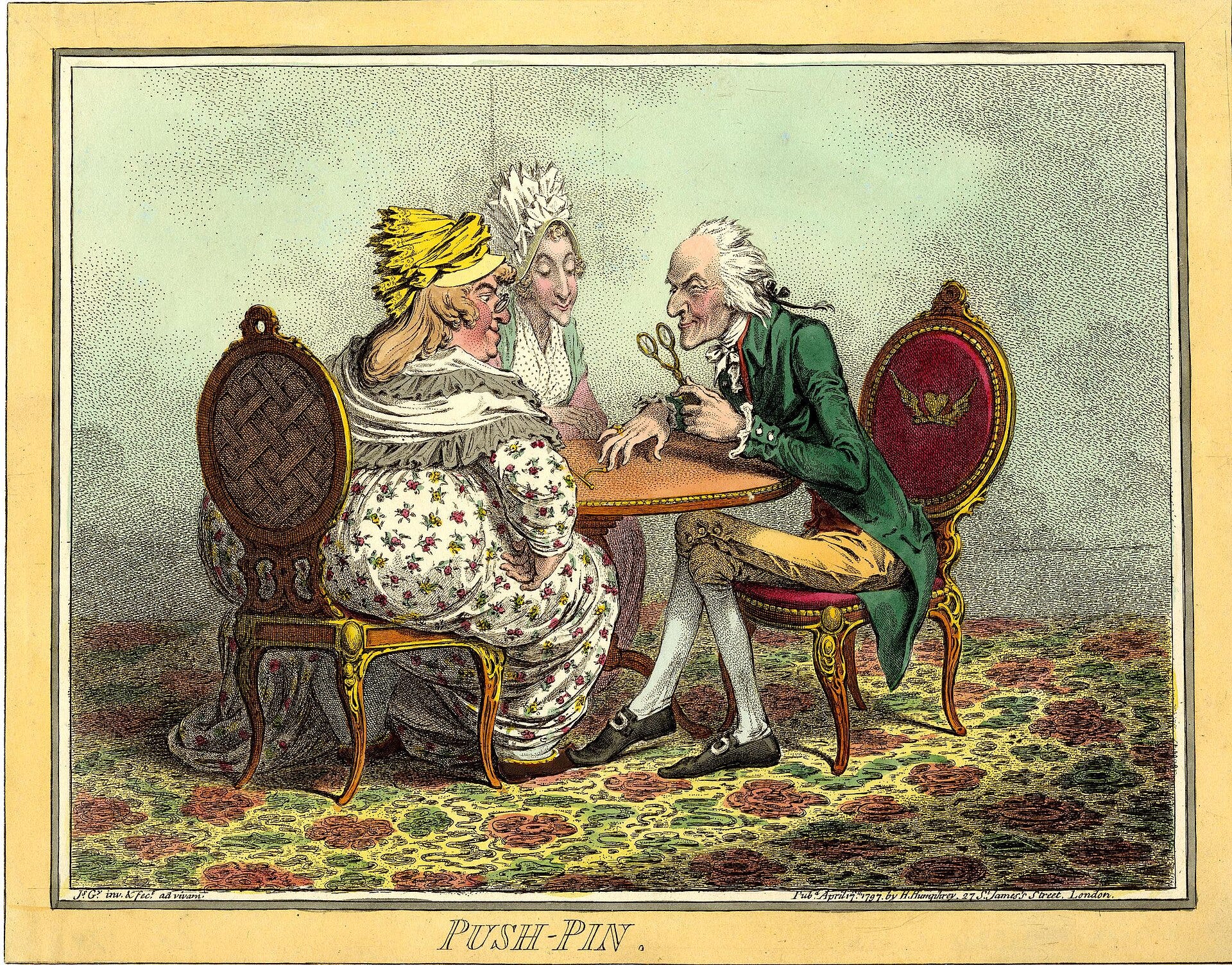
Yes, this liberal ideal recognizes the incredible plasticity of the human capacity for culture and the resulting kaleidoscopic variety of human endowments and preferences. A liberal social order refuses to lock people into any one specific religious revelation or cultural tradition: they must compete for adherents who are free to move from one to the other. There are many possible ways to develop one’s talents, and so the ideal of liberal self-development is a wide path indeed — but it nonetheless leads in a very different direction from the path of self-indulgence, addiction, and alienation. Mill was right and Bentham was wrong: push-pin and poetry are not the same. There are higher as well as lower pleasures, and while (in my view, at any rate) there is plenty of room for enjoying the latter, our lives fall short of genuine flourishing to the extent we fail to strive for the former.
Liberalism doesn’t tell you which God to worship, but it does require faith in the ultimate goodness of humanity, gratitude for our blessings, and resolve to leave the world a better place. Liberalism doesn’t tell you which books to read, but it does esteem intellectual effort and rigor. Liberalism doesn’t tell you which tasks you should excel at, but it does prize excellence and the dedication and teamwork needed to achieve it. Liberalism doesn’t tell you whom to love, but it does lay its foundations on the “small platoons” of face-to-face relationships through which we learn to commit to something greater than ourselves. While liberalism may give us wide freedom to do as we please, Lord Acton was right: the essential freedom, upon which both individual and social flourishing depend, is “the right of being able to do as we ought.”
Liberalism is thus a broad-minded creed, but also a demanding one. We have abandoned its high standards in recent decades — and we wonder why pessimism and anomie and social disintegration are now so common throughout the liberal democracies. Ryan Avent has called this abandonment of standards “the Modern Faith”: the pseudo-sophisticated delusion that achieving a good society requires nothing beyond good system design — getting rights properly assigned and putting the correct incentives in place. This delusion has us thinking of society as a mere machine, when in fact it is a communion of souls.
Anxiety about the current state and future prospects of liberalism is widespread these days among those who wish it well. But for all who want to move beyond hand-wringing and actually do something constructive to make things better, I urge you to leave the shallows of the Modern Faith and value-free liberalism and strike out for those cultural depths out of which liberalism emerged. Yes, there is important work to do in policy change and institutional reform, but these days that is mostly a top-down process confined to a technocratic elite. Furthermore, there is little chance of getting the policies and institutions we need without appropriate cultural encouragement. And cultural renewal — creating a world in which beliefs and values and norms enable and encourage widespread flourishing — is ultimately up to all of us. In the countless decisions of day-to-day life, in every local community, there is work to be done. So do what you can to nudge things in the right direction — one small, uncertain, human step at a time.
Manne’s essay came out just as my wife and I were departing for some vacation travel in Europe, so it’s taken me a little while to get around to this. How delightful to write without needing news hooks!
No posts
Comments
Nothing yet. Say the first thing.
Sign in to join the conversation.