Jonathan Rauch on responding to the crisis of liberalism
Liberal values and institutions now face aggressive challenges from both right and left extremism, so how should defenders of the embattled liberal center respond?

the quest to "live wisely and agreeably and well"
Subscribe:.rss.atom.json.md.m3u.pls
Live Last read · last published · next check
Saves to your Listen queue, to pick up on another day or another device.
Liberal values and institutions now face aggressive challenges from both right and left extremism, so how should defenders of the embattled liberal center respond?
Virginia Postrel has made a career out of seeing the extraordinary in the everyday — from the growing importance of “look and feel” in the products we buy, to the power of glamour to arouse our sense of longing, to tracing the history of humanity through its production and use of textiles.
America is experiencing an epidemic of loneliness: marriage and birth rates, the number of close friendships, time spent with friends, and community involvement more broadly are all in decline.
In the heady days after the collapse of the Soviet Union, many imagined that we had arrived at the “end of history” now that liberal democratic capitalism had chased all ideological competitors from the field.
My essay “The progress movement needs a better theory of progress” provoked some interesting pushback from Geoffrey Manne, president of the free-market-oriented International Center for Law & Economics. Manne and I have known each other for many years and have always been on friendly terms, and he politely prefaces his criticisms with a nod to his admiration for my larger body of work.
If you follow celebrity news at all, you know that the man-bites-dog stories are the ones about stars who never let fame go to their heads.
All of the blessings of modernity, Ryan Avent argues in a fascinating new book, rest on faith.
Any attempt to anticipate how social change will unfold in the coming years has to confront a major unknown: how much better is artificial intelligence going to get, and how quickly?
For as long as I can remember, I have been an enthusiastic believer in and supporter of human progress.
After years of disappointing productivity growth, are we about to experience an AI-powered breakout?
In this episode of The Permanent Problem podcast, Laura Field joins host me to discuss both of our new books.
On this episode of The Permanent Problem podcast, I’m happy to welcome Damon Linker, author of the “Notes from the Middleground” Substack and a Niskanen Center senior fellow, to discuss the challenge of right-wing populism and how liberals should respond to it.
Before diving into the essay that the headline promises, let me first share a few book-related links.
I got back to Thailand at the end of last week after a three-week trip to the U.S., with two of those weeks spent in Washington, D.C.
Happy New Year, everybody!
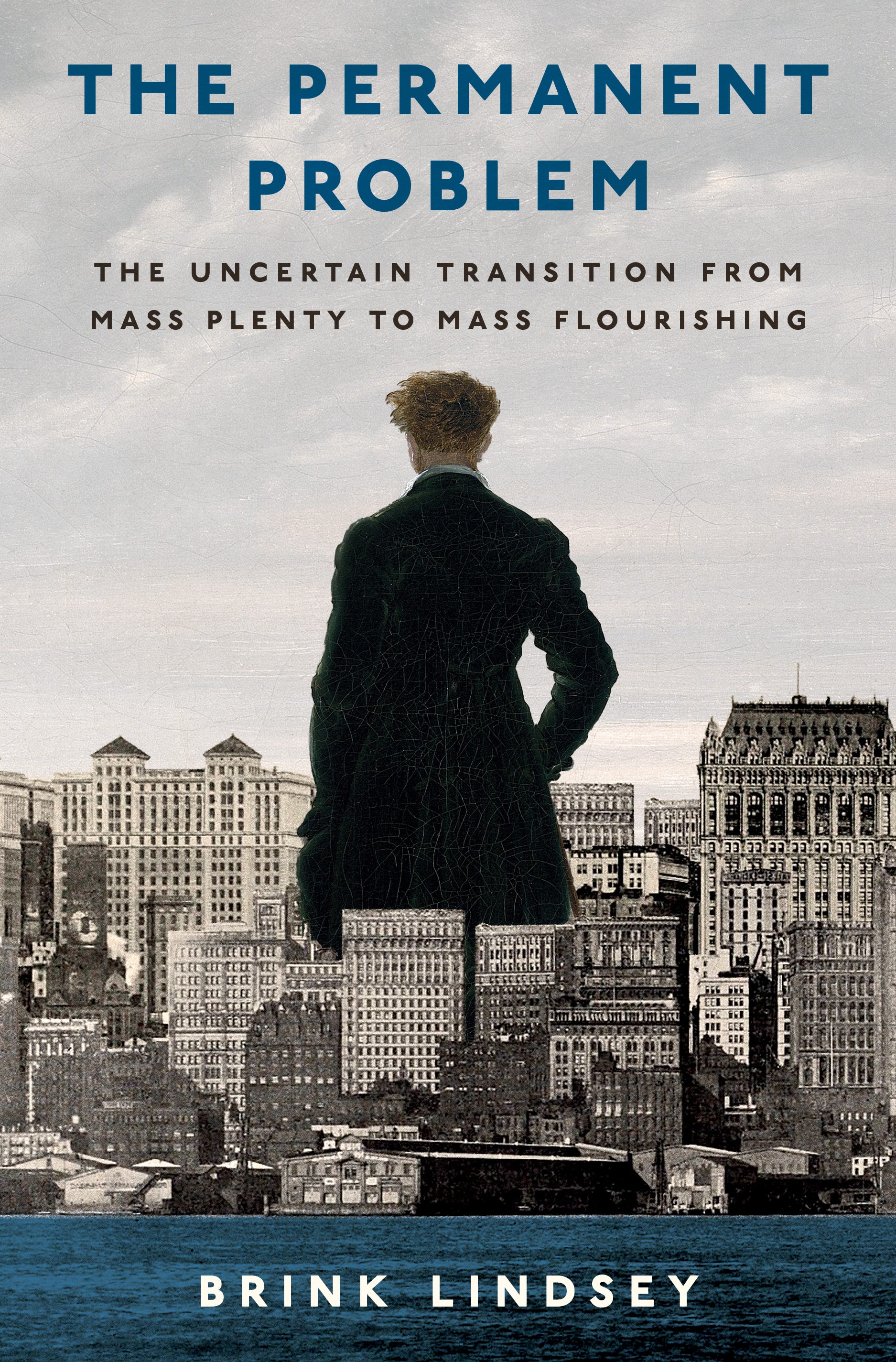
Christmas came early to the Lindsey household this year, as a box of hot-off-the-press copies of The Permanent Problem arrived over the weekend.
"Free Labor" and Life after Mass Employment
The past year has shown that the concept of “abundance” has legs.
I’m happy to announce that everything is set for my book’s official release on January 5, 2026.
My essay a while back about America’s descent into post-literacy got a fair amount of attention, at least by my standards, so I thought I’d follow up by trying to put this phenomenon into broader historical context.