
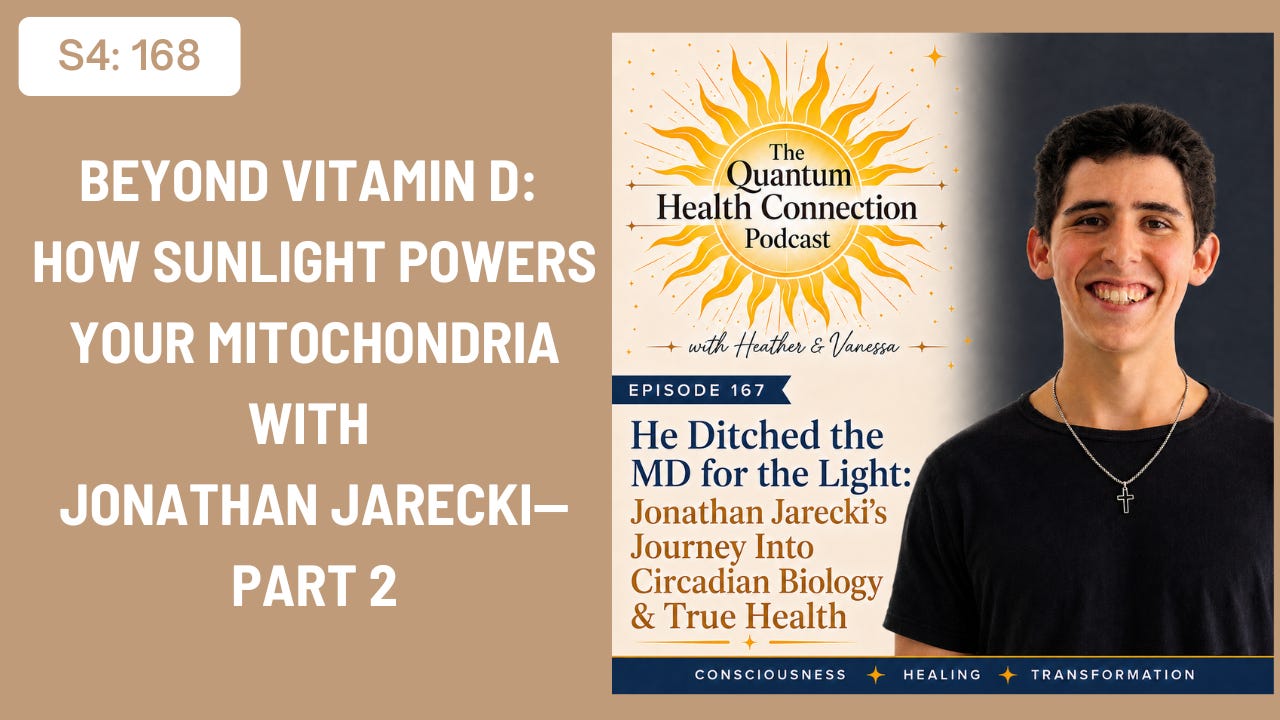
In Part 2 of our conversation with Jonathan Jarecki, we move beyond the basic advice to “get more sunlight” and dive deeply into the emerging science of how light interacts with our mitochondria, cellular water, circulation, and circadian biology.
Jonathan begins by challenging the familiar explanation that ATP is simply the “energy currency” of the cell. Drawing from the work of researchers such as Gilbert Ling and Gerald Pollack, he explores another possibility: ATP may play a crucial role in organizing water and building exclusion-zone—or EZ—water inside the body.
We then examine how red and near-infrared light may support mitochondrial function. Jonathan explains proposed mechanisms involving cytochrome c oxidase, ATP synthase, electron flow through the mitochondrial electron transport chain, nitric oxide, and the production of subcellular melatonin. He also discusses why the absence of infrared light—and the abundance of isolated blue light—in modern indoor environments may place additional stress on our mitochondria.
The conversation also takes an honest look at red-light therapy devices. Are high-intensity panels always better, or could the lower intensity and balanced spectrum of natural sunlight be more biologically appropriate? Jonathan shares his concerns about extremely powerful devices, explains how distance can reduce intensity, and discusses simple alternatives such as incandescent bulbs and reflected near-infrared light.
This Substack is reader-supported. To receive new posts and support my work, consider becoming a free or paid subscriber.
We also explore the often-demonized ultraviolet portion of sunlight. Jonathan discusses vitamin D as a possible marker of sun exposure rather than the sole reason sunlight is associated with better health outcomes. He explains how UVA stimulates nitric oxide release, why that matters for blood pressure and circulation, and what research suggests about regular sun exposure, melanoma mortality, cardiovascular health, and other cancers.
Finally, Jonathan offers realistic ways to create a more light-supportive lifestyle even if you work indoors or are not ready for direct midday sun.
In this episode, we discuss:
What mitochondria do and why they are essential to nearly every cell in the body
Whether ATP is truly the body’s cellular energy currency
Gilbert Ling’s ideas about ATP and cellular water
Gerald Pollack’s research into exclusion-zone water
How infrared light may affect electron flow and ATP production
Cytochrome c oxidase, ATP synthase and the mitochondrial membrane potential
How near-infrared light penetrates deeply into the body
Why trees and green spaces create infrared-rich environments
Whether infrared light can penetrate clothing
Natural fibers versus synthetic fabrics
The mitochondrial effects of isolated blue light
Subcellular melatonin and the body’s antioxidant defenses
Red-light therapy panels versus natural sunlight
Why more intensity may not always produce better results
Incandescent bulbs as a simple source of red and infrared light
Why vitamin D supplements do not fully reproduce sunlight exposure
UVA, nitric oxide, blood pressure and cardiovascular health
The difference between chronic, regular sun exposure and intermittent burning
Sun exposure, melanoma mortality and other cancer risks
Why reductionist studies may fail to capture the full effects of sunlight
Morning light and nighttime darkness as the foundations of circadian health
Practical ways to improve your light environment at home and work
The science may be complex, but the central message is beautifully simple: our bodies developed in relationship with the full spectrum of natural light. Improving that relationship does not have to involve an expensive device or a complete lifestyle overhaul. It can begin with stepping outside in the morning, welcoming more natural light into the day, and allowing true darkness to return at night.
Connect with Jonathan Jarecki:
Instagram: https://www.instagram.com/jonathanjarecki/
X: https://x.com/jonathanjarecki
Youtube/Podcast: https://www.youtube.com/@thesignalwithjonathanjarecki
Substack:

If you’re ready for DEEP healing & to improve your cellular health, nervous system, immune system and emotional well being…..
Find Vanessa at
Website https://brightlightwellnesscoach.com/
Book in a session with Vanessa here
https://brightlightwellnesscoach.com/services
Thanks for reading! This post is public so feel free to share it.
Comments
Nothing yet. Say the first thing.
Sign in to join the conversation.