
On publication day, I didn’t walk into a television studio.
I walked into a TikTok livestream.
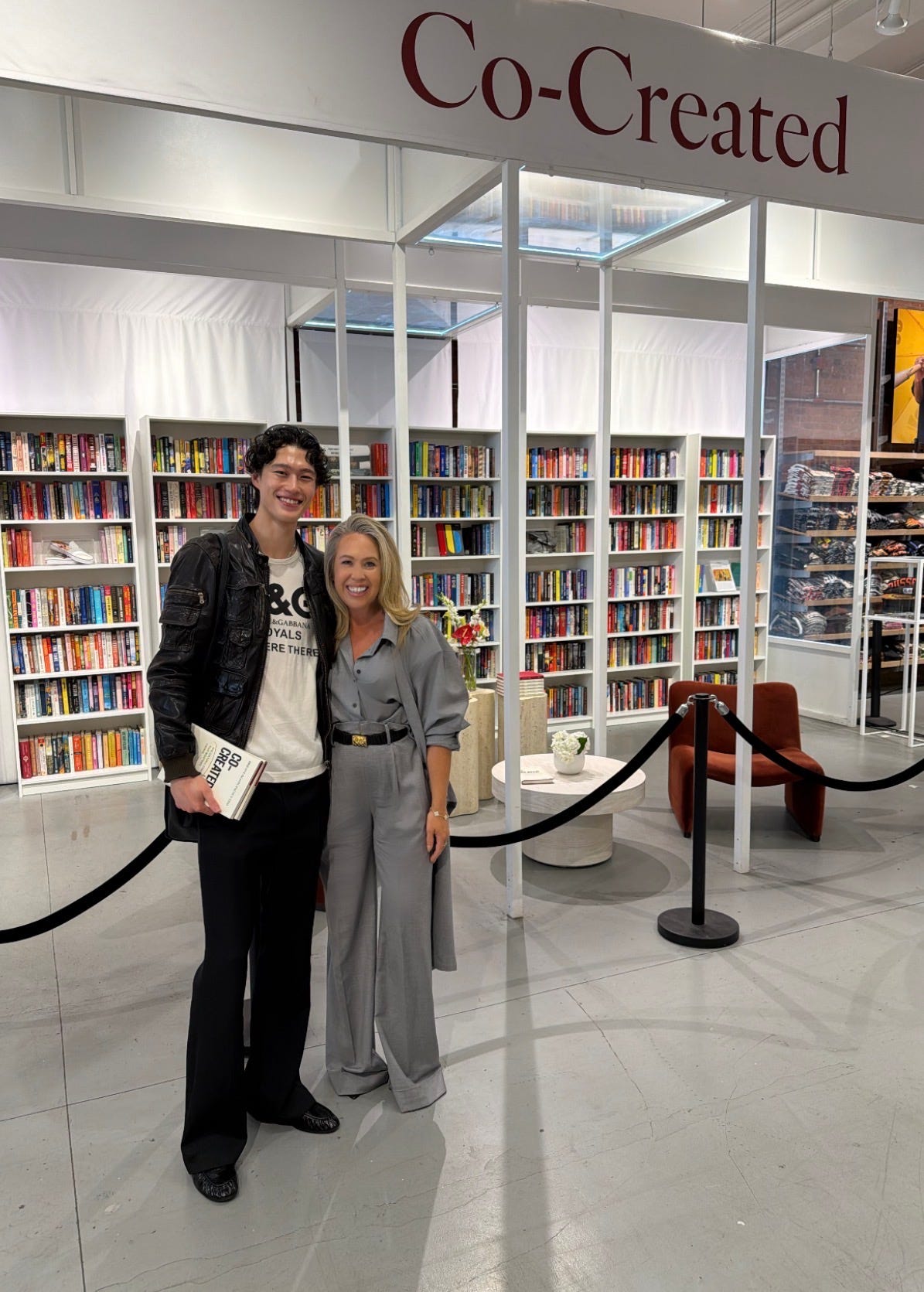
Inside Pacsun’s SoHo store, surrounded by our community, I spent the morning live on BookTok talking about Co-Created — not from a stage or behind a podium, but directly with an audience that has shaped so much of how I think about culture, retail, and leadership.
It was unexpected.
And that was exactly the point.
There are safer ways for a CEO to launch a book.
A traditional media circuit.
A polished fireside conversation.
An executive summit.
But Co-Created was never meant to be a traditional business book.
It’s a story about participation.
About listening.
About building with people instead of simply marketing to them.
So when we started discussing publication day, I kept coming back to one question:
If the entire thesis of this book is about meeting the next generation where they are… why would I launch it anywhere else?
Today, culture moves differently.
It moves through creators.
Through recommendation loops.
Through communities.
Through people sharing what resonates in real time.
And nowhere is that more visible than BookTok.
BookTok has reshaped publishing. Readers are no longer waiting for institutions to decide what matters. They are discovering, validating, and amplifying stories together.
That shift fascinated me — not just as an author, but as a CEO.
Because it mirrors exactly what has happened in retail.
Consumers — especially Gen Z and Gen Alpha — no longer want one-way relationships with brands. They expect participation. Dialogue. A sense that they are shaping culture alongside the brands they support.
That idea sits at the center of Pacsun’s transformation.
And it sits at the center of Co-Created.
One of the first chapters in the book is called 11,000 Astrids.
The chapter is about a realization that changed the way I think about business: consumers are not one audience anymore.
They are thousands of individual identities, aesthetics, algorithms, communities, and perspectives all existing simultaneously.
For years, brands believed mass messaging was enough.
Today, relevance is earned differently.
You have to understand where people gather, how they communicate, and why they connect.
That’s why launching on TikTok mattered to me.
Not because it was trendy.
Because it was aligned with the very argument the book makes:
Modern brands — and modern leaders — cannot operate at a distance from culture anymore.
We have to be willing to step into it.
Even when it feels uncomfortable.
And honestly, there was something vulnerable about it.
TikTok is immediate.
Fast.
Unfiltered.
Especially live.
There’s no executive distance there.
But maybe that’s the point.
Too often, leadership becomes overly polished. Every appearance refined. Every message optimized.
Yet younger audiences respond to something entirely different.
Not perfection.
Presence.
The livestream ended up becoming one of the most meaningful parts of the launch.
People asked thoughtful questions about leadership, purpose, culture, transformation, and what it actually means to build something with people instead of simply selling to them.
And I had the opportunity to do it alongside an incredible host who instinctively understood the energy of the platform and helped create something conversational instead of performative.
That distinction matters.
Because audiences today can immediately sense when something is manufactured.
What they respond to instead is participation.
Not as a marketing strategy.
As a mindset.
Years ago, the idea of a sitting retail CEO launching a book on TikTok might have seemed unconventional.
Today, I’d argue the opposite.
Ignoring where culture is actually happening is what feels out of touch.
The future belongs to leaders willing to cross the invisible line between executive leadership and cultural participation.
Who understand that relevance is no longer built from distance.
It’s built through proximity.
And sometimes, proximity looks like a livestream on BookTok at 11 a.m. on publication day.



Comments
Nothing yet. Say the first thing.
Sign in to join the conversation.