
Last week, I tore through a bleak string of days, still raw from Thanksgiving’s aftermath. Family bickering. Lack of space and exercise. Too much noise and work, too much capitalism brainwash.
Emerging from this, I remember a pre-scheduled dinner with three friends. I don’t want to go initially, imagining it would only compound the overwhelm. I show up ultimately out of a desperate need to put space between me and my tired, overstimulated kids.
I lucked into this friend group about 10 years ago when one invited us to meet because we had each recently moved to our small Southern city from New York and were around the same age. Clearly these were unique and highly desirable personality traits.
Tonight we meet up at a new Italian place, attached to an abandoned building that one of the friends is developing into an exceedingly cool boutique hotel. It’s freezing and rainy, and together we dutifully take down four different bowls of pasta, a loaf of focaccia, forkfuls of octopus, and sauce that feels like mothering. I can’t remember a time when my hunger felt so fully sated.
Our conversation is easy and meanders freeform from work to family to kids to politics to perimenopause. Each of us reports on our latest methods of vision support. One of us turns bright pink with a hot flash. Another grabs my arm while I describe the specific form of murderousness that only my family evokes, insisting, “Mine does this to me too.”
Earlier this same week, I had unearthed a home movie taken by my sister while she was home from college in 1990. She interviews me about what it’s like to be 13 – I say the biggest thing that happened this year was having my first boyfriend. Later she asks if I’ll get married. I retort that I don’t believe in marriage because every man I’ve known so far has been a disappointment. She asks if I will have children – I say I will have many, whom I will raise either with friends, a “part-time boyfriend,” or our mom. Ultimately, she asks what advice I’d share with my future self. I think for a while, kind of drift off, then momentarily drop the performance and glower: “Be yourself and not other people, because I tend to be other people and not myself.”
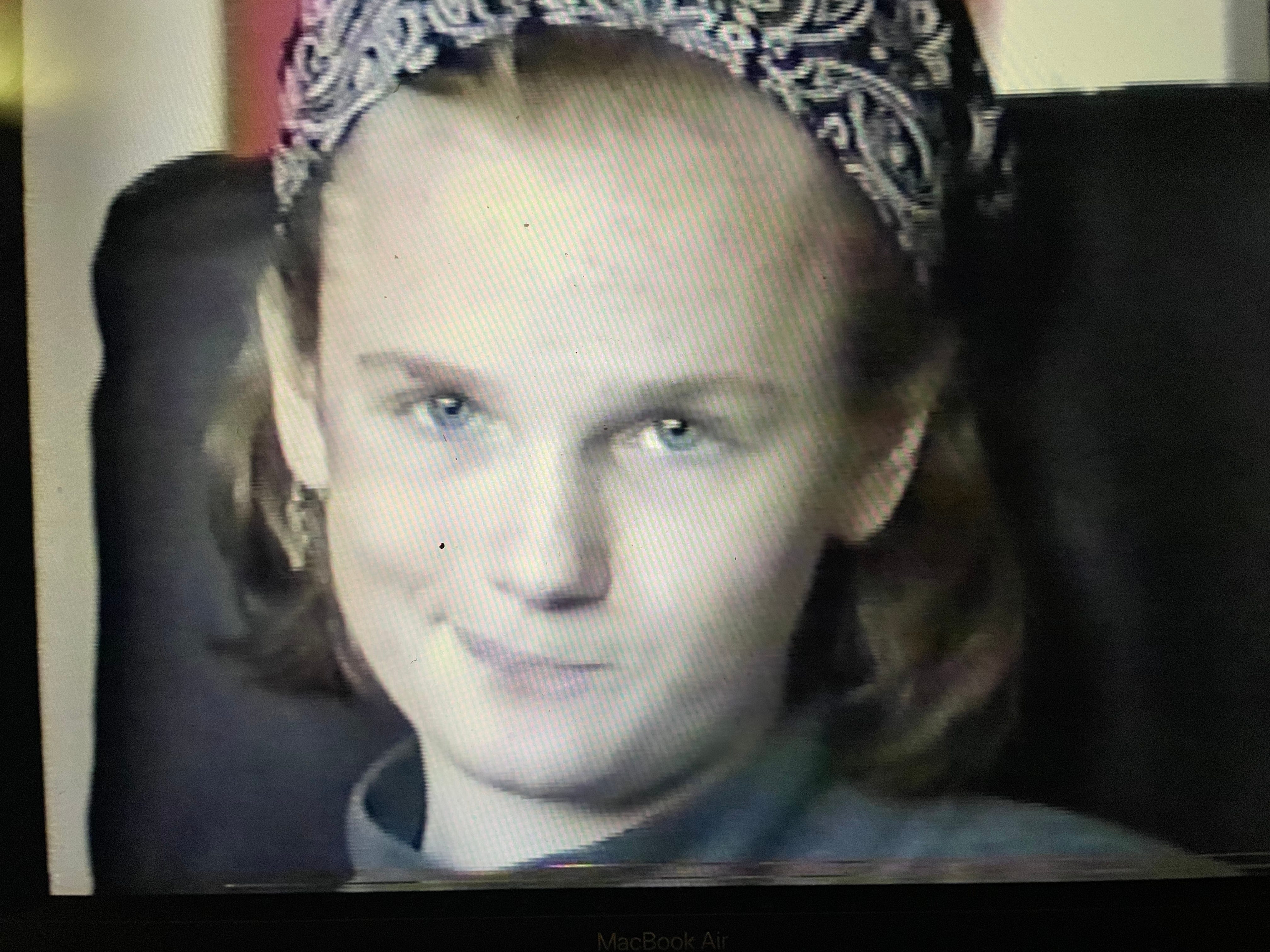
Though it’s super cringey to watch myself and my sister reflexively cut down marriage and men, all while bending over backward to define ourselves in relation to them, I’m not surprised to hear my response.
I remember well how diligently I pieced together an identity from the shards of others’. Even in the video, I hear myself try to match my sister (9 years older) – mimic her voice, tone, and humor. Without much effort, I twist into some reflection of her in order to please and hold her attention. Looking at it now, I see this approach served me well – a protective part that knew girls and women survive based on matching the needs of others. A performance of affiliation.
At some point during dinner, I wonder how each of these women might have responded to the same questions, how their young faces might have looked as they spoke. In Giving Up the Ghost, Hilary Mantel writes:
“You come to this place, mid-life. You don’t know how you got here, but suddenly you’re staring fifty in the face. When you turn and look back down the years, you glimpse the ghosts of other lives you might have led; all houses are haunted.”
I imagine all our 13 year old parts sitting at the table with us, looking on with awe or disappointment or something else all together.
After dinner, the hotelier gives us a tour of the building. The construction site echoes and hides away old history – the concrete walls a palimpsest. It feels like walking through someone’s insides.

Before we leave, we sit in a room that will eventually house the hotel bar, for now a bare shell. We imagine our future selves who will likely spend time together there. One friend suggests a selfie to mark the moment. Another, a photographer, takes to the task in the dark – setting up her phone on a window sill, trying to set a timer, fussing in frustration with exposure settings. Another friend offers her glasses and a flashlight.
Eventually all of us are toiling – a crew of four accomplished, intelligent women who have created life with our bodies and traveled through time and space to be here together.
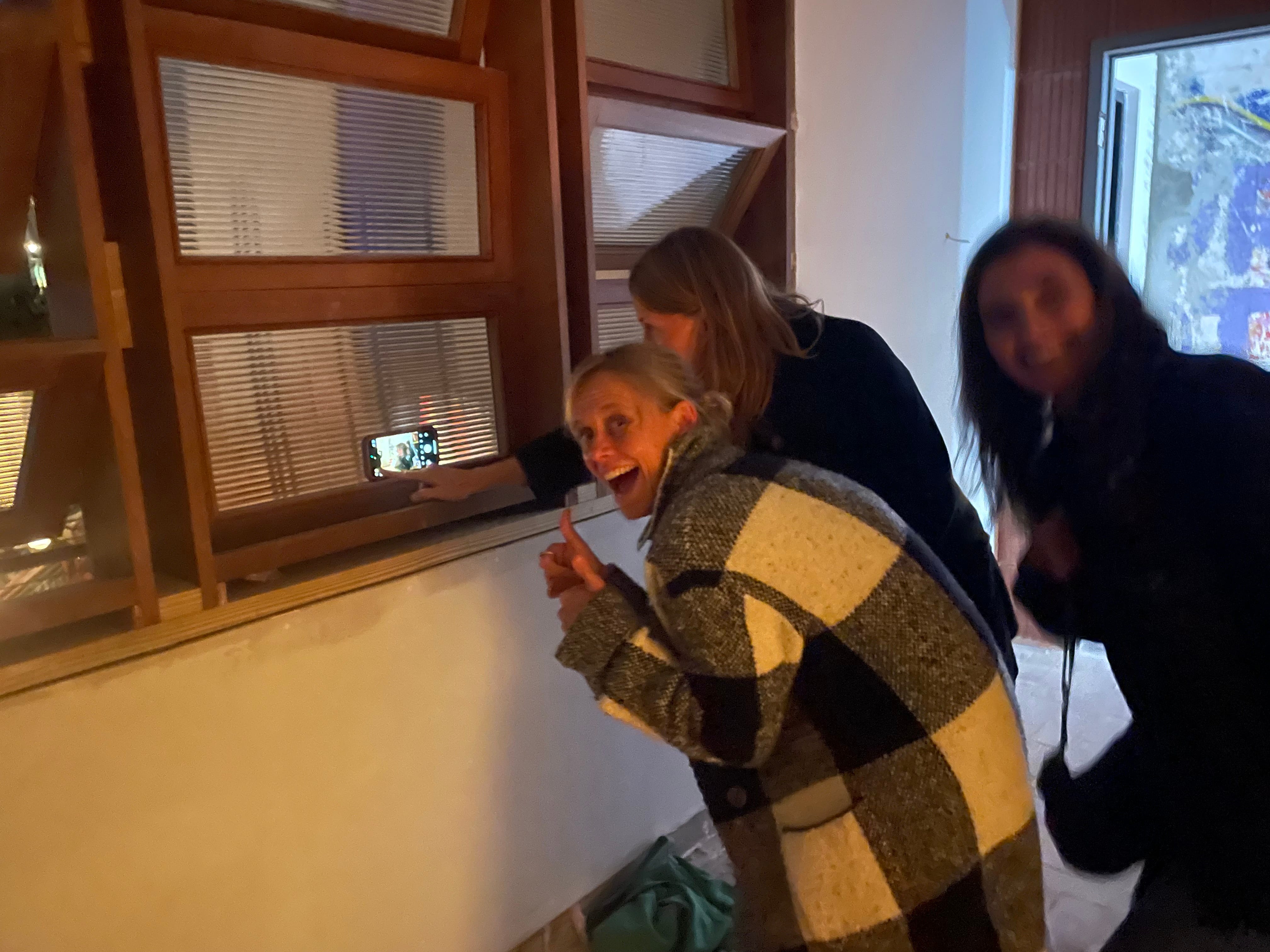
We cannot figure it out.
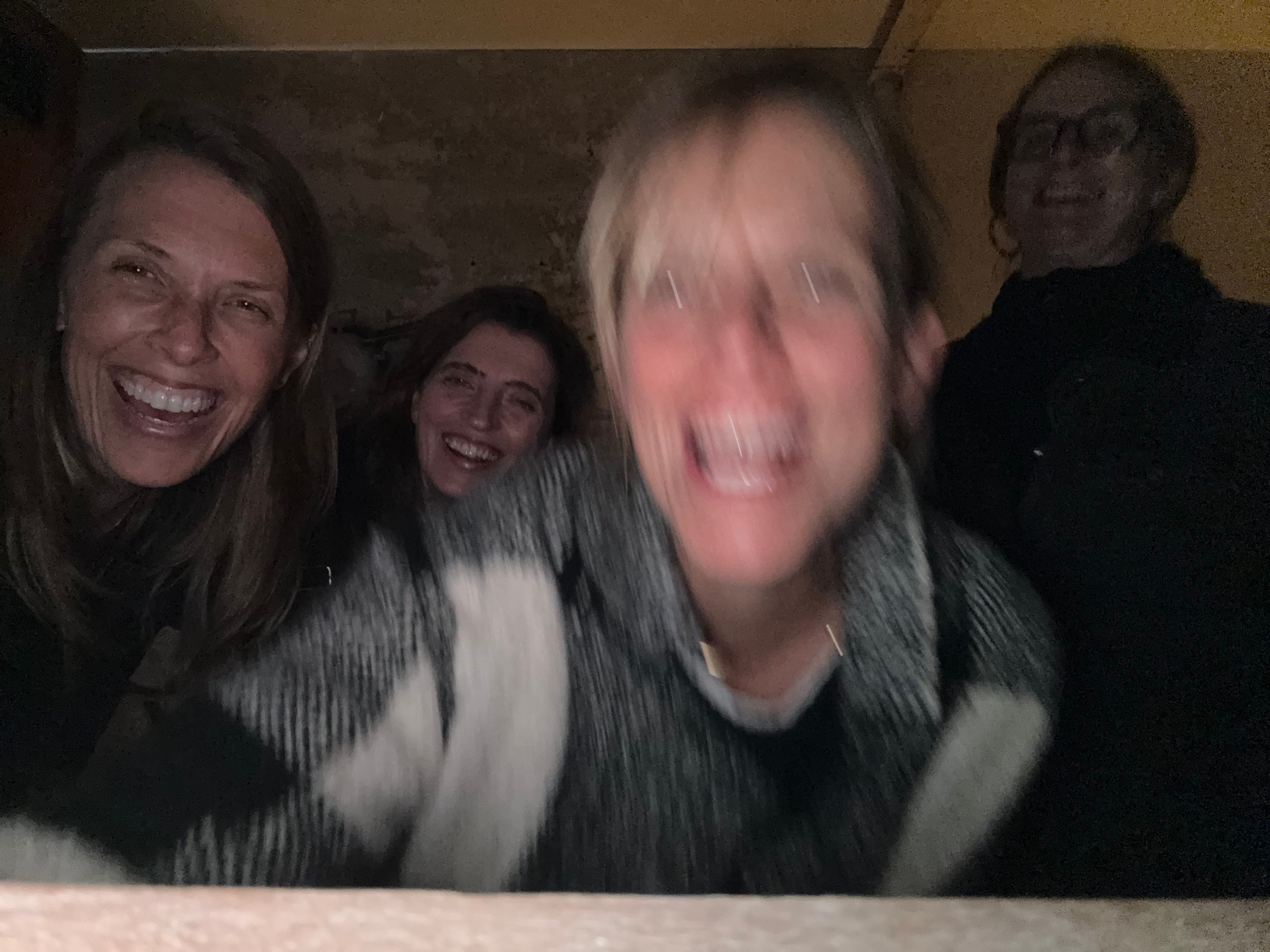
Instead we dissolve, absolutely cackling into a fit of hysterics about our predicament: poor vision, lack of technical skills, inability to perform the simplest smartphone task.
It is the kind of laughter that might split your face open. My sides ache with it. In another life, I would look at this scene and assume we are wasted. In this one, in our late 40s and early 50s, each of us marooned in one way or another in midlife, we have fully dropped our parts who replicate other people.
This reminds me of a terrific line in ’ essay on the Gottmans, which I screenshotted and wrote down immediately:
The work of men is to lose the self, the work of women is to build the self precisely because we are conditioned to do the opposite.
In this skeleton of a bar, my friends and I are wholly, hilariously ourselves. We know how to laugh, haunted houses and all.
Driving home, I’m stricken with love that feels near romantic for these women, and think about how easily my body responds with affection to the other Gen X women in my life. A rare and open-hearted yes when we talk, eat together, and sit close. Not trying to please but matching despite our difference, and because there is no other way to be.
I think of the millennial women I work with in my practice, or those in my social circle that exists as a direct extension of my kids’ social circles.1 My feeling toward them in relation to Gen X women is similar to how I feel about where I currently live in relation to where I’m from: I’m interested in an anthropological sense in what it’s like to have a life and be a human here, and very often feel loving gratitude to have landed in this place. But when I return to the city where I grew up, I’m shaken with recognition: THIS is what it’s like to actually feel at home.
All of my parts light up when I’m in connection with Gen X women. No further need to perform. My home cohort. A generational family.
It’s our shared love language: grit, humor, resilience, and deep, well-worn skepticism.
It’s our collective need to be parented as we stumble through a long career of nurturing others – even when it doesn’t abide the culture’s expectation of how our care should behave.
It’s the algorithm serving me these two on the daily.
It’s , patron saint of Gen X women, dancing half-naked around her apartment just because.
It’s in Why We Can’t Sleep:
My expectations are way lower. I no longer believe that at this age I should have rock-hard abs, a perfectly calm disposition, or a million dollars in the bank. It helps to surround myself with women my age who speak honestly about their lives.
It’s the Marco Polos my best friend sends from her dog walks, her classroom, her kitchen.
It’s another friend sending long texts about her need to be utterly loved and fucked with, away from her family.
It’s finding a room of our own for writing about this very moment.2
It’s the way my entire nervous system will settle and cool just by piping Little Earthquakes through my car at top volume.

It’s the sound of my friends totally cracking up while rummaging through their bags for reading glasses on a cold, dark night.
It’s the lot of us, staggering out of life’s first half after drowning in the notion that we can have it all, now coming to the astonishing conclusion that we don’t want any of it. At last, those parts of us who are still 13 can put down the performance.
What we want instead is a quiet night, deep in talks with other women who share food, document fleeting moments, then collapse into whoops of laughter, an abandon we only unlock when we’re together.
I don’t think I’ve ever known a more beautiful sound.
Cultivate your inner gen Xer here:
Real talk: There are so many things to truly love about millennial women. First of all, they COME TO THERAPY! There is seemingly no end to their generational drive to heal. Also: They are the most brilliant mothers, bosses, writers, and activists. All this in spite of having been young girls in a culture that mainlined white supremacy, patriarchy, and capitalism directly into their bone marrow via the internet. Millennial women, I adore and see you.
Not to mention the good fortune of sharing a generation with the likes of , , Ada Limón, , , , Maggie Nelson, Mikki Kendall, , , and so many more.
say more about that is 100% free. subscribe now to read more from a gen x woman who is trying her best to keep laughing.
Comments
Nothing yet. Say the first thing.
Sign in to join the conversation.