
I don’t flinch, don’t freak out. When things get scary, I don’t collapse or erupt – I store up.
My voice gets quiet, slow, and low. My focus narrows to a point. I perform competence without effort. It’s theatrical almost, a full-body bluff. Dread fills me to the rim, threatening to spill over, but on the outside I’m all game face – a sealed lid.
Example: Years ago, my sister’s husband died suddenly. Young and healthy, he dropped dead without warning while running at the gym. I was having lunch with a friend and her twin toddlers when I saw my sister’s voicemail pop up on my phone. I listened while spooning banana into a baby’s mouth, heard the words “M just died.” My stomach contracted, I lost my breath entirely, but I didn’t miss a beat. I didn’t want to cause a scene, scare the kids, or disturb my friend, who held her own heavy history of loss.
I put the spoon down, kissed the babies, and made up an excuse: I forgot I had to meet someone and I needed to leave right now. My friend was perplexed but I escaped without drama, undetected. I headed straight to my sister and didn’t leave her side for most of the next six months.
To me, this felt like a normal response – to fully skip over what any other human’s reaction would be to learning a family member had died and move through the scene with stealth. An emotional ninja.
It wasn’t until I met up with my boyfriend later that day and he pulled me into his arms that I was able to cry, overcome with sadness and fear, shocked that this was something that happens, terrified it might happen to him too. That went on for all of 10 minutes before I packed up shop on those feelings and returned to my role as death doula.
Not even halfway through my MSW program, I was already a committed case manager, tending to the terrible business of disassembling the life of someone who had not planned to die any time soon. I was de facto therapist for my sister’s friends and family members I barely knew, as well as my own parents who were so overcome by their own shock, they more or less collapsed.
This internal crisis manager rose proudly to most challenges. During my early social worker days, she made an excellent wingman. Sitting with clients who were falling apart or who got big or threatening – to themselves or me – I stayed calm, moved without a blink. One of my first supervisors noted, “It’s so great how nothing seems to shake you.”
On the outside, I was unfazed. But inside, a growing sense of disconnection and dread took root. Sometimes I dissociated. Other times, I’d go to work nauseated, hypervigilant to the day’s potential disasters. I regretted my career choice, plotted escape plans, and kept absolutely cool.1
In the world of mental health and wellness, people talk a lot about learning to be “comfortable with the uncomfortable.” I hear it in yoga class, in meditation practices, in interviews with therapists and thinkers and activists.

Therapists who are schooled in Internal Family Systems, psychodynamic practice, somatics, or mindfulness expect a tolerance for discomfort in ourselves and our clients. The more I sit calmly, holding my uncomfortable feelings, the more available I can be for clients as they walk through their own. When someone comes to my office grasping for solutions, desperate to find relief, I don’t offer a fix. Instead, I invite them to slow down, notice, and get curious.2
Sometimes I hear this call to embrace discomfort as a moral imperative – especially as someone in a body and identity that has benefitted from so much privilege. In a Pulling the Thread interview with Somatic Experiencing therapist and writer Resmaa Menakem, Elise Loehnen asks, how do we find peace?
Menakem snaps back in a moment that feels both fiery and uncomfortable, but that I recognized with glee: “There ain’t no fuckin peace!”
He chastises her, explaining if he can’t get peace as a Black man in a white supremacist society, “what makes you think you’re gonna get peace?” I checked this moment, stored it deeply, holding Menakem’s words as a mantra. Any wish I held for peace or comfort felt like an indictment, a lie I perpetuated. A colonization.
The brilliant Pema Chodron wrote a whole book about this. In Welcoming the Unwelcome, she says:
When our main goals are to gain comfort and avoid discomfort, we begin to feel disconnected from, and even threatened by, others. We enclose ourselves in a mesh of fear.
These ideas makes so much sense to my therapist parts. I see it every day – how much growth can emerge when pain and discomfort are held with compassion, with patience.
But this cool exterior I project when things get scary and uncomfortable, this immovability, what I’ve long considered to be some enlightened superpower? It’s actually something else all together.
In pregnancy and postpartum, I was the most uncomfortable I’d ever been. A part of me dug into it like a feast, fully committed to the sharp pain and ache. Rage, sorrow, regret, exhaustion – this must be what it means to be a mother. After so long of wanting to be one, this part insisted on bearing all of it.
Everywhere I turned I saw validation of this. My partner praised my high tolerance for pain, bragging about my unmedicated births. My mother reminded me that having children means putting yourself last. The culture of motherhood assured this part of me that everyone is tired and stressed – only the weak complain about it.
What are strong women anyway if not women who take their hits and keep moving?
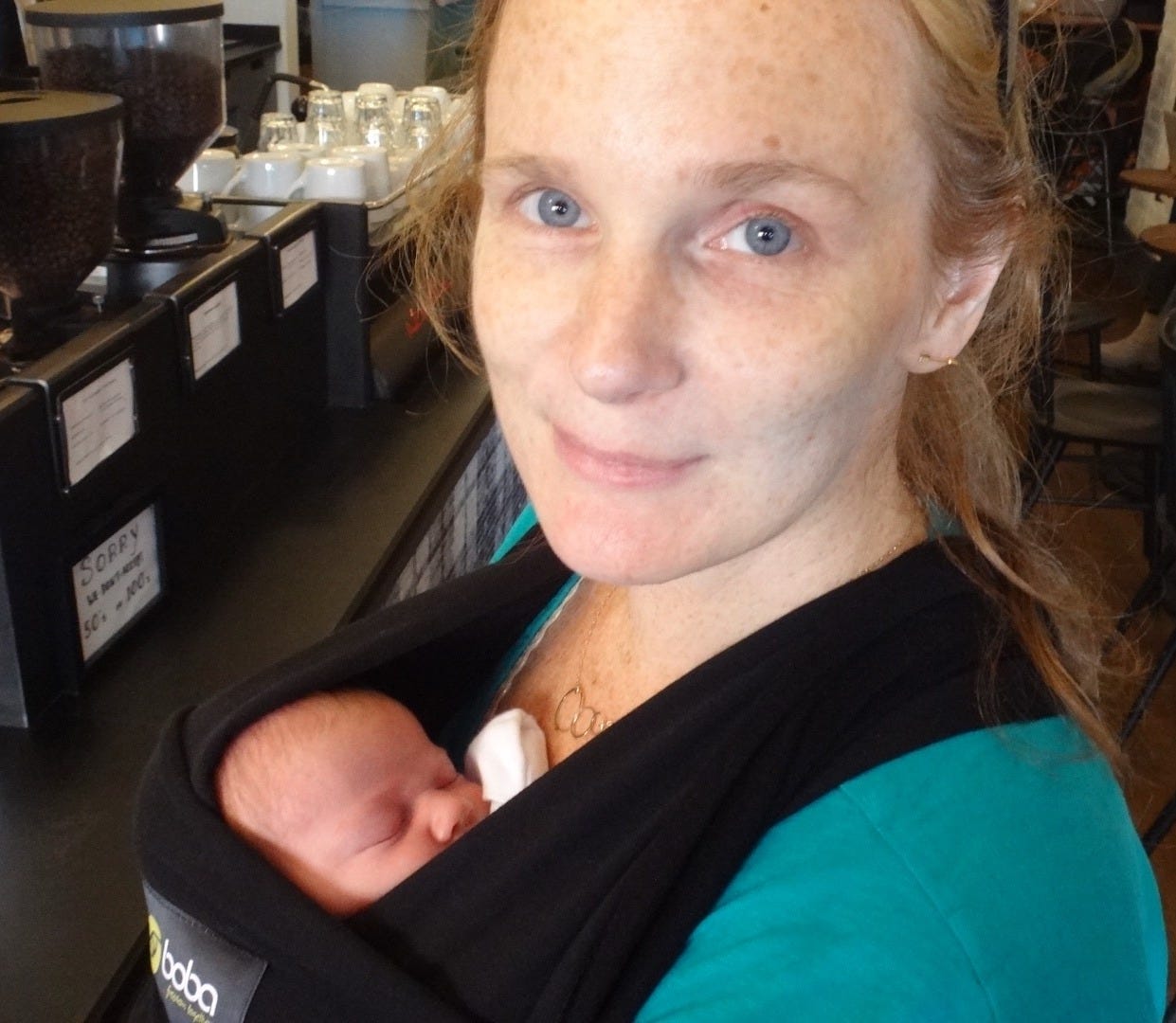
This is the same part of me who, years later, silently called myself a cab to the ER after my appendix ruptured, refusing to ask for a ride or tell anyone about my 104-degree fever. The same who accidentally burned my hand on the stove, heard and smelled the sizzle of skin but stayed silent because I didn’t want to scare the kids. It’s the same part who stuffed down a hurricane of alcohol abuse only to conceal the storm of getting sober from everyone I knew.
Holly Whitaker3 recently interviewed Meg Josephson, author of Are You Mad At Me? How to Stop Focusing on What Others Think and Start Living for You, about many things, including the fawn response – often thought of as the trauma response that follows when fight, flight, and freeze are not possible.4
Josephson describes what fawning looks like:
Our body is trying to appease the threat. It's trying to be liked by it, impress it. It just wants to know that you and the threat are good. There's no problem, no conflicts happening between us.
While I listened, I recognized myself with an exactness that felt like sandpaper on a sunburn.
I thought about the module of my Somatic Experiencing training where we learned about the fawn response. I went back to my notes from this section and found that they were almost entirely blank. Doodles. A few words but no real content.
I’d completely checked out.
I don’t stay calm when I’m uncomfortable at all. I just disappear.
Josephson describes fawning further: “We have to abandon ourselves to be hyper-attuned to the other person, to the environment. We have to leave ourselves in some way” in order to survive. There was nothing threatening about Somatic Experiencing training. But this response is one I slip into like an old shoe – well-worn, the perfect fit.
No notes needed.
I feel profoundly sad for this part of me – some terribly misguided model of Gen X grit. She feels so good when she’s dissolving, so safe when her needs are erased.
This is likely the part of me who thought it would be a great idea to become a social worker, then a therapist. To sit with clients can be a mode of self-erasure: I can hold all my discomfort by myself, knowing no one else will see it.
Pema Chodron goes on:
The interesting thing is that the more willing you are to step out of your comfort zone, the more comfortable you feel in your life. Situations that used to arouse fear and nausea become easier to relax.
This part who maintains a game face, who won’t flinch, refusing to react is probably not what Pema had in mind.
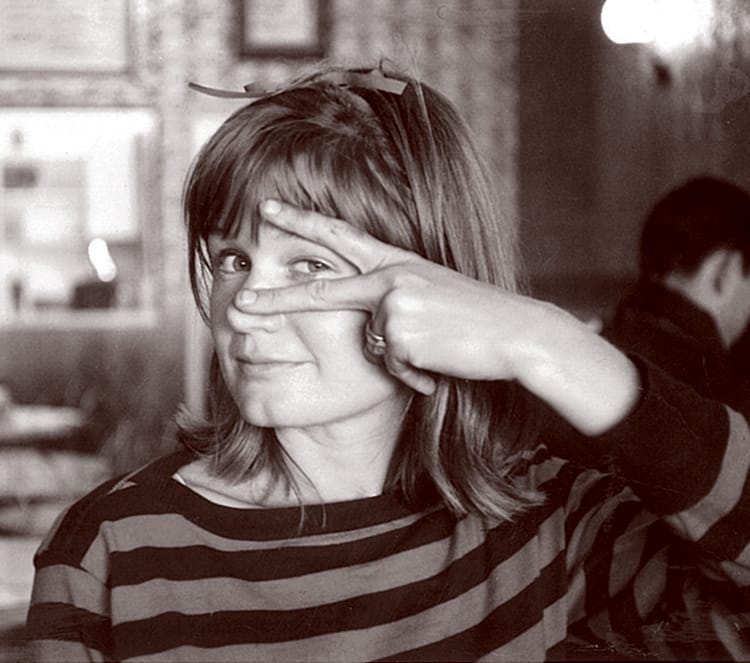
What if by trying to embrace discomfort, I’ve actually trained myself not to respond to anything at all? What if that’s what survival feels like?
In moments of happiness and connection with my kids, with a friend, with my mom, I notice myself walk up to the joy and comfort, then reflexively pull back. When one of them is hurt or in danger or sick, I pull away then too. I refuse to run to any fire, refuse to let it shake me. Instead I take the cue and settle into my story: I’ve always been good in a crisis.
I hold onto every ounce of discomfort. If I look close, I see I’m actually clinging to it, territorial. No one will take it from me.
I see so many women in my therapy office doing some variation of this – committed to their discomfort, accepting it as inheritance, erasing their pain from awareness and from their relationships because it’s safer. Jo-Ann Finkelstein, PhD writes about this within the context of patriarchal culture in her incredible book, Sexism and Sensibility:
We take ourselves out of relationship in order to have relationships that are culturally sanctioned and we are left with a crisis of connection.
I don’t think this has ever been more apparent in the world than right now.
What if all this acceptance of discomfort is actually part of the problem? Maybe we’ve gotten to this current moment in our country and culture because too many people have been tolerating too much fucking discomfort for too long.
What if the goal were to reject discomfort entirely? To fight tooth and nail for our peace?
Here’s Resmaa Menakem again, later on in that same interview:
Peace will happen when people invest in cultivating peace as opposed to war. Peace will happen. And one thing I know, for me, I know peace, I know I will never see it, but maybe I can put something in place to where I leave something here and my children's, children's, children's grandchildren can nibble off of and feed on what I've left here.
There may be no peace but hope persists. We do not heal by silencing ourselves, by tuning out.
Discomfort works when we’re not grasping onto it. It works when we feel the burn and friction we need to grow, then allow others to share in it. It works when we walk into connection and allow our shame to fall away. As Pema says: “Shielding ourselves from the vulnerability of all living beings – which includes our own vulnerability – cuts us off from the full experience of life.”5
I’m not there yet.
But I can see that this is what’s missing from my internal crisis manager. My refusal to respond does nothing but harm.
When I think back on that voicemail from my sister, the acute system fail of appendicitis, fake-smiling through another postpartum feeding, my epic collapse into drinking – I feel my whole body flinch.
An incomplete response. Never even acknowledged.
So what happens if I scream? What if I collapse along with my sister or cry out with the actual pain of an organ exploding? What happens if I tell everyone how sad and hateful I feel while I hold the baby? What happens if the parts of me who are so determined to hold discomfort actually let it go?
What if I call out and someone actually calls back? They could be holding their own heavy animal of discomfort. Maybe we could move toward each other, tend to what hurts in connection, like the loving, preoccupied mammals we are.
We could respond – a serve and return. We could tune in with grace, true in our faces.
Writing this, I notice my inner critic is concerned I sound like a hero or a martyr. A victim, even. Maybe some will read that in this – maybe they should. But to me, this is the less interesting story.
Seems important to note: this is not all therapy, and I’m not (no one is) the therapist for everyone. There are so many excellent clinicians out here, particularly those trained in CBT or behavioral therapy, whose sole focus is providing relief.
Who I will probably never meet and who deserves 100% of the credit for helping me get sober, through her 2019 book, Quit Like a Woman, and her erstwhile sobriety program, Tempest.
No posts
Comments
Nothing yet. Say the first thing.
Sign in to join the conversation.