
Hello, hello!
I have favorite animal disabilities.
I will not be sharing my least favorite animal disabilities, as that one has gotten me into trouble.
Some think it is cruel to have favorite animal disabilities, but truthfully, I simply have favorites, and that cannot be changed.
This is ranked in no particular order.
Tripod(or Tripawd)
Starting off strong, we have our three-legged friends.
I was recently asked:
“When you say tripod, are you referring to a hindlimb or forelimb amputation?”
I greatly appreciated the opportunity to clarify.
I prefer animals who are missing a forelimb opposed to a hindlimb. The reason being that jumping and climbing are predominantly done with the back legs. They are pretty crucial.
Of course, I love both kinds.
One of the major issues that animals with a missing limb will face is arthritis. As the animal gets older, they may have an even more difficult time moving around and jumping.
Other than that, they will live a pretty normal life.
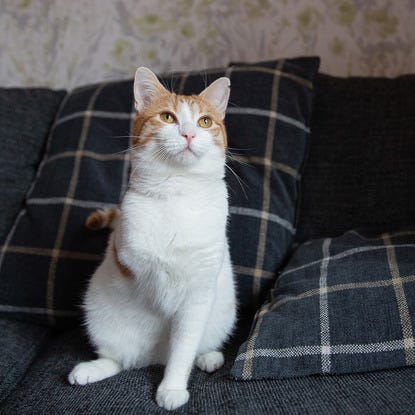
I also once binged this show called Wizard of Paws, where a guy travels all over the world and makes prosthetics for all kinds of animals. It is truly super fascinating to watch.
Here’s a short video about the cool work that he does:
Deaf
I want either a deaf dog or cat soooo badly!! I am especially determined to adopt a deaf cat at some point(For those of you who read about my Junaluska escapade, I have been unsuccessful so far in my attempts)
Why a deaf cat?
Because I want an adventure cat to go hiking with me. Just think about how less skittish a cat who couldn’t hear anything would be! We would be unstoppable.
The kitty who first introduced me to this idea is named Gandalf; his story was written in the book Adventure Cats, and it instilled in me a desire to hike with a deaf cat.
Come to think of it, we can probably blame the book Adventure Cats for a lot of my dreams in life. It really set the bar high.
You should read it if you love cats.
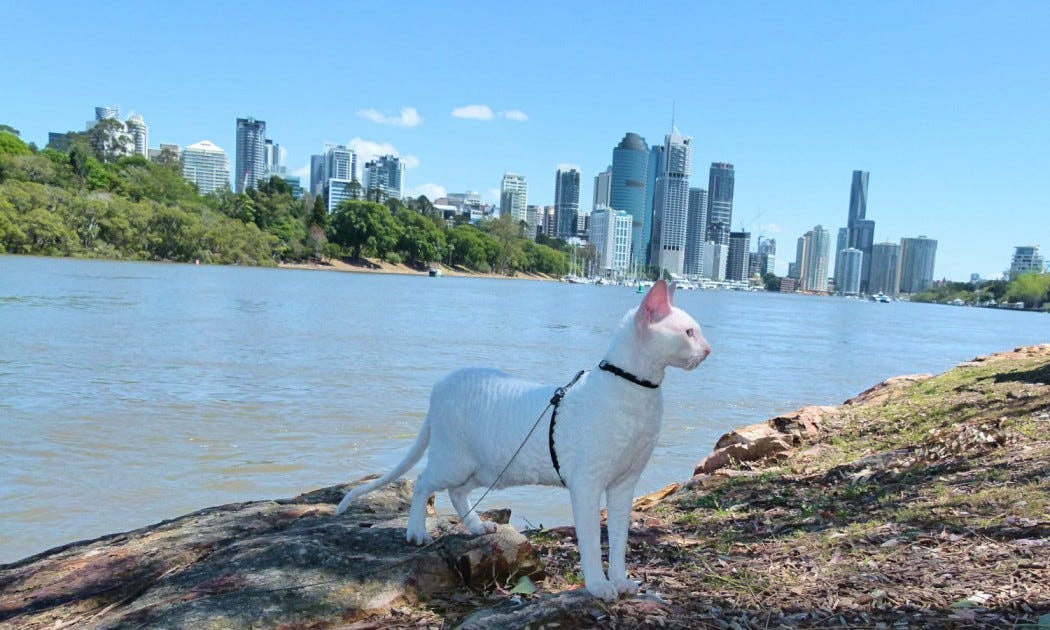
Deaf dogs are just as great, and I would teach my deaf pet sign language.
In fact, I was thrilled when Abby and Ryan adopted Lucky, a double merle Australian Shepherd. I was following them before, but after they got a deaf dog, they became even cooler.
Blind and Deaf
So, here’s where we run into a roadblock, where you all may start to get confused with my logic.
I don’t think I would ever adopt an animal that was just blind. However, deaf and blind is on the list.
Some say that’s really odd, and I honestly can’t explain it. That’s just the way it is.
In particular, I would love a deaf and blind Great Dane.
They are also prone to the double merle phenomenon, and there are several blind and deaf Great Danes out there for adoption.
Obviously, they are a little different than most dogs, but they still love to play and go for walks. Their world is experienced entirely through smell, touch, and taste.
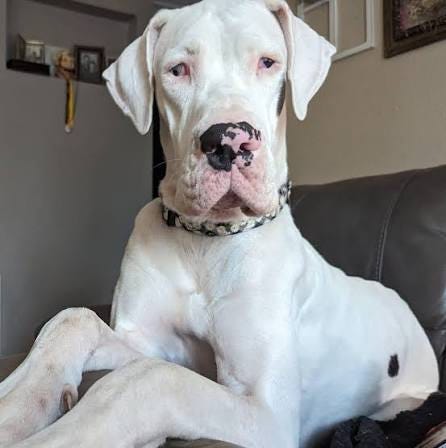
The term double merle refers to when dog breeders will breed two merle dogs together to get more merle puppies. Merle is the most sought-after dog color, so it’s a way for them to make more money.
The problem is that certain recessive genes carried by merles can, when combined, cause birth defects, particularly blindness and deafness.
It is a terrible practice, and any “deformed” puppies usually get sent to a shelter to be adopted out.
Megaesophagus
Eee! Another one of my favorites. This is a condition where dogs are born(although it can also develop later in life) with larger-than-normal esophaguses. Here is a diagram for reference.
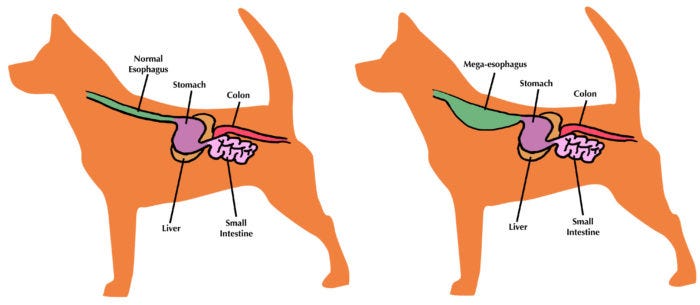
When dogs with this condition eat normally, the food can get stuck in the esophagus, and the dog will either throw it up or even develop aspiration pneumonia.
To remedy this, these dogs have to eat in what is called a Bailey chair.
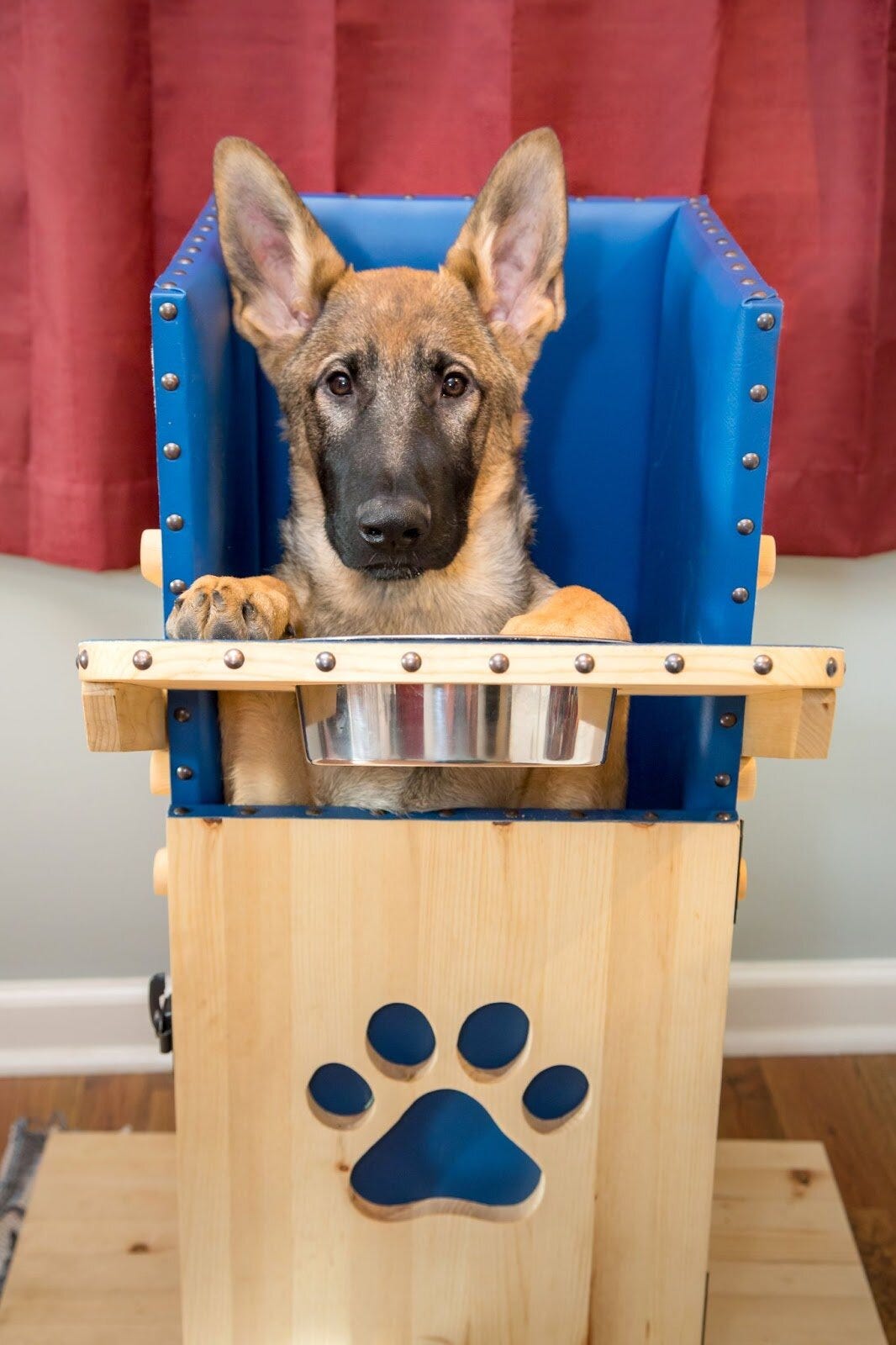
All meals are often mixed with water or blended, must be given in a vertical position, and the dogs need to stay in their chair for 20-30 minutes after eating.
Otherwise, they are just like any other dog!
Larger breeds are more prone to this than smaller breeds, especially German shepherds.
Polydactyl
You may not consider this a disability, but it requires regular maintenance.
As you may recall, Junaluska was a polydactyl kitten, and while I was in the process of trying to adopt him, I was informed his nails needed to be trimmed every week to prevent them from catching on things or causing him problems.
It’s not that difficult, especially if your cat eventually gets used to it.
Ernest Hemingway was once gifted a polydactyl cat by a ship captain because they were thought to be good luck(I wonder if a black cat is polydactyl if all the luck cancels out?).
Well, there are now about 60 polydactyl cats living permanently at Ernest Hemingway’s Home & Museum. Hemingway started a tradition where he named all of his cats after famous people, and the museum still continues that tradition.
But not to worry! Dogs can be polydactyl too!
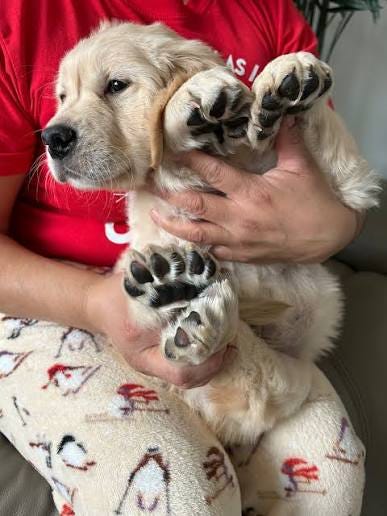
One day, I hope to adopt a pet with at least one of these conditions, but hey, if they have a couple of them, I consider that even better!
Now imagine if I could find a blind and deaf dog with three legs that had megaesophagus and extra toes… now that would be crazy.
Crazy awesome.😉
Do any of you have favorite animal disabilities? Maybe you yourself have a disabled pet.
I would love to hear all about it in the comments!
-Briar Albaugh
If you love special needs pets as much as I do, then we’ll get along just fine👇
Comments
Nothing yet. Say the first thing.
Sign in to join the conversation.