
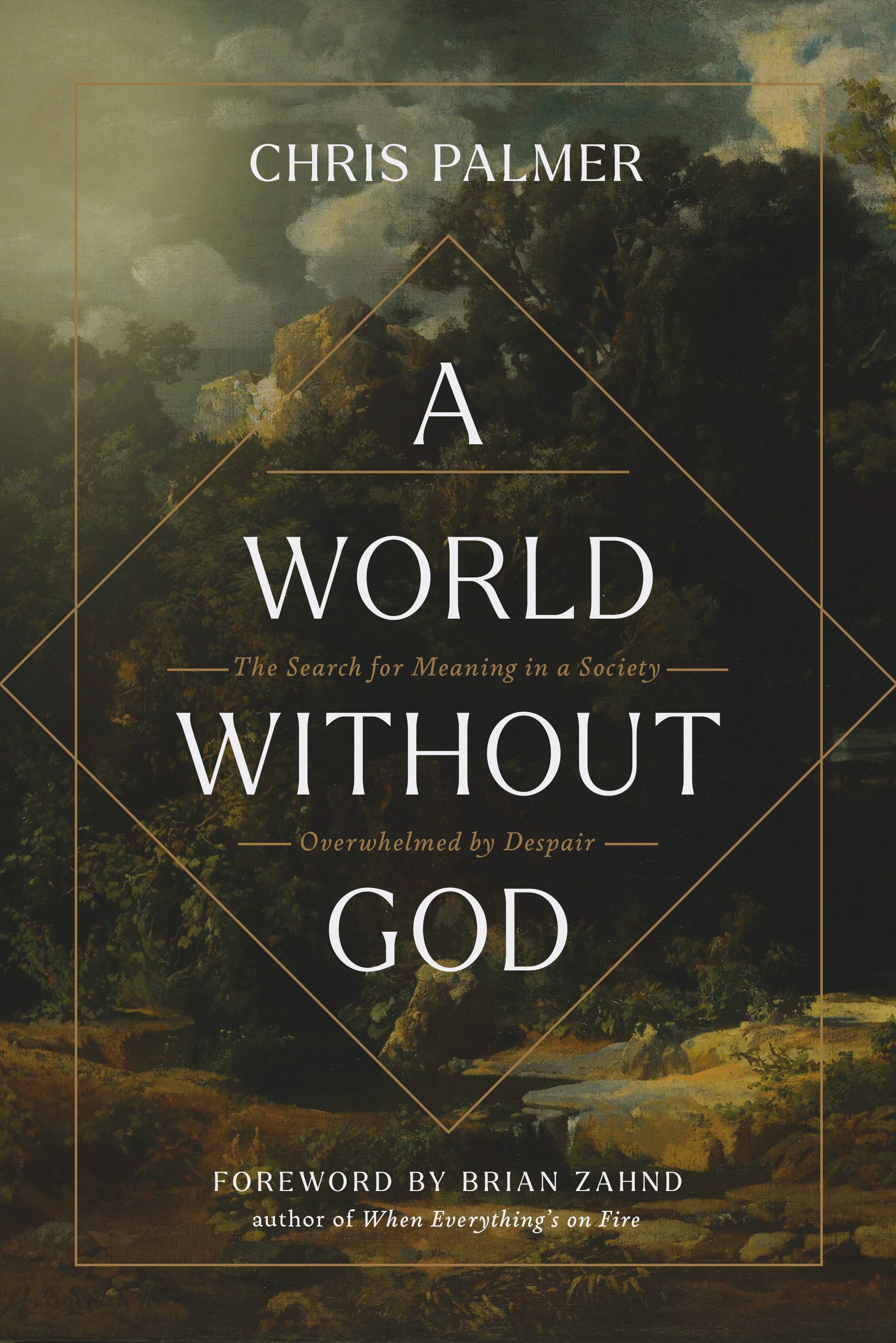
There is a case to be made that the triumph of Christianity in the Western world opened the door for widespread atheism. Once Christ had vanquished from the field all the old gods from the old world, the new world inaugurated by Christ was only one god away from atheism. After all, it is only a very careful atheist who says, “I don’t believe in the gods.” No, in the world after Easter it’s only one God in which the atheist disbelieves—for only one God has been left standing. Some saw this curious Christian proximity to atheism as an opportunity to be seized, and thus with Nietzsche and his madman announcing the death of God, a bold experiment was embarked upon: a world without God.
The idea was that the last impediment to be overcome by science and technology was the stubborn superstition of belief in God. With the old superstition eradicated, new possibilities would appear. As Ivan Karamazov said, “Without God all things are permitted.” Sure, Dostoevsky intended this as a warning, but maybe the axiom could be embraced as aspirational. The experiment in atheism reached its hubristic pinnacle early in the twenty-first century as the four horsemen of the atheist apocalypse galloped their way to fame and onto The New York Times bestsellers list. Hitchens, Dawkins, Dennet, and Harris were smug in their self-assurance that the bold experiment was on the verge of complete success.
But Nietzsche himself had never been so confident. Friedrich Nietzsche (the colossal thinker of which the new atheists were only cheap imitations) was circumspectly nervous about launching into a world without God. He described it as “unchaining the world from its sun.” A risky venture indeed. Nevertheless Nietzsche advocated the uncoupling of humanity from its God. His hope was for mankind to rise to godlike status through the will to power. This is Nietzsche’s infamous Übermensch. I say infamous, because once Nietzsche’s superman goose-stepped onto the world stage asserting will to power over the weak, the Übermensch turned out to be not a glorious god but a hideous demon. I realize some philosophers object to associating Nietzsche with Nazis, but it cannot be denied that German fascists from that era took Nietzsche seriously, making books like Beyond Good and Evil, The Antichrist, and The Will to Power canonical texts for national socialism. If, as Jacques Derrida observed, “the only politics calling itself—proclaiming itself—Nietzschean will have been a Nazi one, then this is necessarily significant and must be questioned in all of its consequences.”
Nietzsche’s hope was for the Übermensch unshackled from what he called the “slave morality” of Christian love to create a new mankind willing itself to heroic greatness. But Nietzsche’s fear was that instead of producing the superman, a world without God would only produce the Last Man—Nietzsche’s description of a final and failed stage of human development. Nietzsche’s Last Man is an incurious, bored, oversedated, entertainment-addled dolt muttering “we have invented happiness” as he stupidly blinks. Might we begin to think that Nietzsche’s experiment of a world without God doesn’t lead to the godlike superman but to the endlessly scrolling screen-man? As the evidence mounts, we can see the writing on the wall—mene, mene, tekel, upharsin. Atheism has been weighed in the balance and found wanting.
Welcome to Novemberton. (Chris Palmer will explain.)
In Palmer’s A World Without God we find a fascinating convergence of philosophy, sociology, theology, and literary fiction. For example, characters from Dostoevsky’s Crime and Punishment, Demons, and The Brothers Karamazov give university lectures while the underground man himself from Dostoevsky’s Notes is the campus IT. Brilliant and darkly funny! In Palmer’s fictional (but all too real) society overwhelmed by despair, the enigmatic line from Dostoevsky’s The Idiot hangs in the air like a single, clear note from a forgotten church bell: “Beauty will save the world.” In his Nobel Lecture, Aleksandr Solzhenitsyn said Dostoevsky’s famous line wasn’t a riddle but a prophecy. A century and a half after the openhearted and guileless Prince Myshkin suggested that beauty will save the world, maybe we can glimpse the first hints of the prophecy beginning to come to pass.
But alas, let us not rush too far ahead. Instead let us begin in the dreary streets of Novemberton with Chris Palmer as our capable guide. He has much to show us, and all of it is important.
—Brian Zahnd, author of When Everything’s on Fire, All Hallows Eve, 2025
(A World Without God releases May 12. It is available for pre-order now.)
No posts
Comments
Nothing yet. Say the first thing.
Sign in to join the conversation.