
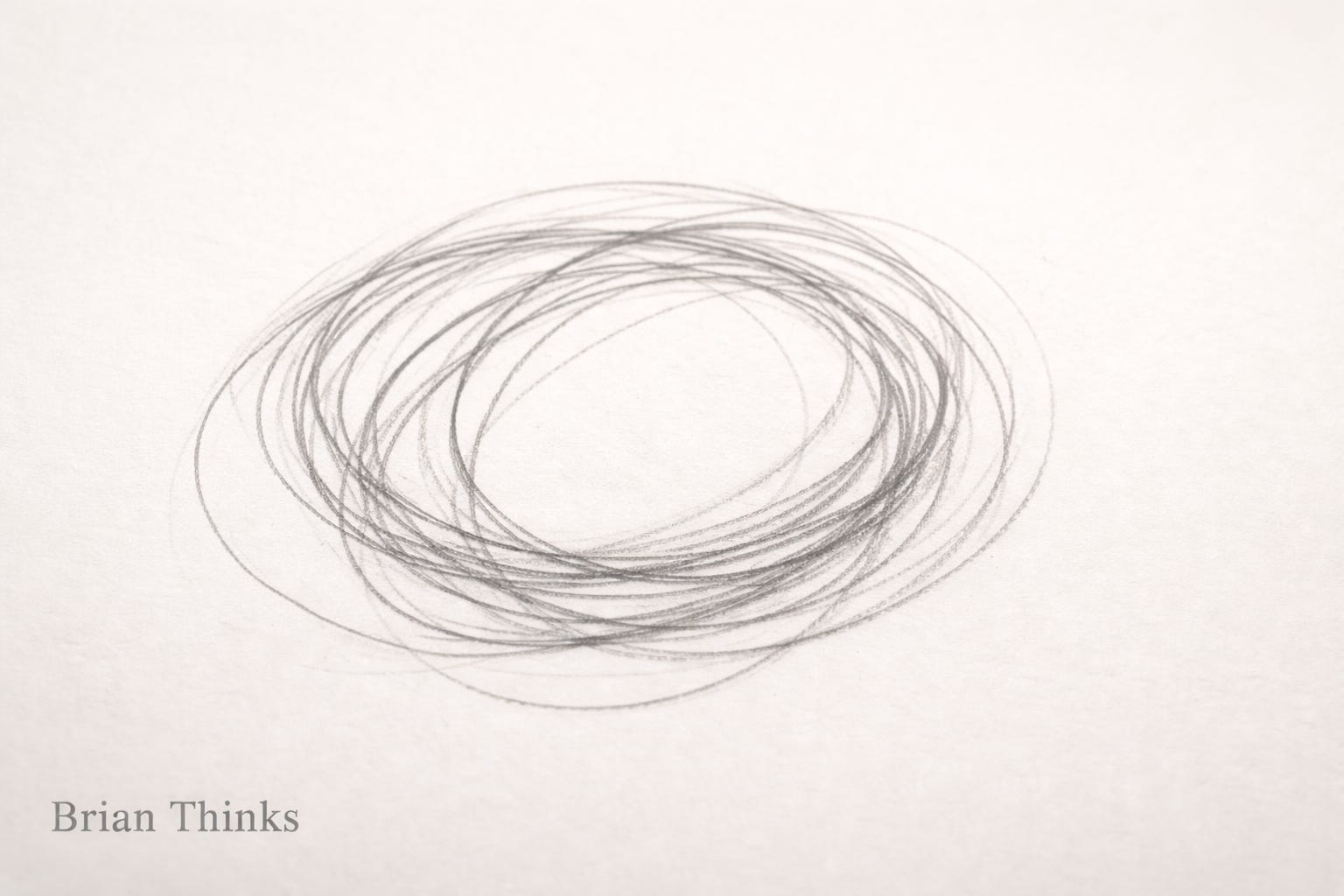
It’s happening again
You’ve heard it before.
“I didn’t get a good draw.”
“I could beat anyone if I drilled more.”
“I just didn’t play my game.”
It sounds reasonable.
It even sounds honest.
But if you listen closely, it starts to repeat.
Same phrases.
Same explanations.
Different matches.
There’s a quote from Bill Parcells:
“You are what you are.”
Not what you almost did.
Not what you could do.
Not what it felt like.
What you are.
In tennis, you hear it like this:
“I lost 2 and 2… but I got to deuce a lot.”
That’s what players who lose 2 and 2 say.
It sounds competitive.
It sounds close.
It’s not.
Most players aren’t stuck.
They’re looping.
A match ends.
A story begins.
The story does a few important things.
It protects our story.
It explains away what doesn’t fit.
It keeps the ceiling intact without having to test it.
So the next match starts in the exact same place the last one ended.
Not physically.
Mentally.
And to be fair…
This isn’t a character flaw.
It’s human.
We’re wired this way.
Protect what we believe.
Stay consistent.
Avoid unnecessary risk.
That instinct has helped us survive a lot of things.
It just doesn’t help us improve very much.
Looping feels like progress.
You’re talking about your game.
Thinking about your game.
Explaining your game.
But nothing real has changed.
Because nothing has been tested in a way that threatens the story.
Pickleball adds another layer.
Because you keep serving until you lose the rally, there are runs.
Momentum swings.
Scorelines stretch.
And when things go wrong, there’s an easy exit.
Your partner.
It shows up fast.
“They couldn’t handle the pace.”
“They kept popping it up.”
“I had to do too much.”
Maybe.
But if every loss finds its way back to your partner…
You’re not analyzing.
You’re looping.
The story isn’t always wrong.
Bad draws exist.
Matchups matter.
Partners make mistakes.
But when every result fits neatly inside the same explanation, something else is happening.
You’re protecting something.
And it’s hard to see.
Especially in yourself.
Because the story feels true.
It feels accurate.
It feels earned.
As a coach, you see it immediately in others.
In yourself…
you have to go looking for it.
Looping keeps you comfortable.
It also keeps you exactly where you are.
No new information.
No real adjustment.
No reason to change.
Just a cleaner version of the same story.
Breaking the loop is simple.
Not easy.
Simple.
You replace the story with evidence.
What actually happened.
When it happened.
How often it happened.
No interpretation.
Just the pattern.
The problem isn’t that we have a story.
It’s that we stop testing it.
At a certain point, results stop being the question.
Decisions are.
That’s the shift Annie Duke talks about.
Not what happened.
What led to it.
Because at some point, you have to accept it.
You are what you are.
Right now.
And that takes a little courage.
Not to judge it.
Not to defend it.
Just to see it clearly.
That’s where everything starts to change.
This is where the work begins.
Not with a full breakdown.
Not with ten adjustments.
One moment.
One pattern.
One decision.
Next time this shows up, what’s the move?
Attack.
Reset.
Wait.
You don’t need more explanations.
You need to stop looping long enough to see what actually happened.
Then decide what to do next.
You don’t lose pickleball matches because you lack information.
You lose them because you miss the moment.
Pop-up. Speed-up. Middle ball. Now what?
Describe the point.
Get your next move.
No posts
Comments
Nothing yet. Say the first thing.
Sign in to join the conversation.