
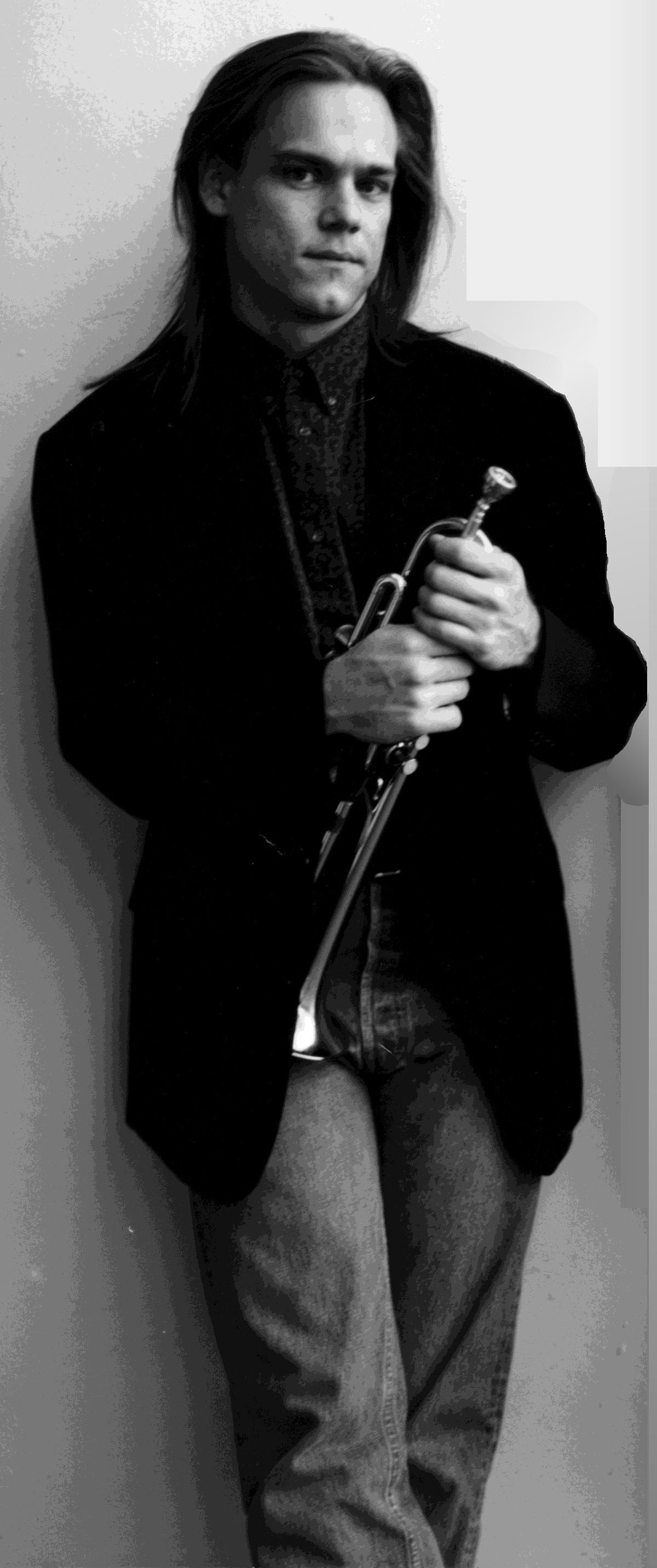
In the early 1990s, I was living a bit of a double life: daytime loss prevention, nighttime trumpet player.
During the day, I was at the flagship Polo Ralph Lauren store in Beverly Hills. My job was security, but in that environment, a big part of the role was making sure the celebrities who shopped there weren’t bothered. It meant I was often standing nearby, observing, trying to be helpful without being intrusive.
This was a different era. This was before smartphones, before GPS—a time when people actually asked for directions, sometimes even from strangers.
One afternoon, I noticed a small crowd forming. Five or six salespeople were huddled around someone, gesturing and talking animatedly. As I got closer, I saw who it was: Harry Belafonte. He was magnificent. A big, charming presence, radiating charisma and warmth. He had that famous smile, that twinkle in his eye. The salespeople were earnestly trying to give him directions to wherever he was headed, specifically how to get on the 101 freeway going north.
Now, anyone who’s driven in Los Angeles knows how our freeways can be. The 101, for instance, starts off going north, but then it curves. At a certain point, it actually flows more east and west.
And I—at 25 years old, a rather sheltered suburban guy with a brain wired for accuracy and a duty to be “helpful”—felt an irresistible urge to clarify. From my observation point outside the circle, I blurted out:
“But remember, at that point, the freeway isn’t going north; it’s actually flowing east and west.”
He paused. He looked at me directly. Then, with that incredible charm and a knowing smile, he reached across the small circle of people, extended his hand towards me, and as he shook mine, he said, very clearly:
“That’s what we needed, a white man to resolve the situation.”
Everyone around us laughed. I even laughed, a little awkwardly—a nervous chuckle mixed with a flush of heat on my face. Because what else do you do when a legend like Harry Belafonte drops a line like that on you?
He went on his way, presumably with clearer directions, and I just stood there, the echoes of his words hanging in the air.
In that exact moment, I didn’t fully grasp the depth of it. I remember just a flicker of something in his eyes, a glint that wasn’t just humor.
To me, at 25, Harry Belafonte was primarily “the Banana Boat Man,” the guy with the calypso hits I’d heard on oldies stations. I knew little, if anything, about his monumental impact as a civil rights icon, his tireless work alongside Dr. King, or his courage. That understanding would only come much later, as I started to educate myself beyond what I was “shown.”
But the line itself started its work on me immediately. It was a barb, yes, but delivered with such grace and charm that it forced you to think, not react defensively.
Over the years, this moment became a constant echo. It made me repeatedly ask myself: “Should I say something? Or am I a white guy inserting himself needlessly into a situation that doesn’t require my input?” This wasn’t just about freeway directions anymore. This was about how I navigate my presence in the world, and more acutely, my place in the music I love.
I am a white man playing jazz. This profound, intricate art form was originated by Black artists. Its roots are in the Black experience, born of joy, sorrow, struggle, and triumph.
Harry Belafonte, with that one perfectly delivered, disarming line, handed me a lifelong lesson in humility. It made me realize that my role, whether as a sideman or a bandleader, must always be one of healthy respect for that origin. It means knowing when to listen, when to support, and when to serve the music rather than just asserting my own voice.
It’s a constant internal check: Am I truly contributing, or am I overstepping? It’s a question I still ask myself every time I pick up my horn. And I have Harry Belafonte to thank for that profound and enduring lesson.
Upcoming Performances
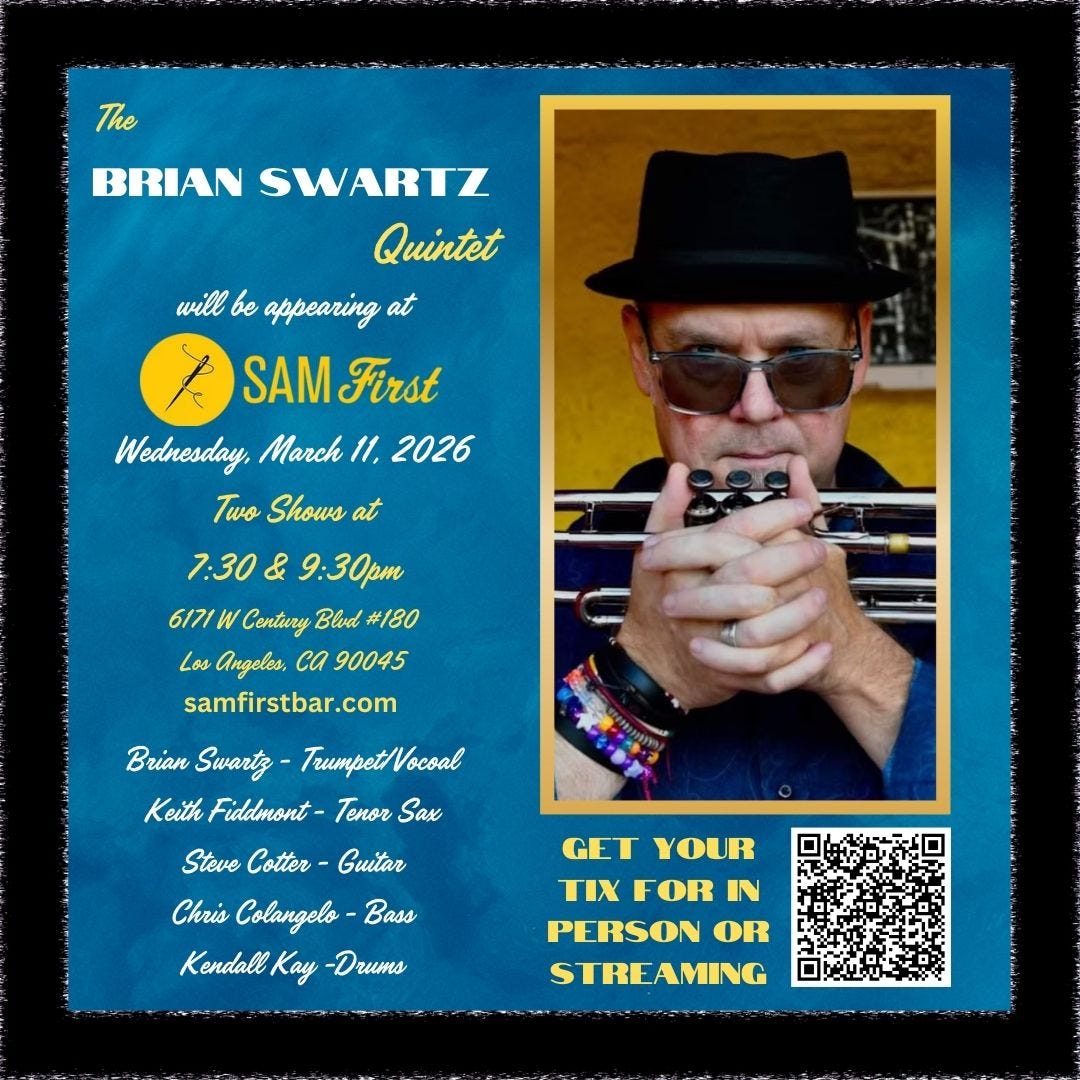
Mar 11 - The Brian Swartz Quintet - Sam First, Los Angeles, CA
Mar 13 - Oingo Boingo Former Members - House of Blues, Anaheim, CA
Mar 14 - Oingo Boingo Former Members - Stage Red, Fontana, CA
No posts
Comments
Nothing yet. Say the first thing.
Sign in to join the conversation.