
It’s a grab-bag! I think I will do several of these over the holiday season. We need all the support we can get in Trump’s America, in the Christo-fascist nightmare we find ourselves in.
If you have a longer-form question you’d love to see me tackle in my writing, email it to contactbrianrecker@gmail.com.
I hope these questions and answers find you well, beloved.
Q:
“I’ve been curious about how you went about talking with your boys about misogyny.”
A:
If you’re raising boys, there is no question: it is essential to teach them about misogyny. And when they’re a little older, the patriarchy. I highly recommend reading bell hooks’ book The Will to Change—it was so helpful for me and spurred me on to take a much more intentional role in counter-formation for my boys under the patriarchy. This is the worldly system we live in, and that means despite our best efforts, our boys will receive anti-women messaging.
By the time they are in grade school, they will hear “gay” used as an insult.
Someone will tell them they throw like a girl.
This will do something within their spirit—something they may not even be aware of.

This pervasive system will push on them an insistent message they will slowly internalize: that feminine traits must be suppressed and a certain version of masculinity must be performed, or they will be bullied by other males who police the boundaries for “appropriate” boyish behavior. This is what we are up against, and I have to be honest, it’s quite overwhelming. Our boys can be swallowed up by it despite our very best efforts—the whole system is working against us.
So here’s what I’ve been doing, and it’s probably not enough.
I have simply tried to bring it up as often as possible, both explicitly and with broader reminders. For example, I remind them all the time that there is not one right way to be a boy or a girl, and that the most important thing is being fully ourselves and letting others be fully themselves.
I also go right to the tension and tell them about some of the messages they will hear, to prepare them. I explain that the world will tell them it’s bad for boys to act like girls, but that’s because people are scared. People are afraid to be themselves, and small, frightened people need something to hate to feel better about themselves.
I tell them about some of the messages they may hear online: that women should be at home or be small and submissive and serve their husbands. I talk to them about how women had to fight for the right to vote, and now there are men who want to take those hard-won rights away.
I can’t tell you how important it is for boys to hear their dad—and not just their mom—celebrate women’s rights and make them a priority.
There are also messages about sex that the patriarchy will tell them, and I want them to hear these from me first. The world will tell them that men need sex more than women, and that women who enjoy sex should be slut-shamed for their “body counts,” while men will be celebrated for their sexual conquests. I want to process these messages with them before they hear them on the internet, so they will be prepared to reject them.
Most importantly of all, I model the behavior I want to see in them. I have female friends, and I let my boys see us interact as equals. We hang out with my gay, trans, and non-binary friends. I take them to a church where they frequently hear women preach and see them lead. I let them see me liking women and refusing to police anybody’s masculinity. I take them to protests where we stand up with queer people who are under attack.
We can’t control who our boys become, and we are up against a lot, but we can model a better way—a way that not only protects women, but also invites boys to be their full expansive selves.
beloved, with Brian Recker is a reader-supported publication. To receive new posts and support my work, consider becoming a free or paid subscriber.
Q:
“Thoughts on what Jesus means when he says to believe in him.”
A:
What does it mean to have faith in Christ? Many of us grew up thinking it meant believing the right things about Christ. A better way of translating this concept is allegiance to Christ—not head knowledge, but aligning our hearts with the priorities of Jesus: living for what Jesus lived for—the kingdom of God, which is to say, the beloved community. For me, to believe in Jesus—to believe that “Jesus is the way,” means that I believe love is the way, even when it could lead to a cross. Father Gregory Boyle says, “Jesus just stood with the outcasts until they were welcomed or until he was crucified — whichever came first.” Faith in Christ means standing with those Jesus stood with, and living for the liberation that Jesus lived—and died—for.
Q:
“How did you/what was it like telling your kids you were separating?”
A:
It was horrible. Next question!
JK, I will try and give you something.
Beloved, when I tell you I dreaded this conversation.
Both my coparent and I got COVID in the week of our separation, so when we moved into separate bedrooms, we didn’t immediately have to come up with an alternate explanation why.
But after two weeks, we knew we had to say something. As the person who did not desire the separation, I wanted to push it out even further—I was wishing things could just go back to how they were. But I do believe it’s best to have the convo sooner rather than later. I don’t want my kids to think it’s normal for a marriage to be emotionally disconnected and separate.
The most important part of this conversation is telling them that you are still a family, that your love for them is not changing, and that neither of you are going anywhere. Get on the same page about this. Your kids don’t need to get any of the inner dynamics of your relationship—it’s not relevant who wanted to separate or why. If one person is moving out, make sure it is crystal clear that they aren’t leaving the family—the family is just going to spread out a bit, take up space in two homes. There is no abandonment here. Your family is taking a new form; it’s going to look different now, but your kids are not losing their family. The focus is on your relationship with the kids and how it is not going to change, even though your marriage is changing.
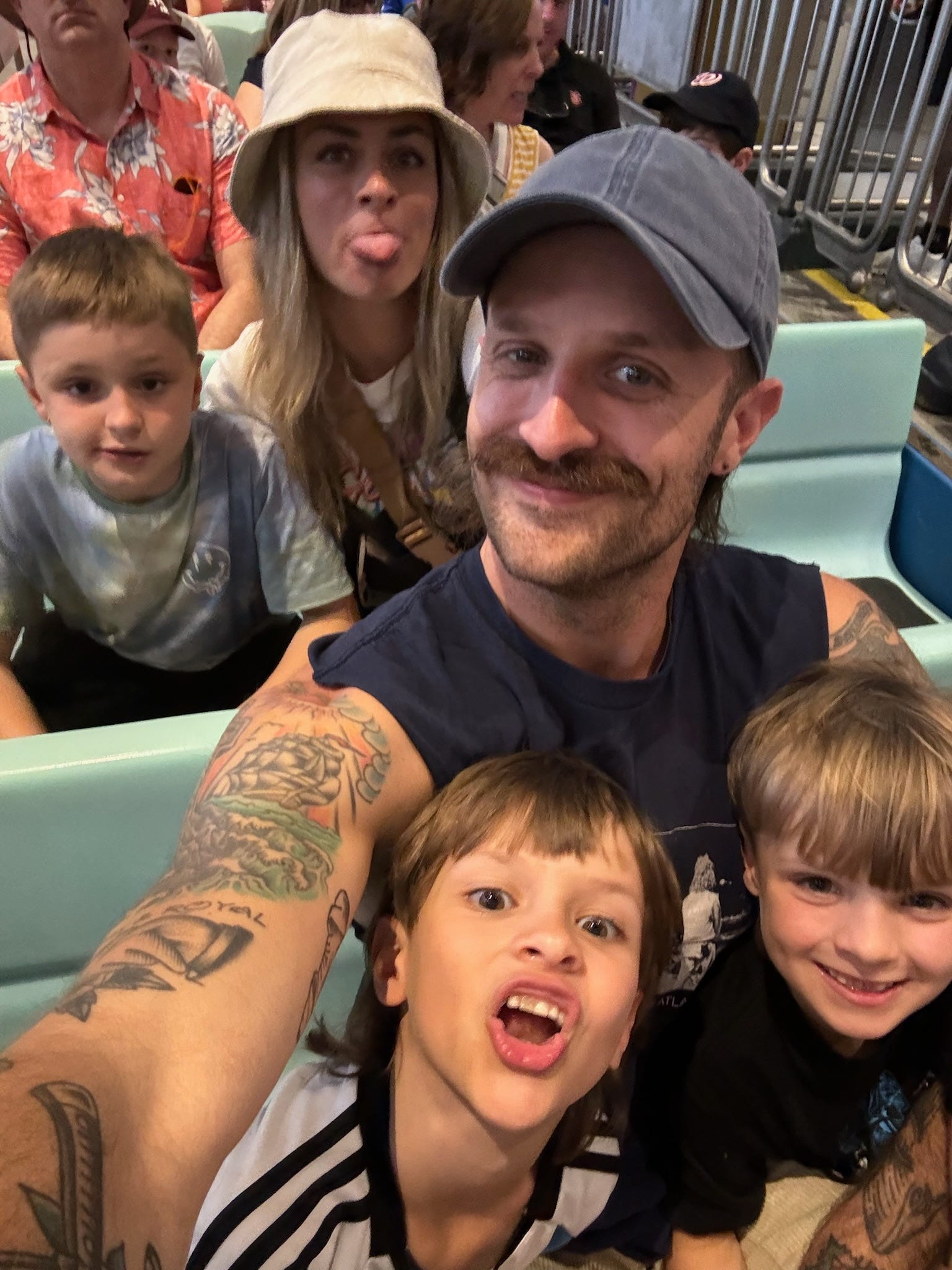
Of course kids want their parents to stay together and love each other. But what they need more than that is the safety and assurance that each parent will stay connected to them. Make space for grief, but in this conversation they will probably not fully understand what is happening. The grief will likely come later, in difficult moments with statements like, “Why can’t you move back into Mommy’s house?” or “I wish we could all just live together.” All understandable feelings. Don’t try to make it okay for them—it’s okay to be sad about that, and you should hope they always feel safe to share those bad feelings with you. But assure them that you are not going anywhere and that you will always be a family—always be their mom and dad, no matter what.
Q:
“Do you have a relationship with God?”
A:
Yes! In fact, I personally believe you do too, for “God is not far from any one of us; in him we live and move and have our being.” I believe we have all been in relationship with God since birth, and the spiritual life is becoming aware of and more deeply connected to a relationship that has always been there—often hidden in the places of your heart you are afraid to look.
Q:
“How (whether?) to have a healthy honest connection with my Christian Nationalist family as they celebrate the current horrors?”
A:
Boundaries, baby.
If you are deconstructing, or breaking with the ideology of your family of origin, you need to get a Master’s degree in boundaries. You need to learn how to communicate them with kindness and clarity (this will take courage). You need to learn how to adapt with your capacity and where each season of life has you: for example, you may have to bow out this Thanksgiving if Uncle Bob is minimizing Trump and Epstein’s sexual abuse of minors, but you are a survivor of sexual assault. But then you may decide that you can handle showing up for Christmas. I have communicated to my family that boundaries are not because I don’t care about the relationship—they are because these relationships matter to me and I want to preserve them.
Unfortunately though, I have found that the connections can only go so deep with those who rejoice in what is evil, or “celebrate the current horrors,” as you say. But I do what I can to keep the connection, because people surprise me all the time, and because as hard as it is for people to change, in my experience love and connection are the things that do it.
Q:
“Does full healing from religious trauma include not trying to convince family out of religion?”
A:
I think it depends what you mean by “convince out of religion.” If you mean, “encourage your family members to recognize the humanity of queer people,” then I believe that is a noble cause. If you mean, “express to your family that it hurts your relationship when they tell you you’re going to hell,” well that is also totally understandable.
But if you mean, “tell my family there is no God and there never was, and they’re ignorant for thinking otherwise,” well I personally believe you’re crossing the line. I don’t want my family telling me what to believe, and I don’t tell anybody what to believe. What you believe about God or religion is totally up to you, and I think it’s a dick move to push religious or non-religious beliefs on others.
I do think there is a missionary/fundamentalist impulse that can linger on post-deconstruction, where you are trying to convert people to your way of thinking. And I get it—some may even accuse me of that with all my posting. But my aim is never to tell people what to believe, but rather talk about how certain beliefs can hurt people. I think there’s an important difference.
I don’t tell people what to believe, but I do tell them how their harmful beliefs might be impacting people, especially vulnerable people. Especially for those of us who carry privilege—white folks, straight folks—it is good and right for us to stand up to racist or homophobic family members. Marginalized communities need us to “get our people” and hold them accountable.
beloved, with Brian Recker is a reader-supported publication. To receive new posts and support my work, consider becoming a free or paid subscriber.
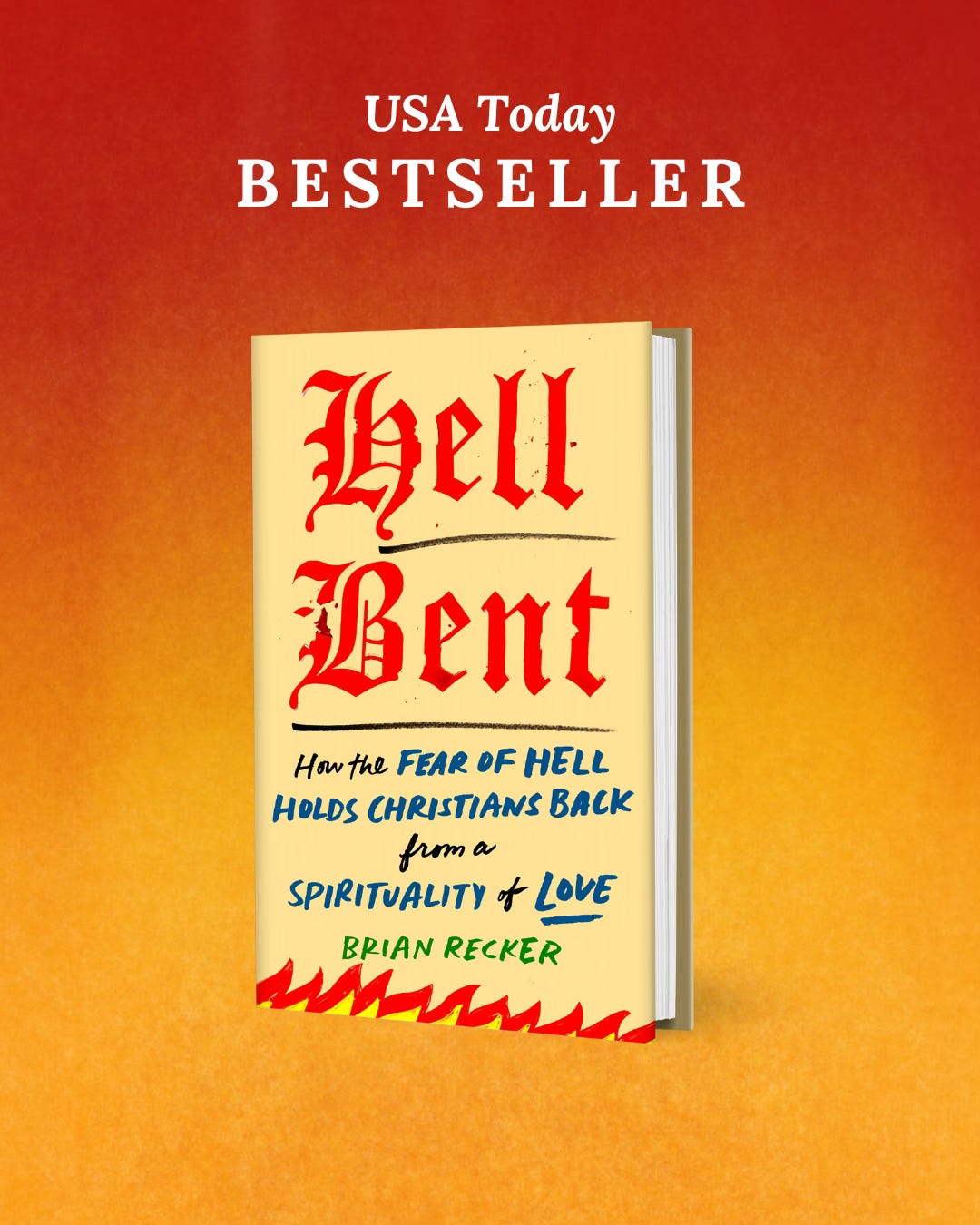
If these questions and answers resonated with you, you will probably appreciate how I explore some of these themes in my new book, Hell Bent: How the Fear of Hell Holds Christians Back from a Spirituality of Love.
It’s about reclaiming the Spirituality of Jesus, which was a way of love for the sake of this world, not escaping to the next. The Gospel is so much better than many of us were taught.
Comments
Nothing yet. Say the first thing.
Sign in to join the conversation.