
For my Substack today, I want to start a practical new series, naming some important shifts to make for those of us deconstructing from evangelicalism or other fear-based religions.
These are areas that evangelicalism has gotten wrong—so badly wrong that unless you make these shifts, your spirituality will do more harm than good. So here’s the first of four (unless I think of more) shifts to un-fuck your spirituality.
Like so many Christian kids of the 90s, I grew up convinced that Jesus was returning soon, and one of my deepest fears was being “left behind.”
Our church hosted regular “prophecy conferences,” where speakers dissected obscure passages in Revelation, showing the supposed parallels to modern geopolitical events—the state of Israel restored, an inevitable war in the Middle East. The chess pieces were all aligning: Armageddon was on the horizon. Every new political crisis, war, or climate disaster sparked the same hopeful refrain from the adults around me: “Jesus must be coming back soon!”

Instead of the world’s suffering being a summons to compassion, solidarity, and justice, it became the countdown of a doomsday clock.
This is the gospel many of us inherited. It was a spirituality of evacuation, not incarnation.
Good news for the next world, not this one.
This perspective skewed our spirituality. It kept us from the most important questions—questions like:
“How do we create a society that reflects the dignity of every person?”
“In a world with staggering inequality, how do we lift up the least of these?”
“How do we live sustainably on this planet?”
These are deeply spiritual questions, yet they were dismissed as distractions from the “real” gospel. When Christians talked about justice or liberation for the oppressed, they were often accused of “putting politics over the gospel.”
But a gospel with no use for the real world has little in common with the gospel of Jesus—who prayed, “Your kingdom come, on earth as it is in heaven” (Matt. 6:10), and said that God’s Spirit was upon him “to preach good news to the poor,” “freedom for the prisoners,” and “to set the oppressed free” (Luke 4:18).
Evangelical spirituality is built on salvation for the afterlife, but Jesus preached liberation in this life.
During Advent, Christians reflect on the theological idea of the incarnation (which literally means “in flesh”). This truth reminds Christians that this fleshly world is the focus of God’s love and the very place where God chooses to dwell. To escape this world is not only to flee the source of God’s delight, but to attempt to escape God’s own self. God is with us here, in an animal feeding trough, in abject poverty—in human vulnerability.

When we are taking this seriously, we will not attempt to escape the world, but to build a world that honors this divine presence. We will recognize that social questions are spiritual questions.
Yet, many of us were told that social justice is an unhelpful distraction from the gospel.
I’ve always thought it was strange that Christians were so hostile to socialism.
In the early church, they sold possessions, held everything in common, and redistributed wealth so that no one was in need.
Basically, socialism.
And when you look at the Christian vision of heaven—no rich or poor, no hunger, no war, no national divisions, and everyone included from “every tribe, tongue, and nation”—you see it again.
Basically, socialism.
Yet despite this ideal in both the church’s origins and its imagined future, conservative Christians rarely pursue a vision of equality here on earth.
Instead, they condemn “utopian thinking.” They say, “Our hope isn’t in what we accomplish here—our hope is in Jesus alone.”
Or: “This world can’t change. People are too sinful. Socialism will never work because people are greedy. Our job isn’t to fix the world—that’s God’s job.”
So instead of seeking justice, peace, and reconciliation for the world’s most vulnerable, we searched for signs of the Second Coming—waiting for a deus ex machina to sort everything out. It wasn’t our job.
Even when evangelicals do try to engage in social issues, it tends to be a bait and switch: If you fed the hungry, you were supposed to give the Romans Road while you did it. If you cared about policies that reduce poverty or expand healthcare, you were “distracted from the eternal.” I was told that focusing on systemic injustice instead of conversion was like “rearranging the deck chairs on the Titanic.” If the world is headed to hell, then alleviating a bit of suffering in the meantime didn’t matter much.
This may be why white evangelicals support government spending on the poor at the lowest rate of any major religious demographic. Pew finds that less than 25% believe the government should guarantee access to healthcare. Personal charity is fine—but systemic change? Not the church’s job.
They are also the least likely religious group in America to believe climate change is real or human-caused. Many brush it off entirely because they believe the earth is destined to burn anyway, and they’re “just a-passin’ through.”
I grew up listening to Rush Limbaugh with my parents, where he lampooned climate change as a hoax. My fundamentalist christian parents ate it up, despite the fact that Rush made little effort to appear spiritual. He was a capitalist, through and through, but conservative talking heads like Rush gave a generation of evangelicals permission to ignore the state of our world.

Nobody loves escapist, afterlife-based, pie-in-the-sky religion more than the powerful oppressors exploiting this world. Billionaires and corrupt politicians are perfectly content for Christians to fix their eyes on the next life and leave this one in their greedy hands.
But the world can change for the better. In fact, it has. As people have followed God’s Spirit, we’ve seen massive shifts in racial equity, gender equality, and LGBTQ+ rights. A century ago, women had only just gained the vote. Half a century ago, queer rights weren’t even public conversation. I see these as movements of the Spirit, drawing us toward the humanity of the most vulnerable.
This is our work.
The work of spirituality is here, not there. Not escaping this world, but learning to live in it with a global family of neighbors.
Not praying for people to go to heaven, but longing for it to be “on earth as it is in heaven.”
In fear-based religion, the point of spirituality is being on the right team—believing the right things so you go to heaven instead of hell.
This spirituality is empty and alienating.
True spirituality doesn’t inspire escape. It drives us deeper into the world. It knits us more closely to our human and non-human neighbors. It heightens our concern for the material well-being of others. It makes us responsible creatures of this planet. It makes us more human, not less.
If the point of spirituality is “going to heaven,” then success is measured in converts and church influence—bending society toward Christian dogma so more people can escape.
But if the point is “heaven coming to earth,” success looks like the flourishing of humanity. We are drawn into connection, not tribalism.
True spirituality isn’t merely a theological idea about God’s love but an embodied reality that liberates bodies from oppression.
Less altar calls; more eliminating child poverty, apartheid states, and climate refugees.
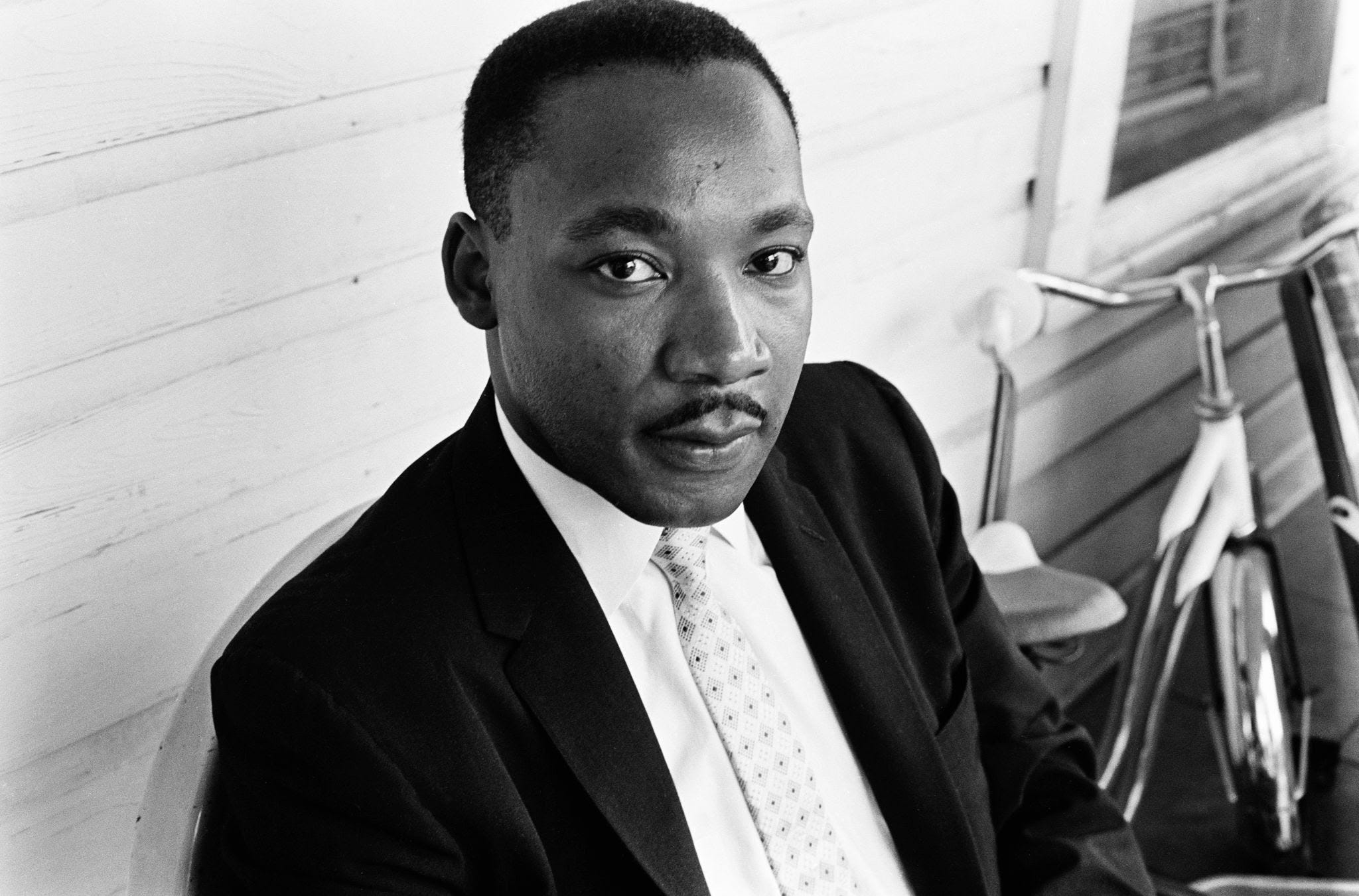
As Martin Luther King Jr. said, “Any religion that professes to be concerned with the souls of people but is not concerned with the slums that damn them, the economic conditions that strangle them, and the social conditions that cripple them is a dry-as-dust religion.”
Deconstruction can be overwhelming. You don’t have to reconfigure all your beliefs at once. But this is a good place to start:
Let go of a version of the gospel trying to get you out of the world, and embrace a gospel that sends you deeper into it.
Next week I will look at the next shift in this mini-series I am calling “4 shifts to unf*ck your spirituality.” We will explore the shift from a punitive god to a God of Love.
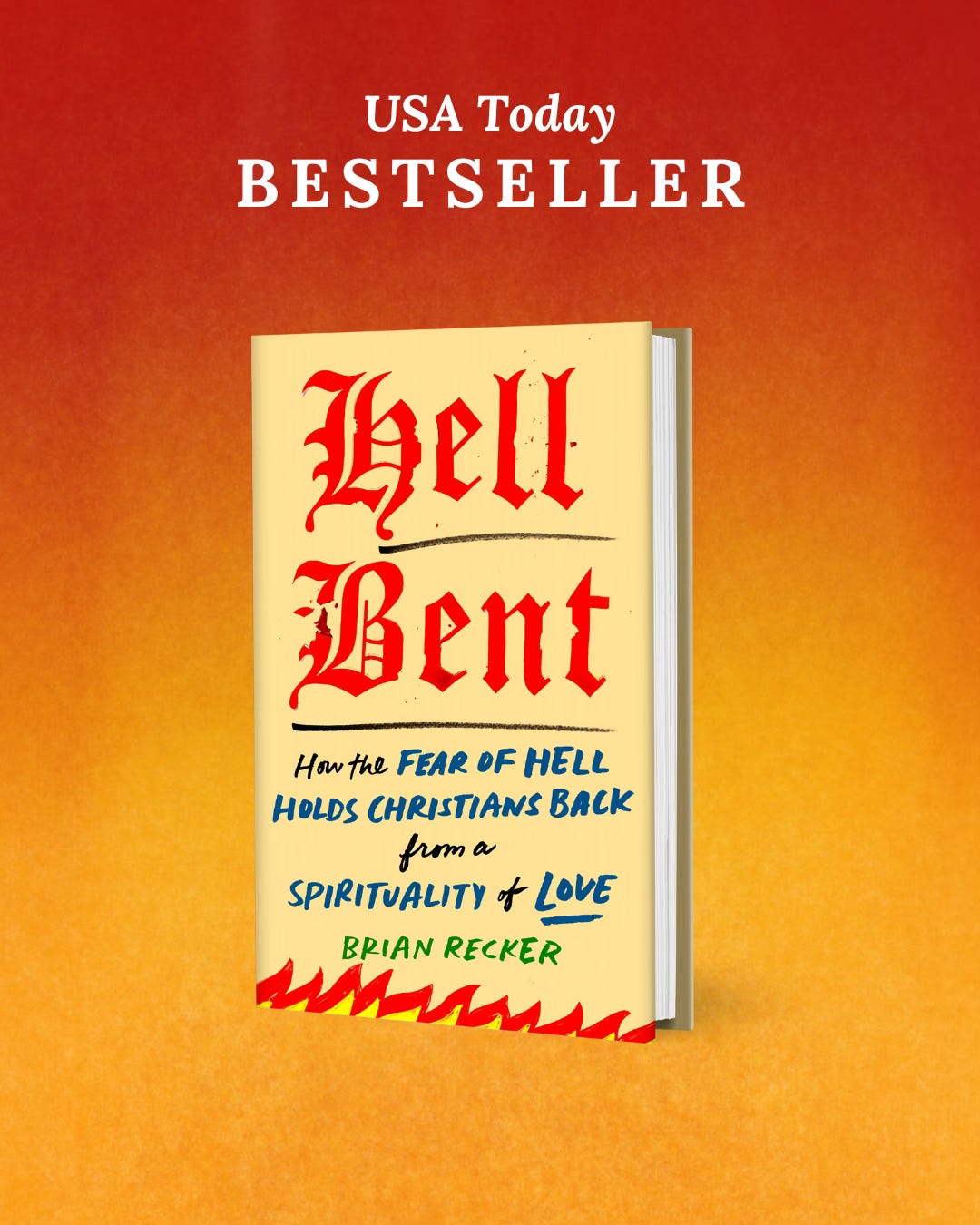
If this reflection resonated with you, you will probably appreciate how I explore these themes in my new book, Hell Bent: How the Fear of Hell Holds Christians Back from a Spirituality of Love.
It’s about reclaiming the Spirituality of Jesus, which was a way of love for the sake of this world, not escaping to the next. The Gospel is so much better than many of us were taught.
No posts
Comments
Nothing yet. Say the first thing.
Sign in to join the conversation.