
If you are anything like me, you were handed a version of Christian spirituality that stopped working for you. I’m not sure what your breaking point was. Maybe it was when evangelicalism put their full weight behind Donald Trump, not only one of the most xenophobic and race-baiting presidents in history, but also likely a child sex offender. But for many of us, the rot went deeper than the political compromises of the movement. The “relationship with God” this spiritual system promised us was hollow. We judged the fruit, found it wanting, and in the resulting process of deconstruction, many shed the label ‘Christian’ altogether—a valid and understandable response, and I make no protestations.
I do, however, want to suggest that while many of us received a trite, fear-based spirituality, the Christian tradition and the teachings of Jesus contain much deeper wisdom and spiritual depth than many of us were exposed to. I still believe that following Jesus can lead to a rich spiritual life.
In this series, which I am cheekily calling “4 shifts to unf*ck your spirituality,” I want to highlight areas that the white evangelical/American Christian tradition let us down, and discipled us into patterns that took us further from the heart of true spirituality, and how Jesus himself corrects these patterns. The first was from escape to incarnation. Check it out if you missed it. The second I would like to suggest is the need to shift from Christian Separatism to Human Solidarity.
beloved, with Brian Recker is a reader-supported publication. To receive new posts and support my work, consider becoming a free or paid subscriber.
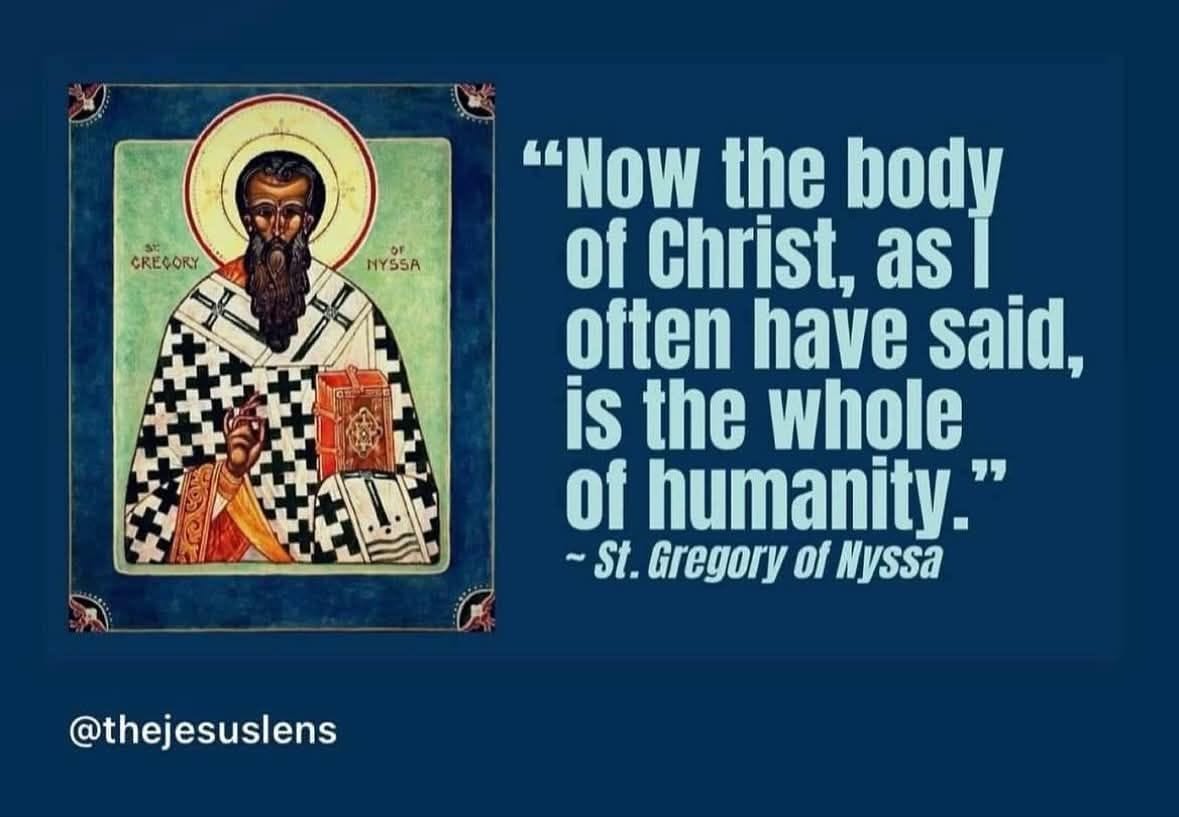
Human solidarity means that we are all in this together. We are all made of the same stuff—none of us are superior or inferior in the eyes of God, who is not a respecter of persons, which means that God doesn’t play favorites. All of humanity is God’s favorite. As Gregory of Nyssa said, “the body of Christ is the whole of humanity.” The Bible is full of this truth, beginning with the concept that every single person is made in the image of God. For Christians, this comes to full bloom in the incarnation and ministry of Jesus, who declared that there is no geographic, racial, ethnic, or religious barrier to who counts as our neighbor.
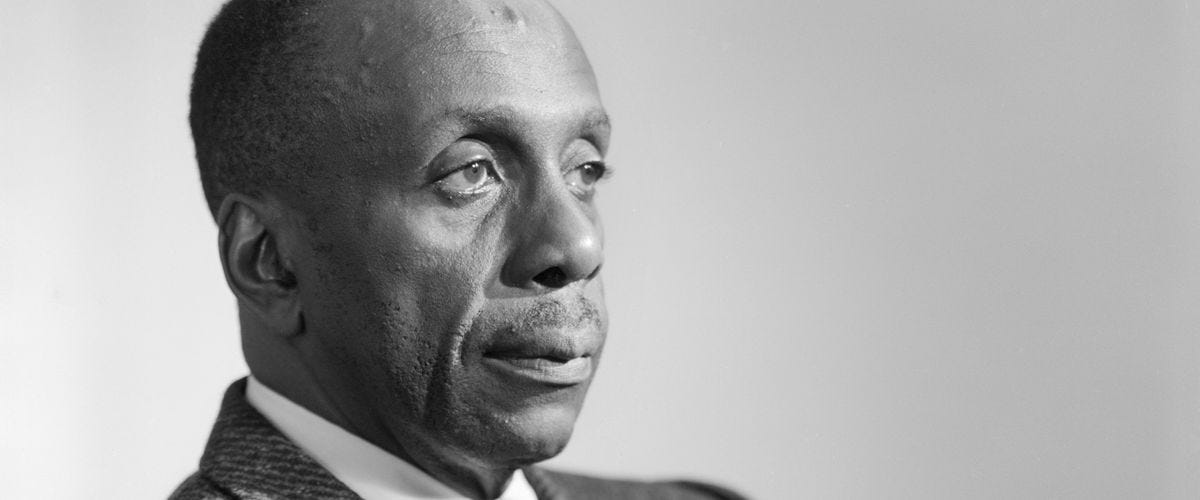
Many Christian leaders speak words that divide, but a true spiritual leader is always reminding us of our deeper solidarity. Martin Luther King’s mentor, Howard Thurman, wrote, “Human life is one and all humans are members of one another. And this insight is spiritual and it is the hard core of religious experience.” This resonates deeply with me. But we must be honest about the fact that the Christian religion has often been a barrier to this solidarity, rather than a spiritual engine for it.
Human solidarity did not factor at all into the version of Christianity I was raised with. That makes sense, because as a fundamentalist Christian who went to Bob Jones University (nicknamed ‘the bubble’), we were all about separation, not solidarity. We rejected “worldly” music and movies. I wasn’t allowed to go to the theater, because an “unbeliever” might see me there, and it would be bad for my testimony. How, exactly, I’m not quite sure, since they were at the theater too. But we were not like them, and we wanted them to know it.

The world was the enemy seeking to destroy the church, and we were the ones set apart by Christ with the truth of salvation. Salvation meant heaven for us, and damnation for everyone else. To momentarily expand this logic: we believed that only true Christians would go to heaven, which meant that of the 8 billion people on the planet, at least 5 billion were headed to eternal torture. This number was probably higher, because many of these were likely Christians “in name only.”
Needless to say, we were not “all in this together.”
These lines we drew between us and the world were imaginary, and they flowed from our worst impulses—to divide, separate, dominate. I do not need a religion to help me put distance between myself and my neighbor—I do that just fine on my own. Tribalism comes naturally to us—the Spirit of God is the spirit of solidarity.
I grew up being told that “humanism” was demonic, but Jesus consistently and happily prioritized human beings over religious rules (Mark 2:27). He crossed our invented boundary markers—many of them created by religion itself—to draw us into our solidarity with each other, which is the spiritual reality that our delusional barriers blind us to.
In his book, After Evangelicalism, The Christian ethicist Dr. David Gushee uses the term “Christian Humanism” to describe a faith that is anchored in the spirituality of Jesus, but understands “Christianity to be for humans (and the creation), not mainly about protecting Christian doctrinal purity, ideology, or the church’s self-interest.”
What is Christianity for? What is spirituality for? In the paradigm many of us inherited, it was for being right about God, so that you could be on the correct spiritual team, believe the correct doctrines, and ensure that you were going to heaven when you died. Dr. Gushee says that Christian humanism, however, is “concerned with the holistic well-being of all humans in this world, and not just their souls in the next.”
I am increasingly convinced that this is not just the purpose of Christianity, but of spirituality generally—the interdependent flourishing of humans and creation. Shalom in this world, not avoiding torment in the next world. If your spirituality isn’t drawing you into that larger story, it is likely doing just the opposite—shrinking your world, narrowing the scope of whose flourishing matters, and blinding you to the deeper reality: that we rise together and fall together, because we are interconnected.
This is not only a crucial spiritual truth—it’s also a plain fact of life on Planet Earth. We ignore it not only at the peril of our souls, but to the very existence of our civilizations.
Although our modern consumerist society hides this reality, by the time we step foot out of the house in the morning we are already indebted to hundreds of people from all around the world. You wake up and check your phone, which is designed by tech bros in California, but assembled by underpaid workers in Vietnam. You brew your coffee, which says it’s from Ethiopia, and was likely blended from dozens of farms in that region. Hundreds of farmworkers contributed their labor to every sip. When you splash in your half-and-half, you are indebted to more farms that you’ve barely considered. On a day of typical eating, the average American is relying on hundreds, possibly even thousands of individual farms, and tens of thousands of workers, most of whom do not make livable wages.

As Martin Luther King powerfully put it, “whether we realize it or not, each of us lives eternally ‘in the red.’ We are everlasting debtors to known and unknown men and women… Before we leave for our jobs we are already beholden to more than half of the world. . . . All life is interrelated. Whatever affects one directly affects all indirectly.”
If you think that you won’t be affected by climate change because you live in an area safe from flooding or hurricanes, you are probably failing to consider your total dependence on the climate of places you may never visit, but still rely upon for the readily available we all take for granted.
Ignoring our solidarity, our fundamental belonging to one another, has been spiritual death in the evangelical church. While we attended services, worshiping with people who looked mostly the same way that we looked, and we prayed for the unfortunates of the world who we believed to be separate from us, and separate from God.
We prayed that the gospel would reach the ears of “unreached people groups,” but beneath our pity was disgust. I think of the 60,000 Somalis who make up 1% of the population of Minnesota, but are being blamed for every social problem imaginable, mostly by white Christians. They want them to hear the gospel over there, but they don’t want them to come over here.
Over the last few days, I have seen many white conservative Christians sharing stories about alleged fraud in Somali daycare centers. Any valid fraud should be investigated of course, but the eagerness to jump on a story that implicates a despised minority, while ignoring the rot seeping from the Trump White House on a daily basis—is revealing. When we encounter difference, is our impulse to search for common links of humanity, or to amplify the things that separate us?

Most Somalis are Muslim. Many dress differently than white Americans do. If we already believe ourselves to be separate and superior, we will accumulate evidence to support this story—but in doing so, we move further from the spirituality of Jesus.
When Jesus told the story of the Good Samaritan, he was responding to someone who believed this lie of superiority, someone who “wanted to justify himself,” and Jesus told him a parable that reimagined the concept of who a neighbor is—it is always exactly who you don’t want it to be.
We live in a world of neighbors.
The closer you are to this reality, the closer you are to the spirituality of Jesus. Jesus’ favorite title for himself was the “Son of Man.” Many translate this as, “the human one.” Jesus did not identify himself primarily with a tribal sect, but with all humanity.
Moving towards humanity is moving towards God. Failing to do so—failing to see yourself in your neighbor, your neighbor in yourself, and all the threads that connect you to one another and to God—this is what it truly means to be lost.
beloved, with Brian Recker is a reader-supported publication. To receive new posts and support my work, consider becoming a free or paid subscriber.
Comments
Nothing yet. Say the first thing.
Sign in to join the conversation.