
When the auditors from the Texas Department of State Health Services showed up unannounced at my new surgery center, I was ready—drug count checklists completed and signed, freshly framed HIPAA policies displayed in the waiting room, a modern electronic health record system installed, the works. I knew that an unannounced visit to review the facility and operations would occur within the first year of opening, and I was actually looking forward to showing off my health policy and administration expertise.
I was 29 at the time and full of piss and vinegar, so you’ll have to forgive my overconfidence and naivety.
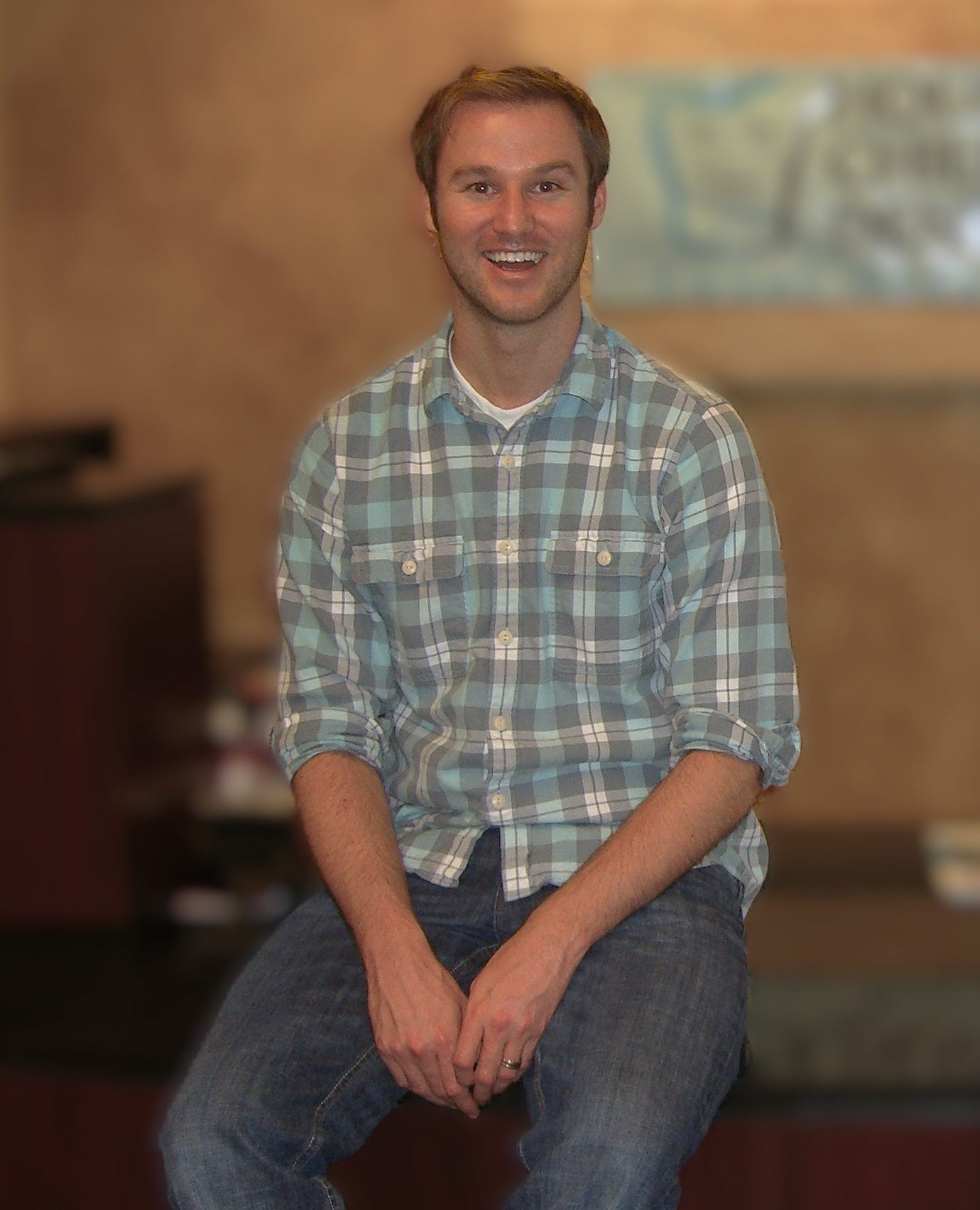
See: Brian at the front desk of the surgery center one month before opening
The auditors, who had both been reviewing and supporting health care facilities in Texas for longer than I had been alive, patiently sat in my office as I enthusiastically showed them the surgery center’s licenses, accreditations, and the 700+ page policies & procedures manual I had put together. They then asked me to take them through a few patient records from top to bottom—starting with the initial consult, then moving on to preoperative, surgical, and postoperative care.
Excited to share the abundance of details my electronic medical records system could hold, I pulled up a picture of a young patient getting discharged from the center in late November of 2011 and bragged about the Thanksgiving turkey his parents were holding—a gift from my surgery center for showing up on time and ready for surgery.
Auditor 1: You know you’re showing us a picture of Medicaid fraud, right?
Me: I’m sorry, what?
Auditor 2: If you promised a patient that they would receive a Thanksgiving turkey if they showed up for surgery on time and ready, that’s technically patient inducement. In other words, Medicaid fraud.
I remember the room spinning a bit as I went flush. The auditors let me feel the weight of this reality for a moment before kindly stepping in to provide some much-needed advice.
Auditor 1: Look, you seem like a nice kid, and we’re not here to ding you on a couple days of handing out turkeys to patients. But you also seem pretty new to all of this, and health care delivery is complicated and consequential. Even with all of your licenses and records in place, I’d still recommend that you find a way to educate yourself better on health care—and fast.
They were spot on. To me, starting a business seemed like a birthright, and I plowed into it young and self-assured. I grew up in Idaho, where there were plenty of small business owners who made a comfortable living, and I was confident that I would be able to figure it out somehow. After all, I had received my BS in Management and had four full years of training post college—first as a consultant and then as a private equity investor—so although I didn’t say it out loud, I felt pretty big time.
Looking back on it now at 42, it’s hard not to shake my head in both awe and embarrassment at the casual recklessness of it all:
Turning down a promotion at a PE firm and resigning before I even knew what kind of business I would start.
Deciding to open a pediatric surgery center after only two months’ worth of research and some bullish financial modeling, despite never having worked in health care.
Signing a 10-year lease for an abandoned medical facility that was 11,000 square feet and—after six months of free rent—would require a $35,000 payment to the landlord each month.
Starting my business in Houston, where I had no family, friends, contacts, or investors—just four years’ worth of savings from my previous jobs.
Today, the outcome of this endeavor is usually told in brief segments that make it sound linear and almost predestined. The first center realized a breakeven run rate by month nine and was shockingly profitable by the one-year anniversary of its first surgery. Within five years, I had opened two new centers in Texas and received a significant growth equity investment from a major institutional investor. Around the ten-year mark, my company was completing more pediatric surgeries than any other organization in the country, and I decided to sell my remaining equity to one of the most respected social impact funds on the planet.
You can see the same on my LinkedIn page or the about me section of my personal website. No career gaps. No setbacks. No help needed. Just a straight path toward awesomeness.
But what do entrepreneurs, like me, leave out? After having interviewed hundreds of founders and creators all over the world, I found my answer:
The best parts.
The nuances in their journeys that lead them to discover who they are and what matters most to them. For me, those include:
The gutting of my confidence in the first year as I mismanaged staff members and sadly parted ways with a good friend whom I had convinced to join the venture.
The encouraging advice of a health facility auditor that led me to hire a temporary CEO in year two so I could move to Boston and pursue a master’s degree in Health Policy and Management.
The thousands of hours I spent on the phone with that new CEO—who soon became my best friend—as we worked to implement evidence-based protocols like the Safe Surgery Checklist and the OR Crisis Checklist.
The night I saw my three daughters dancing around our small, student apartment and began to wonder if the world of entrepreneurship would welcome them the same way it had welcomed me.
The day I turned down a formidable executive package at the company I founded to enroll in a doctoral program and research the experiences of women navigating the entrepreneurial process.
And that’s what this newsletter is about—those best parts. The moments when someone goes about the work of creating something new and, along the way, discovers meaning. And after discussing these moments with hundreds of entrepreneurs all over the world, I continue to be surprised with the many different ways that the act of creating can lead to meaning.
Still, that doesn’t answer why I’m writing “Creating, Meaning, Everywhere.” I genuinely hope that the stories, ideas, and reflections in this newsletter have broad appeal and encourage people to work entrepreneurially and create solutions to the problems that matter most to them. I also hope that readers will find clarity in their own journey to discover meaning by observing how this process has unfolded for others.
But above all, I’m writing this because I want my daughters to see that their individual contributions in this life matter. That the things they choose to create—both now and in the future—can help them discover meaning.
And that their dad sees a world where people are creating meaning everywhere.
Thanks for reading about why I´m writing this newsletter.
This summer I’ll be traveling to Switzerland, Pakistan, the U.S., Ethiopia, and a few other places to meet with people who are creating meaningful change in their communities.
About 3–4 times a month, I’ll share reflections on what I’m learning—stories from the road, insights from my work with entrepreneurs and leaders, and thoughts on how we create meaning through what we build.
If that resonates, I’d love for you to follow along.
Comments
Nothing yet. Say the first thing.
Sign in to join the conversation.