
We had just made the 35-minute walk from the Hotel Bristol to the Freud Museum the day before, and I could tell that my three daughters didn’t want to make a similar trek again. They had actually really enjoyed learning about Vienna’s most famous psychiatrist—and had spent the rest of the afternoon riffing on one of his more misguided prescriptions.
Me: I have to stop eating at all these hot dog stands around town.
15-year-old: Maybe we can get you some cocaine instead—that’s what Freud would do.
Me: Wow—that’s one idea. How about we just go sit down somewhere to eat. My feet are killing me from walking all day.
12-year-old: You should just sprinkle some cocaine on them.
They’re smartasses—like their mother—which makes them both terribly endearing and also fairly easy to leave behind in a hotel, which is what we did that morning as we set off toward the Viktor Frankl Museum. My wife, Katie, is a Hopkins-trained therapist, and she had always wanted to visit the renowned psychiatrist’s former office. I agreed to tag along, but my head was elsewhere.
The next day, I was scheduled to fly to Wisconsin to meet Judy Faulkner—one of the most impactful entrepreneurs in modern history and the founder of Epic, whose software manages the health records of over 325 million patients worldwide. The visit marked the culmination of nearly a year’s worth of research, interviews, and case writing—work that would become the first Harvard Business School case ever written about Epic. I was distracted, already mentally in transit.
But something about that museum just grabbed hold of me and put me in the moment.
The Viktor Frankl Museum is small, tucked on the first floor of an ordinary building in the Alsergrund district—a quiet residential part of Vienna just beyond the grandeur of the First District. There’s no marquee. No ticket window. Just a buzzer by the door, and a hallway lined with soft white walls and brass door handles that haven’t changed in decades.
Inside, it’s hushed. A kind of reverent quiet that feels earned. One room holds Frankl’s desk and a few artifacts from his clinical work. Another room tells the story of his imprisonment at Auschwitz. His manuscript—his life’s work—was taken from him the day he arrived. The therapy model he would go on to develop—logotherapy—was, in part, his response to that loss and was later distributed after the war as the global bestseller Man’s Search for Meaning.
Near the entrance, I saw an exhibit with a series of quotes that stopped me.
“There are three main avenues on which one arrives at meaning in life. The first is by creating a work or doing a deed.”
“The underlying concept of meaning is the fact that who we are and what we do matters to the world.”
“We are particular individuals with unique personal characteristics who experience a unique historical context in a world that has special opportunities and obligations reserved for us alone.”
I stood there for a long time. I’d interviewed hundreds of founders, entrepreneurs, and builders over the years. So many of those conversations had followed the same arc: beginning with business ideas, shifting to go-to-market strategies, and peaking at sustainability breakthroughs. And then, about five minutes before the interview was scheduled to end, the tone would shift as the formalities died down. That’s when I would hear the best parts of their story.
A memory. A person. A frustration. A longing. The interviews nearly always turned personal—and I had never quite known what to call that turn.
Until that moment.
I had always thought of entrepreneurship as invention. But maybe, in its truest form, it’s something deeper: a way of creating, a search for meaning, unfolding everywhere.
Watch: A Brief Tour of the Viktor Frankl Museum
The next morning, I packed up for my flight to Wisconsin as a barrage of requests and nonsense came flying in from the open door of my daughters’ connecting hotel room:
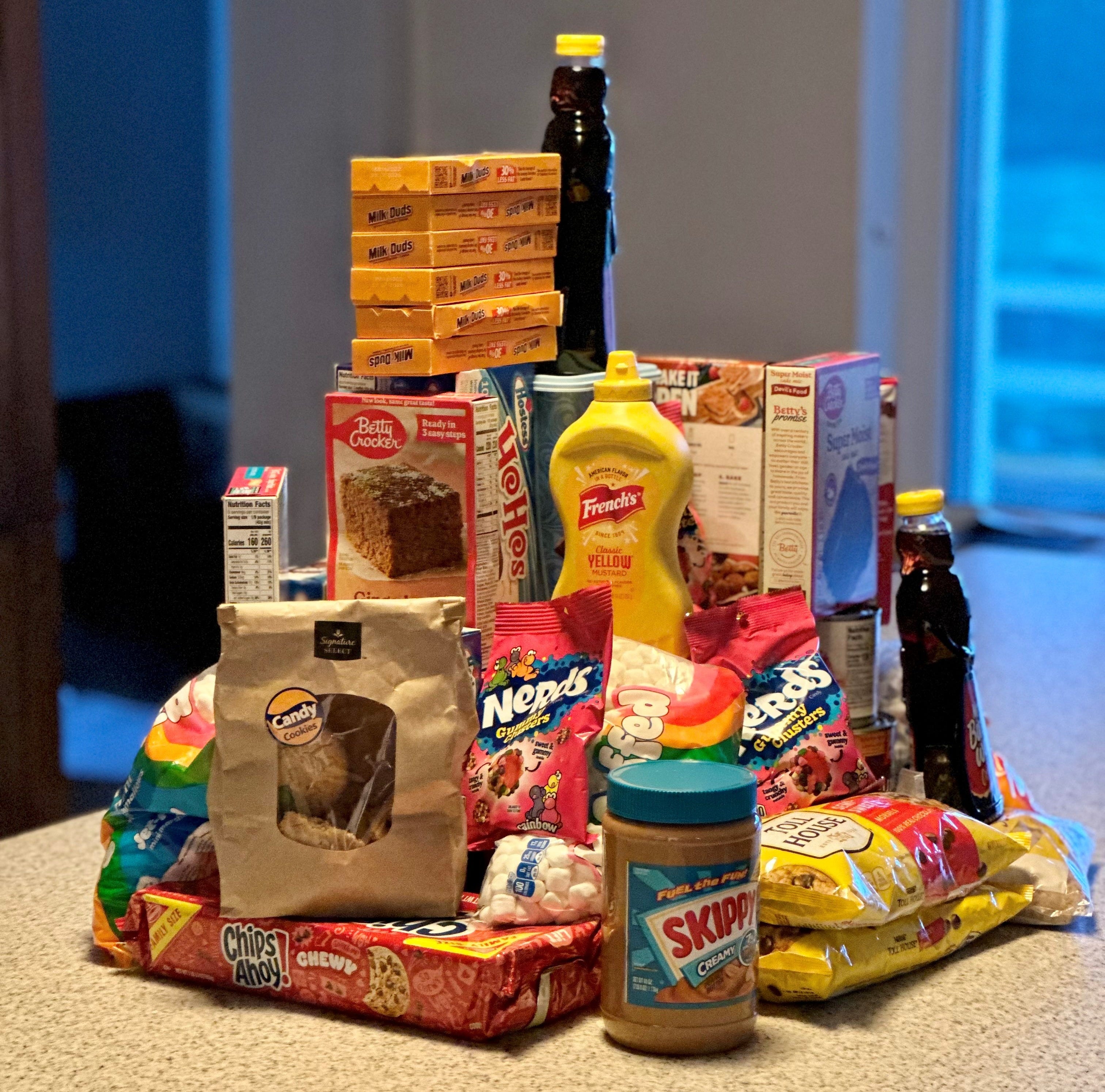
12-year-old: Bring back some cake mixes. I don’t need any more of these dry-ass European cakes without any sugar in them.
17-year-old: When I was your age, Mom and Dad would’ve killed me if I said that. But she’s not wrong—the cakes here suck. I want a family-size bag of Nerds Gummy Clusters, please.
15-year-old: Just bring back some cocaine for me. I’m trying to quit sugar.
Me: Just text it. And try to avoid the drug requests—Customs officers are technically allowed to search my phone, and I live in constant fear that our family text string is going to get me cancelled or arrested.
I stuffed my empty North Face duffle into my carry-on—to make sure I had enough room to bring a bit of America back to Austria—and grabbed a taxi to the airport just as my family headed to the train station. I’m a regular on the Austrian Airlines international routes and have a decent routine: reading, a movie or two, and the in-flight Schnitzel to pass the time.
See: Tower of America that I built with the goods from my North Face duffle
Epic’s campus is about a 25-minute drive from the Madison airport and sits on a 1,670-acre plot of land, 750 acres of which are still actively farmed. The buildings look like they’ve been pulled from fairytales and science fiction—castles, gardens, and corridors with names like The Wizard Academy and Deep Space.
In scale and style, I couldn't imagine finding a greater contrast to the Viktor Frankl Museum. But the feel of it as I walked the campus was very familiar. A kind of reverent quiet that feels earned. Like someone has been building this world, piece by piece, for decades.
See: Epic Campus in Verona, Wisconsin

Judy Faulkner founded Epic in 1979 with $70K in startup funds from colleagues, potential customers, and a few family members. Today, it operates in 16 countries with over 14,000 employees and has been recognized as the #1 Healthcare Software Suite for 14 consecutive years. As I spent the day talking with her, walking the campus, and meeting Epic’s team—programmers, physicians, systems thinkers, scientists, and more—I was genuinely struck by the clarity of their values and came away convinced that the company’s culture was one of its greatest competitive advantages.
And the meaning behind it all? The evidence was everywhere:
No outside investors. No IPO. No acquisitions. And no plans for any. Epic is employee-owned and is slated to remain that way after Judy’s retirement—a deliberate structure designed to protect what matters most: long-term relationships with customers, and the patients they serve.
A slide featuring three male CEOs of competing companies alongside Judy with the question “What’s the difference here?” And Judy’s unexpected answer: “Only one of these CEOs can code.” Being a technologist matters deeply to Judy, and it continues to shape how she leads and the trajectory of Epic.
An office for every employee with a door you can close—and Epic’s famously simple dress code: “When there are visitors, you must wear clothes.” Significant investments that reflect a culture rooted in creativity, individual expression, and mutual respect over rigid conformity.
Watch: The Why Behind Epic’s Campus
When I met Judy Faulkner in 2024 on a surprisingly warm winter day in Wisconsin, I didn’t witness any performative branding or crafty sales strategies. Instead—as she would say—I was simply “lucky to meet another interesting person.” A founder who built one of the most impactful healthcare technologies in history in a way that reflects what she values and who she is.
This newsletter is full of stories like hers—of people working entrepreneurially to solve problems all over the world. And in the midst of that work—through the choices they make and the things they create—meaning quietly takes shape. Not as a goal, but as something they discover along the way.
Creating. Meaning. Everywhere.
Thanks for reading about my visits to the Frankl Museum and Epic
This summer I’ll be traveling to Switzerland, Pakistan, the U.S., Ethiopia, and a few other places to meet with people who are creating meaningful change in their communities.
About 3–4 times a month, I’ll share reflections on what I’m learning—stories from the road, insights from my work with entrepreneurs and leaders, and thoughts on how we create meaning through what we build.
If that resonates, I’d love for you to follow along.
Comments
Nothing yet. Say the first thing.
Sign in to join the conversation.