
Last week, my older brother Matthew and his longtime friend Jared stopped in Salzburg to visit my family on their way to a business event in Athens. Whenever I’m with them, I find myself thinking back to our childhood days in Idaho, which sometimes feel like they were pulled straight from the novel A River Runs Through It.
Running through the foothills at midnight, barefoot and shirtless (always shirtless).
Building makeshift treehouses with scrap wood from construction sites.
Floating down the Boise River with a department store raft that would inevitably spring a leak, leaving us to finish the journey on our own, bodies with the current.
“Life every now and then becomes literature—not for long, of course, but long enough to be what we best remember.”
- Norman Maclean, A River Runs Through It
With Matt and Jared, that’s how it often feels—the memories I have with them read less like recollections and more like stories.
One summer afternoon, three young boys came to the edge of a river. The current pulled hard and cascaded over a towering waterfall not far downstream. The only path across was a series of stones, spaced just precisely enough to lure them across.
See: Brian, Matt, and Jared at the river
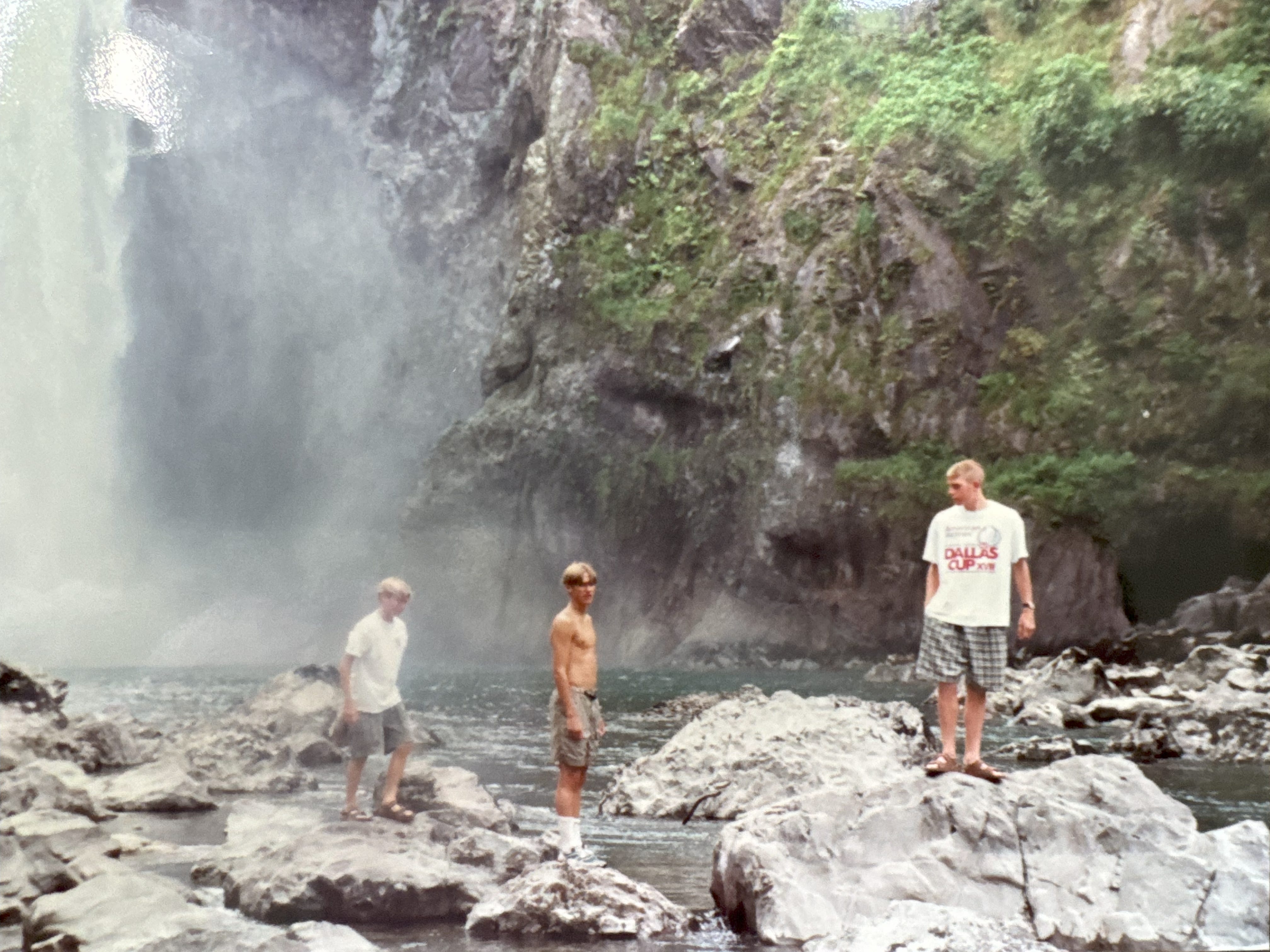
At first the stones seemed friendly. The boys hopped from one to the next, growing confident, maybe even complacent. Until they came to a gap wide enough to make them pause.
The boldest of the three stepped forward first. He was optimistic, assertive, and comfortable with the risk. He leapt for the far rock, came up short, and splashed into the torrent. For a sickening moment, it seemed the river would take him. But by force of will and some impossible stroke against the current, he clawed his way to safety.
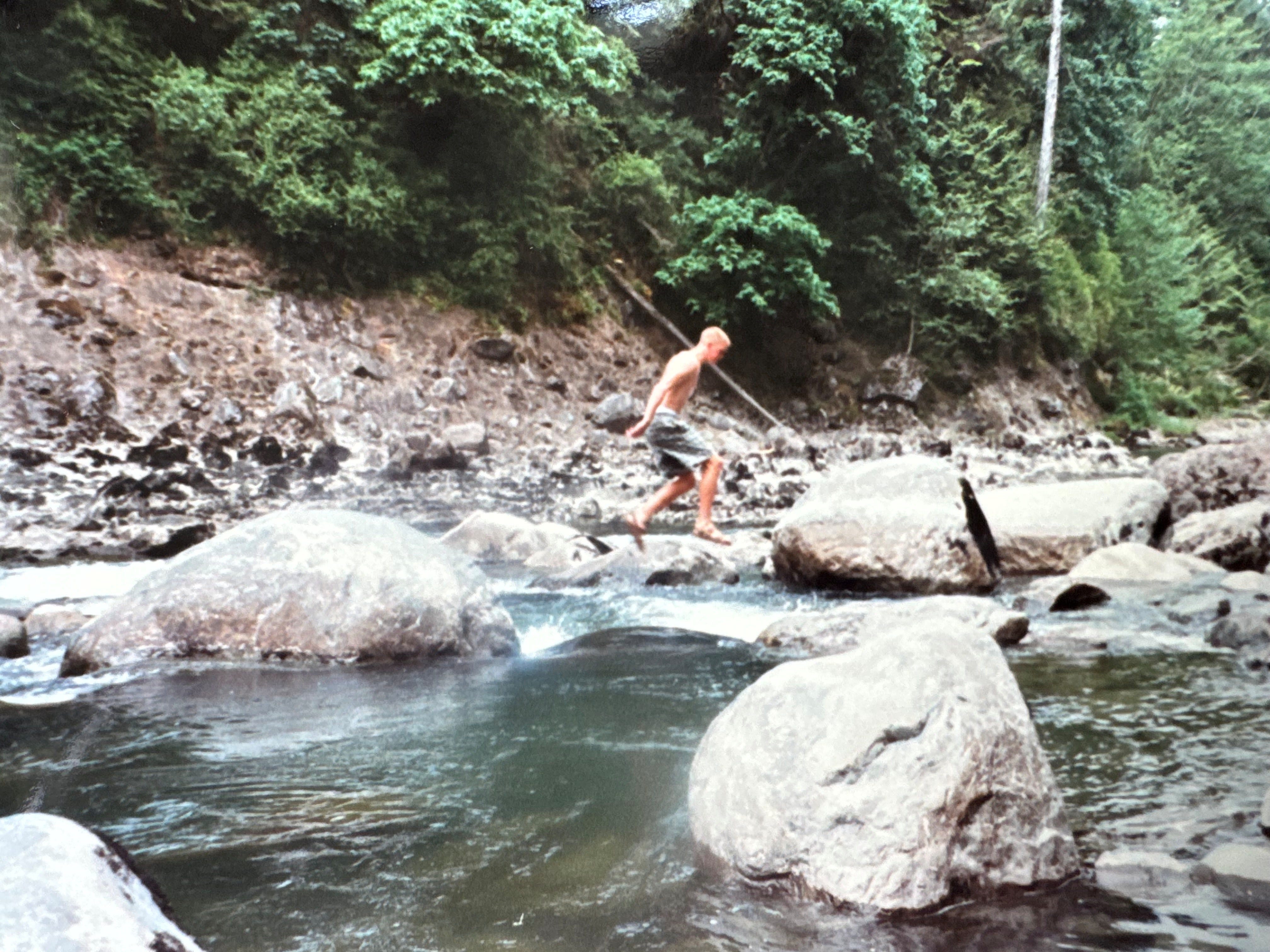
The most naturally skilled of the three was next. He had been watching the first jump closely. He measured the distance, studied the angle, and repositioned himself before leaping across cleanly.
See: Jared making the jump
The youngest stood back. His heart pounded from the sight of his older brother nearly swept away, then another gambling with the same fate. He imagined what it would mean to lose them, and so he stayed put, unwilling to risk it on that day.
I was thirteen when my brother and Jared made that jump at Bridal Veil Falls. To this day, I still hate that they did it. And yet, last weekend, as the three of us swam in a mountain lake during a storm—the only ones in the water while everyone else took cover inside—I had to shake my head. How in the hell is this still happening?
Maybe the answer is that while much about us can change over time, some of our instincts never really go away. For the three of us, the way we approach risks seems to be deeply embedded at our core.
And fortunately, the old adages about what that means for our capacity to create—about who is “cut out” to be an entrepreneur—turned out to be just that: thoughtless anecdotes that don’t hold up when tested.
While studying the process of creating for my doctoral dissertation, I found that the usual list of “entrepreneurial traits”—assertive, bold, decisive—doesn’t actually explain our capacity to build and sustain new ventures. Those traits show up, yes, but they’re not causal drivers.
We create and persist in all kinds of ways, drawing on very different characteristics. The heroic archetype so often described in the literature is only one version of the story.
The truth is simpler, and more interesting: our best chance to create something impactful and personally meaningful occurs when we lean into our lived experiences and who we genuinely are. Some lead with boldness, some with calculation, and some with caution. And all of those instincts can fuel our creative work if applied with clarity and persistence.
In fact, the only two characteristics that continually emerged in my dissertation as causal drivers of impactful creative work were the willingness to learn and the discipline to iterate. And when I look back at that day by the waterfall, I can see each of us, in our own way, already learning those lessons.
My brother—the founder and CEO of Swivel—continues to be a bold first mover, launching ideas into the world and then pivoting almost in real time as challenges appear.
Jared—now Swivel’s Chief Revenue Officer—still studies the gap before he leaps. He has a gift for reading the emotions and mission of a group, and the natural talent to lead them forward.
And me—I never embraced risk the way they did, but I’ve learned to work with its discomfort, finding ways to move forward without losing sight of the costs.
Or maybe I’m still just that thirteen-year-old kid who is trying to belong inside the stories of his older brother and be included with his friends, writing myself into a narrative of grand waterfalls and river crossings.
“As is known to any teller of stories who eventually tries to put a few of them down in writing, the act of writing changes them greatly.”
- Norman Maclean, A River Runs Through It
Creating. Meaning. Everywhere.
Thanks for reading about Matt, Jared, and Swivel.
This fall I’ll be teaching in Boston and traveling around the world to meet with people who are creating meaningful change in their communities.
About 3–4 times a month, I’ll share reflections on what I’m learning—stories from the road, insights from my work with entrepreneurs and leaders, and thoughts on how we create meaning through what we build.
If that resonates, I’d love for you to follow along.
Comments
Nothing yet. Say the first thing.
Sign in to join the conversation.