
Scientists are the people with the deepest knowledge in their fields of expertise. That’s all. They’re not necessarily unusually knowledgeable or skilled in other things — no more so than anyone else. That’s not a jab or an insult. I’d say the same thing about you: If you’re a mortgage broker, you probably have very deep knowledge about the current mortgage landscape; but I shouldn’t expect you to also know everything about scuba diving.
If my headline seems a little clickbaity, well, yeah; if I had written it dispassionately, it would have said NON-EXPERTS IN FOOLING PEOPLE ARE BAD AT KNOWING WHEN THEY’RE BEING FOOLED. And you would have rightly said “No shit, Sherlock.” But since I said scientists, you may have taken it as a bit of an affront to scientists. It’s not at all.
Why, then, do so many people hire scientists when they’re actually looking for skill in the arts of deception?
I’m referring to an issue that James Randi used to always beat the drum about: When the engineers at SRI were testing the supposed “psychic” abilities of Uri Geller — who was simply fooling them with common sleight-of-hand magic tricks — they hired physicists to validate Geller’s performances. Randi knew that a physicist is no more likely to recognize magician tricks than a street sweeper or a chef. He told them as much, but was ignored.
Unfortunately, this phenomenon extends well beyond the little “skeptical world.” Consider these examples:
When Elizabeth Holmes’ Theranos scam was recruiting board members that would impress venture capital investors, she hired random prestigious people instead of people skilled in blood diagnosis: George Schultz, William Perry, Henry Kissinger, Sam Nunn, Bill Frist. It worked; Theranos scammed investors out of some $1 billion. Politicians are not the people best positioned to endorse a blood testing machine.
Pons and Fleischmann honestly believed they had achieved cold fusion in 1989, and since they were scientists, the University of Utah aggressively promoted the discovery to the world press. Pons & Fleischmann were electrochemists; nuclear physicists (who were never brought in by the University to validate the claim) knew it was nonsense from the very beginning. One type of scientist is not the best person to validate a different type of scientist’s work.
When the SEC was building its case against Ponzi scheme magnate Bernie Madoff, the SEC brought in lawyers experienced in insider trading — which is what the SEC knew. Meanwhile, Harry Markopolous, an actual expert on Ponzi schemes, sent them report after report on Madoff for years, and was ignored “because he didn’t know the stock market.” The SEC finally did listen — after a 16-year investigation mostly spent ignoring complaints and evidence presented by Markopolous and others. Experts on one type of crime are not the best people to catch a criminal in a different crime.
Wine collector Rudy Kurniawan got away with selling counterfeit bottles of rare wines for years, but those who were suspicious of him brought in only more wine experts, whose only superpower was tasting wine. They were unable to find any evidence. Only after the FBI was brought in with a more down-to-Earth approach of testing label paper stock, glue, computer printers, and cork testing, was the case proven. Wine tasters are not the best people to study a forged label.
Sometimes people can have the right skillset, but not the right level of independence:
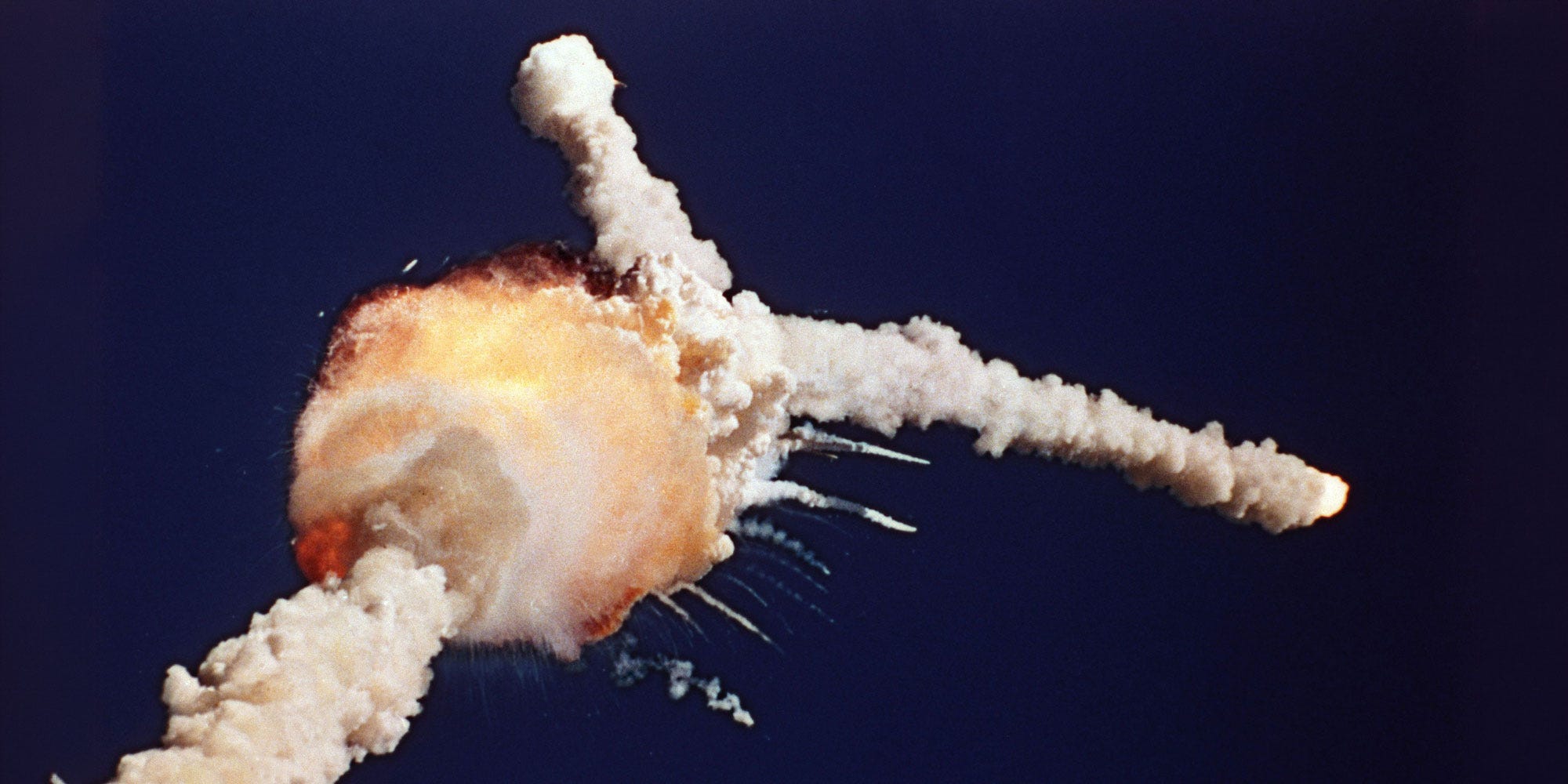
Following the 1986 loss of the space shuttle Challenger, NASA’s program managers and Morton Thiokol’s engineers who had designed the rubber O-rings and knew their cold weather limitations were magically unable to pin the cause of the explosion on their own O-rings that had been compromised by the cold weather. But Richard Feynman, a scientist on the Rogers Commission, simply dunked an O-ring in ice water on live television and demonstrated that it lost its crucial properties. People responsible for an error are the wrong people to determine the cause of the error.
And, sometimes we see the experts being brought in who are both the wrong type of expert and also have a conflict of interest:
Trump’s new UFO department within the Office of the Director of National Intelligence is guided by the “UAP Science Advisory Council” whose primary job will be (nominally, anyway) to analyze anomalous UFO videos, claims, and other sightings and tell our intelligence agencies what they think it is. For years now, this job has been done nowhere as successfully as at the Metabunk forum, led by Mick West, who (along with his top team members) is arguably the world’s leading and best analyst of UFO videos. But who did Trump choose? Avi Loeb, who has a background as an astrophysicist, but some years ago abandoned science in favor of running The Galileo Project, which collects millions and millions of dollars from naïve investors hoping for proof of their conviction that aliens actively visit the Earth, a belief to which Loeb has since dedicated his entire public persona. Last year, Loeb asked Congress for $1 billion (!!!) to study objects he believes are alien. He is clearly extremely conflicted, and has never demonstrated any ability to correctly identify anomalous videos. The rest of his council is made up almost entirely of names long familiar to the UFOlogy community who share these convictions.
And, as a result, a lot of people are going to be fooled — both inside and outside Loeb’s council.
So I leave you with a simple appeal: Please, if you want to find out X, get an independent expert on X, not an expert on Y.
Comments
Nothing yet. Say the first thing.
Sign in to join the conversation.