
In my writing, I always put in a little extra effort to make sure I’m using the preferred terminology for groups of a specific identity. And when I say preferred I mean the term they prefer; not the term other people think I should use. They’re not always the same. By now, most people know not to use the term eskimo, as the term was invented by colonialists under which the Inuit suffered. But not everyone knows that you should really, really avoid Laplander and Bushmen — if you use them, you’ve just offended Sami and San people.
To verify this, I generally need immediate access to real people in that community. Not someone who knows someone, not what’s on Wikipedia or in Google’s AI results, but someone in that community. My favorite resource for this is whatever the most active Facebook group is for them, and it’s often a group where the language is discussed. Most recently I visited a few such groups just to confirm whether First Nations, Alaska Native, and Native American people still prefer those terms (they do) for a piece I was writing. Sometimes cultural trends shift and it’s best to double check once in a while.
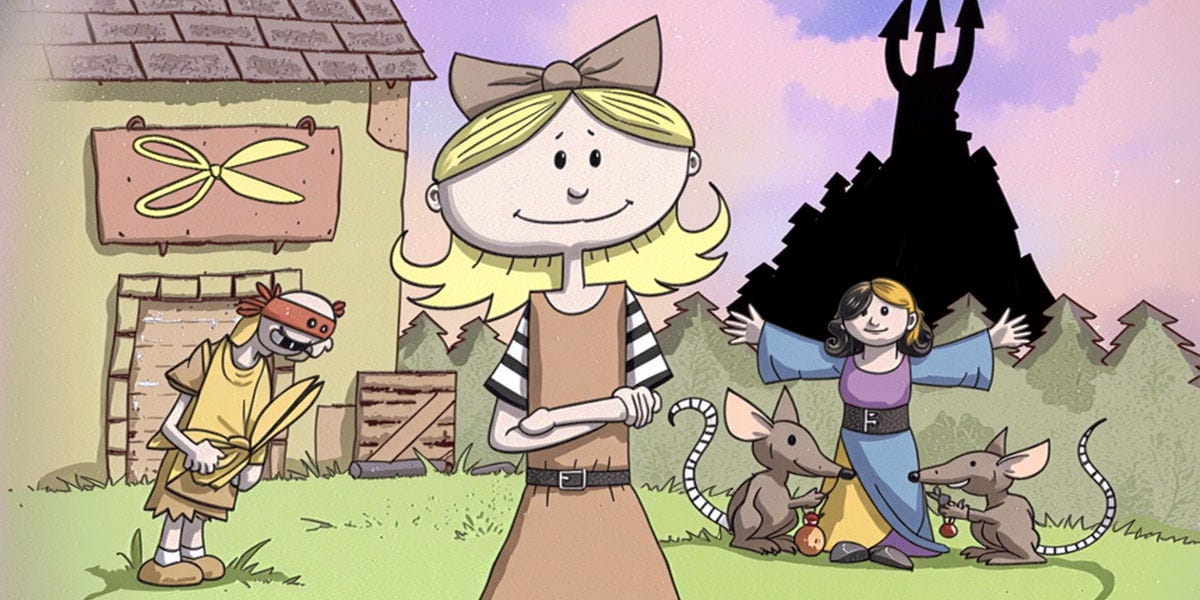
One time this bit me in the butt was way back before the Facebook Groups trick, when I wrote Skeptoid #300: “The Secret of the Gypsy Queen,” an animated musical folktale of a little girl who saves her village when she is the only one who doesn’t buy into the pop pseudoscience of the day — peddled by, of course, the antagonist: the fearsome Gypsy Queen.1
As you probably know, The Gypsy Queen aka Queen of the Gypsies is a frequently reused character name both in Hollywood and in written fiction, going back to 18th century folktales at least. My error was in giving it no more thought than this: “Oh, it’s a famous and familiar name, that would be a fun hook to hang this story on.” Nevertheless, when the episode came out, we were all deluged with hateful charges of racism and everything else, for using an offensive slur. (I should point out that of the seven people involved in the production, none reported being aware of any potential offense.)
I happened to know a Bulgarian and a Russian from volleyball, both of whom quickly confirmed to me that gypsy is indeed the common term for people of that culture, and neither of them considered it offensive in the least. However, it was not a decisive verdict — neither of them was Roma. It was like a California surfer lecturing you on the daily habits of the Amish.
That was where I left it, as something of a question mark, for a long time. I had other things to do.
But it was something I’d check up on every once in a while. Most recently was a couple weeks ago, while sitting on the couch with my lemon ginger tea at 2:00 in the morning with The Guns of Navarone (one of the Greek characters was distinctly Roma-like in manner, so I felt inspired to take a look). I found the situation has gone and got itself all complicated.
Today, the overwhelming take among Roma is that the term Gypsy carries with it centuries of connotations of homeless criminals, false charges, literal chattel slavery, and the same treatment given by the Nazis to the Jews during the Holocaust. Like the common names of the cultures mentioned earlier, the word Gypsy was invented by outsiders, believed to have been a bastardization of Egyptian which some Europeans thought they were based on their dark complexions (many trace their ancestry to India). But in wasn’t a pejorative or meant cruelly, like the others. However, over centuries of mistreatment by virtually everyone they encountered, the word became a pejorative.
The Roma are at the bottom of the European ethnic heap, under-housed, undereducated, underemployed, underserved, underrepresented and actively discriminated against by landlords, employers, school administrators and governments… Nowhere is their situation good.2
If there’s one thing you need to know about the word Gypsy, it’s that. There are fluctuations, but if you need just one fact, take that one.
The fluctuations are interesting. The Roma are a people without a homeland. They are at least as much a cultural identity as any other on Earth with their own language and history, but geographically, they live mostly in Europe and the British Isles. Yet for them, the lack of a homeland is not a handicap; it is a huge part of their identity. They do not seek a homeland. They are nomads.
Comments
Nothing yet. Say the first thing.
Sign in to join the conversation.