
‘Paging Dr Terminator to theatre 1…’ #NeoArmory:
Did you think your job as a surgeon is safe form the AI boom? Well, you may be right. But the Autonomous Robots are here to take over!
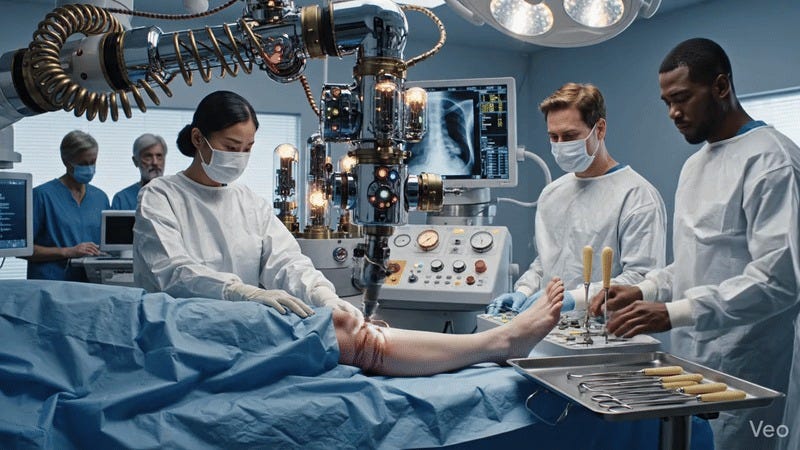
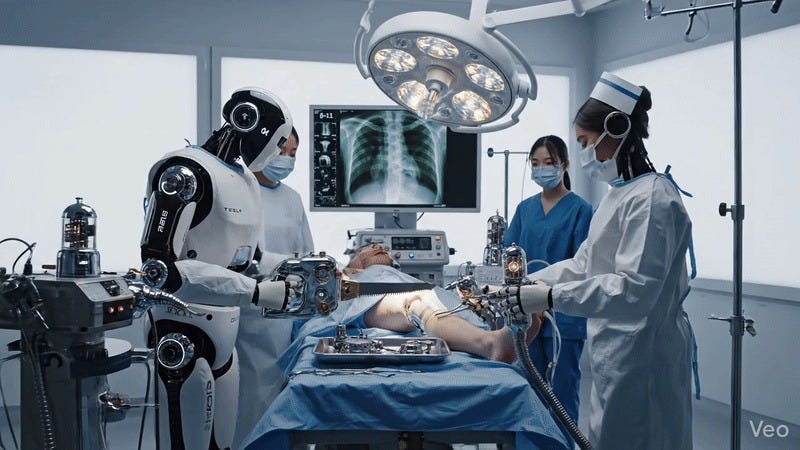
What they meant Robotic surgery in 1960s vs What patients think robotic surgery is now?
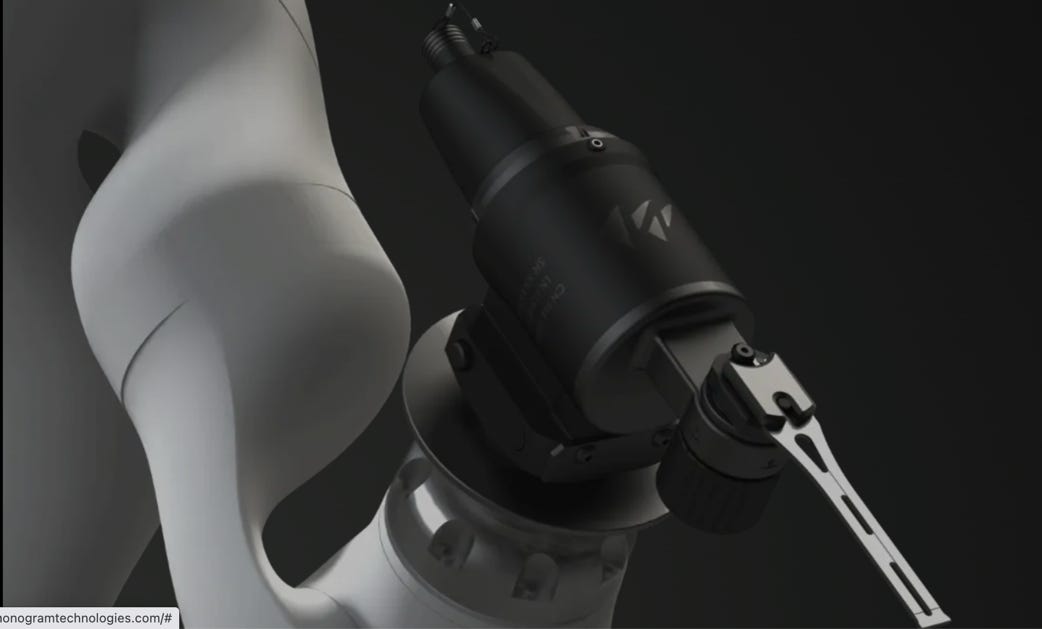
Monogram technologies have built an autonomous robot ‘mBôs’ which, after registration can complete the cuts without human intervention. Built from scratch, with their 23 patents application, they have built a unique looking robot.
This is them speed running a 6-minute registration and cuts. They have received FDAs 510k clearance and have completed clinical trial in India with 102 cases.
Welcome new kid in the block - the rectus femoris for ACL reconstruction #SurgicalPearl:
Rectus femoris is the new buzz word in ACL circles. Evidence on the superiority of Rectus femoris over routine grafts is poping up in literature as we write this article. Before we start debating on the need for it, it would be handy to learn a technique to harvest it - will be a convinient option in multiligamentous knee injuries as well as revison ACL surgeries
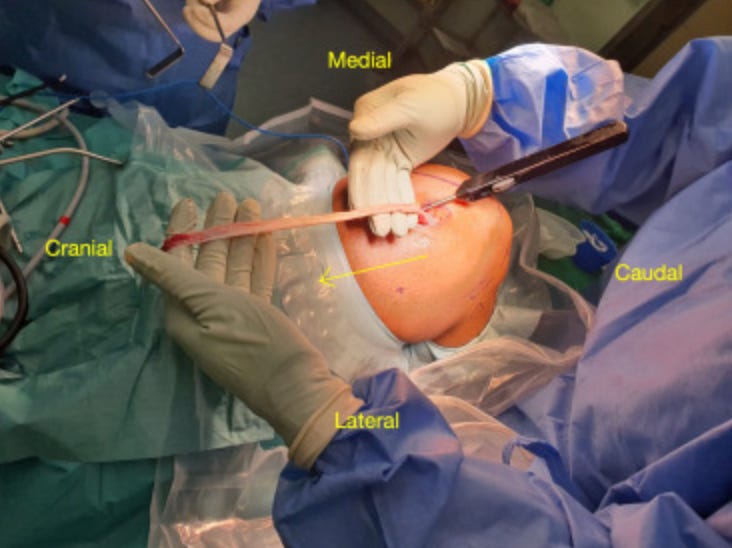
Lee et al. describe a minimally invasive, highly reproducible technique for harvesting a rectus femoris (RF) tendon graft using a bidirectional tendon strip (BTS) approach.
Patient supine; knee supported in ~45° flexion.
A 2-cm midline incision made ~8 cm proximal to the superior pole of the patella (SPP). This zone has looser tissue planes and better tendon mobility than the suprapatellar region. At 8 cm proximal location, the RF tendon is easier to identify, less crowded by confluence of quadriceps layers, and capsular breach risk is lower.
Blunt dissection through subcutaneous fat to expose the glistening rectus femoris tendon, which lies superficial to vastus intermedius. Vastus medialis fibers partially overlying RF are gently swept aside. This allows clear visualization of true RF width and trajectory.
Using a No. 15 blade, two longitudinal parallel incisions are made to define graft width. Depth is limited to the fat plane separating RF from vastus intermedius → ensures partial-thickness harvest.
The tendon strip is gently lifted using a right-angle clamp. Fascial bands (especially medially) are released to allow smooth passage of harvest instruments.
An open tendon stripper is advanced proximally toward the ASIS. This gives controlled proximal length with excellent tactile feedback.
Through the same incision, a cylindrical tendon corer is passed distally to harvest an additional 7–9 cm, completing the bidirectional harvest. Capsule and vastus intermedius are preserved, minimizing hematoma and anterior knee pain.
Final graft typically measures 8–11 mm diameter and 28–35 cm length, suitable for ACL ± ALL or multiligament reconstructions.
Hemostasis achieved; no quadriceps or capsular repair needed. Skin closed in layers.
The bidirectional rectus femoris harvest is a clean, elegant technique but needs access to Corer device of Arthrex. If you want a simpler but less elegant technique check out the one by Rego et al.
The Man behind the Mechanical Axis #FromTheHistory:
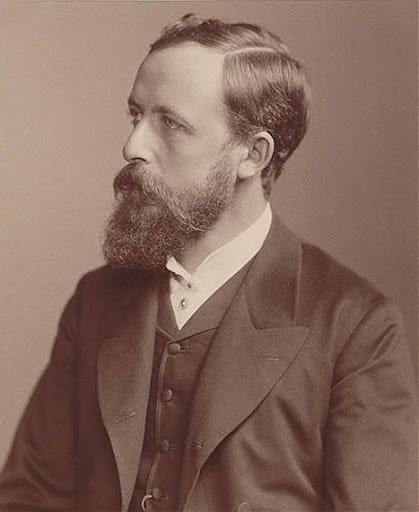
As Orthopods, we draw the mechanical axis almost as a reflex. But, do you know the man who steered us away from obsessing anatomical axes and toward the weight bearing mechanical axis? His name is Jan Mikulicz Radecki.
Now, Mikulicz was not our stereotypical 19th century surgeon. No drinking, no smoking and zero theatrics. He was the serious type, almost intimidating. He got trained under the legendary Theodor Billroth – who for obvious reasons was not really impressed. But over time they grew close and then what helped? Both of them played Piano, they even played alongside the great German composer Johannes Brahms.
In 1882, at just 32, Mikulicz got the prestigious position as Chair of Surgery in Krakow. Billroth may have pulled some strings in Vienna without the knowledge of the medical council. This resulted in a predictable outrage calling “attack on autonomy”. But our man handled it very well and eventually won everyone over. Now comes the relatable twist: his wife, who didn’t speak Polish, was not very happy to be in Krakow and he chose to move out within 5 years. His wife would have played a major part for the change – some dynamics never change!
As a boss, he was feared as a very formal type. He never complimented his assistants as if it was a rule not to. He had what we can call a double life! From 10am to 6pm, he worked in Breslau as Chief medical officer in the government setup where he setup a splendid hospital. He introduced the usage of face mask for surgeons; he was one of the first European surgeons to use surgical gloves. Once Billroth visited this splendid structure created by his disciple as Mikulicz recalls told half jokingly by Billroth “ If it weren’t yours, I would perish out of jealousy”.
Finally another anecdote from his practice which shows how shrewd he was. When a patient once asked him to reduce his fee, he reportedly said: “Certainly, but I have to operate with dull instruments then”!
Serious man, sharp mind and sharp instruments. And a line we still draw every day.
No Starvation Surgery for Diabetics, New ERAS Trend!
Many individuals undergoing surgery involving general anaesthesia are asked to fast for a prolonged period to ensure perioperative safety, yet this can initiate stress reactions and insulin resistance, harming postoperative recovery. Such fasting may be particularly problematic for those who have type 2 diabetes.
Lai et al. performed an RCT where 90 patients who had non-insulin-dependent type 2 diabetes mellitus who were scheduled for elective TKA received oral carbohydrates at two or four hours before surgery, or received a carbohydrate-free “placebo” drink at four hours before surgery. Patients given oral carbohydrates had lower insulin resistance, reduced β‑cell activity, less hunger, and better glycemic control compared with placebo. Administering carbohydrates two hours preoperatively showed the most significant benefit. No aspiration or severe complications occurred, confirming that this approach is safe and effective for non‑insulin‑dependent type 2 diabetes.

Events to check out:
Pediatric Orthopaedic Society of North America (POSNA) 2026 Annual Meeting 6 – 8th May 2026 Orlando, USA
Barcelona Hip Meeting 2026 27 – 29th April 2026 Barcelona, Spain
22nd ESSKA Biennial Congress 2026 20 – 22nd May 2026 Prague, Czech Republic
Have a Fabulous February ahead guys.
Comments
Nothing yet. Say the first thing.
Sign in to join the conversation.