
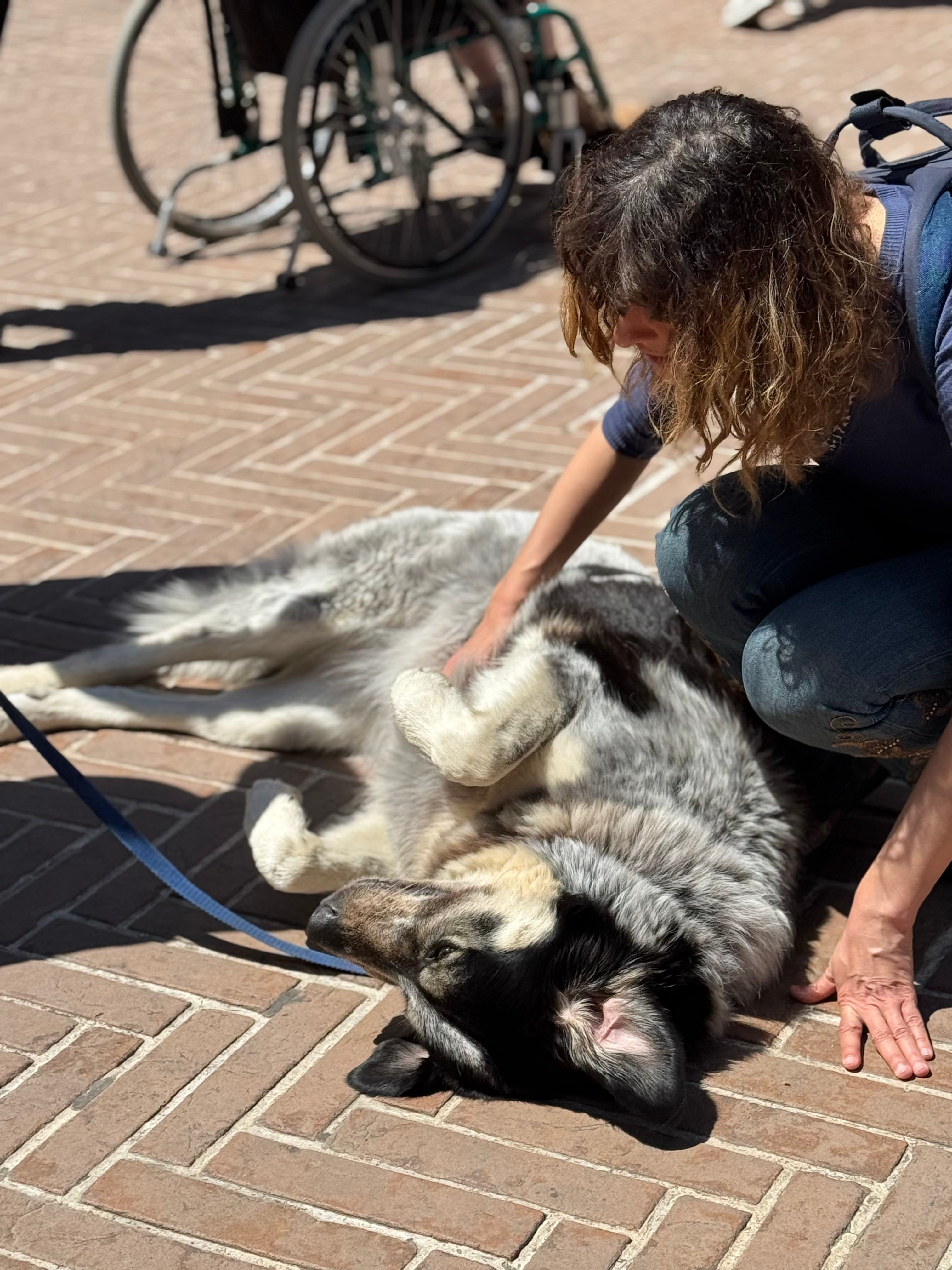
Maggie was so long, her back looped and swayed. Half Border Collie, half Italian Sheep Dog, Maggie was big. “Maggie Doggie,” that’s what our friend Andrew called her.
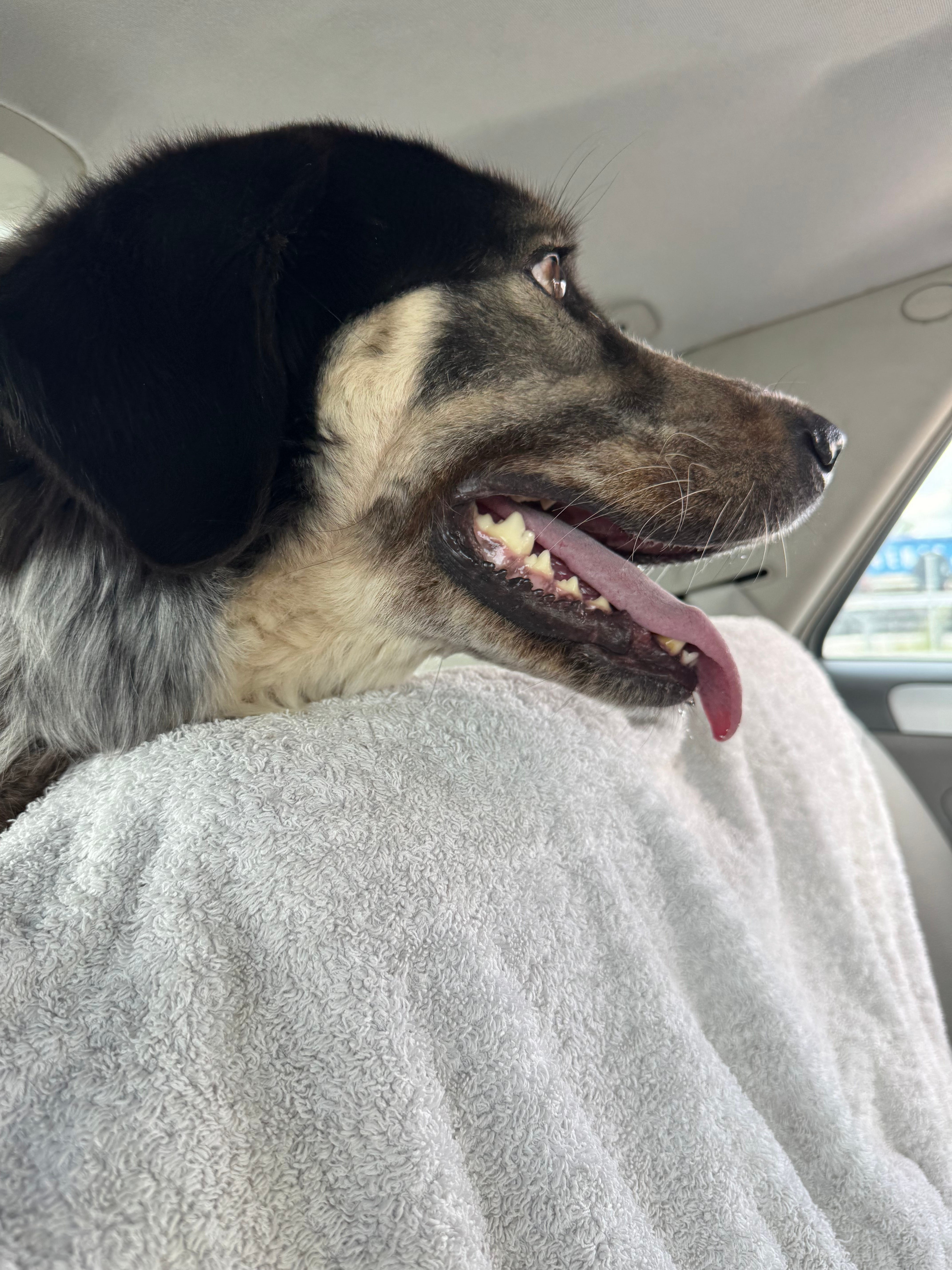
Maggie became our mascot during our travels in the Italian countryside, an omen for the sweet visit that we were about to experience.
Maggie has the entire back of Andrew’s car on our long drives. Insists on hanging her head cheek to cheek with me. Her smell, my smell. I’ve never been so close to a beast. (Her long, pink tongue is dripping on me.)
I am so full of my recent visit to Italy that it’s spilling over into these pages. Dear readers old and new—please forgive me.
The trip is a present my husband and I were able to give to me on a no-nonsense birthday that I cannot ignore.
First sunset in the Pisa countryside, returning to Andrew’s farmhouse in the early evening. Untroubled, fresh light above the radiant blue.
In the distance the land is rolling, columns of cypress trees and clumps of Pino divvying up the waves of green. Vineyards, hillsides, and the blue mountains beyond.
Tuscany is vineyards, repetition, order, history.
At home with Andrew and his wife Orsi. I’ve forgotten how lovely it is to talk and let the talk take you.
First day of touring—the beautiful city of Lucca. Massive, ancient walls covered in lime and moss.
The Italians are knowingly dressed. It’s the fabrics, the precise cuts, the precision of the curves on a Maserati. Sexiness is allowed.
Italians are artists of motion Tiny roundabouts, decisions at the turn of a dime. No red and green, no stop and go. Backing up single lane roads.
Wrong turn on way to Portovenere, fishing village on the Mediterranean Sea. Winding mountain road folding on itself, a water hose crimped on the lawn. Buses beeping in warning, not slowing. —precipice on the right. precipice on the left— Grateful for our competent driver. Andrew, born in Hungary, raised in Australia, has become more Italian than he knows.
Maggie looks at me imploringly with her wet, brown eyes. In the mornings she bounces with wild excitement, knocking me down.
Rome is the most beautiful city on Earth. Low, stucco buildings reflecting the sun’s domain. Peaches, apricot, pinks, early morning yellow. Responding with their solid flesh to the emperor sun.
How to hold on to so much beauty?
Colosseum: cartoon arch madness.
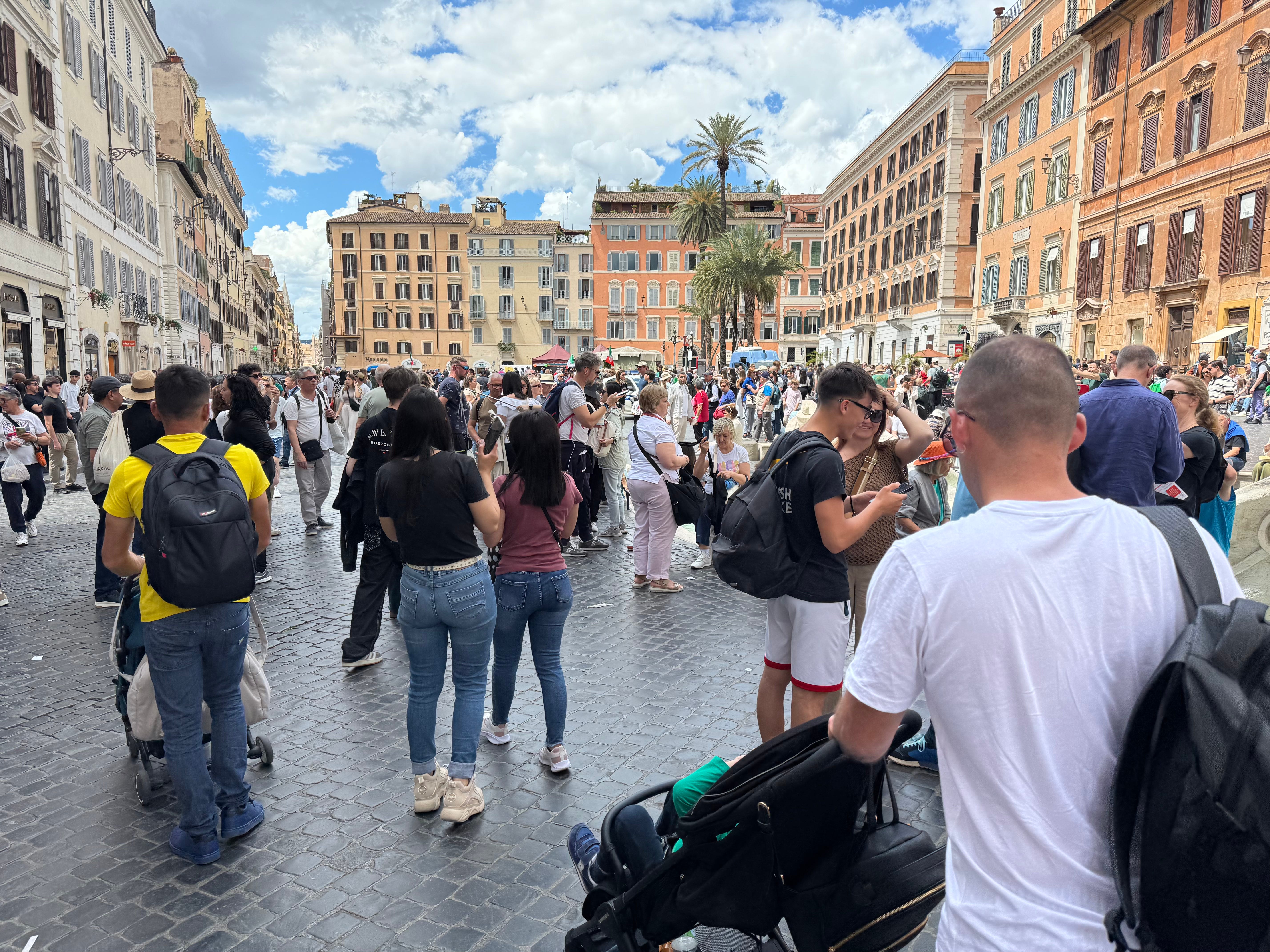
The ancient walls of Rome were built 275 AD. Eleven miles of stone, cement, and brick. Who built these walls and at what cost of suffering.
Popes and emperors—money and blood and force must have been part of the agreement.
Rome has more than 900 churches. Has anyone counted the arches? the vaults? the domes?
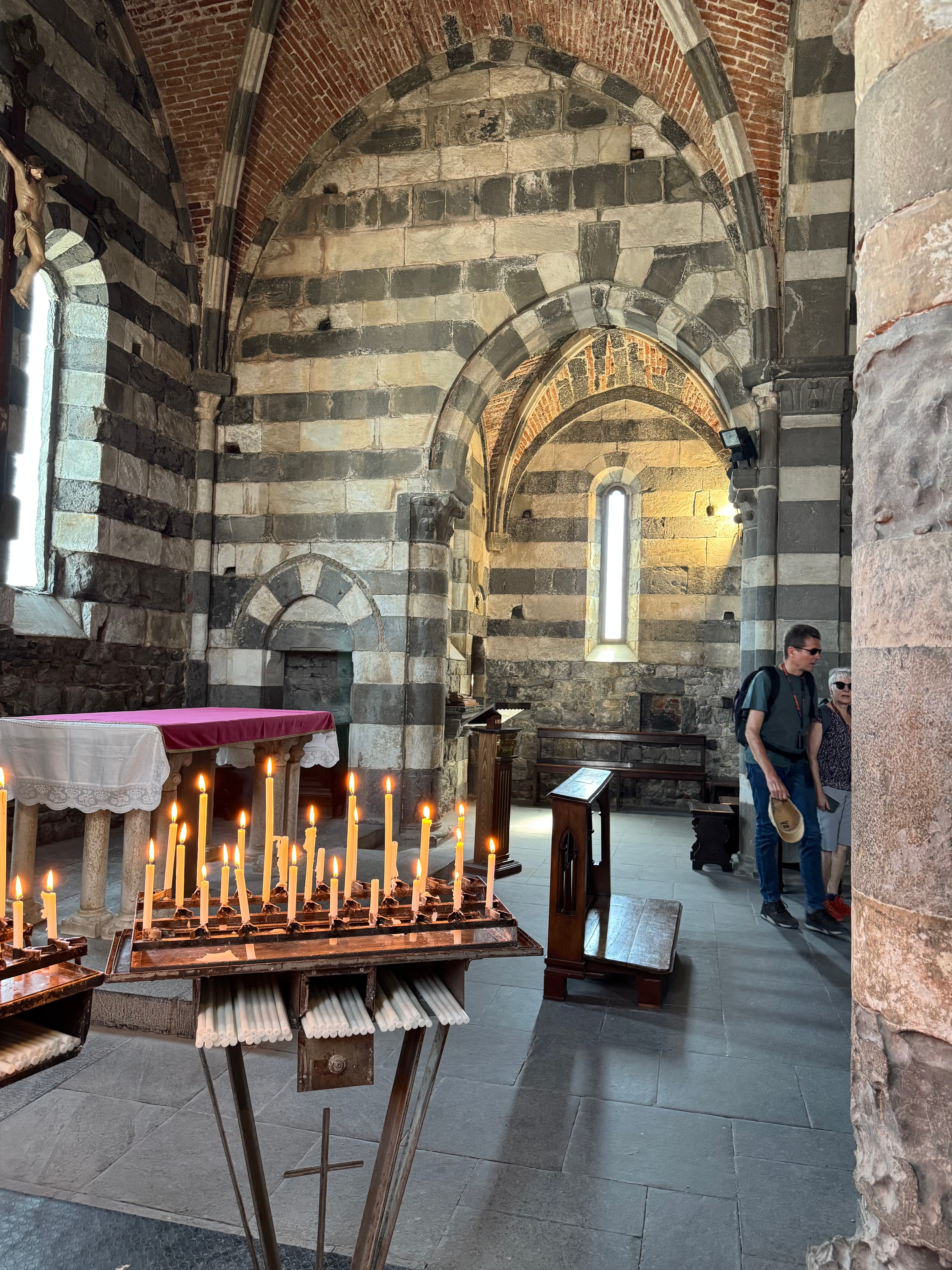
It doesn’t matter if you are not Catholic. In a cathedral or small stone chapel, you will light a slender candle to your sister’s memory.
Parking for mottos, narrow slots. Efficient. Why do Americans love big and bigger? The Italians want small. Vespas exquisitely designed and engineered. In Rome the vehicle of choice is the Smart car, really a front seat on wheels. And women careering down basalt stone roads on bikes.
I’ve almost lost the quiet, unmoored feeling after the long-awaited vacation. How do I define this expensive trip?
In most ways this has been a superficial trip, leaving impressions.
Places of great beauty and power that I did not create, nor have a history with, or can claim for antecedents.
What means?
why do things mean
do they need to mean?
Will you find a way to reset this summer? What are you hoping to find?
“Identity is not nothing. My parents valiantly tried to live outside of history.”
Dear readers - soon in your inbox! A conversation with Sonia Daccarett, journalist and memoirist, author of the brand-new memoir, The Roots of the Guava Tree. Sonia was born in Colombia to a Christian Palestinian father and a Jewish mother. I’ve read early pages of this tender and compelling book. I can’t wait to introduce Sonia to you.
Comments
Nothing yet. Say the first thing.
Sign in to join the conversation.