
I came home from a trip a few weeks back and walked into an apartment that was completely clean. There were no dishes in the sink, the counters were spotless, I didn’t have any dirty laundry, and my bed was fluffy and inviting me for a deep rest after a long week of travel.
Nothing was out of place. And even though I had just had a chaotic travel day ( tell me why flying has gotten so horrible lately) - from a delayed flight, yucky airport food, the whole thing - I walked through my front door and immediately felt my nervous system settle.
That’s not an accident. It’s a system. And one that I have perfected through years of constant travel and living in my own space.
People ask me all the time if my apartment is just clean for the camera, or if it’s actually only this clear. The answer? It’s always clean. Not because I spend hours and hours cleaning or a big Sunday reset every week: it’s because I don’t let it get to a point where I need to.
Most people think about cleaning as something you do reactively - things pile up, the sink gets disgusting, surfaces disappear under stuff, and then eventually you dedicate a whole Saturday or Sunday to digging yourself out. And then it gets bad again. And then you clean again. It’s demoralizing because you’re always catching up.
What I do instead is maintain.
Maintaining means you never let the mess build in the first place. It means cleaning is something that happens continuously throughout your day, in tiny two-second increments, rather than in one giant event every week. It means the effort is so small you barely notice it. And the result is that you never have to dread a big reset because there’s nothing to reset from.
This reframe - maintenance over cleaning - is what changed everything for me.

Before I get into the actual system, I want to spend a minute on the why, because I think this is where a lot of people miss it.
Your space is a reflection of your state of mind. I’ve said this before…. when my space is chaotic, I cannot function - I can’t focus, I can’t think clearly, I feel a low-level anxiety I can’t always trace, but 99% of the time, it’s coming from the clutter. My brain treats visual chaos the same way it treats any other kind of overwhelm: it hums in the background and drains me.
But here’s what I think is even more important: it works in the other direction, too.
The state of your space shapes your state of mind just as much as it reflects it. It’s a loop. A messy space makes you feel scattered. Feeling scattered makes it harder to clean. The mess gets worse. You feel worse. We’ve all been in that spiral.
On the flip side: a clean space makes you feel calm and in control. It feels easier to maintain. You feel better. The space stays clean.
Which loop you’re in is largely determined by the systems you’ve built - or haven’t built yet.
Your home is the container for your entire life. Everything you’re working on, everything you’re thinking about, everything you’re trying to build happens inside that space. And the condition of the container affects everything that happens inside it. This isn’t an aesthetic preference or a perfectly styled apartment. It’s deciding that your environment matters and treating it accordingly.
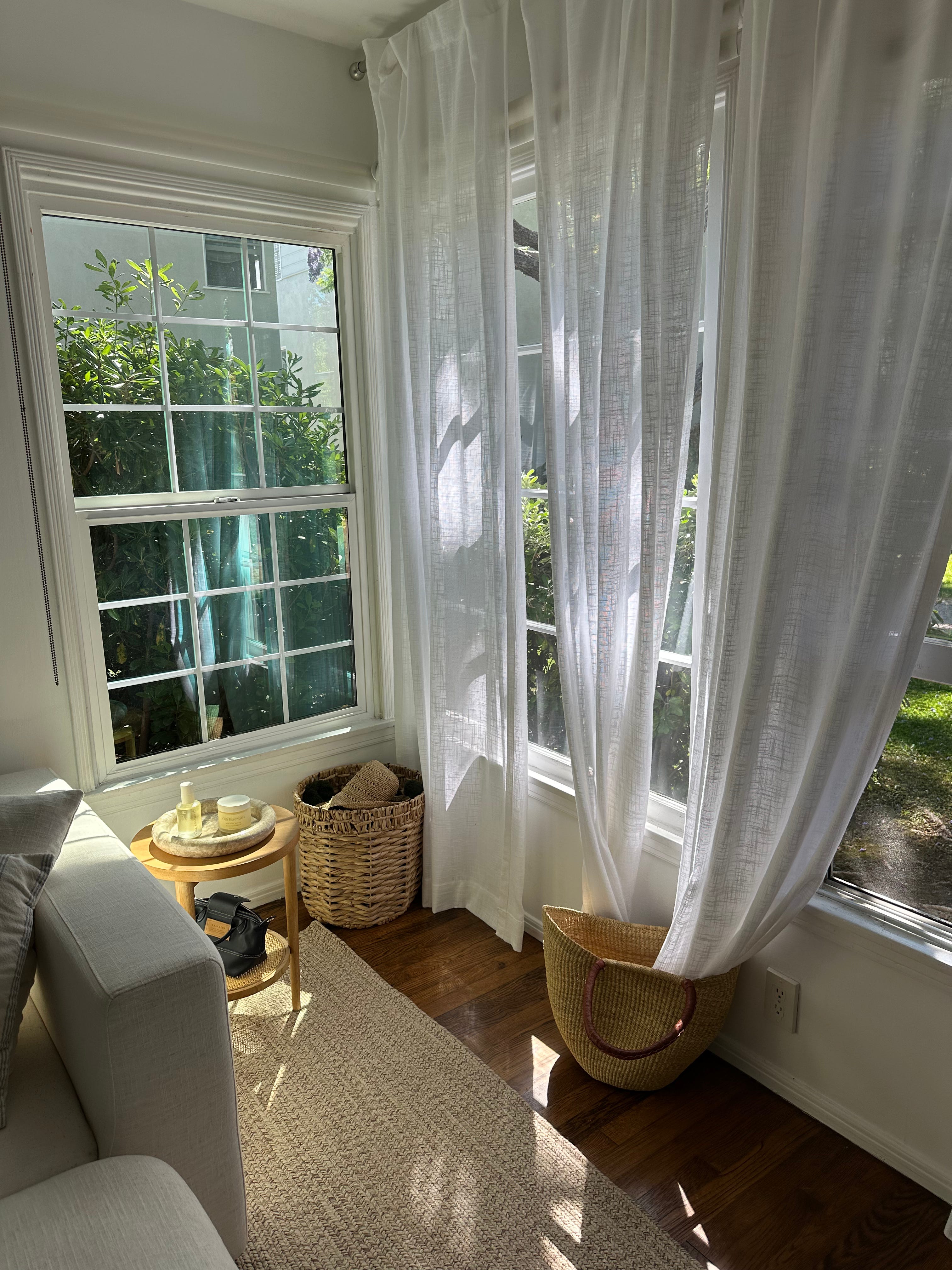
So here’s how the actual system works, and it’s shockingly simple:
Everything has a home. And when you’re done with it, it goes back there.
That’s it. That is the whole system. It sounds almost condescendingly simple (sorry) But pretty much all household clutter is just stuff that got put down instead of put away. Things land on a surface because they don’t have a specific place to go back to. They accumulate and feel invisible. And then one day you look up and your apartment is a disaster zone.
When everything you own has a designated, functional space - not a general vicinity, not a basket you throw things into, a specific place - the mess never happens. You use something, you put it back, and the baseline stays exactly where it needs to be.
For this to work, a few things have to be in place:
Your storage has to be functional. Things should be stored as close to where you use them as possible so that putting them away is effortless. For example, I have a specific drawer right by my front door that holds my keys, wallet, sunglasses, lip balm, headphones, etc. Everything that leaves the house with me lives there. When I come home, it all goes back into that drawer. I have never lost my keys since I started this system.
Surfaces are not storage. This is probably the single highest-leverage habit shift I can give you. Counters, tables, the top of your dresser - these are not places where things live. If something is sitting on a surface, it’s either being actively used or it needs to go somewhere else. The only things on my surfaces are things I’ve intentionally chosen to put there: a plant, a candle, a book. Everything else gets put away. Clear surfaces = clear mind. It makes the biggest visual difference between a space that feels clean and a space that feels cluttered, even when everything else is technically in order.
Build the daily rhythm. Mine honestly takes about 15 minutes total, spread across the whole day, and it runs on autopilot at this point. In the morning: empty the dishwasher, make the bed, quick pass on any surfaces. Throughout the day: dishes go into the dishwasher as soon as I am done using them (NOT IN THE SINK), clothes go back on the hanger or into the laundry, nothing gets left out for later-me to deal with. In the evening: wipe the counters, run the dishwasher, put anything away that needs it. I don’t sit down to relax until that’s done, because once I sit down I’m done for. The relaxation is the reward on the other side of it.
The golden rule: never leave a mess for later. This is the one that changed my entire relationship to cleaning. Every time I’m tempted to put something down instead of putting it away, I ask myself: is this going to be annoying to deal with later? The answer is always yes. So I deal with it now. Two seconds now saves twenty minutes later.
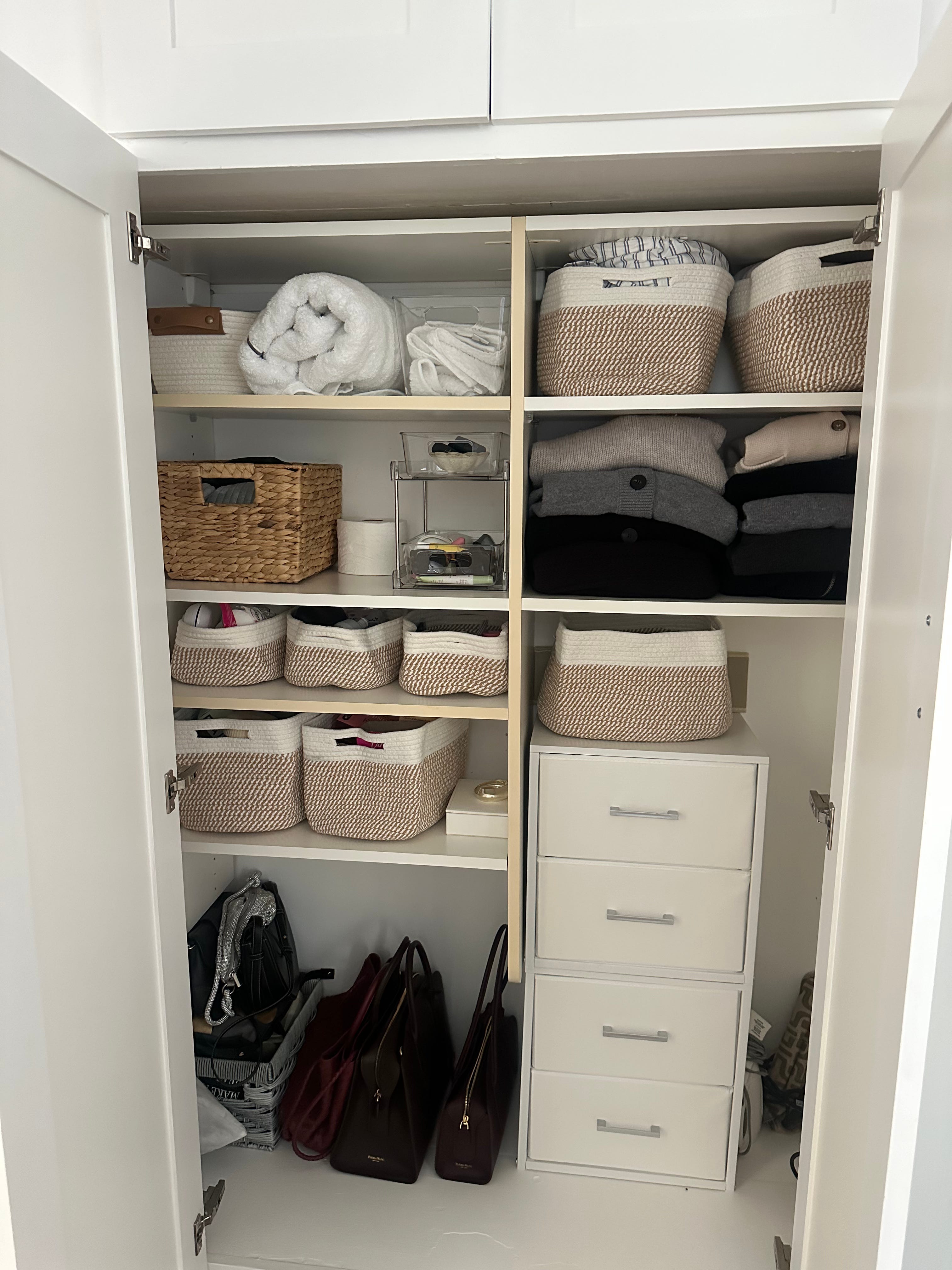
I’m by no means a true minimalist, but I have been VERY INTENTIONAL about buying less & buying better, and truly refining everything that I own.
The less you own, the less you have to manage. That’s just math. I very rarely buy things to add - I buy things to replace. I have a set number of hangers in my closet, and that’s the amount of clothes I own. I have a shoe rack that fits ten pairs of shoes, and those are my shoes. I don’t buy additional storage because I don’t want to expand beyond the natural capacity of my space.
If your space consistently feels messy and overwhelming no matter what you do, the honest answer is probably that you have too much stuff. More storage is not the solution. It just means more stuff to manage.
Here’s the thing about keeping a clean space that I’ve come to believe pretty deeply: it’s not really about cleanliness. It’s about self-respect.
The same way you build a morning routine because you care about how you start your day. The same way you’re intentional about what you eat or how you spend your time. Taking care of your space is a decision that says: my environment matters. How I feel as a result of my environment matters. The conditions I’m operating in are worth paying attention to.
You cannot build a disciplined, intentional, high-functioning life in a chaotic environment. I’ve tried, and I’ve watched a lot of people try. It doesn’t work. The environment is either working for you or it’s working against you.
The good news is it’s 100% in your control.
The system isn’t complicated.
Maintain instead of clean
Give everything a home
Keep surfaces clear
Build the daily habits so small they don’t feel like anything.
And stop normalizing living in a space that you have to mentally block out just to get through your day. Your space is always communicating something to you. Make sure it’s something good.
xx
Michela
No posts
Comments
Nothing yet. Say the first thing.
Sign in to join the conversation.