
There’s a feeling I think a lot of us experience have but don’t necessarily have language for, and it’s this sense of having a life that looks completely fine from the outside but doesn’t actually feel good to be in on a daily basis.
Everything is technically in place - you have a good job, your routines are locked in, your apartment or house feels good, maybe you’re in a relationship - and nothing is obviously wrong, but there’s this underlying restlessness that you just can’t seem to shake. You’re always waiting for the weekend, counting down to the next trip, looking for the next thing that will make your life feel a little more worth being present for.
I know this feeling really well. And for a long time I tried to fix it the way most of us do - by doing more, being more productive, optimizing more. In my early 20s, it was “if I could just get a different job, I’d be happy.” Then in my mid-20s, it was “If I could just quit my job and work for myself, I’ll be happy.” Then in my late 20s it was, “If I could just get into a relationship, I’ll be happy.
If I could just get everything under control, maybe I’d stop feeling this way. Surprise - I became an extremely disciplined and systemized person, and still, the feeling didn’t go away. And it’s because the problem was never external. The problem was that the foundation of my life wasn’t built around what I actually valued and I had no idea who I was or what I wanted. And no amount of optimization or productivity or social validation is going to fix that.
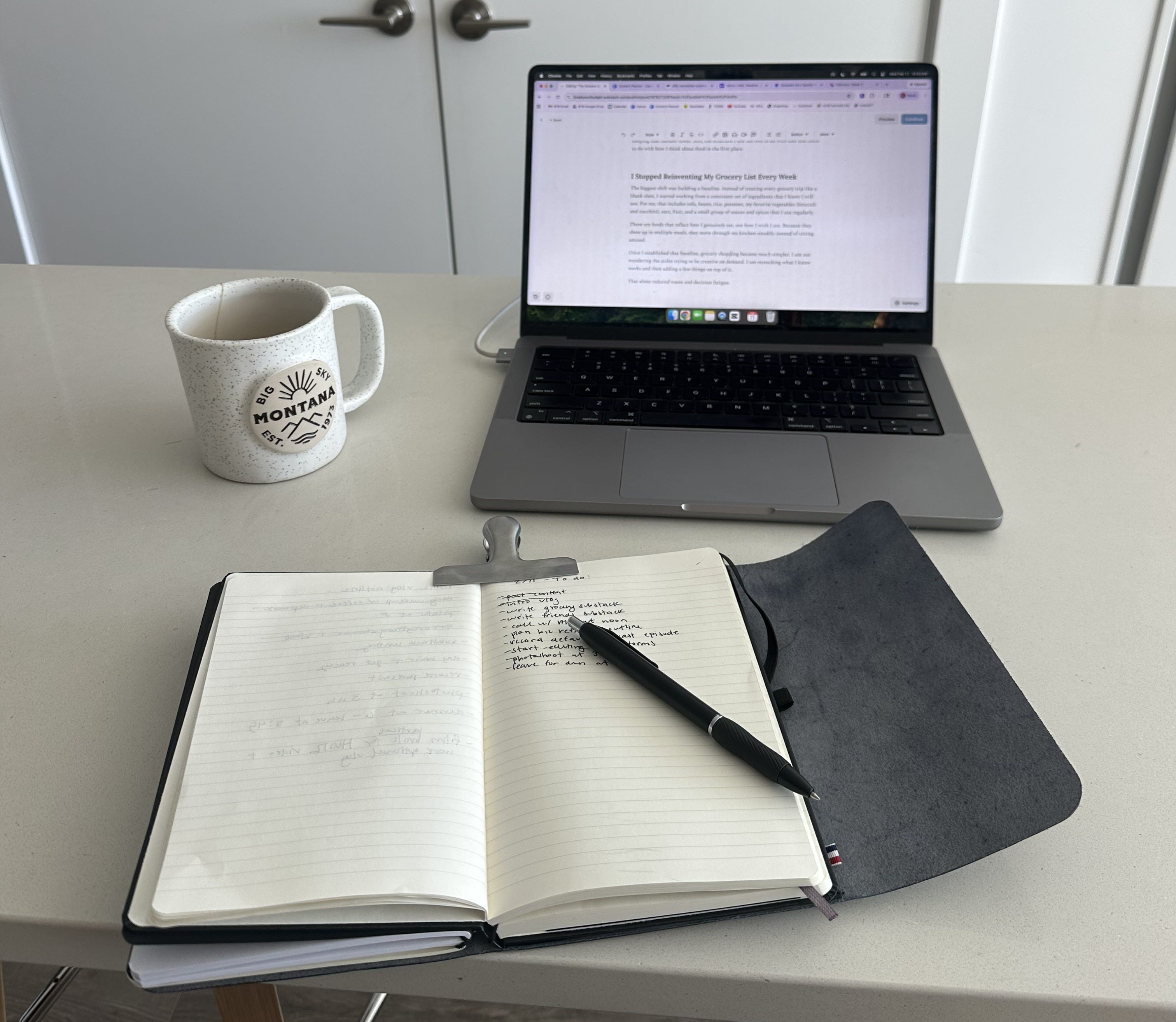
Ever since I moved back to LA, I feel like I am finally living my life in color. My experience this second time around has been entirely different; not only due to a new environment, but also because of a shifted perspective and clarity around what I actually want my life to look and feel like.
I’m not going to harp on routine, or discipline, or productivity, but instead the more foundational question of whether the life you’re building is actually the one you want... because most people are not asking this question. They’re just moving forward, making the next reasonable decision, and wondering why something still feels slightly off. I think it’s why we’ve normalized a mid-life crisis.



I want to use my own decision to leave Chicago and move back to LA as the anchor here, because I think it’s a good illustration of what this actually looks like in real life. My life in Chicago was, by all reasonable measures, fine. I built a good routine, I had an apartment I liked, I made some new friends, and it was a version of my life that “made sense” compared to the “peter pan” version of my life back in LA.
But when I paid close attention to my days, there were a lot of small, consistent things that really didn’t feel good. Waking up to the cold and dark, and having to negotiate with myself to go outside and take a walk, which is my favorite thing to do. Feeling stuck inside, because I didn’t have a car, and I didn’t love what the options were for activities. Feeling like all there was to do was either shop, eat, or drink. Spending 6-8 months of the year feeling chilled. And most of all, feeling like the city required me to push against it just to live the way I wanted to live. (and to be clear, this was a ME problem, not a Chicago problem).
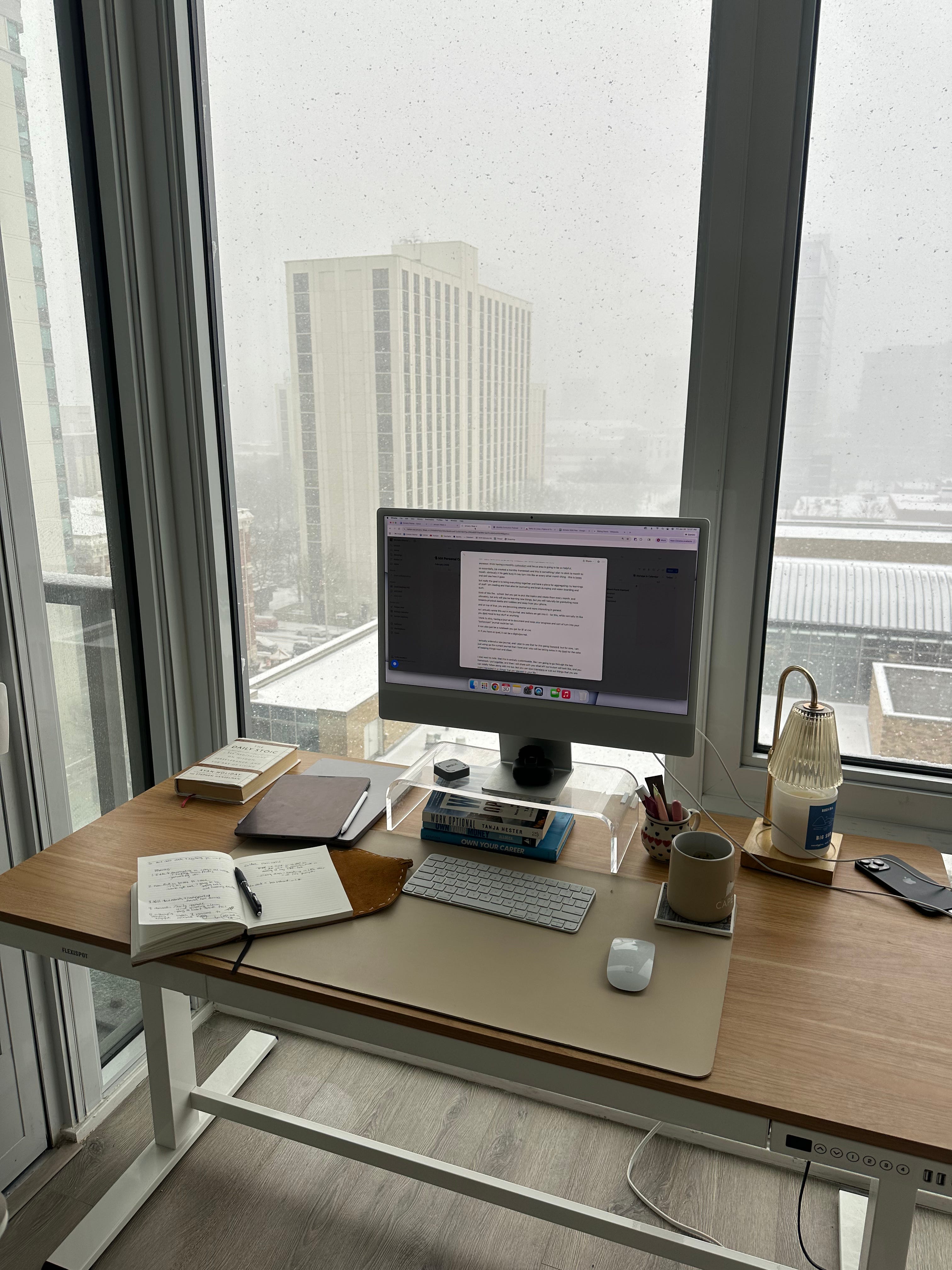
What I didn’t understand at the time was that it wasn’t a discipline problem, and I couldn’t discipline my way out of it. It was an environment problem. Some places, when they’re not right for you, require a constant low-level effort just to get through the day. And once I was honest about that - which took a lot of time and a lot of therapy - the decision started to feel a lot less complicated because I already had the comparison.
I knew what my days felt like in LA. I knew I was outside more without thinking about it, that my mornings felt easier and lighter, that I didn’t have to look for reasons to like where I was living. I just liked it. And once you feel that difference, it’s hard to unknow it.
I’m sharing this because I think a lot of us are living some version of my Chicago situation. It’s a quiet hum in the back of your mind - everything is technically fine but something isn’t right and you can’t put your finger on it. And the work is figuring out where that’s coming from.
So let’s go through the three areas worth auditing. For each one I have reflection questions to actually sit with and specific action items, because reflecting without doing anything isn’t going to change anything. There are 3 different pillars that could be causing this feeling; it may be your home, but it could also be your job, or your partner, or something else.
This covers your environment, your home, your routines, your mornings, your evenings - the day-to-day texture of how you’re actually living. This is the foundation everything else sits on, and it’s usually the first place that signals when something is off.
Your life is almost entirely made up of very normal days. And if your regular day feels like something you have to get through rather than something you actually get to be in, that’s important information worth taking seriously.
Reflection questions:
When did you feel most like yourself last week, and when did you feel off? And I don’t want you to think of through a “productive” or “unproductive” lens. Were there any moments when things felt most aligned vs. when did they feel harder than they needed to? Write it down, because the pattern usually becomes obvious when you see it.
What conditions were present on your best days? This is where most of us stop too early. Get specific. Were you outside more than usual? Did you have a slower morning? Did you leave your apartment at some point? Was your space clean? You’re looking for the actual conditions you can replicate, not just the feeling.
Is your environment working for you or against you? Your apartment, your workspace, your daily surroundings. A space that feels chaotic or cluttered drains you in ways you might not even connect back to it. Aesthetics matter - caring about how your space looks and feels isn’t shallow, it has a real and tangible impact on your mood and your ability to function.
Action items:
Do a one-week audit. At the end of each day, ask yourself: on a scale of one to ten, how did today feel, and what drove that number? Don’t over-analyze it; just write it down and look for patterns at the end of the week.
Pick one thing about your environment that you’ve been tolerating and change it. One source of low-level friction - your morning routine, your workspace setup, something in your apartment that’s been bothering you every day. Remove it and pay attention to how it affects everything else.


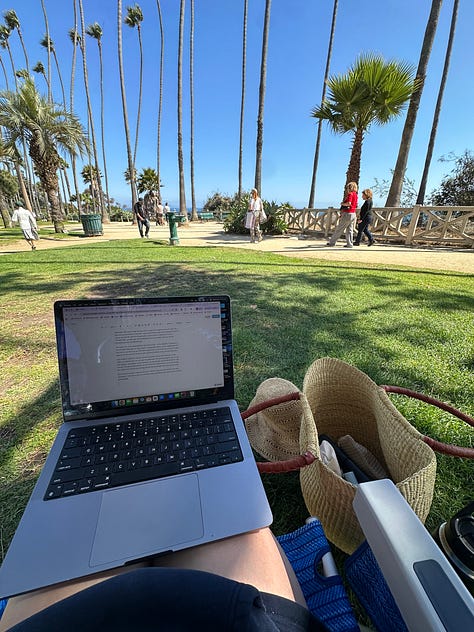
Most of us have less control over our professional lives than our personal ones, and I’m not asking you to quit your job tomorrow. But getting honest about whether your career is aligned with what you actually value is worth doing, because a lot of people are on paths that made complete sense when they started and have slowly stopped fitting as they’ve changed.
Normalize changing your mind. Seriously!!!
Reflection questions:
Does the work you’re doing feel meaningful - and if not, is it the work itself, the environment, the people, or the direction? Those are four very different problems with four very different solutions. Being specific about which one you’re dealing with matters.
What would your ideal workday actually look like, and how far is your current reality from that? Not your dream job in five years - just tomorrow. What would need to be true about tomorrow for it to feel like a good day?
Are you building toward something you actually want, or something that made sense at an earlier version of yourself? I experienced this after college - I majored in finance, went into finance, and had an existential crisis when I realized I’d built an entire identity around a path I hated. Leaving that path to build my own business was the right decision. It wasn’t easy… but the longer you stay on the wrong train, the longer it takes to get home.
Action items:
Write down your professional non-negotiables - the things that have to be true about your work for you to feel good in it. Autonomy, flexibility, creative control, financial threshold, growth opportunity. Get specific, then honestly assess how many of those are currently present.
Identify one thing within your current situation you can actually change in the next 30 days. It could be a conversation you’ve been avoiding, a project you want to pitch, a boundary you want to set. One small piece of evidence that you have agency over your professional life, even if it doesn’t feel that way right now.
This is the one people think about the least when it comes to building a life they enjoy, which is interesting because the people you spend your time with shape your daily life more than almost anything else.
This was a significant difference between my life in Chicago and my life here. I just felt more closely aligned to my friends in LA, both personally and professionally. Here, I am around people who are pursuing similar career paths and it has opened up a different sense of what’s possible - not just professionally, but in how I see my own life.
Reflection questions:
How do you consistently feel after you leave the people you spend the most time with? Energized, neutral, or drained? That answer tells you a lot. Sometimes feeling drained is just a low social battery day - not every interaction is going to be your best one. But if the answer for specific people is consistently drained, pay attention to that.
Do the people closest to you support the life you’re trying to build, and do they actually understand what you’re doing? There’s a difference between people who are in your corner and people who understand you. You want both, and it matters more than most people let themselves admit.
Where are you showing up out of obligation versus genuine connection? A lot of us are spending time in relationships we’ve outgrown just because they’ve always been there. You don’t have to cut anyone off - but you do have to be honest about where your energy is actually going. Not every friend is going to be your best friend for everything, and that’s fine. But your closest energy should be going to the people who fill your cup.
Action items:
Think about the last five people you spent meaningful time with. For each one: did you feel good when you got home? Did you feel like yourself? Were you glad you were there? You’re not making decisions - you’re collecting information. And you probably already know the answers. You just haven’t let yourself look at them directly.
Identify one relationship you’ve been meaning to invest more in and actually reach out and make a plan. Relationships that fill you up don’t maintain themselves. They require intention.
What all of this really comes down to is paying attention - to how your days feel, whether your work is aligned with what you value, and whether the people around you are supporting the life you’re actually trying to build. And then having the honesty and the courage to do something with what you notice.
Building a life you love isn’t a destination. It’s built slowly, by making honest decisions consistently - removing what makes your days feel worse and adding what makes them feel better, and being willing to keep doing that as you change.
The signals are usually already there. The work is just finally letting yourself hear them.
xx Michela
No posts
Comments
Nothing yet. Say the first thing.
Sign in to join the conversation.