
I have been on my buy less, buy better journey for a few years now, and it originally started with my wardrobe. But over time it’s expanded into pretty much every area of my life - my bedding, my furniture, my skincare, my kitchen. The mantra applies to anything you buy, especially if you’re someone who is trying to slowly curate a high quality life rather than just accumulating more stuff (me).
What I keep coming back to is that most of us don’t actually have the tools to evaluate whether something is worth buying. We look at the brand name, we look at the price tag, and we make a decision based on those two things alone. Which is exactly how you end up with a closet full of things you never wear and a bank account that’s lacking, when you feel like you should have something to show for it.
So this is the guide I wish I’d had earlier - a framework you can actually use every time you shop, built around three things: brand ROI, material composition, and where to spend versus where to save.
Brand ROI: Are You Paying for Quality or Marketing?
A higher price tag doesn’t automatically mean higher quality. A lot of times what it means is that you’re paying for marketing, a more luxurious retail experience, a more desirable logo, and/or a brand that has successfully convinced you their product is worth more. And I say this as someone who owns things from expensive brands; sometimes the quality really is there, and sometimes it absolutely is not, and the only way to know the difference is to look past the brand and into the actual product.
Before I buy anything over a certain price point (usually $75), I ask myself three questions:
What is this actually made of?
What are comparable pieces at other brands going for?
Does the price make sense for what I’m actually getting, or am I paying a premium for the name?
Let me walk through some specific brands because that’s where this gets useful.
Aritzia is a brand I wear a lot and really love, but the quality can be inconsistent depending on the line. Their TNA and Homestretch basics like the sweatshirts, the long sleeves, and the T-shirts, are high quality, largely 100% cotton or very close to it, and I’ve had some of those pieces for years. Their Super Puffs are also legitimately worth the money - I was on the fence, but I bit the bullet and splurged and ended up wearing mine every single day of winter in Chicago and was never cold.

But not everything in at Aritzia is the same story. They do have a lot of polyester and viscose if you’re not paying attention, and some of their wool blend coats are barely wool at all. So Aritzia is a great brand overall, but you have to look at the specific item rather than trusting the name across the board.
Reformation is positioned more premium and priced accordingly. Their denim and their silk pieces are largely well made and the price feels justifiable - I have a silk wedding guest dress from there that I consider one of the best purchases I’ve made, and I’ve worn it multiple times.
But some of their basics are not materially different from what you’d find at Old Navy for a fraction of the cost - for example, the Rowan t-shirt is great, but it’s $48 and essentially exactly the same as the $10 Vintage tee at Old Navy. They also do a lot of recycled synthetics and have a bit of a greenwashing reputation, so you really have to look at the individual item.
One more thing worth noting: fit matters just as much as material. I have a pair of pants from Reformation that are mostly synthetic, but I’ve worn them constantly because nothing else fit me the same way. Sometimes you make a concession on material because the fit is irreplaceable, and that’s okay.
Levi’s, AGOLDE, and Citizens of Humanity are all examples of brands where the quality and the price are aligned. A well-made pair of jeans in a classic style, 100% cotton, will last you years and shape to your body over time. There’s a reason vintage Levi’s are so desirable and it’s because the material really holds up. If you’re going to spend money anywhere in your wardrobe, a classic pair of denim is one of the highest ROI purchases you can make.
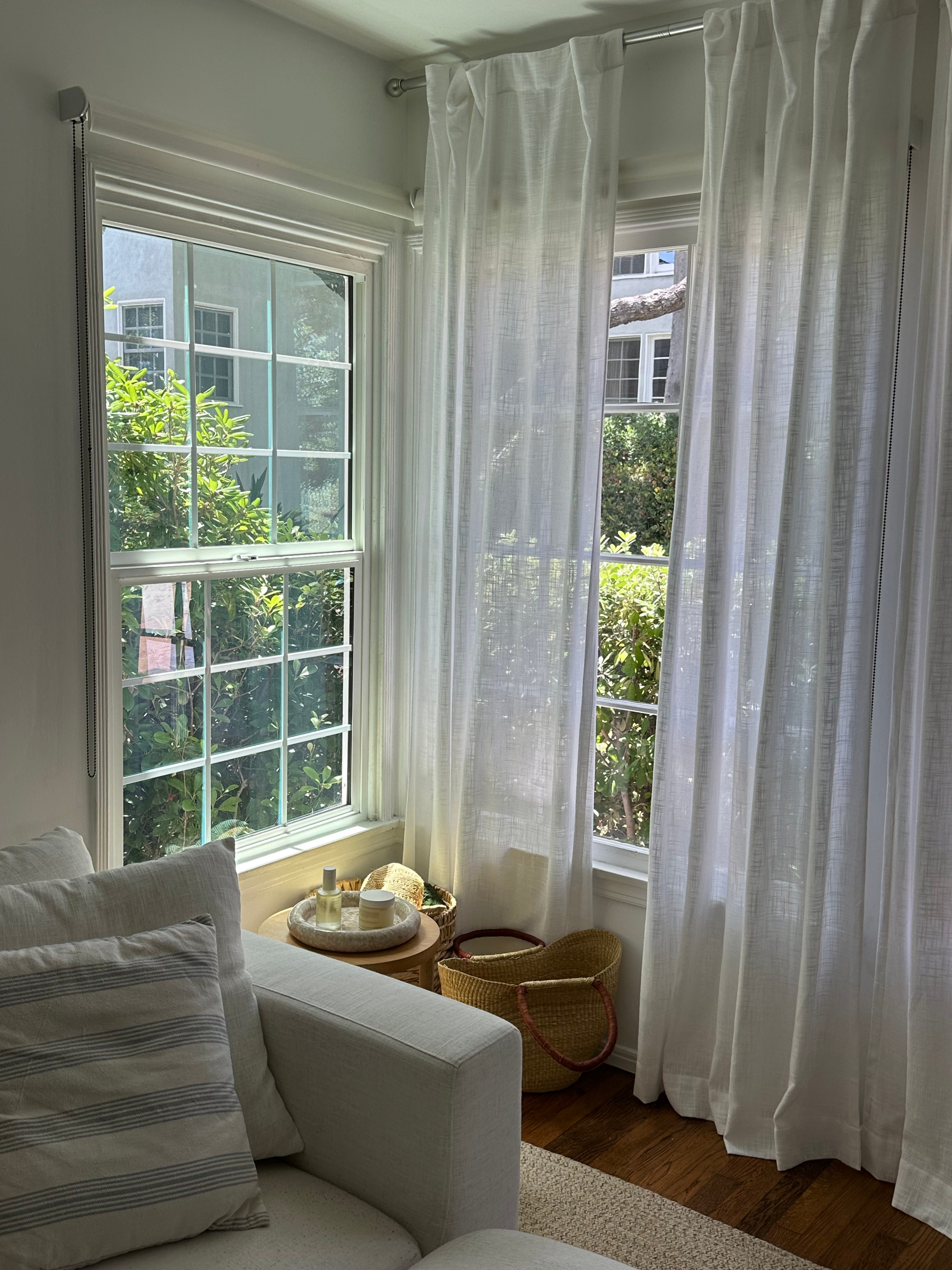
Quince I’m a little mixed on, though I do like a lot of what I’ve gotten from them. The material quality is good - a lot of their pieces are 100% linen, 100% cotton, 100% cashmere - and the price is significantly lower than comparable products at brands with more marketing overhead. My main issue is that the cut of some of their clothes doesn’t work for my body, and if it doesn’t fit, the material composition becomes irrelevant. But for bedding, home items, and basics, they’re a really strong option. I have curtains from Quince, some pillows, and also recently got sheets, too.
Everlane - pre-Shein era (ughhhhhh) - hit a solid sweet spot on material composition and price. I have wool sweaters from there going on six years old. I won’t be buying from them going forward now that they’ve sold to Shein, which is a SHAME, but their legacy pieces are a good example of what quality at a fair price can look like.
Material Composition 101
This is the part where I want to give you an actual tool you can use every time you shop. Most people never look at the material composition label. Once you start, it will become the first thing you look at going forward.
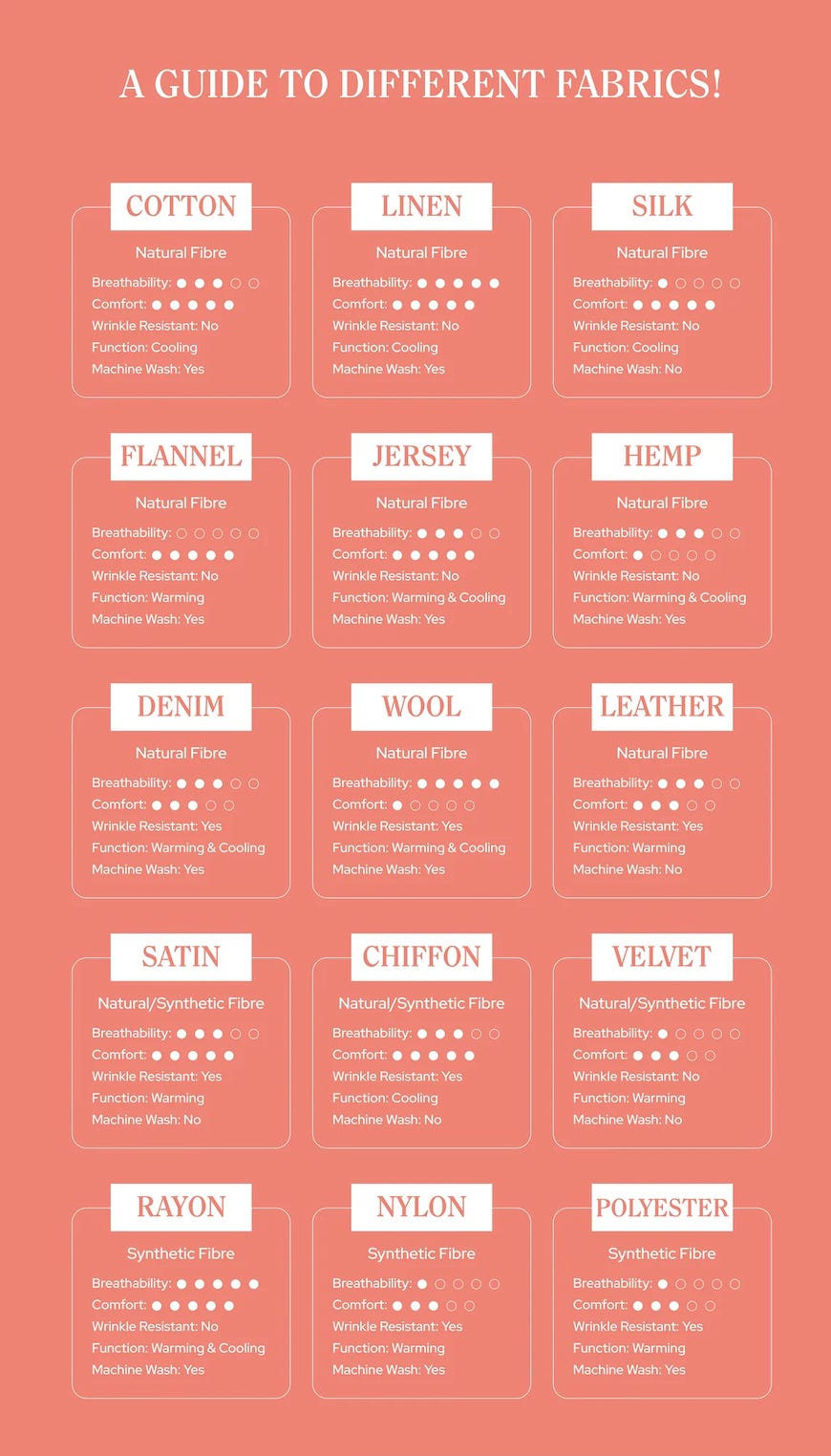
Natural fibers are what you’re generally aiming for.
Cotton is breathable, soft, and durable, great for everyday basics, T-shirts, and bedding. Look for a tighter weave and heavier weight where possible, because loosely woven cotton pills and wears out fast.
Linen is one of the best fabrics for warm weather. It gets softer with every wash, lasts a really long time if you take care of it. The downside is it can get pretty wrinkly, but that is just part of the charm I guess.
Wool is temperature regulating and naturally odor resistant, which means you don’t have to wash it as frequently as cotton. Merino wool specifically is soft enough to wear against your skin. The thing to know about wool and cashmere is that they’re naturally antimicrobial, so you can wear them multiple times between washes - which is actually part of what makes them worth the investment.
Cashmere is softer and warmer than wool, but quality varies enormously. Cheap cashmere is made from shorter fibers that pill almost immediately. Better cashmere uses longer fibers and holds up over time. My favorite cashmere pieces are from Jenny Kayne - expensive, but they’ve held up beautifully and barely pill. Quince can also be a solid option at a much more accessible price point.
Silk is luxurious, temperature regulating, and great for sleeping. Silk pillowcases are worth it for your skin and hair. For clothing, silk is delicate and dry clean only - make sure you’re actually willing to take care of it before you invest.
A note on caring for your clothes; this is something people skip and it’s one of the main reasons high quality pieces don’t last. Nothing natural except cotton goes in the dryer. Wool and cashmere are dry clean only. I take mine in at the start and end of every season and use a fabric shaver to remove any pilling before I start wearing them again. Linen I’ll hand wash or put on a delicate cycle and hang dry. Silk goes straight to the dry cleaner. If you’re spending real money on clothes, take care of them.
Synthetic fibers are not universally bad, but it completely depends on the application.
Polyester on its own against your skin is something I generally avoid because it doesn’t breathe and holds odor. In outerwear and technical pieces though, polyester is appropriate and often essential because it’s water resistant and durable.
Elastane or spandex in small percentages - anywhere from 2-10% - is fine and often necessary to give a piece stretch and help it hold its shape. The problem is when the percentage gets too high, which makes the fabric feel cheap and wear out faster.
Nylon is durable and works well in bags and athletic wear but isn’t something I’d want against my skin all day.
Rayon and viscose drape beautifully and can feel really nice, but they’re less durable and require more careful washing. Fine in small percentages for something like a blouse, but not ideal in high touch, heavy use items.
On blends - a cotton polyester blend is not automatically “bad.” A small amount of polyester in a sweatsuit, for example, helps the piece hold its shape and resist wrinkles. The key is the ratio; you want the natural fiber to dominate. The materials on a label are listed from highest to lowest percentage, so always read the order. 95% cotton with 5% elastane is a cotton product. 60% polyester with 40% cotton is a polyester product. Those are very different things.
Where you want 100% natural: bedding - 100% linen or 100% cotton, always. Anything touching your skin for eight hours while you sleep should be natural fiber. I have the Brooklinen luxe sateen sheets and love them, and I’m currently testing Quince’s 100% linen sheets for summer.
Basic T-shirts and anything against your skin all day - high cotton content. Sweaters - 100% wool, cashmere, or cotton, always. No polyester or acrylic in sweaters because they will pill, lose their shape, and look cheap fast.
Where some synthetic is fine: outerwear and technical pieces, athletic wear, and denim with a small percentage of elastane for stretch.
Where I Splurge vs. Where I Save
The framework is simple: high touch, long use items get the investment. Low touch, high replacement items do not.
Where I splurge:
Denim and pants: These are my most worn items and where I spend money without hesitation. AGOLDE, vintage Levi’s, Madewell, Parke - all 100% cotton, all worth it. Cheap denim looks different on the body and I can always tell.
Jackets and outerwear: A multi-year investment that you’ll wear every single day through an entire season. Look for classic styles, look at the material composition, and don’t go cheap here.
Structured pieces: a blazer, a wedding guest dress, a really good blouse. I’d rather have two dresses I actually feel confident and comfortable in than a rotation of cheaper ones taking up space.
Bedding: You spend a third of your life in bed. If your sheets are a polyester blend, that’s why you’re sweating at night. 100% cotton or 100% linen, always.
Where I save:
T-shirts: They always get stained, the collar stretches, they fade or get worn out. I buy them from Cotton On, Old Navy, or Aritzia’s basics line and replace them when they wear out. I’m not spending $50 on a T-shirt I’m going to ruin.
Long sleeves, tank tops, and basics: Same logic. They are high frequency, high wear items that see a lot of washing. Buy decent quality and move on.
Socks and underwear: There’s a real difference between terrible and decent, but you don’t need to spend a lot here. I KNOW someone will disagree though lol.
Trendy pieces and “going out” tops: If it’s a trend or something I’ll only wear a handful of times, I buy the affordable version. The investment is for the classics.
The Through Line
Becoming a smarter consumer is really about developing your own discernment. Understanding what you’re actually buying, whether the price reflects the quality of what you’re getting, and making decisions based on the specific item rather than the brand name on the tag.
Read the label. Ask the three questions. And invest in the things that are going to last in the categories where lasting actually matters.
xx Michela
Beyond Your Budget is a reader-supported publication. To receive new posts and support my work, consider becoming a free or paid subscriber.
Comments
Nothing yet. Say the first thing.
Sign in to join the conversation.