
I talk about being a morning person literally all the time. I’ve been sharing the evolution of my morning routine across my podcast episodes, YouTube videos, and approximately one million IG posts and stories. But I haven’t sat down (recently, at least) and explained how I actually built the routine - or, more importantly, how I rebuild it when I fall out of it.
I will admit that I am naturally more of a morning person and my Oura Ring chronotype has confirmed this. IDK how much scientific weight that holds, but it has to be based on something since it tracks my sleep and wake times, so I’m choosing to count it.
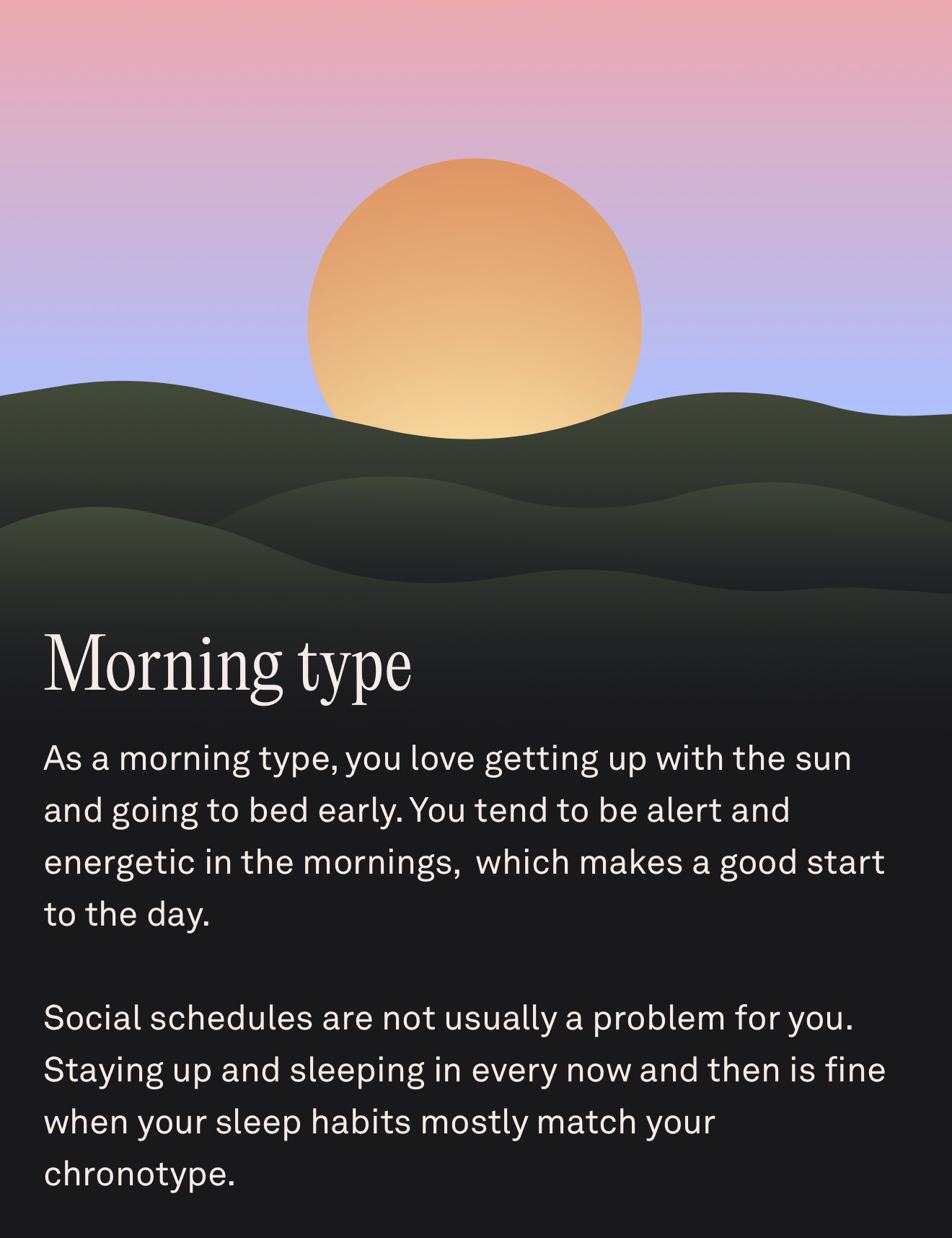
I like getting up early everyday, even on the weekends, and I like having time and quiet space before the rest of the day starts demanding things from me. My brain also works best in the morning. If I need to write, script a podcast, or do anything that requires actual creative thought, I need to do it early in the day, ideally in my morning focus block before I have un-bricked my phone (which btw if you don’t have a Brick, you need one). By the time we hit 3/4 in afternoon, that part of my brain is no longer firing.
But being naturally inclined to wake up early doesn’t mean I have been perfect about it forever. In fact, this morning I snoozed my alarm 5 times (ugh). I have gone through plenty of stretches where I started snoozing my alarm regularly, reaching for my phone first thing, and convincing myself that maybe I’m just not a morning person anymore and I can now reshape my entire day around sleeping in.
But after experiencing falling out of the routine so many times, I now know how to rebuild the routine.
And the first thing I would tell anyone who wants to become a morning person is this: stop trying to completely reinvent your life by tomorrow morning. It’s not going to work!
Your ideal morning routine is probably doing too much
A failed morning routine tends to follow a very predictable cycle:
Sunday night rolls around and you decide that Monday is the day you become a new person.
You’re going to wake up two hours earlier, go to a workout class, shower, journal, meditate, put on your red-light mask, make a fully cooked breakfast, and somehow do all of it before 8:30.
Maybeeeeeeee you are able to pull it off on Monday.
You might even make it through Tuesday.
But by Wednesday? You’re exhausted, the entire routine falls apart, and you decide you don’t have enough discipline and the whole thing is a wash.
What we’re missing here is … of course it fell apart. You tried to change your sleep schedule and add seven new habits at the same time. Becoming a morning person has much less to do with motivation than you probably think, and a lot more to do with removing friction, reducing decisions, and giving yourself a compelling reason to get out of bed.
It also doesn’t require you to wake up at 5 a.m. Early is relative. I like to be up and moving by 6:30 or 7 most days, but I am also usually asleep around 10pm. If you normally wake up at 10, an 8am morning is early, and it will feel that way the first few times you do it. So the goal here is not to try to copy someone else’s schedule that works for them, it’s to create more useful time within your own life. And the easiest place to find that time is in the morning.

Give yourself a compelling reason to get out of bed
Wanting to “be a morning person” is not a compelling enough reason to wake up earlier over a long period of time. It may work for the first few days, or even a week. But after a while, it gets old and if it’s the only thing getting you up, it’ll start getting really easy to make excuses and revert back to your old routine. There needs to be something on the other side of the alarm clock.
Maybe you want an hour to yourself before your kids wake up or you want to work out before work because you know you won’t do it after. Or, maybe you’re tired of starting every day in a complete rush and want to have a moment to breathe before the chaos of the day starts. Maybe you want uninterrupted time to work on a hobby, a side business, or something that matters to you.
For me, mornings are when I do my best work. I’m on PST while many of the people I work with are on CST or EST, which means I often wake up to a full inbox. Getting up earlier gives me a window to make my coffee, catch up on the news, and do an hour or two of focused work before I feel like I’m being bombarded by things that I have to reply to.
What I am not doing is waking up early to journal 5 pages, meditate, and complete an elaborate list of wellness habits. Obviously, I am sure those things would benefit me. But at this point in time, they just don’t excite me enough to get out of bed. They feel like chores, and I am not going to make waking up harder by filling my morning with activities I do not want to do.
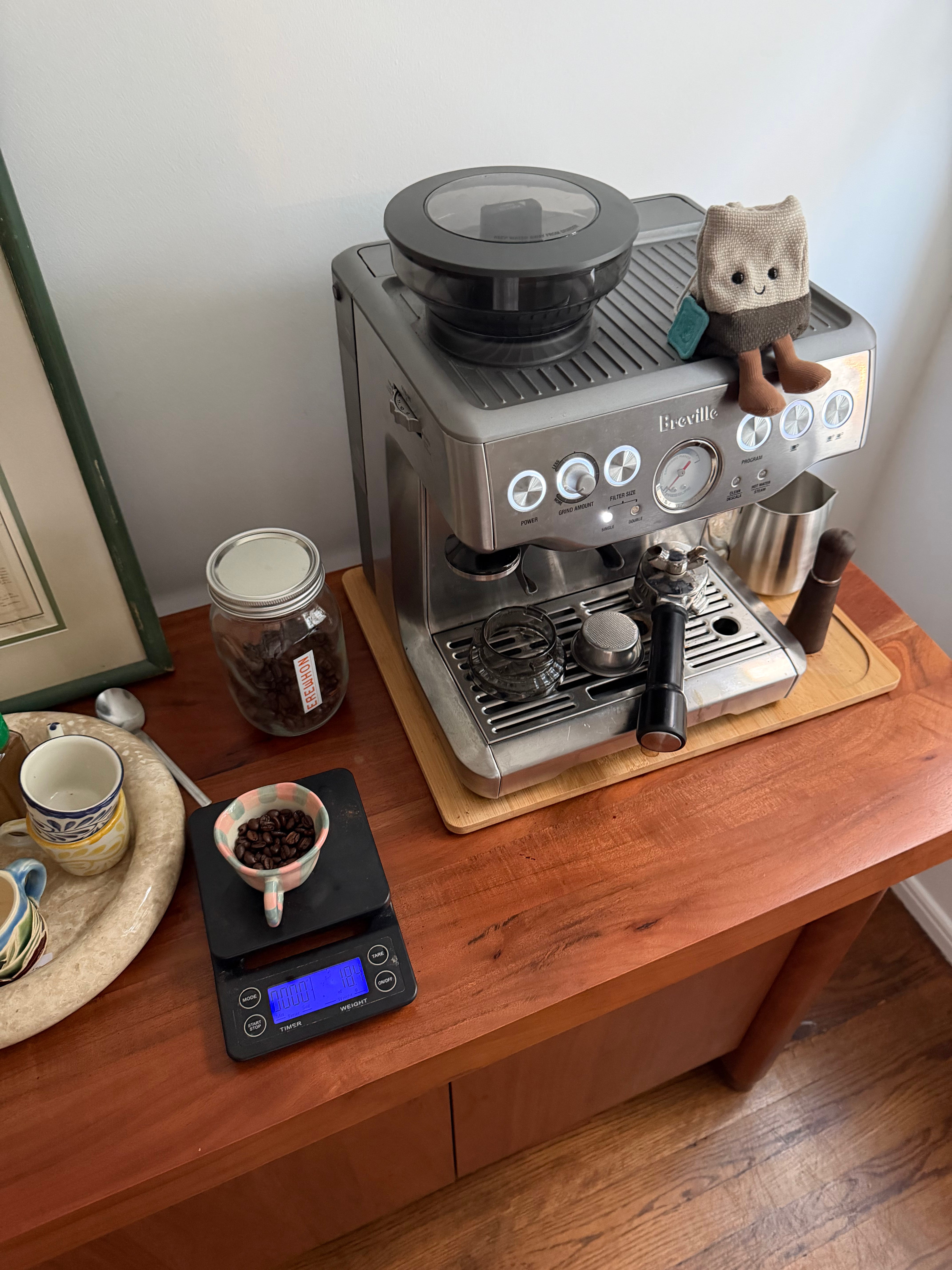
I’ve made the executive decision that my mornings can begin with coffee - which I drink on an empty stomach and live to tell the tale - and work I actually want to complete.
Your routine doesn’t need to look impressive or performative from the outside. It just needs to make you want to participate in your day.
Start smaller than you think
If you currently wake up at 8 every morning, don’t start this journey off by setting your alarm for 6am tomorrow and expect your body to happily accept it.
Start with 15 minutes increments!
If your goal is to move from 8 to 7, push your alarm back 15 minutes each week for a month. It is not going to feel like an enormous change, and that’s why it has a much better chance of working. You need to give your body time to adjust instead of demanding that it absorb an enormous change overnight.
Consistency matters here, including on the weekends. This does not mean you can never sleep in again or that every Saturday morning needs to become a performance of discipline. But if you wake up early all week and completely reverse your schedule every weekend, it will be harder to make the earlier wake time feel normal. I actually love the quiet peace of an early Saturday morning, so much so that I look forward to waking up early to experience it. It feels so different compared to a regular weekday!
The first few days will feel hard and uncomfortable. This is not an indicator that the routine you’re building is wrong or that you are incapable of becoming a morning person. Your have to give it time. Changing a habit requires sitting in a little bit of discomfort while your body catches up.

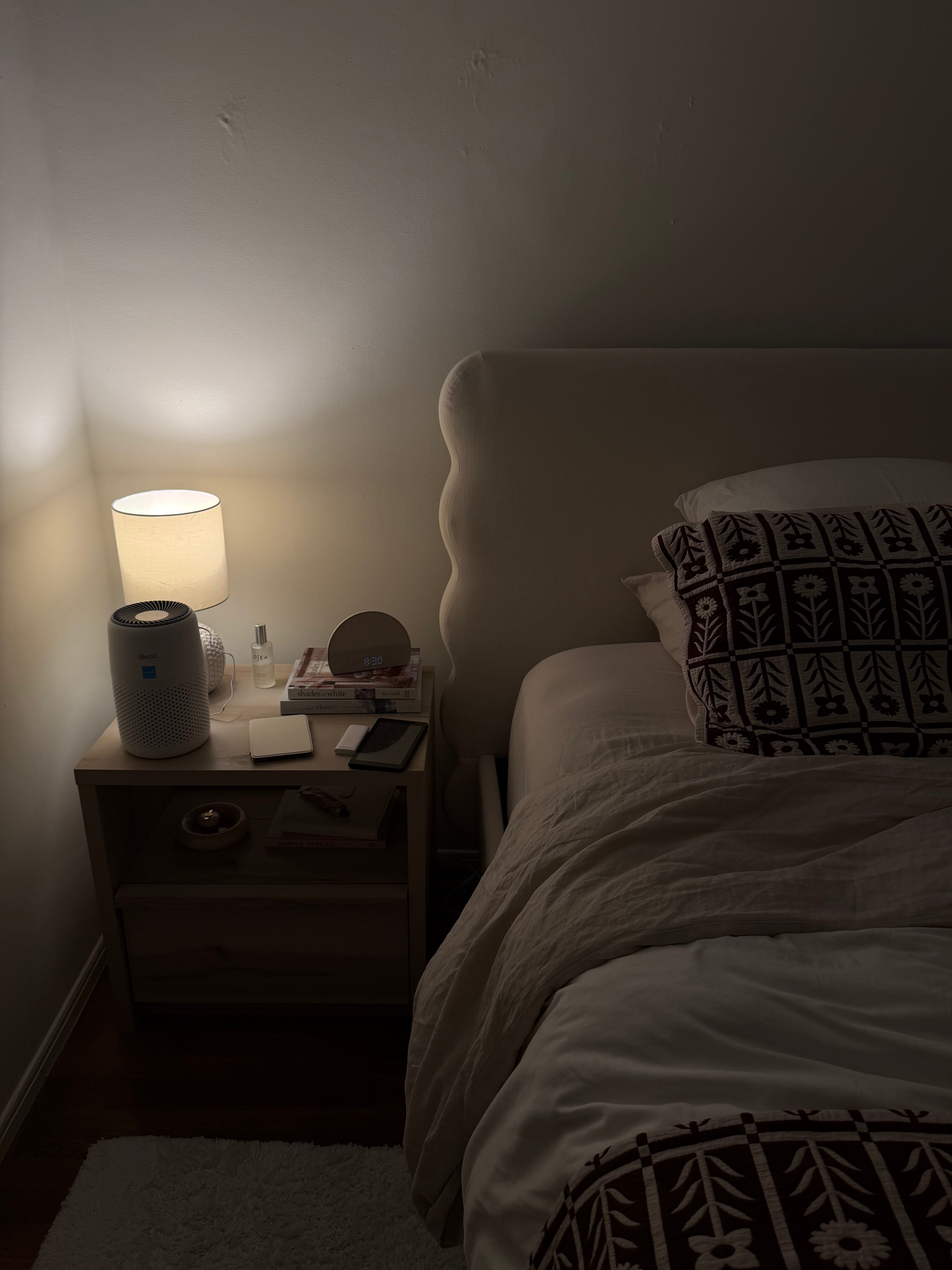
Your morning routine starts the night before
This is the least exciting and most important part: you have to go to bed earlier!!! Sorry.
You cannot consistently wake up earlier if you do not consistently go to sleep earlier. You may be able to push through a few days on too little sleep, but eventually it will catch up with you, and then you will associate your new morning routine with feeling terrible.
Work backward from the time you want to wake up. If you want to be awake around 6 and need 8 hours of sleep (as mot of us do), you need to be asleep - not just in bed -by 10pm. Simply being in bed can mean reading, scrolling, or watching one more episode. Being asleep means you are fully asleep! Big difference.
It is also worth taking a second here to honest about what is keeping you from going to bed earlier if you are a chronic night owl. Are you actually doing something that is meaningful and adding value to your life at 11:30, or are you scrolling because you don’t want the day to end or you just feel like it’s “still early” to go to bed?
What has really helped me wind down is around 8pm, I use my Brick to block social media completely on my phone. I finish my closing shift in the kitchen, brush my teeth, and give the rest of the evening a loose structure either watching an episode of a show or reading my book. If I don’t do this, those final ~2 hours of the night become empty space that is extremely easy to fill with a TikTok vortex - and something about the nighttime scroll hits completely differently. IYKYK.
Stop making decisions in the morning
I have trained myself to follow a morning routine largely by removing as many decisions as possible from the first hour of my day. Remember, constant decisions = friction, and if you want your life to feel like is ~flows~ more smoothly, you need to focus your energy on removing as much friction as possible.
The night before, I decide what I am getting up to do. If I am going to Pilates, I lay out my clothes and know exactly what time I need to leave. If I am going to get into work, I know exactly which task I am starting with. If I am going on a walk (which I haven’t been doing much lately tbh), I already know the route I am going to take.
When I first moved (back) to LA and had fallen out of my early routine, I started booking 8am workout classes. At the time, 8am felt astronomically early. Eventually I moved them back to 7am, which I now prefer. The class gave my morning somewhere to go. It was booked, my clothes were ready, and I had to leave unless I wanted to pay the cancellation fee. Which, if you know me at all, I don’t lol.
If you regularly talk yourself out of doing something in the moment, then you need to stop leaving the decision until the moment.
I also want to highlight that this doesn’t mean every morning needs to look exactly the same. Mine most certainly do not. I work on some mornings, go to Pilates on another, and sometimes make the decision to take a slower start. But I never start the day with a question mark, and I think that is the key to becoming a morning person and creating a successful morning rhythm. I always know what the first 30-60 minutes of my will look like.
Sometimes we assume we need more discipline when what we actually need is fewer opportunities to change our minds.
The through line: Give your morning somewhere to go
Waking up early just for the sake of waking up early gets old. The time you get back has to move you toward something, even if that something is just a calmer start to the day.
As we’ve discussed, it’s going to look different for everyone. It might be an hour of focused work, a workout, a walk, time to read, or enough space to cook breakfast without feeling like a maniac before you leave the house.
Useful does not have to mean maximally productive. It only has to improve the way your day feels.
That is what eventually makes early mornings feel addictive: you begin to recognize the connection between getting up and having a better day. You know that if you skip the part of your morning that helps you feel focused, peaceful, or prepared, the rest of the day will not feel how you want it to.
What I really want to leave you with here is that becoming a morning person is not a performative identity. It doesn’t require a picture-perfect routine, a 5am alarm, or a different personality, despite what social media makes it look like. It is literally just the practice of getting up a bit earlier, at roughly the same time, over and over again. It is choosing a realistic bedtime even when you would rather keep scrolling, and deciding in advance what your morning is for.
And when you fall out of the routine, the answer is not to shame yourself, but instead, to rebuild it.
So start by waking up 15 or 20 minutes earlier for the rest of this week. Tonight, before you go to sleep, decide exactly what you are going to do with that time tomorrow morning. You do not need a perfect routine… you need a reason to get up and a bedtime that makes it possible!
xx
Michela
Beyond Your Budget is a reader-supported publication. To receive new posts and support my work, consider becoming a free or paid subscriber.
Comments
Nothing yet. Say the first thing.
Sign in to join the conversation.