
Ever since moving back to LA a couple of months ago, I’ve been on a mission to rebuild who I am from the ground up. Small, deliberate tweaks to my routine with the goal of actually leveling up my life in this new chapter, really just to feel my best and maximize my life now that I live in this amazing place (again). This has looked like getting back to waking up earlier, changing up my fitness routine, getting serious about getting off my phone, and building more discipline and planning into my week so I can be proactive instead of constantly reacting to whatever pops up.
The more I’ve done this, the more I’ve realized that this is what it looks like to be a high performer in your own life. Your version of it, built around what you actually value and what moves the needle in your own life - not some externally prescribed checklist of habits that social media tells you you’re “supposed” to be doing.
The problem is that (I personally think) the conversation around high performance has been completely hijacked by a very specific kind of optimization culture - the LinkedIn brain, hustle-forward, male-podcaster, over-engineered type where the goal is to add more to your already full life and extract every possible unit of productivity from every waking hour.
I’m actually not doing any of that, and I think a lot of it is just noise. What I’m doing instead is something that sounds simpler but is actually a lot harder - and it’s doing the boring, unsexy stuff over and over again, even when I don’t feel like it. That’s the version of high performance I’m interested in, and these are some of the smaller tweaks I’ve been making that actually make a difference.
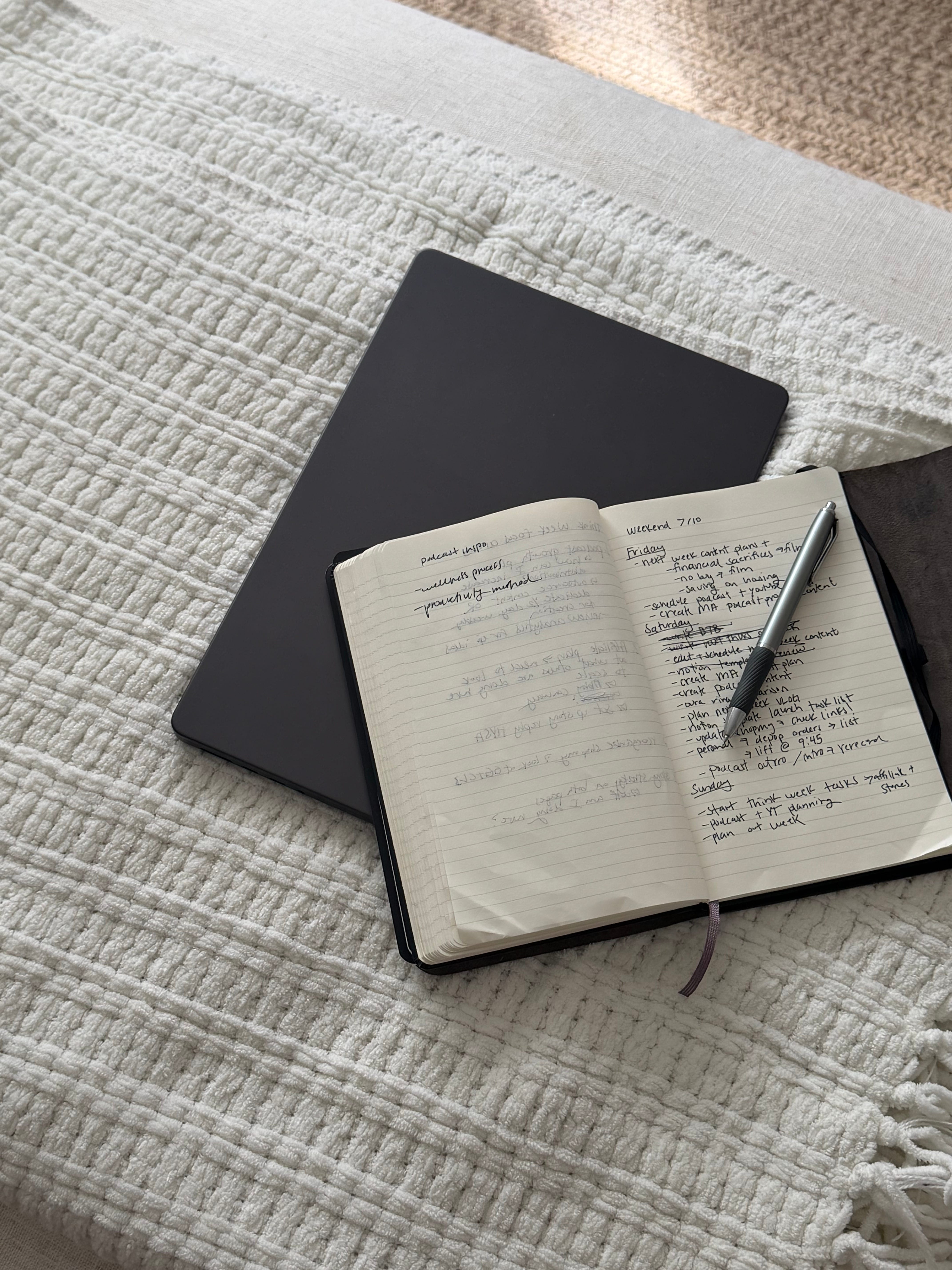
When most people think about becoming a high performer, they think about doing more. Optimizing every hour, adding another habit, reading another book they’ll never finish. But the highest performing people I personally look up to are doing less, but with more intention.
High performance is not addition, it’s subtraction. It’s figuring out what actually matters and getting really, really disciplined about protecting it.
And where I think most of us get stuck is that we either have discipline with no systems, or systems with no discipline. Either way, you plateau. You know the feeling - you’ve got the color-coded calendar, the beautiful Notion template, the whole aesthetic productivity situation, and you do nothing with it. Or you’re highly motivated for three days and then lose steam because there’s no structure underneath the willpower that has burned dry.
The people who actually change their lives have three things stacked on top of each other: discipline, systems, and standards. That’s the framework I’m walking through today.
Discipline is keeping the promises you make to yourself, showing up when you say you’re going to, and retraining your ability to focus so you can actually execute on the things that matter to you.
Discipline is not a feeling. It’s not something you either have or don’t. It’s a muscle, and it’s buildable if you want more of it.
Here’s what I’ve been focused on lately:
Waking up earlier. I’ve always been a morning person, but I’ve gotten really lax about it since my move and all my travel - snoozing my alarm, sleeping in, not actually going through a proper routine. What has made the difference lately has been booking early workout classes and putting myself on that schedule. I started with 8am, then shifted to 7am, and I’ve found that it wasn’t actually that hard once I made it a non-negotiable. On the days I don’t have a class, I keep the same alarm and go on a 20-minute walk instead. It’s just enough to get the blood moving and start the day on the right foot.
The other thing that has helped: I’ve stopped overcomplicating the morning. I let myself have my coffee right away (on an empty stomach! the horror!!) I know there’s all this content online about when you’re allowed to have coffee and in what order and with how many ounces of water first - I literally don’t care. If coffee is what’s getting me out of bed, I’m having it. If you’re trying to stack your morning with 10 new habits at the same time you’re trying to wake up earlier, you’re going to fail at all of it. Just start with one thing and make it easy enough that you can’t say no.
De-centering social media. This is really hard for me because social media is obviously my job. If it wasn’t, I actually don’t think I’d be on it at all. But because it is, I’ve had to get really honest with myself about the difference between using it intentionally versus reaching for it as an anxiety crutch - which I absolutely do, especially during times of transition or when I am feeling uncertain in general.
The Brick has been the most impactful thing for me - and I’ve mentioned this a bunch before. I don’t have a structured routine with it, I just keep my phone bricked as much as I possibly can. I brick it at night when I’m unwinding, my phone never comes into my bedroom, and I keep it bricked through my morning until I actually need it for work. The apps I get lost in are blocked (instagram, tiktok, etc). And I’ve been supplementing the phone time with reading, needlepointing, and sometimes just watching a show. We villainize TV, but replacing an hour of mindless scrolling with an hour of watching something you actually chose is an upgrade!
The other thing I’ve been doing is intentionally giving myself “the ick.” When I notice I’m in a scrolling vortex I can’t seem to get out of, I ask myself: if someone I admired could see me right now, would I be embarrassed? The answer is always yes. And somehow that’s been enough to make me put the phone down.
Protecting deep work blocks. When I’m working, my phone is bricked and out of sight, my computer doesn’t surface notifications, and I have a specific list of what I’m going to accomplish before I sit down. Deep work is not about finding more time, it’s about defending the time you’ve already decided you’re going to use for something specific. I talked about this in my deep work podcast episode, but the version I want to emphasize here is that this is discipline in its purest form. The goal is to remove the moment where you have to negotiate with yourself so execution becomes a lot easier.
Systems are the external structures that make discipline feel doable and sustainable over time. My entire life runs on systems at this point, and having them in place seriously reduces the mental load of daily decision-making.
Here’s what I’ve been focused on lately:
Sunday planning system. Every Sunday I sit down with my notebook, brain dump everything that’s been circulating in my head, and then plan out the week in Notion. Work tasks, workouts, anything I need to be somewhere for. This takes between 20 minutes and an hour depending on the week, and it has completely eliminated the Sunday scaries for me. I walk into Monday with a clear picture of what I’m working toward instead of opening my laptop and staring at a blank page trying to figure out where to start. I have a whole podcast episode on this if you want the full breakdown.
Notion planner. This is where my week actually lives. I have annual goals that break into half-years and quarters, then monthly goals, then weekly tasks that ladder up to those. I plan out my content, my deep work blocks, my workout schedule, everything. I’m also releasing my Notion template very soon - it’s in its final stages and I’m really excited about it!!
Fitness routine. I’ve been actively rebuilding this since early June. I’ve been lifting weights for a while but wasn’t seeing the results I wanted, and the reasons were simple: I wasn’t doing progressive overload and I wasn’t eating enough protein. So I’m working on fixing both. I now have 3 strength training sessions a week at a dedicated lifting gym, I take 1-2 Pilates classes depending on how I feel, and of course my daily walks to hit 10-15K steps. At the start of every week I book everything in advance so it’s already on the calendar and I’m not deciding in the moment whether I feel like going or not.
Digital organization. This was a project. I recently upgraded my tech setup and used it as an opportunity to do a full digital overhaul - I organized my photo album, restructured my notes into two folders (life and business), and reorganized my apps so the things I need for work are front and center and the things I get lost in are buried a few swipes deep. The idea is simple: make the disciplined choice the easier one, and make the undisciplined choice require a little more effort.
Standards are the filter that everything runs through. And I want to be clear that standards are not rules. Rules are things you follow; standards are things you protect. Think of them as the version of yourself you won’t negotiate away from.
Instead of “I have to wake up early,” it becomes “I’m not the kind of person who lets my days get away from me.” That shift - from obligation to identity - is what makes something actually stick.
A few examples of how this shows up in practice:
Environment design. Half of holding yourself to a higher standard is not letting your environment make the undisciplined choice the easier one. This can look like laying your workout clothes laid out the night before, charing your phone outside your bedroom, keeping everything in your apartment organized with a specific place it lives so you’re moving through your space with flow instead of friction. These small things compound significantly over time.
Energy management. I don’t just manage my time - I manage my energy. I track my sleep and my cycle with my Oura Ring, and I’ve gotten really intentional about planning my work around both. I know that deep work feels easier in the morning and during my follicular and ovulation phases. I know that my luteal phase is better suited for lighter tasks. I know my brain winds down after 4PM. I’m not trying to discipline my way through those natural rhythms anymore - I’m working with them, which means I’m actually getting more done with less friction.
Tracking. High performers don’t just implement a routine and cross their fingers. They track, they check in, they notice what’s working and what isn’t, and they adjust. I’ve always tracked my money obsessively - that’s not new. What is new is bringing that same tracking mentality to my fitness, my work output, and my progress on bigger goals. When you have actual data, you can make real decisions instead of operating on vibes.
Discomfort tolerance. This is the one I’m most actively working on. It’s the practice of doing something hard consistently so that when the hard thing isn’t optional, you can handle it. For me right now that looks like waking up earlier than I want to, getting to the gym when I don’t feel like it, and staying off my phone even when I really want to reach for it. The discomfort itself isn’t the point - what you’re building is the proof that you can do hard things and stay level-headed through them.
High performers are not people who force their way through life. They’re people who have stopped negotiating with themselves because they’ve already decided ahead of time who they are and what they do. The daily question isn’t whether they feel like it -that question has already been answered. All that’s left is execution.
When you have systems in place, the decision doesn’t require motivation, it doesn’t require reinventing the wheel, and it doesn’t require additional brain space. You’re just executing on what you’ve already planned. It doesn’t need to be complicated, it just needs to have a little more intention behind it than most people give it.
xx
Michela
No posts
Comments
Nothing yet. Say the first thing.
Sign in to join the conversation.