
Breaking the Bottleneck is a weekly manufacturing technology newsletter with perspectives, interviews, news, funding announcements, manufacturing market maps, 2025 predictions, and more!
💥 If you want to chat, feel free to reach out at aditya@machinafactory.org.
🏭 If you were forwarded this and found it interesting, please sign up!
This newsletter is brought to you with support from our partners: Jiga, Industry 4.0 Club, Ironloop, and T51.

“A model that performs great on benchmarks in a lab is meaningless if it can't pass SAT, run 24/7 in production non-stop, survive lighting drift, survive vibration, or integrate with a PLC effortlessly.”
You spent four years at SalesforceIQ shipping SaaS before making a hard pivot into industrials and computer vision. What was the specific gap you saw in manufacturing quality control that convinced you the problem was yours to solve? Additionally, what did you get wrong about the industrial world in your first year building UnitX, and how did your outsider’s perspective shape your early approach?
What convinced me was how much of manufacturing quality control was still basically stuck between human inspection and brittle rule-based vision. Factories were producing incredibly complex products, but the inspection stack was often either a person staring at parts for hours or a classical vision setup that worked only when the environment was tightly controlled. The gap was obvious: deep learning AI had become good enough to understand high-variance visual data, but it had not yet been turned into a product that could survive real factory conditions.
What made it feel like our problem to solve was that this wasn’t just an AI problem. It was a systems problem: imaging, lighting, data, deployment, and integration all had to work together. That’s exactly the kind of problem where we can make an impact, because we love precision hardware, imaging optics, reliability engineering, in addition to AI.
What I got wrong in year one was underestimating the deployment effort needed for manufacturing vision. Coming from SaaS, I thought that if the model worked, adoption would follow. That’s not how factories work. A model that performs great on benchmarks in a lab is meaningless if it can’t pass SAT, run nonstop in production, survive lighting drift and vibration, or integrate with a PLC effortlessly. I also underestimated how conservative the buying motion is. In software, you can sell a vision of where the product is going. In manufacturing, customers care much more about whether it will work on Tuesday at 2 a.m. when the line is under pressure.
At the same time, being an outsider helped. I didn’t inherit the assumption that machine vision had to stay a services-heavy business. We approached it with a more product-centric mindset: why should lighting be fixed? Why should training need hundreds of defect images? Why should every deployment require custom engineering? That outsider, first-principled view is part of why we ended up with UnitX’s unique software-defined lighting, small-sample AI, and a much stronger focus on repeatability. This is what enabled UnitX to win the trust of 190 manufacturing customers, including 10 of the world’s top 50 automotive manufacturers.
Lighting is the Achilles’ heel of industrial vision. How does OptiX’s software-defined lighting actually work in practice when you’re dealing with a shiny aluminum radar case versus a translucent battery coating on the same line?
The core idea is simple: instead of treating lighting as a fixed hardware choice, we treat it as something programmable. UnitX lowers the barrier to vision engineering, so a non-engineer can learn to use it in minutes.
In a traditional setup, you pick a light, mount it, test it, and hope it works across the full range of parts and defects. If it doesn’t, you start over with another light or another fixture. That’s one of the biggest reasons machine vision deployments become slow and expensive.
With OptiX, the hardware is designed to allow the illumination pattern to be changed in software. In practice, that means we can sweep through different lighting directions and patterns, see which ones create the best contrast for the surface or defect we care about, and then lock in the best recipe for production.
Take your two examples. A shiny class-A painted surface is hard because specular reflections can saturate the signal. A translucent conformal coating is hard for almost the opposite reason: the light interacts with the material in a more diffuse, subsurface way, and the defect signal can be subtle. You want a single versatile hardware platform that can present the part under many different lighting conditions and let software determine which lighting conditions reveal the defect best.
So in practice, the system captures the same part under multiple illumination states very quickly (up to 30 frames per second), and the software selects or combines the views that maximize useful contrast. That’s why we say imaging becomes programmable. It gives us two advantages: first, better defect contrast; second, much faster dial-in when the part, surface, or defect changes.
SE Ventures said they “looked at every major startup in this category” before investing. What did they see in UnitX’s go-to-market that the other vision startups were missing? As you scale, you’ve shifted toward a Certified System Integrator model rather than direct deployment. What happens when a third-party integrator, not your team, is responsible for getting a UnitX system to Site Acceptance?
I think what they saw was that we have real deployments in production. A lot of vision startups can show an impressive model demo. Far fewer have a credible plan to turn that into a repeatable, scale-deployed base in manufacturing.
From the beginning, we focused on hard inspection problems where the pain is obvious, and the ROI is measurable. We also learned pretty early that if the product only works when our own best engineers are on site, that’s not a company - that’s a consulting organization. Now that we have deployed across 190 manufacturers, our go-to-market evolved toward self-serve software and eventually an integrator-led deployment model.
That’s where the UnitX Authorized System Integrator Network comes in. The goal is not just to outsource labor. The goal is to productize deployment so that a trained partner can deliver a successful SAT with a defined playbook repeatably at scale.
When a third-party integrator owns SAT, we create a win-win situation. System integrators can solve a previously hard problem more easily with a next-generation AI vision system. UnitX can help more manufacturers produce higher-quality products more efficiently and make them more competitive. This fulfills UnitX’s mission to help manufacturers.
You’ve described a future where CorteX sends a command directly to an upstream CNC machine or laser welder to self-correct. How far away is that closed loop in practice, and what’s the technical or organizational bottleneck holding it back?
Technically, pieces of the loop are already here. We can detect patterns, identify drift, and localize where the issue is happening. So the question isn’t whether a closed loop is possible in principle. It is. The question is how to make it actionable in production.
The bottleneck is less about AI inference and more about trust, process ownership, and control boundaries. If an inspection system flags a defect, that’s already valuable. If it starts telling an upstream machine to change a parameter in real time, now you’re crossing into process control. That touches manufacturing engineering, quality, and control teams, and, in some environments, even safety or validation requirements.
So my honest answer is: the first closed-loop systems will appear in narrow, well-bounded cases sooner than people think, but broad adoption will take longer because organizations need confidence in AI, not just technical capability. You need high confidence in AI accuracy and reliability, and someone in the factory who is comfortable giving the system that authority.
In other words, the limiting factor is not “can the AI send the command?” It’s “does the factory believe the system understands the process well enough to deserve that authority?” That trust will be earned one bounded application at a time. Every year, the value of products inspected by UnitX is $15B. Chances are, you have a phone in your pocket or are driving a car with components inspected by UnitX to ensure safety and quality. We are making good progress here at UnitX helping manufacturers adopt AI.
A bit of a change in pace, but humanoid robots are getting enormous attention as the future of flexible manufacturing. Your thesis is that perception is the missing piece, not more actuators or dexterity. So I was curious, do you think the humanoid wave is solving the right problem for manufacturing, and where do you see robotics becoming truly pervasive on the factory floor?
I don’t think humanoids are the right form factor for manufacturing. In manufacturing, the question is not “can a robot look human?” The question is “can it do useful work reliably, safely, at the right cost, within the cycle time, inside an existing production line?”
Where I think robotics will become pervasive first is not in generic humanoids. It’s narrower and more pragmatic: perception-heavy tasks where there is already structure, repeated motion, and clear economic value. Inspection is one. Then you move into manipulation tasks that are tightly coupled to the same perception problems, where non-rigid contact dynamics have historically kept robots out.
The right form factor for manufacturing will be between automation and AI robots. There is so much to respect, appreciate, and learn from good old automation. The magic happens when one combines AI perception understanding with process automation principles. That’s why UnitX’s roadmap is eyes first, then brain, then hand. While we solve real pain points with deployed units. We think that’s the more grounded path to real adoption of robotics in manufacturing.
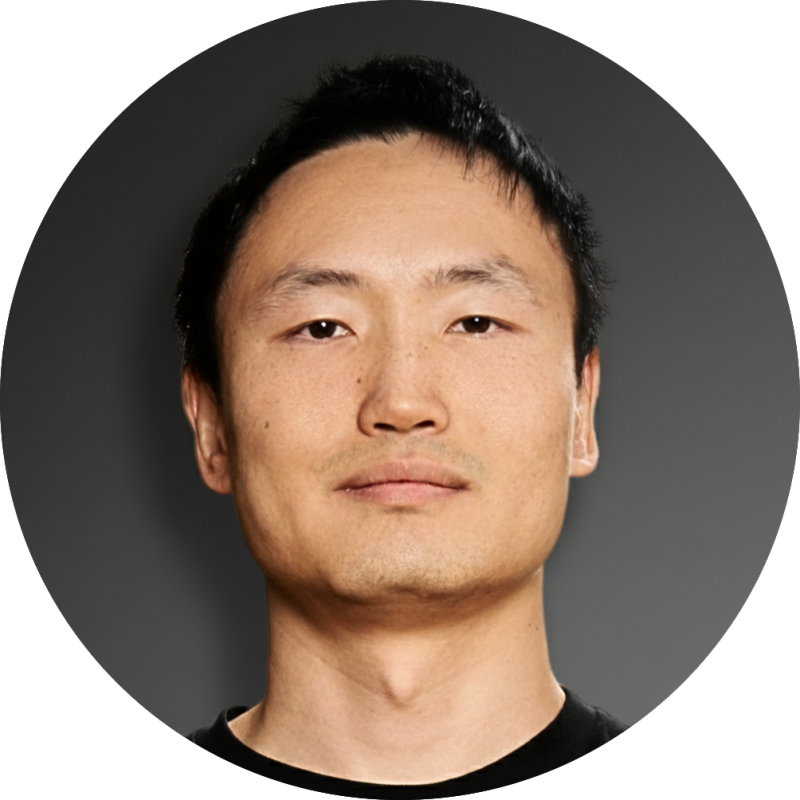
To contact Keven, reach out to him on LinkedIn here. He’s always open to chatting and sharing valuable insights.

Comments
Nothing yet. Say the first thing.
Sign in to join the conversation.