
It was a busy week in biomedicine, it is difficult to keep up! Here’s everything that happened…
1. A quintuple agonist in obesity
The obesity space is getting crazier and crazier. This week Eli Lilly reported earnings, with $13B of revenue for Tirzepatide in the first quarter of the year, making it (by far) the highest-selling drug in the world.
To me it seems like GLP1s will become a backbone therapy, a metabolic foundation to be combined with other medicines — or built into multi-agonist molecules — for more weight loss, to reduce side effects, and for benefits beyond obesity.
This paper from Nature this week takes it to the next level, with a molecule that agonises 5 different receptors: GLP1, GIP, PPARα, PPARγ and PPARδ.
GLP1 agonism reduces hunger, while adding GIP tolerises and increases weight loss (this is the mechanism of Tirzepatide). PPARα/γ/δ agonism is how Lanifibranor works, which is itself in phase 3 trials for fatty liver disease — this adds anti-inflammatory effects, lowers liver fat, and increases insulin sensitivity.
Put that all together, and the result is 40% weight loss — when tested in mice!
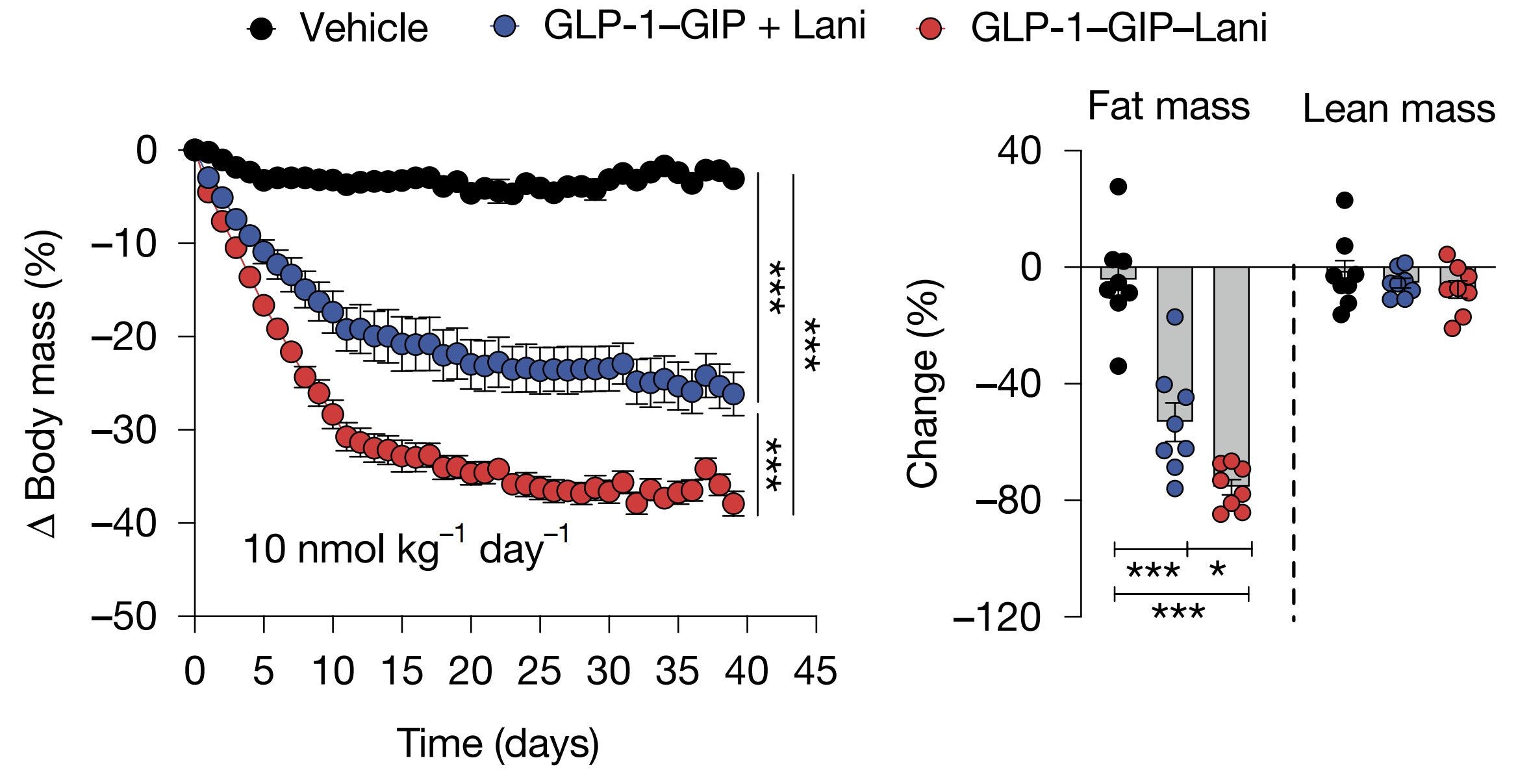
It is a wild statistic that the two main GLP1s (Semaglutide and Tirzepatide) make more revenue than the two main AI labs, OpenAI and Anthropic, combined. Still, we’re just at the beginning of this wave: the leader in the space, Eli Lilly, has no less than 8 weight loss drugs in its pipeline.
Subscribe to keep up to date with the cutting edge of medicine.
2. A new hair loss drug wins in phase 3
The approved drugs for pattern hair loss are oral finasteride and topical minoxidil. These are decent therapies, but oral finasteride is generally only used by men (it can harm development of the male fetus in pregnant women) and there are often concerns over side-effects (sexual, mood). Minoxidil is usually used topically (due to risk of systemic side effects with oral use) so it’s applied directly to scalp.
This week, VeraDermics, a dermatologist-founded company in Connecticut, posted phase 3 results for an oral, reformulated version of minoxidil. Here’s an example of what it can do:
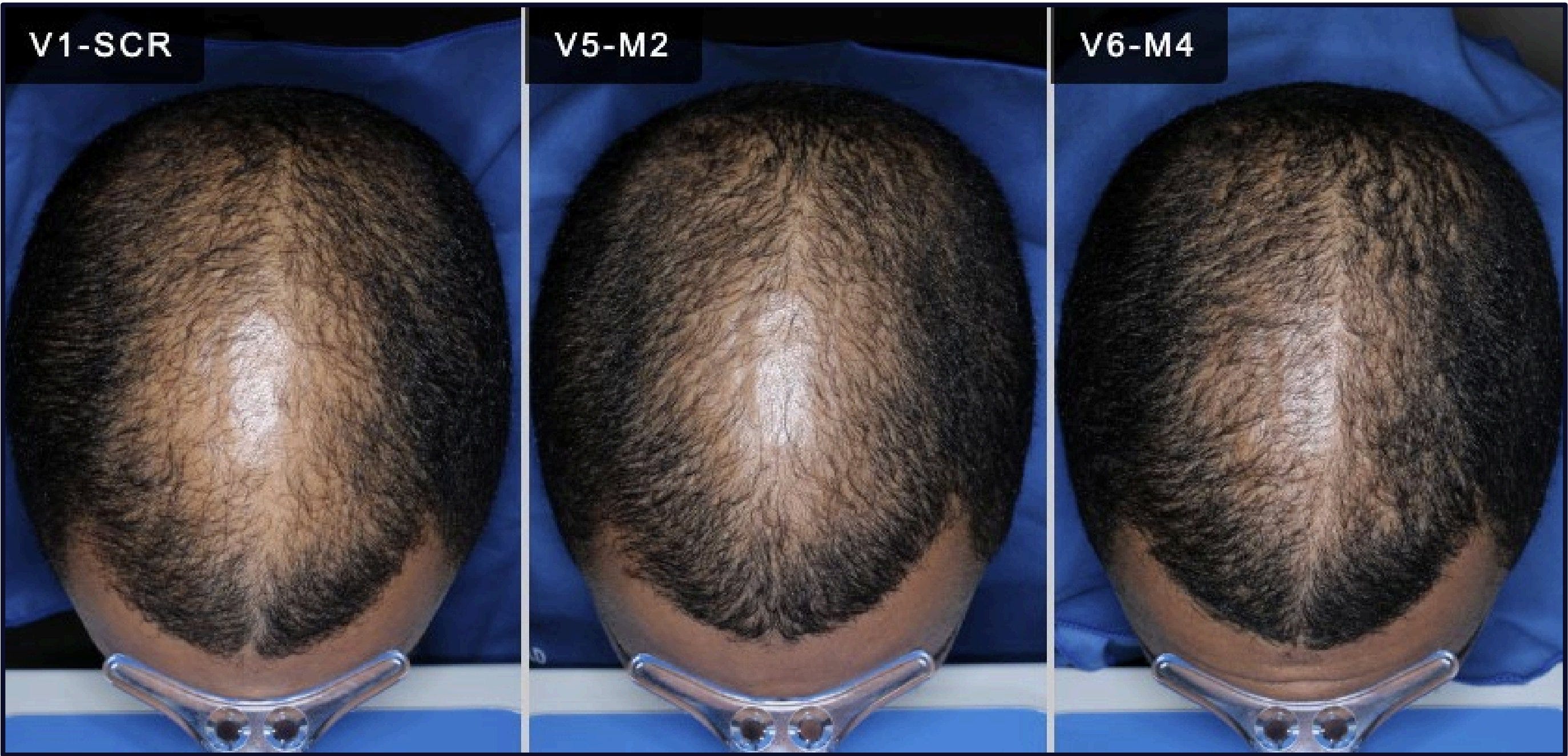
The reformulation means that release of minoxidil is steadier, and longer-lasting — to keep its levels high enough for continuous hair growth (but not high enough to be toxic).
Comments
Nothing yet. Say the first thing.
Sign in to join the conversation.