
Progress in medicine is fast. I track it here, with the most important advances from each week — let’s go!
If you’re running systematic reviews in pharma, biotech, or academia, check out the AI-native systematic review platform I helped build — scholara.ai!
KRAS is the most commonly-mutated oncogene in cancer — it’s a driver in ~90% of pancreas cancers, ~30% of lung adenocarcinomas, and ~40% of colorectal cancers. KRAS is a small, smooth molecule, which is a problem for drug development, because there’s no obvious pocket or active site for a drug to slot into.
KRAS does sometimes expose a druggable pocket — in its ‘off’ state. There are a couple of approved KRAS inhibitors that do this (Sotorasib and Adagrasib, in colorectal and lung cancer) both of which target the G12C mutant. These are effective, but the G12C mutant only composes a fraction of KRAS mutants, and mutant KRAS spends most of its time in the on state — not the off state.
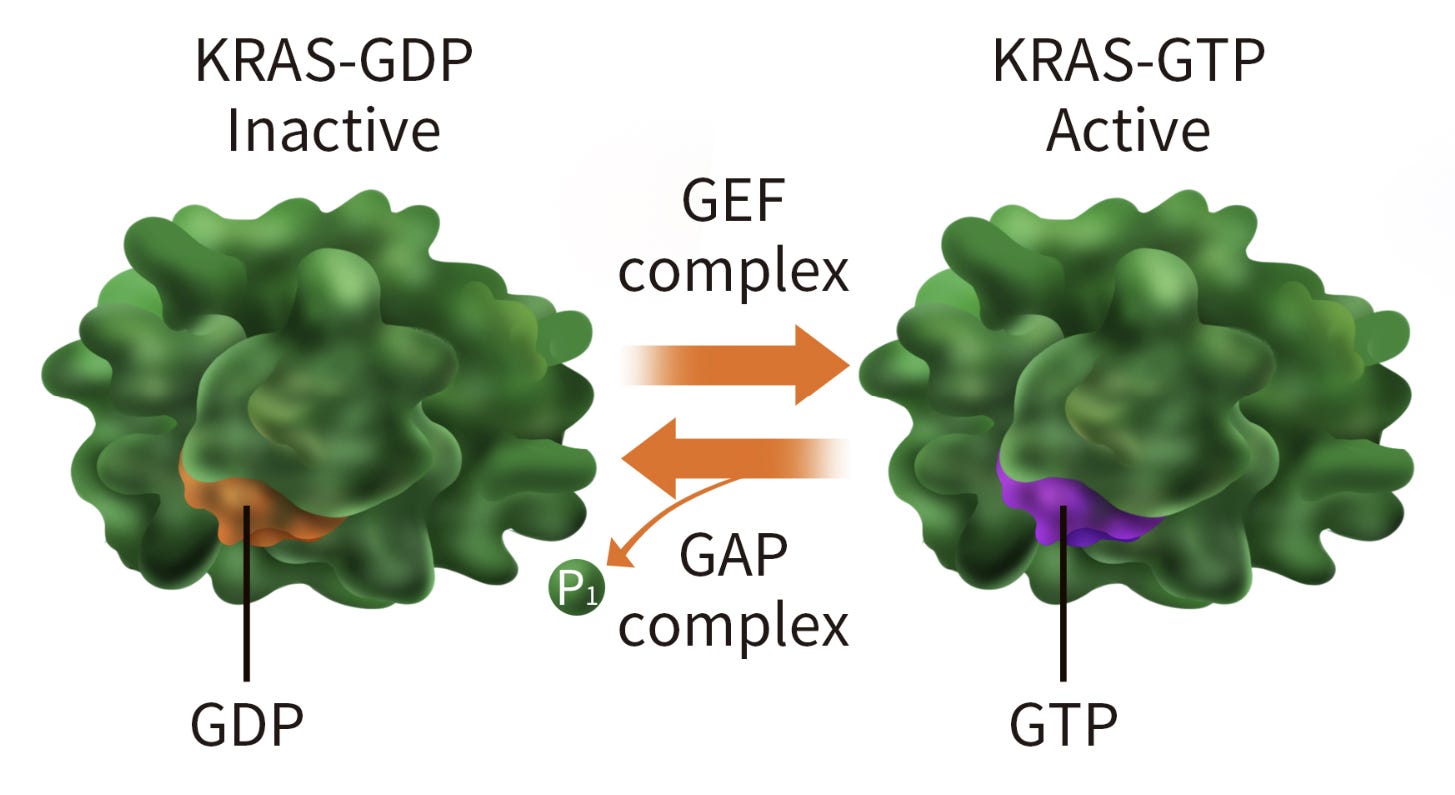
To drug the ‘on’ state, you’d need a drug small enough, with high enough affinity, to displace GTP. Given the picomolar affinity with which GTP binds to KRAS, and its high concentration in the cell, this is probably ~impossible, so Revolution Medicines came up with a different way.
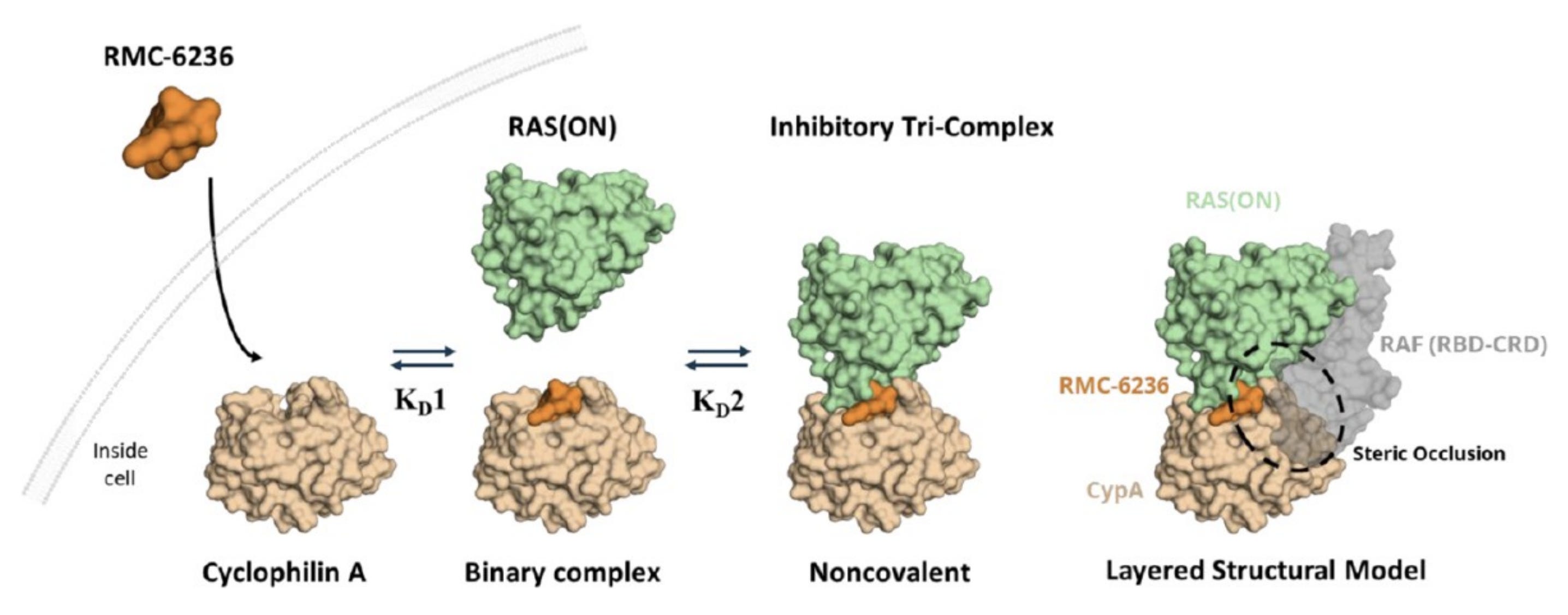
Their lead compound is Daraxonrasib, a molecular glue which binds to a scaffolding protein (called Cyclophilin A) and then KRAS. This trimer locks KRAS into an inactive state that’s unable to activate the downstream pathway, and promotes GTP hydrolysis — to push KRAS into the ‘off’ state.
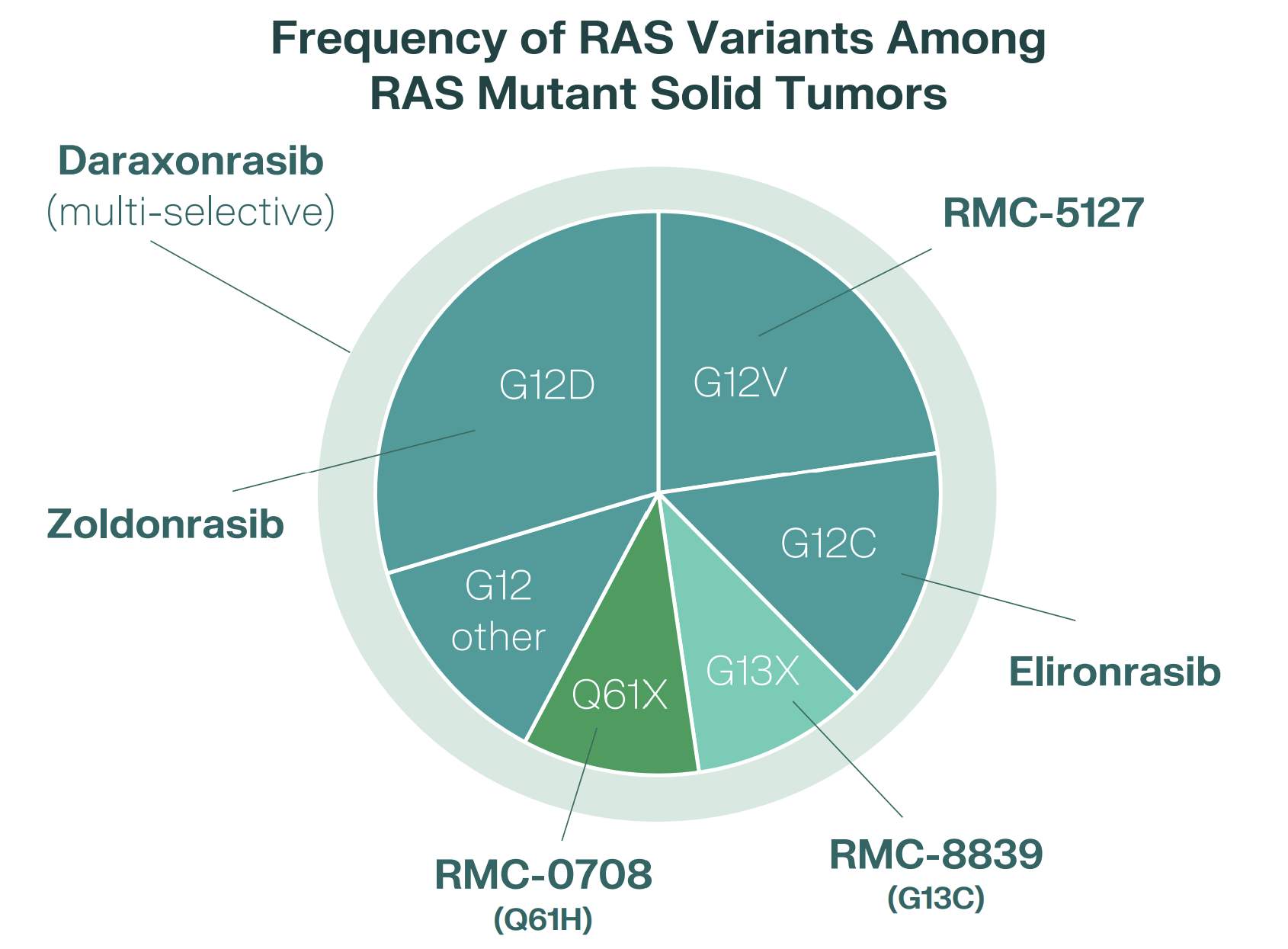
This mechanism means that Daraxonrasib inhibits many of the major KRAS mutations — G12D, G12V, G12C, G13X, Q61X, and others:
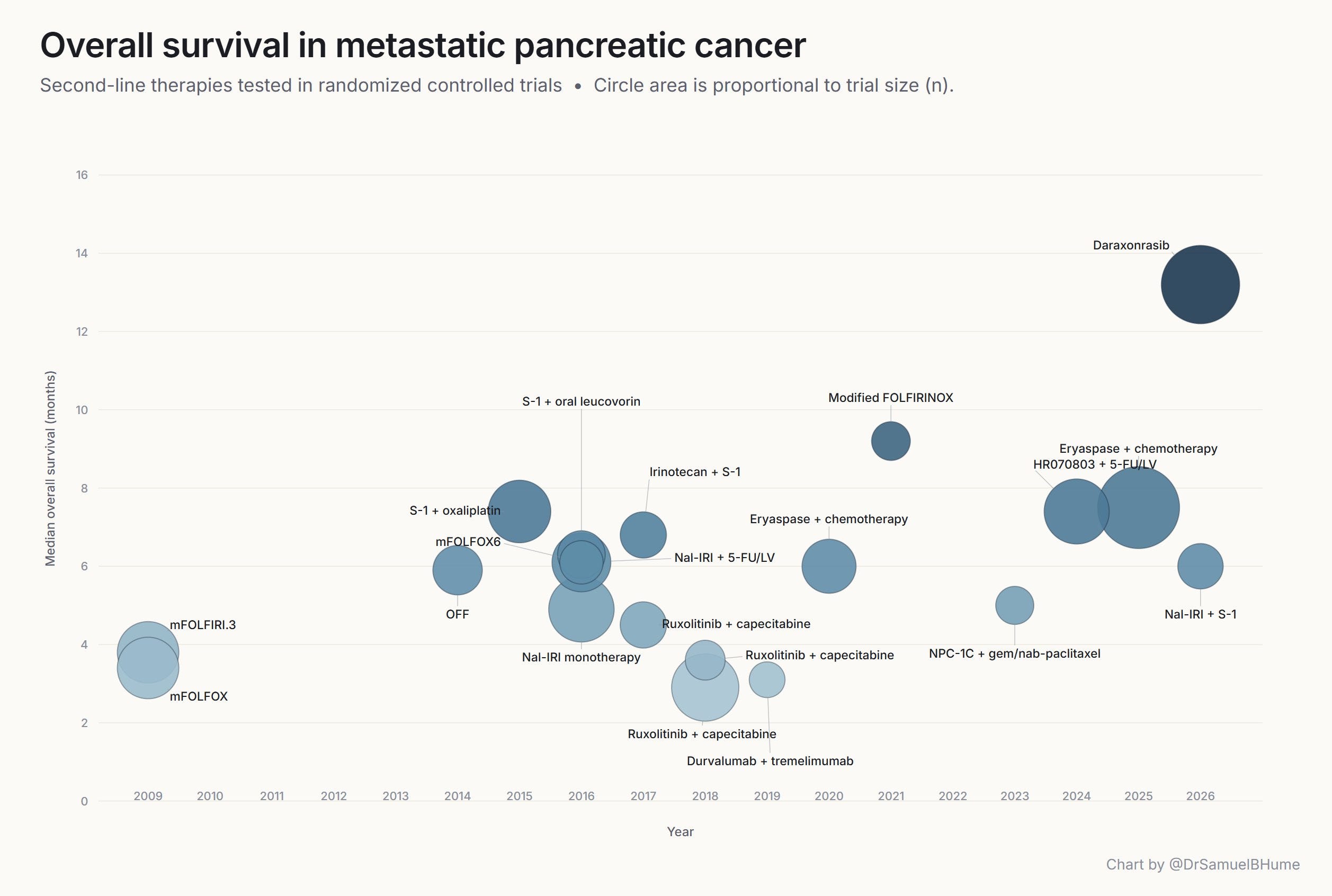
This week, RevMed press-released their phase 3 results for Daraxonrasib in second-line metastatic pancreatic cancer. The Daraxonrasib group had an overall survival of 13.2 months vs. 6.7 months for the group treated with the physician’s choice of chemotherapy — a hazard ratio of 0.4. To put this in context, no other therapy has ever achieved more than 10 months overall survival in this setting:
The major caveat here is that this is just a press release — the full dataset will be announced at ASCO, in Chicago in late May (I will be there!).
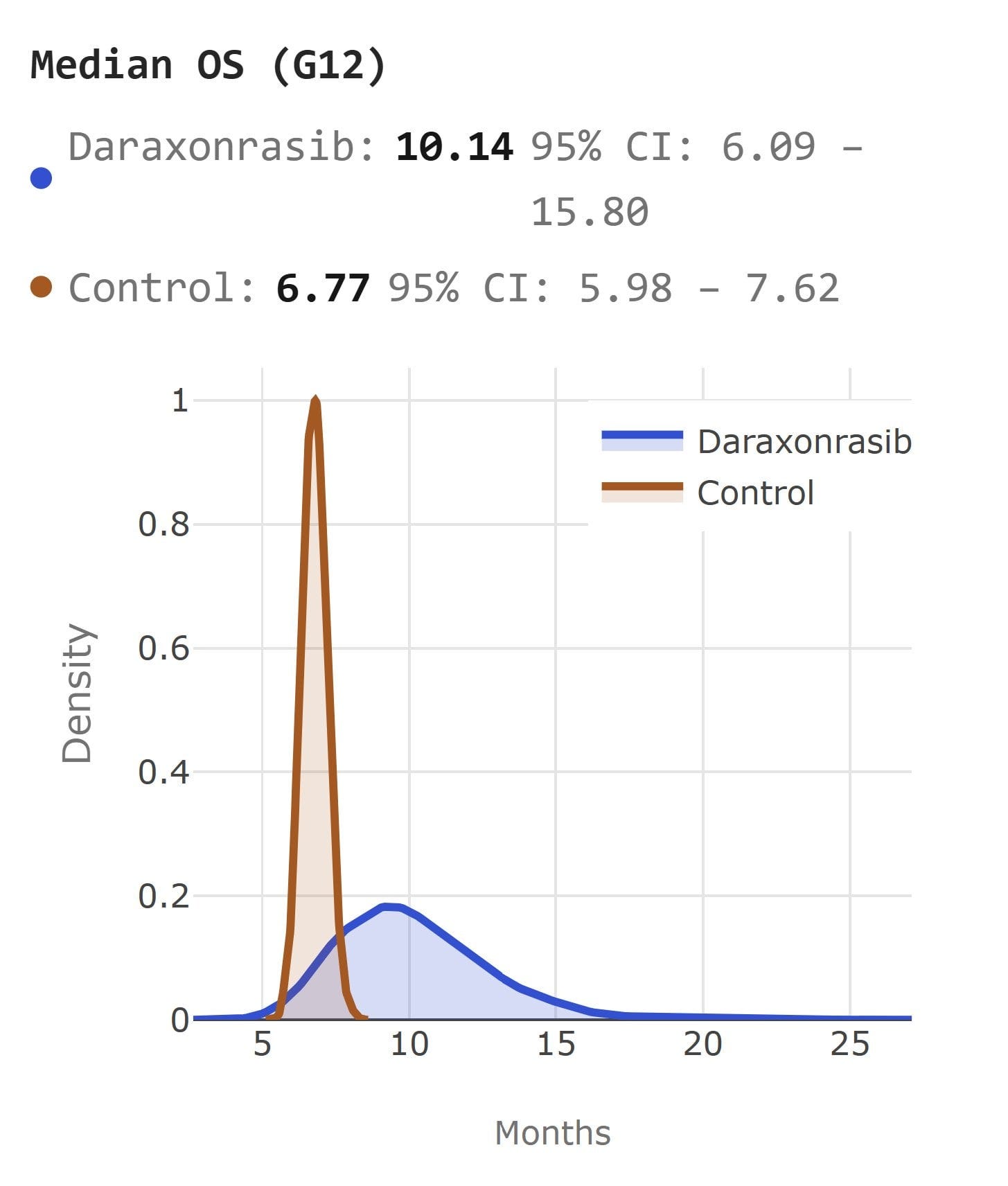
It’s worth mentioning here that WarpSpeed released a prediction for this clinical trial, using AI. They predicted 6.77 months survival in the control arm (spot on) and a pessimistic 10.14 months with Daraxonrasib:
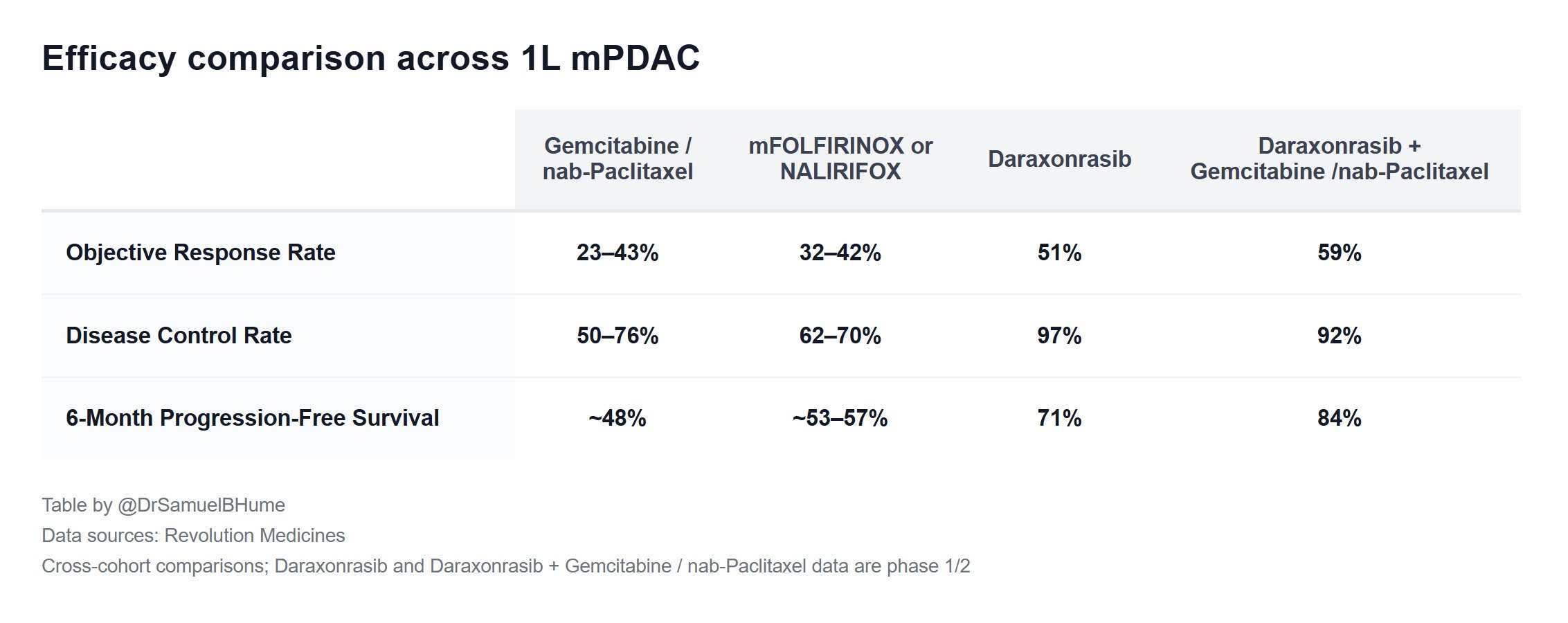
If these data were not exciting enough, this week, at the AACR conference, RevMed released the phase 1/2 data for Daraxonrasib in the first line of metastatic pancreas cancer. They trialled Daraxonrasib alone and in combination with standard-of-care chemotherapy. The data look good there, too — here’s how they compare to the current standard of care:
Beyond the phase 3 2L mPDAC data announced this week, RevMed are running two other phase 3 trials: in 1L metastatic PDAC and in adjuvant resectable PDAC.
Credit to the Gut Onc Lab pod for helping with my research for this!
Comments
Nothing yet. Say the first thing.
Sign in to join the conversation.