
We’re 6 months into 2026, so what better time for a rundown of what’s happened so far? I’ve chosen advances that changed practice, produced differentiated late-stage clinical data, or proved a new concept.
This post is sponsored by Consensus, the AI agent for research that now has >2.5 million monthly users. If you’re a doctor, try Medical Mode to query guidelines and the top medical journals. If you’re doing research, Consensus has access to 220 million peer-reviewed papers, and has deals with 6 top publishers to access full texts (even behind paywalls). You can use my link for a free trial!

Many trials have been done in metastatic pancreatic cancer, all of which have failed to improve (or only incrementally improved) the standard of care. This year we saw the first step change in survival, with Daraxonrasib.
Daraxonrasib is a ‘molecular glue’ that locks RAS — the oncogenic driver in pancreatic cancer — into an inactive trimer with a third molecule, Cyclophilin A. This works for multiple RAS isoforms — both wildtype and mutant — and Daraxonrasib inhibits active, GTP-bound RAS(ON), which is more potent than RAS(OFF) inhibition.
As second-line therapy, Daraxonrasib doubled median overall survival, improved quality of life, and reduced pain associated with pancreatic cancer.
Just a couple of weeks after those data, Tango Therapeutics revealed results that layer a new therapy on top of the Daraxonrasib foundation. Tango’s approach depends on a concept called synthetic lethality between an epigenetic enzyme, PRMT5, and the metabolic enzyme MTAP, which is deficient in about 40% of pancreatic cancers. In a small phase 1/2 trial, this combination achieved 6 month progression-free survival of ~90%, compared (cross-trial) with ~50% for Daraxonrasib alone (and ~30% with the current standard-of-care chemotherapy).
These therapies are both for metastatic disease, which is the stage where most patients present — earlier detection is a key problem to solve too.
One way to do this is with blood tests, and the one we currently use is CA19-9. In February, the first independent validation of Immunovia’s PancreaSure blood test was published, which measures 5 pancreatic cancer proteins. Compared to CA19-9 alone, Pancreasure had higher sensitivity and specificity, including for early-stage disease.
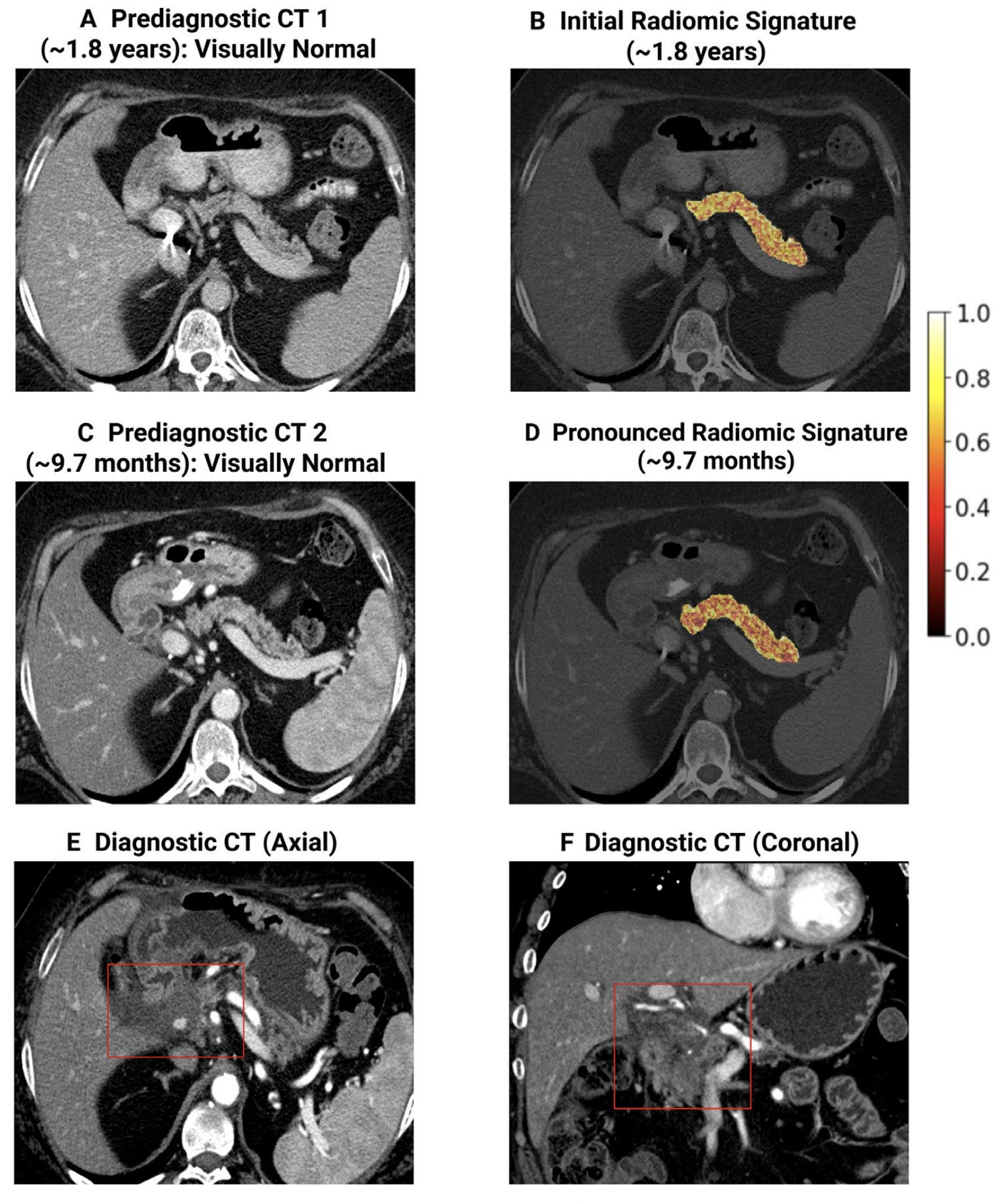
Early pancreatic cancer is often missed on CT scans, so the other way is to improve detection on imaging. There were two new AI models trained to solve that, PANORAMA and REDMOD. The image below, on the left, shows a pancreatic tumor missed on CT imaging, 1.8 years before eventual diagnosis. On the right, the same tumor was detected with the REDMOD AI system:
If we can solve the early detection problem, outcomes are likely to improve — partly because more therapies are available. One of those, newly approved this year, is Novocure’s tumor-treating field device — the first new therapy for locally-advanced pancreatic cancer in >30 years.
Tumor-treating fields deliver low-intensity electric fields that disrupt mitosis to cause death in dividing cells — and impair DNA repair too, so can sensitize cells to DNA-damaging chemotherapy.

A fortunate set of people are born with inactivating variants in PCSK9, which means they have low LDL cholesterol and low cardiovascular risk for life. Based on this, PCSK9 has emerged as probably the most effective target for lowering cholesterol — and we’re hitting it from every angle, including, now, a pill.
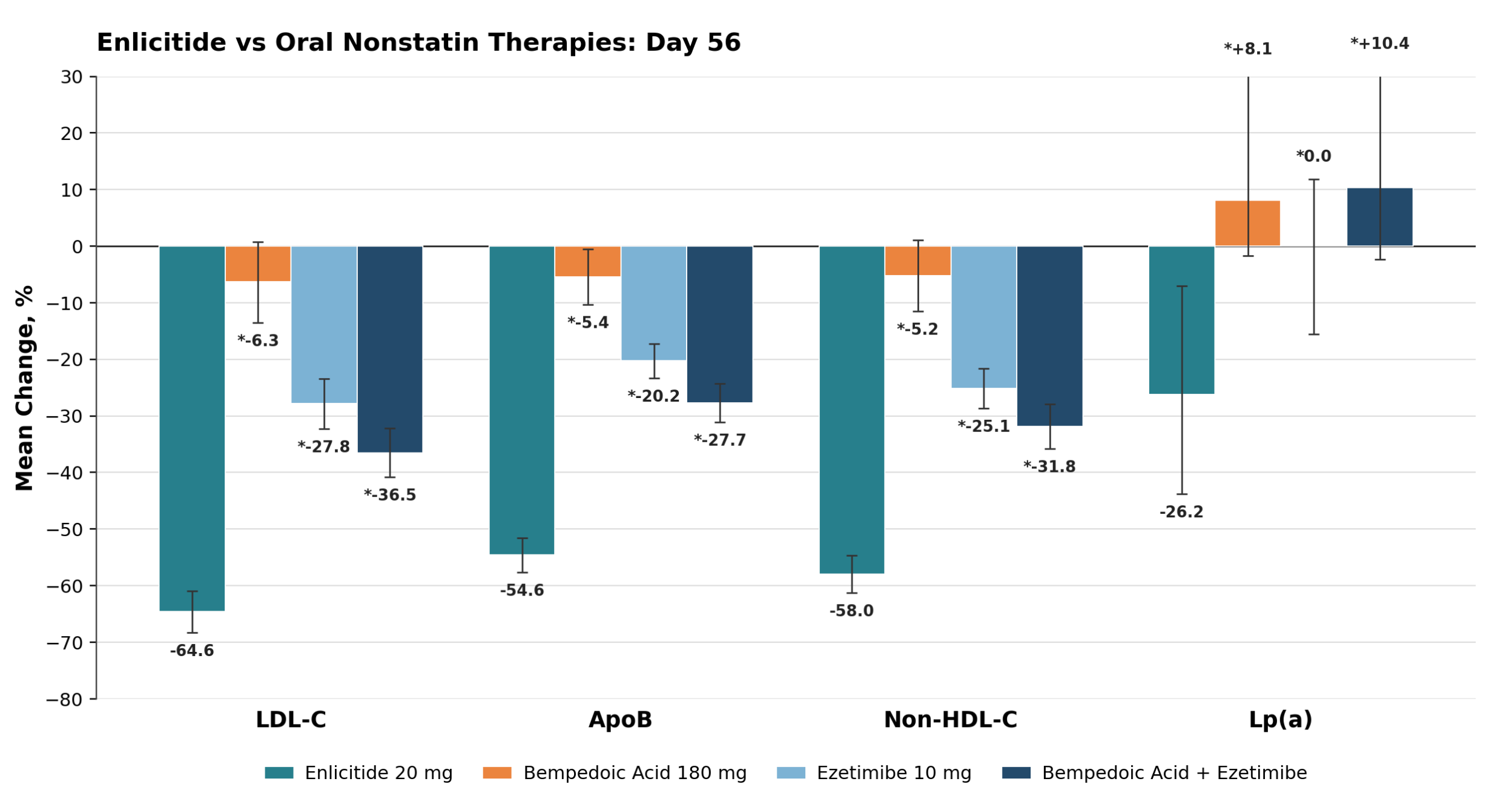
Merck’s Enlicitide cut LDL cholesterol by >60% in phase 3 trials on top of statin therapy — that’s almost twice as much as combination therapy with two other non-statins, Bempedoic acid + Ezetimibe:
The other major cardiovascular risk factor is high blood pressure (hypertension). Treatment-resistant hypertension is common, affecting ~7-10 million adults in the US. AstraZeneca’s Baxdrostat, which was approved in May, uses an established mechanism — aldosterone inhibition — but in a differentiated way to circumvent side-effects: blocking the synthesis of aldosterone altogether.
Another target built on genetic evidence is clotting factor XI. Humans born with factor XI deficiency have a reduced risk of ischaemic stroke, but no increased hemorrhagic stroke risk. This finding was replicated pharmacologically this year, with Bayer’s factor XI inhibitor, Asundexian, which reduced the risk of (non-atrial fibrillation-related) stroke in a phase 3 trial.
The most common genetic heart condition is hypertrophic cardiomyopathy, which affects about 1:200-500 people. It causes thickening of the left side of the heart, due to a range of mutations — most commonly, in the proteins that help heart muscle contraction, like myosin. About 30-50% of these patients have non-obstructive disease, where we still have no disease-modifying therapies. The cardiac myosin inhibitor, Aficamten, from a small biotech called Cytokinetics, became the first drug with positive phase 3 data in this condition.
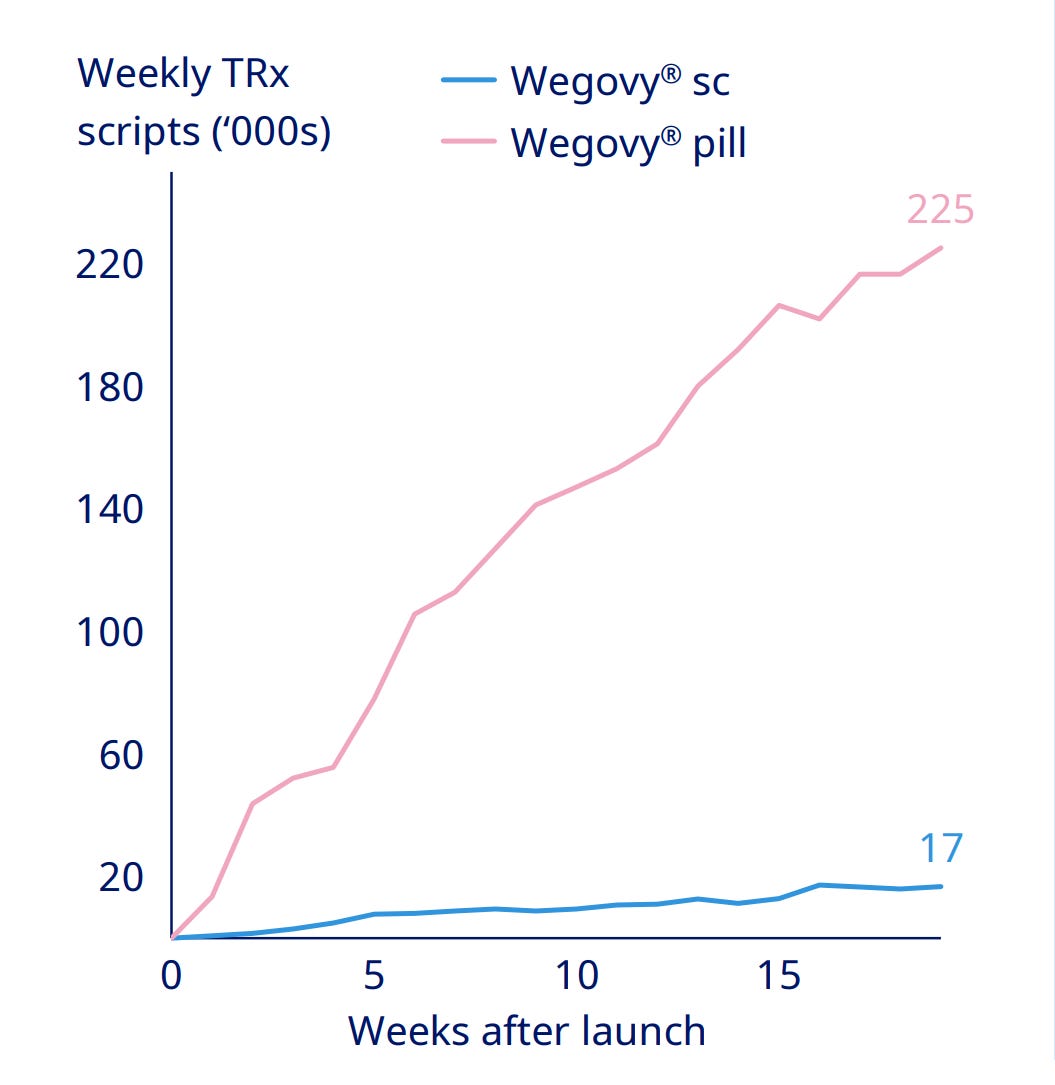
At the start of the year, the first oral GLP1 launched in obesity, Novo Nordisk’s oral Semaglutide, which was later followed by Lilly’s Orforglipron. Oral Semaglutide — the Wegovy pill — has been the fastest-launching (non-infectious disease) drug of all time.
Anecdotally, GLP1s help reduce inflammation, but this year we saw the first clinical trial proof of this, in patients with overweight/obesity and psoriatic arthritis. Tirzepatide improved disease activity in psoriatic arthritis by an extra ~25% on top of the IL17-A inhibitor, Ixekizumab.
This is really only the beginning of this story: Lilly’s pipeline shows there are many more studies like this running, testing GLP1s in Crohn’s, ulcerative colitis, and psoriasis.
Observational data show that GLP1s are associated with reduced risk of addictive disorders: alcohol, cannabis, cocaine, nicotine, and even opioids. This year we saw the first real clinical trial proof that GLP1s — in this case Semaglutide — can reduce heavy alcohol consumption, in people with coincident obesity and alcohol use disorder.
Again, Lilly is the innovator here — their drug Brenipatide, a GLP1/GIP receptor agonist, is in dedicated development for psychiatry and addiction indications, with ongoing trials in smoking cessation, bipolar disorder, schizophrenia, opioid use disorder, depression, and alcohol use disorder.
Rapid weight loss with GLP1s can cause muscle loss. Phase 2 trials this year have shown that muscle-sparing antibodies like Bimagrumab, when added to GLP1s, can reduce loss of lean mass — in addition to more fat loss, and bigger reductions in inflammation.
To much anticipation, Lilly’s triple agonist, Retatrutide, presented its phase 3 data in obesity:
Other new GLP1s presented data too: Novo’s triple agonist UBT251. AstraZeneca’s oral GLP1, Elecoglipron, Structure Therapeutics’ oral GLP1 Aleniglipron and Zealand Pharma’s GLP1/glucagon co-agonist, Survodutide.
I think it’s likely we’ll see GLP1s used as a backbone therapy in metabolic medicine. In line with this, there were pre-clinical data for an agonist with 5 different targets — GLP-1, GIPR, PPARα, γ, and δ. This adds anti-inflammatory effects, burns more liver fat, and increases insulin sensitivity on top of baseline GLP1 therapy.
Some proteins are inherently hard to make a drug against, and an alternate solution is ‘proteolysis-targeting chimeras’ — PROTACs. PROTACs degrade, not inhibit, targets. This means they could drug ‘undruggable’ targets, lead to more potent inhibition, and circumvent some resistance mechanisms.
In May, the first PROTAC was approved — it’s called Vepdegestrant, and it works by recruiting an E3 ligase to potently degrade the estrogen receptor in breast cancer (specifically, it’s for ER-positive, HER2-negative, ESR1-mutated metastatic breast cancer after progression on endocrine therapy).
Cancers often develop resistance to chemotherapy, and it turns out a major driver of resistance is the glucocorticoid pathway, which suppresses chemotherapy-induced apoptosis. To resolve this, Corcept therapeutics’ Relacorilant, a glucocorticoid receptor blocker, was approved for platinum chemotherapy-resistant ovarian cancer — only the second drug approved specifically to restore or increase sensitivity to chemotherapy.
It feels very futuristic to imagine a world with one-and-done therapies that lower LDL cholesterol for life, but... it might not be far off. This year saw new phase 1 data for Verve/Lilly’s PCSK9 base editor: one single intravenous infusion reduced LDL cholesterol by as much as 60%.
Lipoprotein(a) is an LDL-like particle that also contains a protein component — apolipoprotein(a) — which means it’s unaffected by diet, exercise, or statins. It’s genetically determined, and it’s implicated in about 10% of cardiovascular disease as well as aortic stenosis (age-related narrowing of the heart’s aortic valve). CRISPR therapeutics made an apolipoprotein(a)-targeting genetic therapy, which, in a first-in-human trial, reduced lipoprotein(a) by as much as 73%.
CRISPR therapies today (like Casgevy for sickle cell) usually remove cells, edit them ex vivo, and reinfuse them. This year Intellia Therapeutics presented the first positive phase 3 trial for an in vivo CRISPR therapy — where DNA was edited directly inside the body.
It’s for hereditary angioedema, which causes swelling attacks that are unpredictable, painful, and — if airway swelling occurs without treatment — can be even be fatal. The therapy inactivates KLKB1, the gene encoding plasma prekallikrein in the liver, in a single dose, dramatically reducing bradykinin-driven swelling attacks.
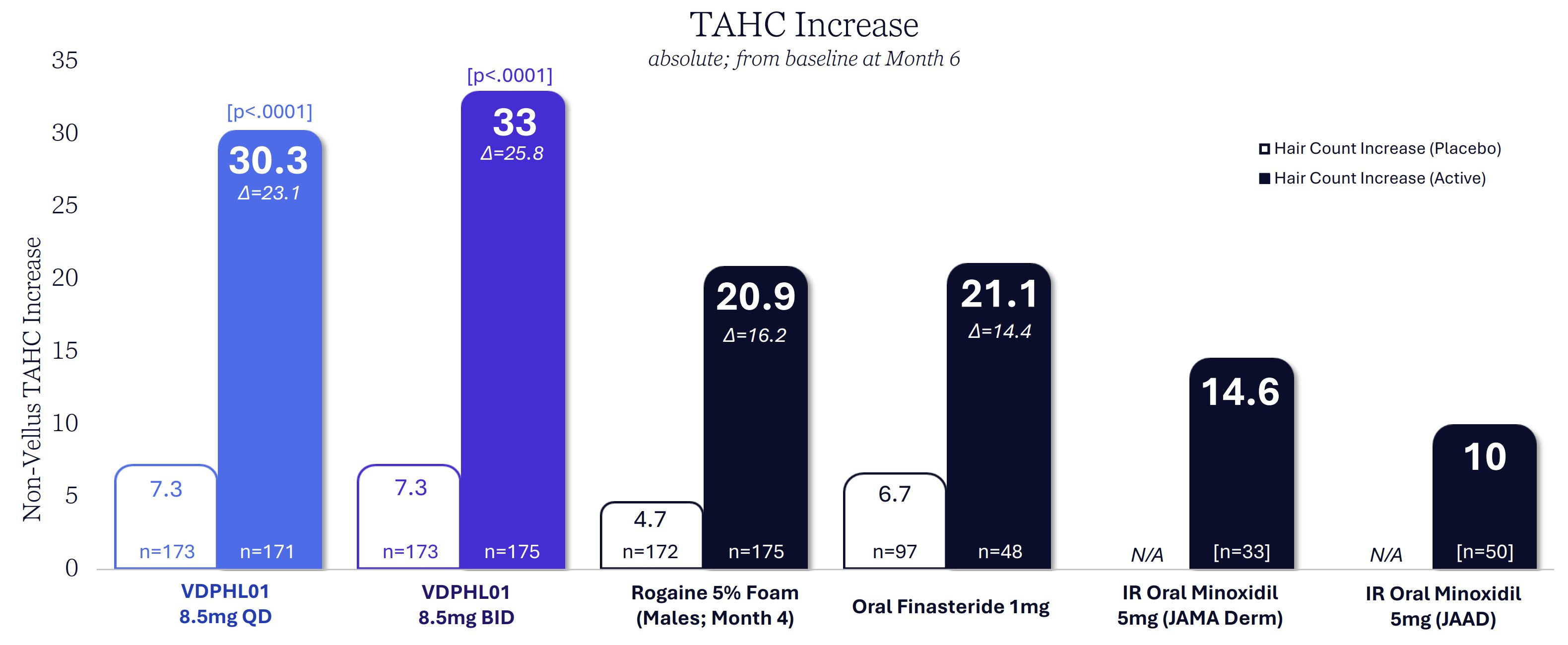
The most common form of hair loss is pattern hair loss, which affects… pretty much everyone eventually. VeraDermics presented phase 3 results for an oral, gel-matrix, extended-release minoxidil, which means minoxidil diffuses out slowly, so the peak is lower and the exposure is longer. This should keep its levels high enough for continuous hair growth, but not high enough to be toxic.
In cross-trial comparisons, it looks to be more effective than anything else on the market:
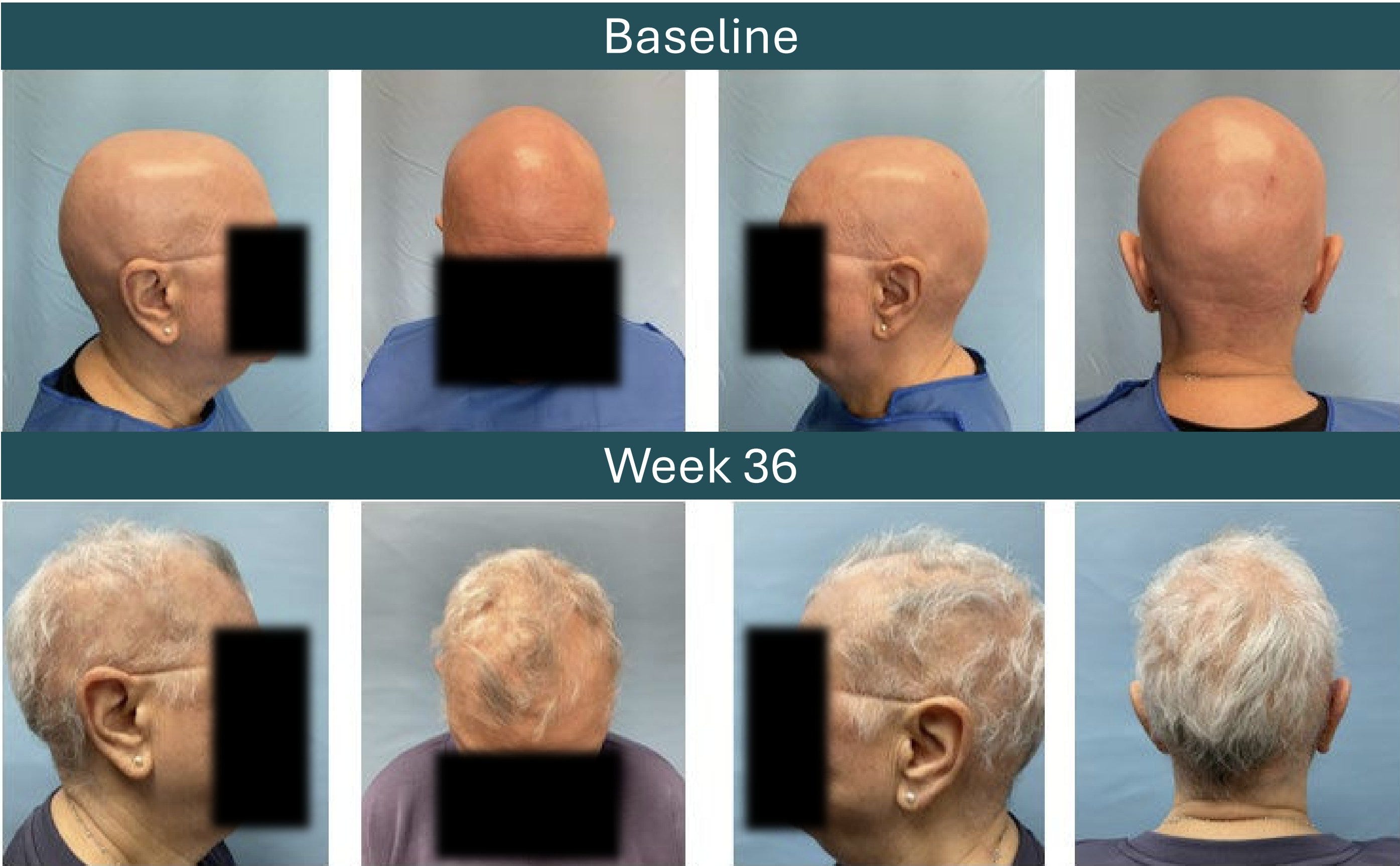
A less common — but still very important — form of hair loss is alopecia areata, an autoimmune condition where the immune system attacks hair follicles. Nektar therapeutics are working on turning the discovery that won the 2025 Nobel Prize in Medicine — T regulatory cells — into a medicine for it.
Their drug is ‘Rezpegaldesleukin’, an IL2 receptor agonist which expands anti-inflammatory T regs without broad immunosuppression. In phase 2 data so far, it looks to be effective.
Comments
Nothing yet. Say the first thing.
Sign in to join the conversation.