
Welcome back to The BREAK–DOWN’s weekly(ish) newsletter. This week we have a new essay from Gareth Fearn, a Leverhulme Early Career Fellow at the University of Manchester working on the political economy of energy, environmental planning and housing.
It’s a bracing piece of conjunctural analysis, mapping the terrain of energy politics. As Fearn writes, we are in an age of transition, just not the kind that the techno-boosters like to wax lyrical about. Per Fearn: “the economic basis of this transition is not simply between technologies of energy production. Rather, it is between two different fractions of capital, fractions that have been both allies and competitors for a century or more.” From there, the essay takes on everything from the Chinese model of electrification to the AI boom and its implications for energy.
You can, as ever, read a preview of the essay below or in full on our website.
Before that, a reminder. Tomorrow (Tuesday 24 February) you can see our editor Adrienne Buller in conversation with our most recent podcast guest, Ann Pettifor, at Foyles on Charing Cross Road, London. There’s a few tickets left here if you’ve not already got yours (and there’s been tell that tickets include a glass of wine?).

If you’re not based in London, don’t worry. Next month we’ll be heading up north for Scotland’s Economics Festival, which will be held in Leith between 19 and 21 March. There’s some incredible speakers booked in already, plus a panel on the politics of land chaired by yours truly. The full line-up is on their website. You can still pick tickets up for it, too. We’ll see you there!
And, if you missed it the other week, available on the BREAK–DOWN podcast is MV Ramana’s talk about the limits of nuclear power that he gave at the How The Light Gets In festival last year. You can listen to the full thing on our website or wherever you get your podcasts, or watch the lecture in full (with slides!) on the IAI channel.
And last but not least, a reminder that we are ALSO a print magazine. Our third issue, Airborne, is due out later this spring, and if you subscribe now via our website you’ll get both that lovely issue and our fourth this autumn, plus a full year of digital access to our entire archive. Best of all, you’ll be making great, independent climate media, and the kind of incisive analysis you’re about to read, possible.
Electro-Capitalism
“The best business in the world is a well-run oil company. The second-best business in the world is a badly run oil company.” JD Rockefeller
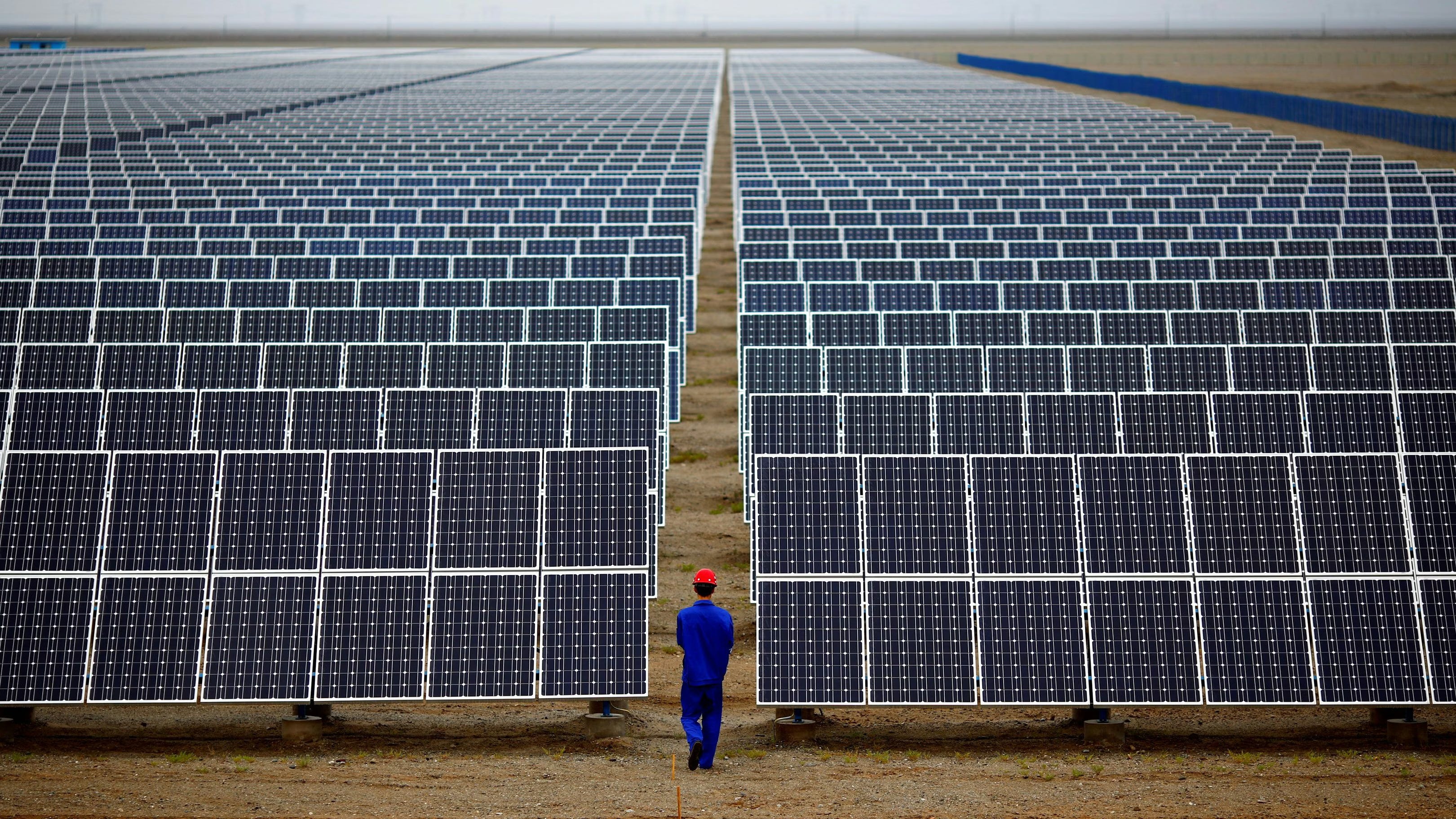
We are in a transition, a revolution and a crisis of energy all at once. It may have taken a pandemic and the energy price shocks of 2021-22 for states to really begin putting their weight behind decarbonization and electrification, but we are now at the start of something that might plausibly be called an “energy transition”. Last year, investment in low-carbon energy was double that of fossil fuels, at around 67 per cent of total energy investment globally. At this rate of development, renewables are—albeit slowly—beginning to displace fossil fuels in electrical power systems, with their capacity doubling every five years.
If this is an energy transition, it is not of the kind the techno-optimists envision—some neat, progressive shift from one fuel source to another. The economic basis of this transition is not simply between technologies of primary energy production. Rather, it is between two different fractions of capital, fractions that have been both allies and competitors for a century or more: fossil capital and electricity capital.
The transition to the dominance of electricity capital has started, but is still transitory, without any guarantee of arrival. There will be no clean break: oil and gas will not be easy to shake off. We are, however, beginning to see a challenge to fossil capital’s dominance, and a path toward a world dominated by electricity, itself increasingly derived from low carbon sources. In this confusing time, the best business in the world may be, contra Rockefeller, a well-run oil company and one well-placed to profit from the energy system of the future.
Capital Contestations
Much has been written about “fossil capital”, both as a distinct sector engaged in the production, distribution and combustion of fossil fuels, and as a particular circuit of capital accumulation, of which carbon emissions are a necessary byproduct. Recent scholarship has sought to identify another distinct fraction, “electricity capital”, which describes the companies, circuits and accumulation regimes involved in low carbon energy and electrification.
How we manage, discipline and organise fossil and electricity capital in the next decade will define the rest of the century. Energy transitions of the past were characterised by upheaval—most dramatically, the shift from human and animal power to coal in the first industrial revolution, or the neoliberal turn of the 1980s through which global markets for oil were created and made profitable through waves of privatization. We should expect the transition from fossil fuels to electricity to be no different, producing significant or perhaps even greater change, not least when we consider the additional challenge of adapting to the impacts of climate breakdown at the same time as the energy system is transformed.
What is unlikely to come out of any state and intra-capital contestation over the energy system is a genuinely “green” capitalism (if such a thing is even possible). Far more likely is what I am calling an “electro-capitalism” capable of challenging a system based on fossil fuels. How it does so, when it does, who wins and who loses—these are much more contingent political questions. The energy “transition” is best understood as the fraught period in which these outcomes are realized.
In the early stages of this contestation between fractions of capital, two confusing spectacles are taking place side by side: fossil capital is continuing to accumulate, while at the same time being out-competed by electricity, both as the world’s primary energy source overall, and within the electrical power system itself, where it is being replaced by renewables (plus storage) and nuclear. Since 2020, global fossil fuel investment has remained relatively consistent at just under £1.2 trillion annually; investment in the somewhat broad category of “clean energy” was double that in 2025. Renewables alone attracted $245 billion more investment than oil last year.
Unfortunately, while fossil capitalists may be losing, they are losing too slowly—and, crucially, slowly enough to continue making the returns they and their backers expect while cooking the planet in the process. It is this strange collision of forces that makes it possible (and indeed, likely) that we will in the next five-odd years see the peak of global fossil fuel combustion at the same time that the world remains on a trajectory towards a disastrous 2.5 degrees Celsius of warming, or higher. The key question in the short term, therefore, is how quickly electricity capital comes to dominate.
In the conflict between electricity and fossil capital, three factors define the how transition will play out: the intra-capital electricity versus fossil conflict; the geopolitical tensions between electro- and petro-states (defined below); and the relationship between electricity capital and the leading “Big Tech” firms. The outcome of these conflicts will determine the structure of an emergent electro-capitalism, and most importantly, the extent to which global temperatures continue to rise.
Defining Electricity Capital
Since the introduction of electricity 150 years ago, electrification has had the built-in economic advantage of being significantly more efficient than fossil fuels. Fossil fuel power stations and the internal combustion engine are both highly wasteful, losing a significant amount of energy (as much as 75 per cent) as heat loss—a problem that renewables and electric vehicles do not suffer from to anywhere near the same extent. This means that there is a significant and measurable gap between the inefficiency of fossil fuels and the more efficient electricity system (estimated at a value of $4.5 trillion annually) from which enterprising electro-capitalists and smart electro-states can find opportunities to profit.
But who, exactly, are the electro-capitalists? There are some obvious firms who fall into this category: the legacy firms in both public and private sectors that own and run the electrical power system, from grid and distribution companies to the retailers to whom you probably pay your electricity bill. We can also include the generators actually producing power, from established firms running gas and nuclear plants to upstarts that specialize in renewable energy generation. At the next step are those manufacturing the components of renewables; energy services, including the sale and installation of technologies of decarbonization—heat pumps, EV chargers, rooftop solar and so on; and “off grid” firms, particularly prevalent in southern Africa, that provide localized power generation for communities not connected to national grids or for wealthier homes who want independent supply. These are all served by supply chains, some of which are specific to electricity (transformers, subsea cables and so on) and others with wider applications (the steel industry, for instance). Importantly, many energy services firms are now also, essentially, tech firms, incorporating digital technologies into managing electricity: “smart meters”, mobile phone apps, local area networks, cloud computing and, increasingly, machine learning and AI.
Lastly, we can include within electricity capital the industries producing both the prevailing technologies of electrification—manufacturers of electric vehicles, heat pumps, and so on—and more nascent technologies like green steel or green ammonia, which promise to electrify sectors currently reliant on fossil fuels. Many firms, of course, cut across these sectors. The UK’s Octopus Energy are renewable generators, energy retailers and provide most of their energy services in-house. Spain’s Iberdrola and the UK National Grid operate or co-ordinate both fossil fuel generation and renewables across multiple jurisdictions.
When we identify electricity capital, we are identifying more than just firms, however. We are also identifying what Nikki Luke and Matthew Huber have called a wider “nexus of state, regulatory, and financial relationships that shape private accumulation through electricity provision”—in short, a circuit of accumulation mediated by the state and finance capital. Electricity and fossil capital can thus be distinguished clearly by considering where their respective profits are made and reinvested.
The profits accruing to electricity capital derive specifically from the production and sale of electricity (even if that includes fossil fuel-based power plants) followed the production and sale of important goods for decarbonization, with electric vehicles perhaps the most obvious. Fossil capital, meanwhile, should be thought of primarily as a circuit of profits from the production and sale of fossil fuels themselves, from the oil and gas majors to petro-chemical industries and fossil fuel-powered products like petrol cars or gas heating. The firms who profit exclusively from these distinct sectors represent increasingly distinct fractions of capital as well as two different circuits of accumulation that “fix” investments into the built environment through their relationship with the state. Importantly, these two circuits might stand in tension even within the same company.
The primary site of conflict between these two fractions of capital has been the electrical power sector, a battle that fossil capital has, over the past decade, started to lose: the high point of fossil fuels in the electricity mix came in 2013-14, during which coal and gas made up around 62 per cent of the global electricity mix. Today, that figure stands around 56 per cent, and is expected to fall to 50 per cent by 2030 even as electricity demand continues to rise.
This expansion of renewable power has occurred both because of political pressure from civil society as well as the now clear economic rationale for low-cost renewables. The invasion of Ukraine gave strong impetus for decarbonization across Europe. In China, meanwhile, the decarbonization has been driven by a national industrial strategy seeking to reduce oil import reliance and position China as the leading nation for manufacturing and developing high-value electro-tech.
All of this has become increasingly clear to both states and investors, and particularly to finance. It is not the prospect of mass suffering from climate impacts that has pushed capital to embrace renewables and electrification; capital accumulation has always been deeply entwined with brutality towards and exploitation of both people and the natural environment.[1] And, as Brett Christophers has argued, even the cheapness of renewable energy is not enough to shift the dial when fossil fuels still offer reliable and superior returns on investment.[2] What is starting to open up the space for rapid electricity capital expansion is that electricity is beginning to look materially superior from the point of view of capital accumulation in general.
The “electro-tech revolution”—the combined and self-reinforcing development of electrical and digital technologies—opens up the potential for a future power system that is relatively stable with relatively low prices. The advantage here for the state is the removal any chance of political and social upheavals every time there is an oil or gas price spike, with the added value of mitigating climate change. Electrification also opens a vast expanse of new opportunities for capital accumulation. Much as new opportunities for accumulation drove the initial phase of electrification in the early 20th century, in everything from electric lighting to cable cars, today a whole suite of new goods and industries awaits development, alongside opportunities in the transitionary phase for service and installation and significant efficiency savings.
The core question is whether the state can co-ordinate the systemic development of an electrical system—a long and expensive project—in such a way that the price of electricity stays significantly below that of hydrocarbons. By far the best way to do that is through large-scale build-out of some combination of renewable power, storage and nuclear. So far, states have largely tried to play both sides, incentivising renewables and electrification while continuing to support fossil fuels.
As electricity capital expands, though, its political power will grow. To take an example from the UK: Octopus, a relatively new firm, has its CEO on a central government advisory board. The new public energy firm, meanwhile, is headed by a former Siemens executive. The UK government, like many others, is now committed to nearly removing fossil fuels in its entirety from the grid, which makes them keen to champion domestic electro-capitalists in light of their own lack of state capacity—the result of decades pursuing marketized energy policies and mass privatizations. While some concessions are still being made to fossil capital, notably further drilling for oil and gas in the North Sea, it is electro-capitalists that increasingly shape the UK’s energy future.
As the interests of fossil and electricity capital come into conflict, states will be forced to make decisions in one or the other’s favour. Labour, organized or not, is likely to play a significant role in the outcomes of these conflicts. The early stages of renewable build-out are relatively easy, as most new capacity is additive, and poses little challenge to fossil capital. Over time, however, fossil-fuelled power stations have started to be displaced. Workers do and will continue to resist such closures, as they have done over coal power in the UK and are now doing in northern China, where coal is integral to the region and thus poses significant co-ordination challenges for the state. At the same time, unions are increasingly active in advocating for jobs within industries of electricity capital. In places where electricity capital and labour can find some temporary alignment, we will see states more ready and willing to advance electrification and decarbonization.
If both states and labour unions accept that electrification and renewables provide opportunities for new markets, products and jobs, combined with political pressures to reduce emissions, a strong political constituency for electro-capitalism will emerge in many high-emitting countries, one comprising electricity capitalists, other industries seeking lower costs and emissions, plus politicians, workers and civil society groups whose interests align. Uniting these groups, however, will take considerable political skill and courage—even more so when fossil capital starts to fight back with increasing ferocity.
Continue reading on The BREAK–DOWN website.
Thanks for reading! This post is public so feel free to share it.
Comments
Nothing yet. Say the first thing.
Sign in to join the conversation.